
Myth or fact
What guides, guidebooks, and friends say about Portugal. Can you tell what’s true? Behind every answer is one of my stories.
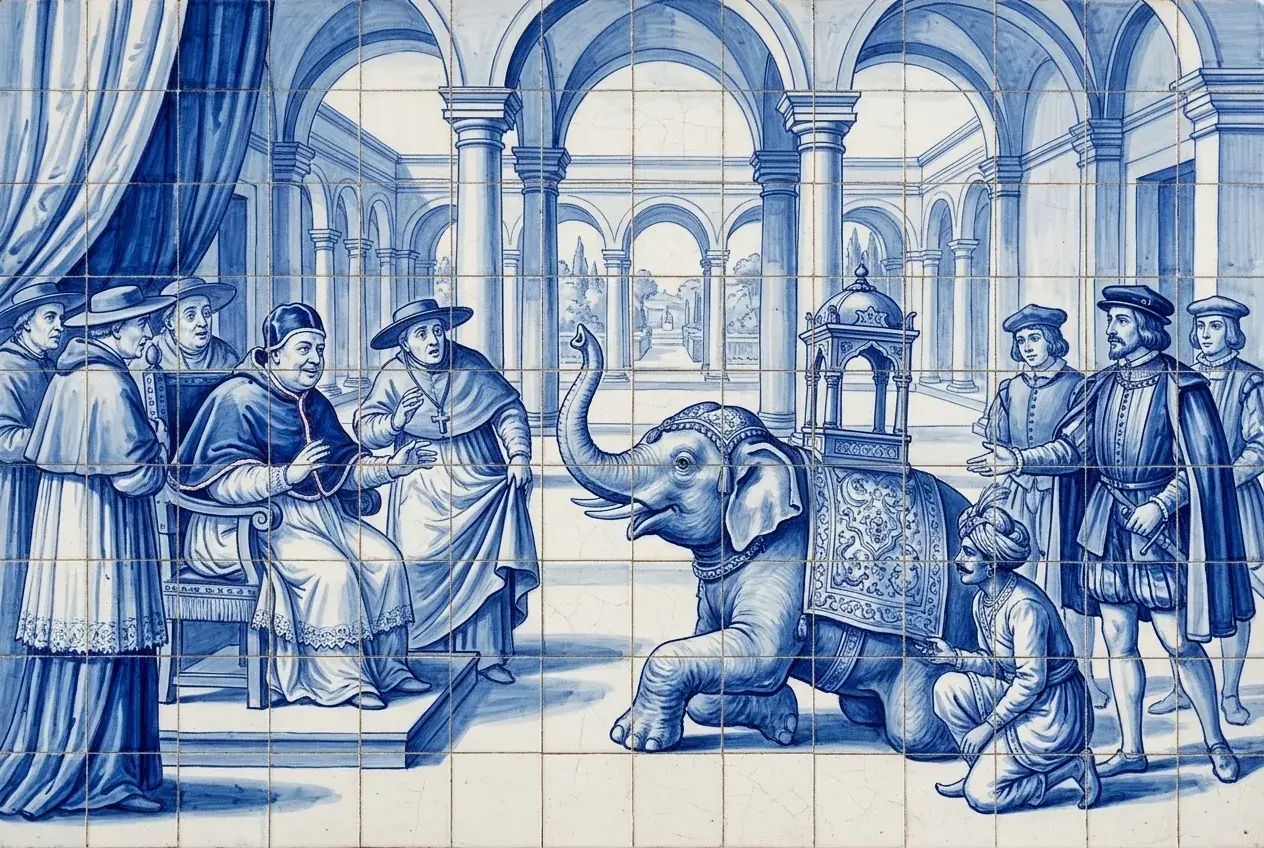
Roman doctors treated the sick elephant with a laxative containing gold
Answer
Fact
Yes: in the summer of 1516 the elephant Hanno fell ill, doctors gave him a laxative with gold, and he died on June 8. The pope was at his side.
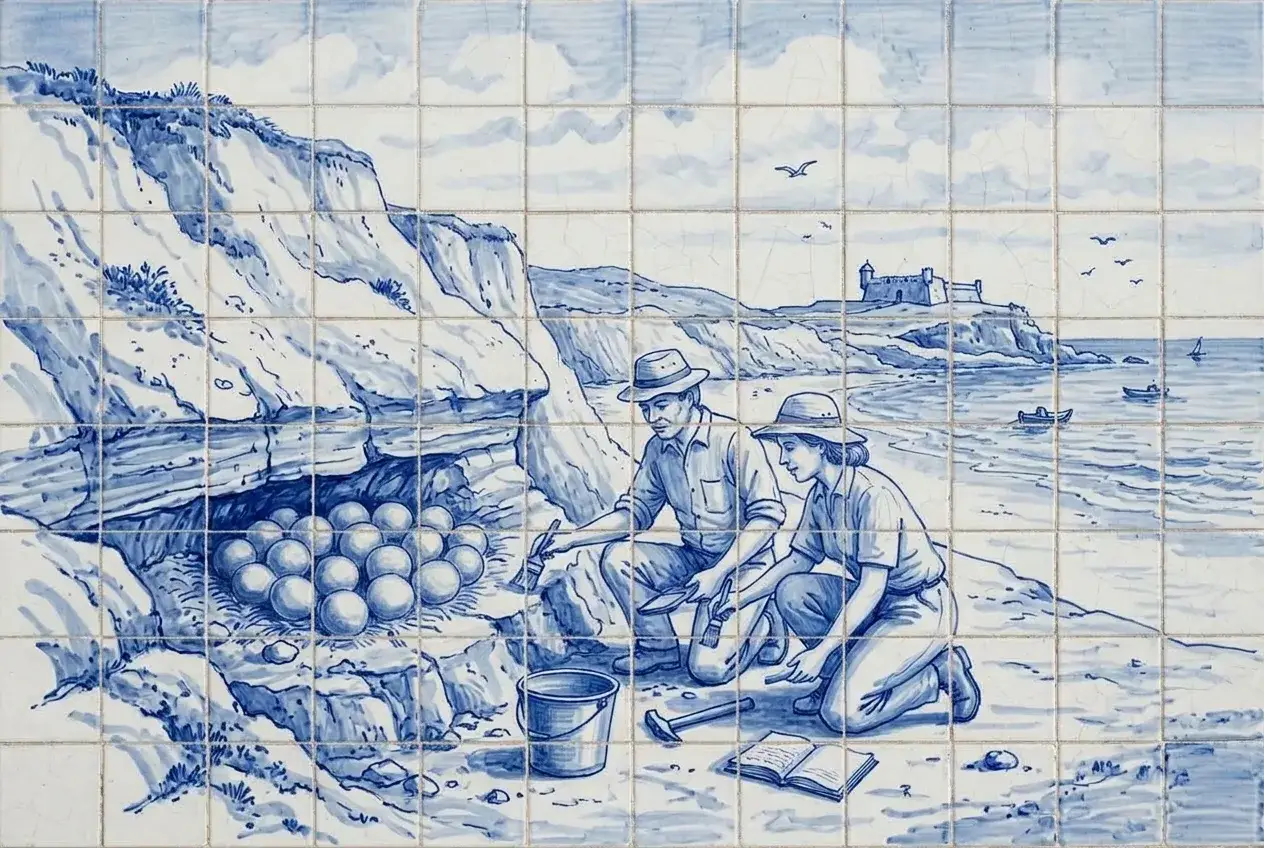
Dinosaur eggs are almost never found
Answer
Myth
They turn up often. What is rare is embryos inside: fragile bones rarely survive. At Paimogo, the silt from a flood preserved them.
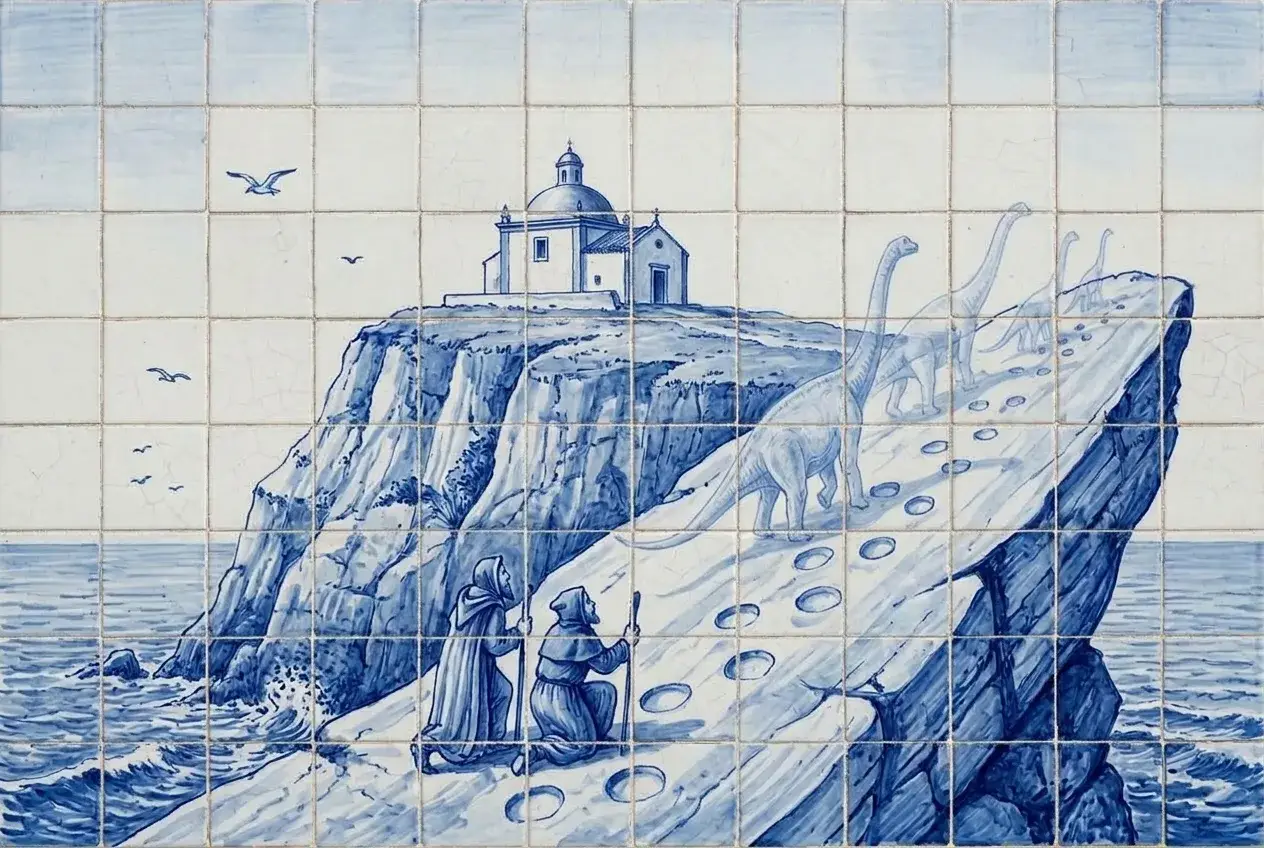
The footprints at Cape Espichel were left by the Virgin’s mule
Answer
Myth
Legend says a mule carried the Virgin up the cliff. The trackways were actually left by sauropods about 150 million years ago.
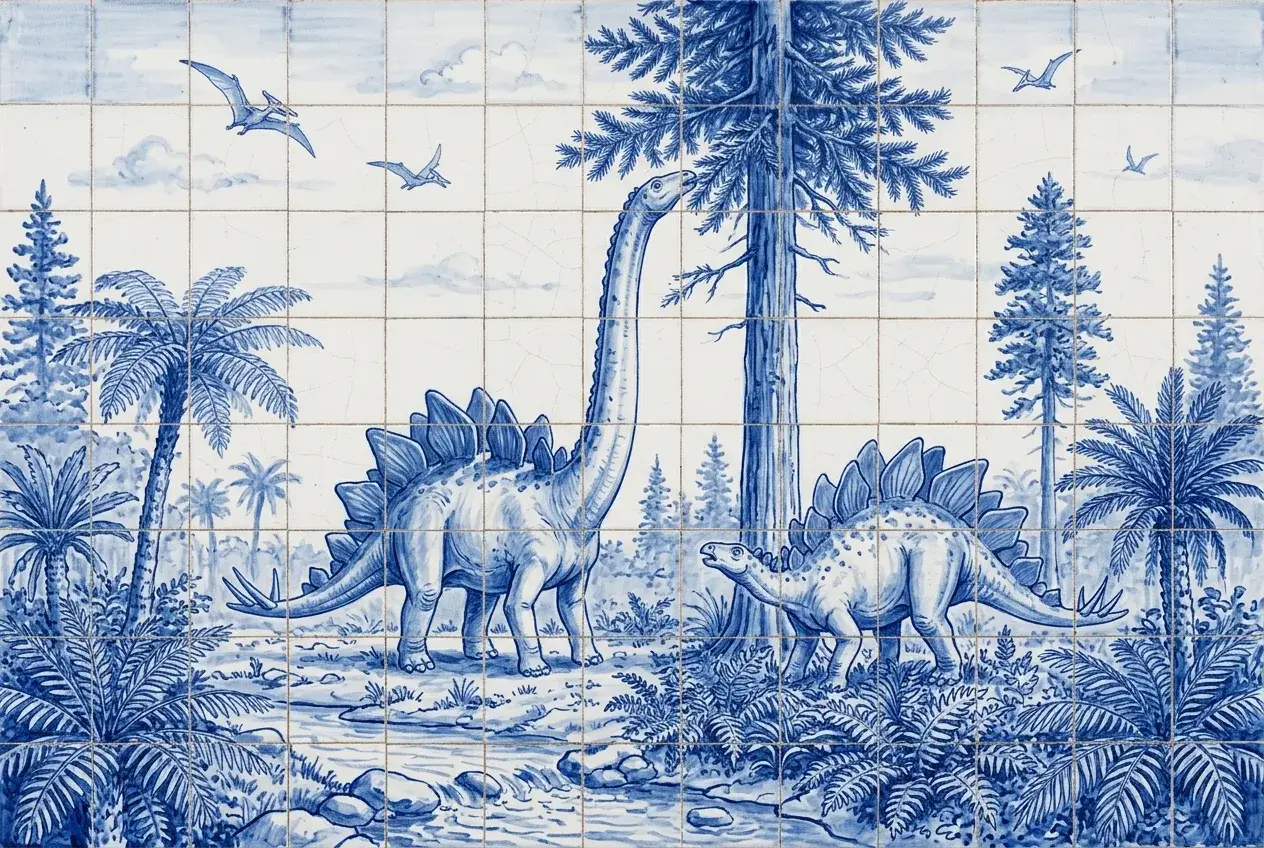
All stegosaurs had short necks
Answer
Myth
No: Portugal’s Miragaia longicollum had at least 17 vertebrae in its neck, more than most sauropods. What it was for, nobody knows for sure.
Portugal canceled a dam to save prehistoric rock art
Answer
Fact
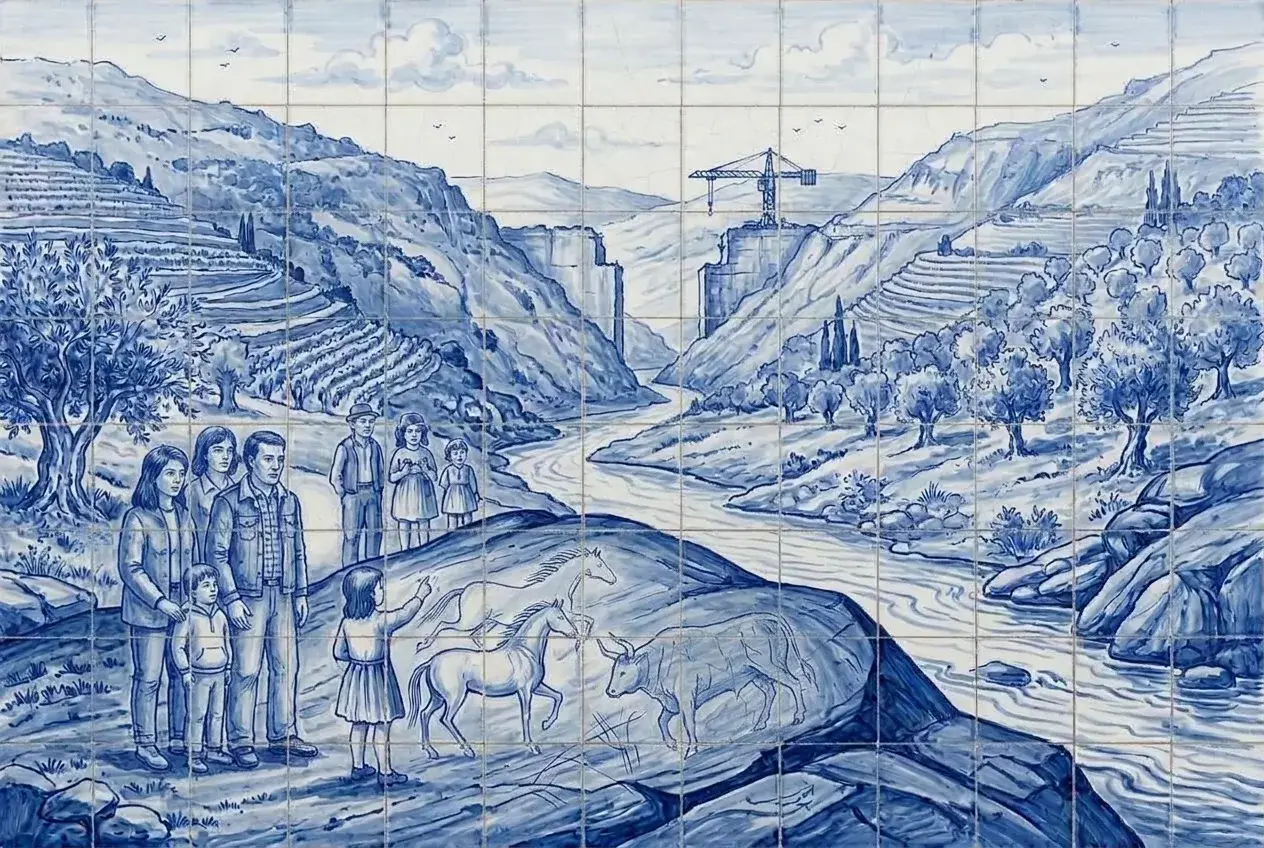
In 1995, work on the Côa dam was halted so Stone Age engravings would not be flooded. Today they are a UNESCO World Heritage Site.
The Pig of Murça was carved by the Romans
Answer
Myth
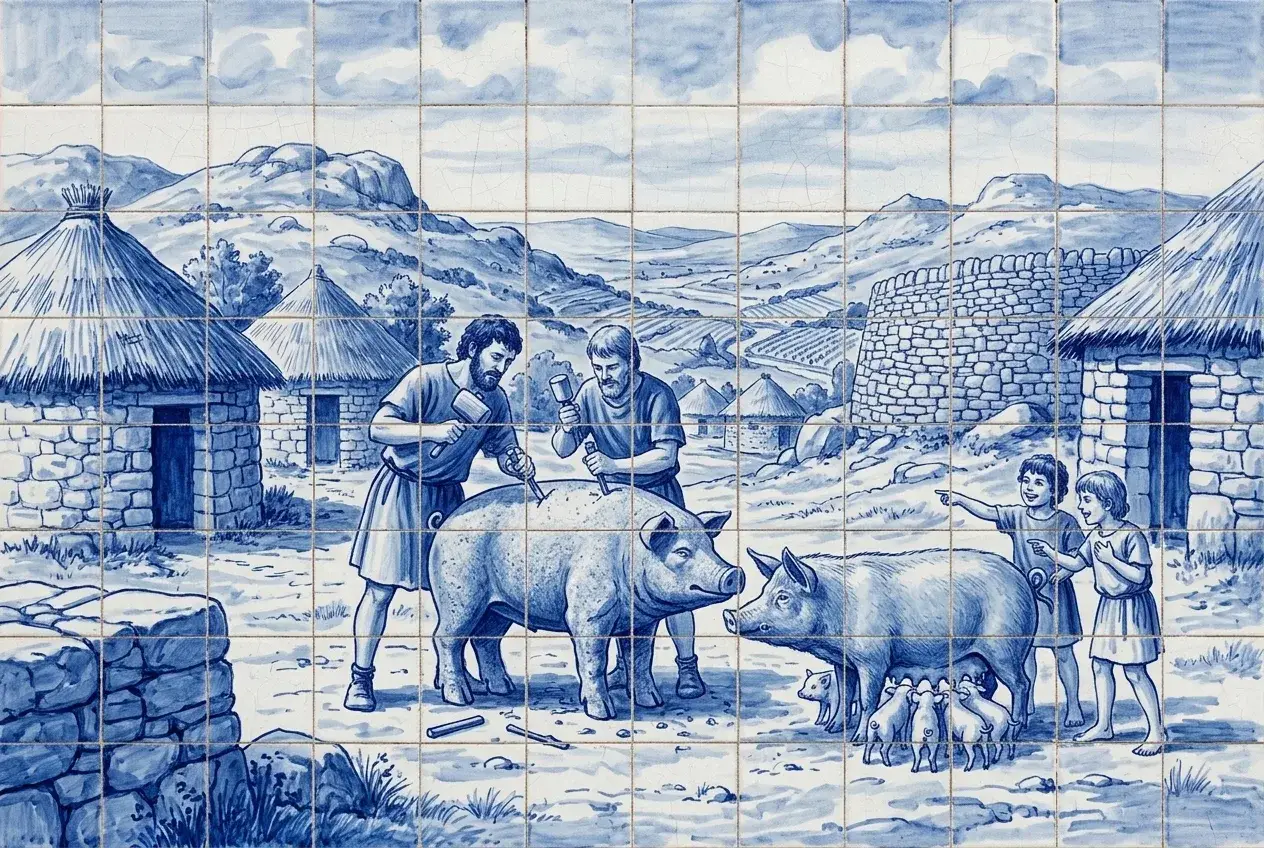
No: such animals are older than the Romans and were carved by local tribes. The Romans only added inscriptions to some. Nobody knows for sure what they were for.
Viriathus’s killers were told, “Rome does not pay traitors”
Answer
Partly
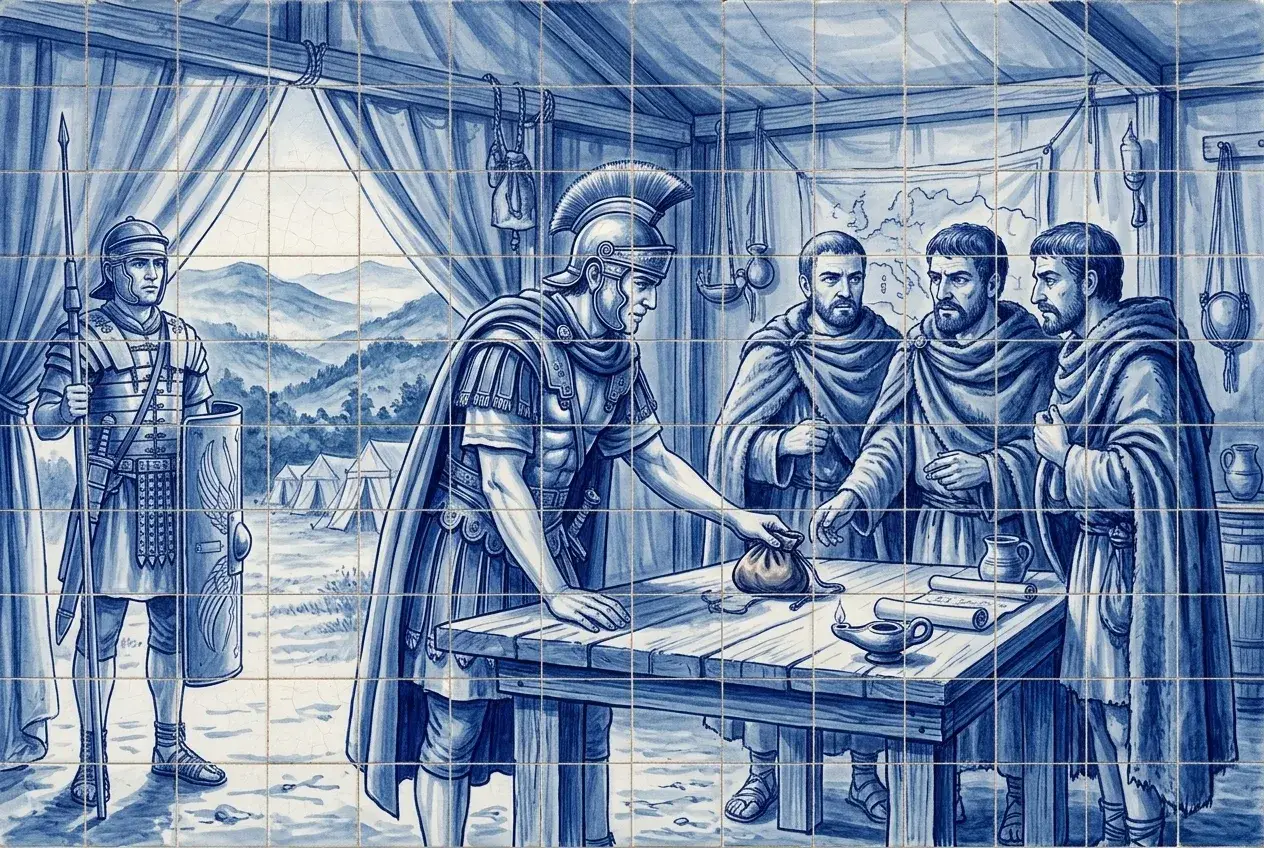
So tradition says, but Appian differs: Caepio paid them part of the money and sent them to Rome for the rest.
Lisbon’s Roman galleries are kept flooded on purpose
Answer
Fact
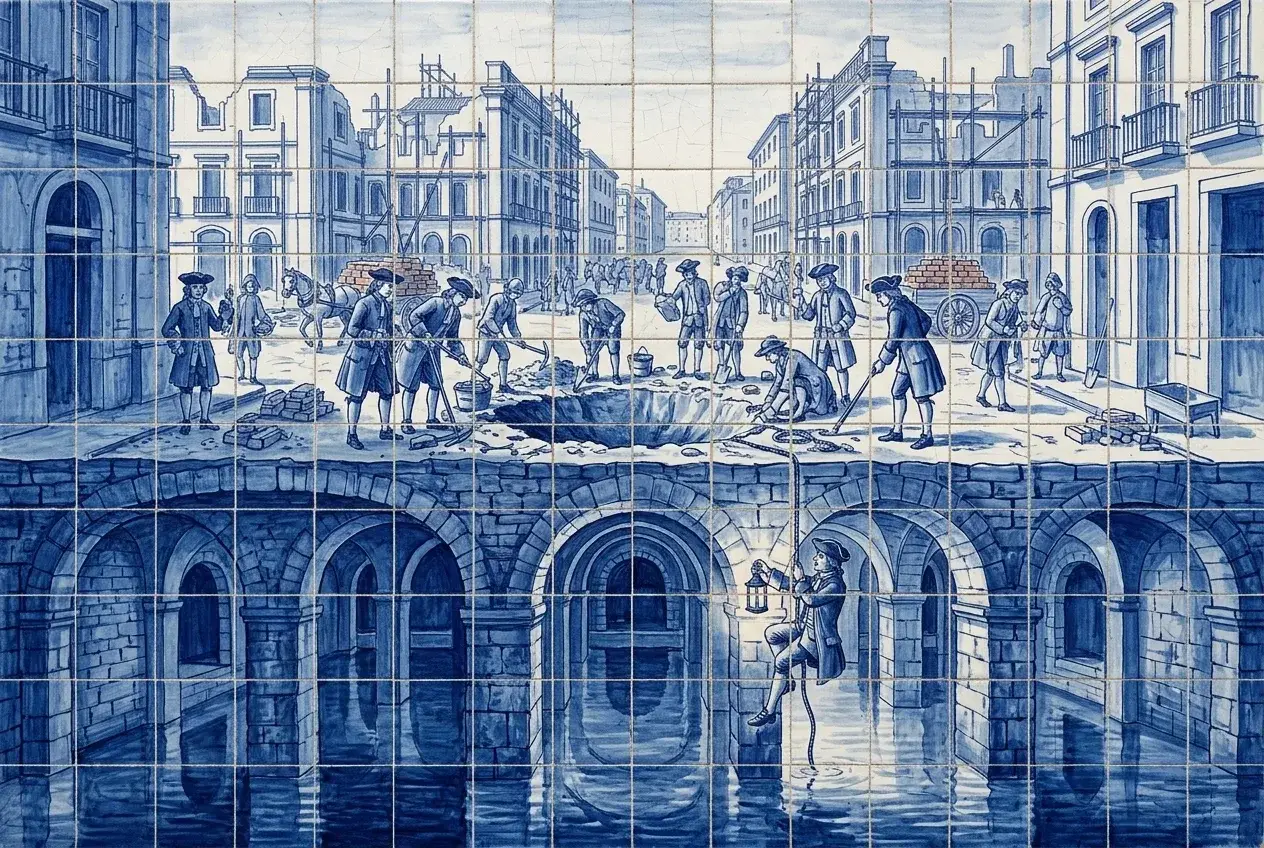
The water helps hold up the houses above, and without it the structures could suffer. So it is pumped out only twice a year.
The Roman temple in Évora is the Temple of Diana
Answer
Myth
A Portuguese priest came up with the name in the 17th century, and archaeology doesn’t support it. The temple was most likely dedicated to Emperor Augustus.
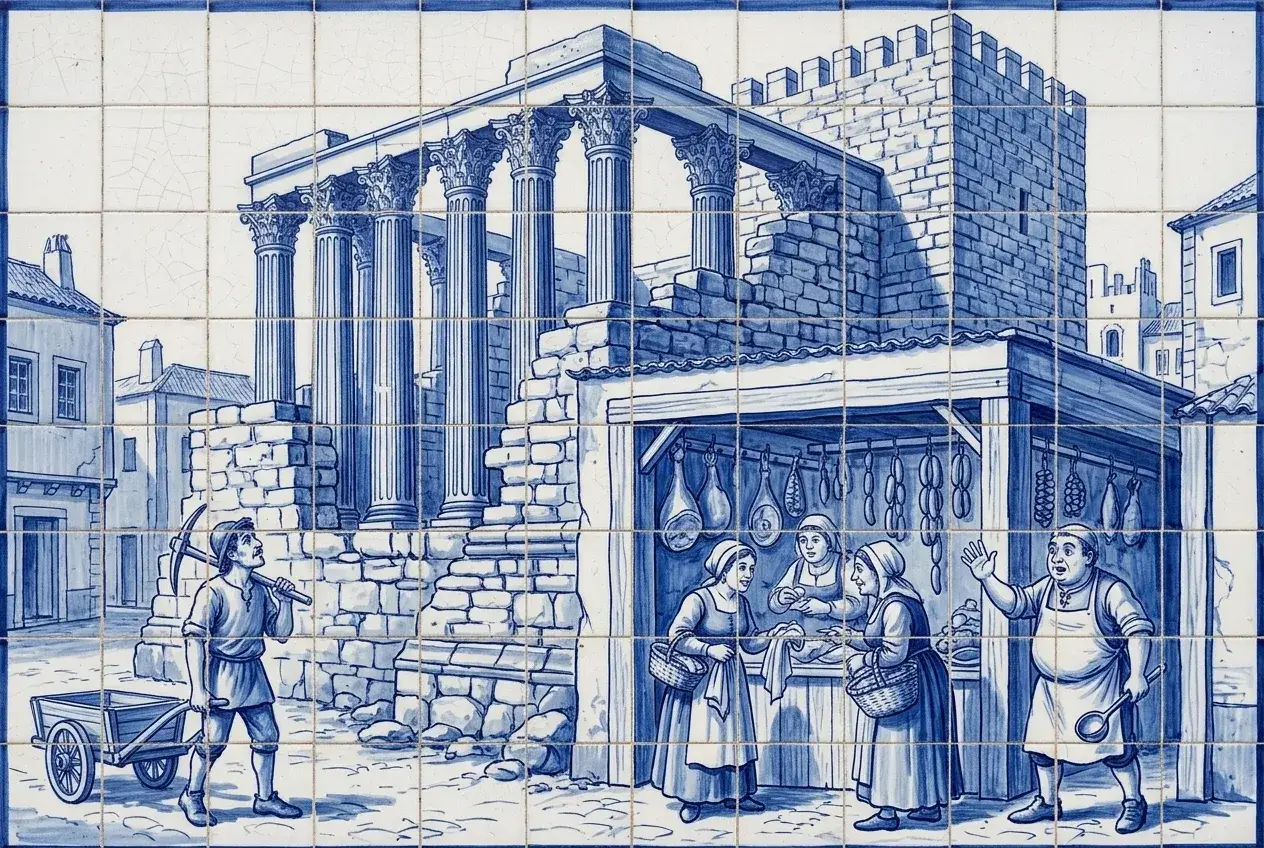
Under a Lisbon bank lies a Roman fish sauce factory
Answer
Fact
Yes: in 1991, during the bank’s renovation, workers found Roman vats for fish and garum sauce. The find was not buried again, and it is now a museum.
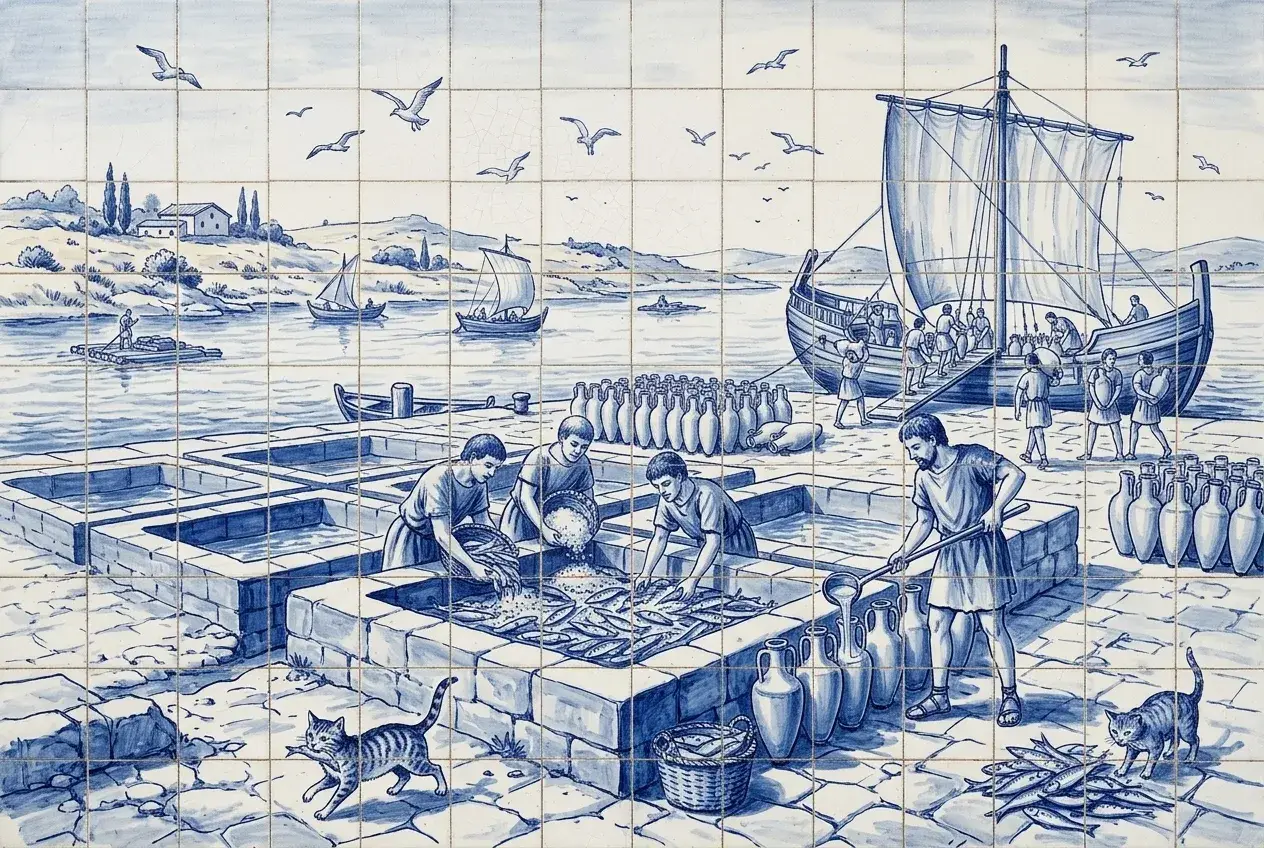
In the Roman baths, women paid twice what men did
Answer
Fact
By the law on the bronze tablets of Vipasca, a man paid half a coin and a woman a whole one. Historians argue over why.
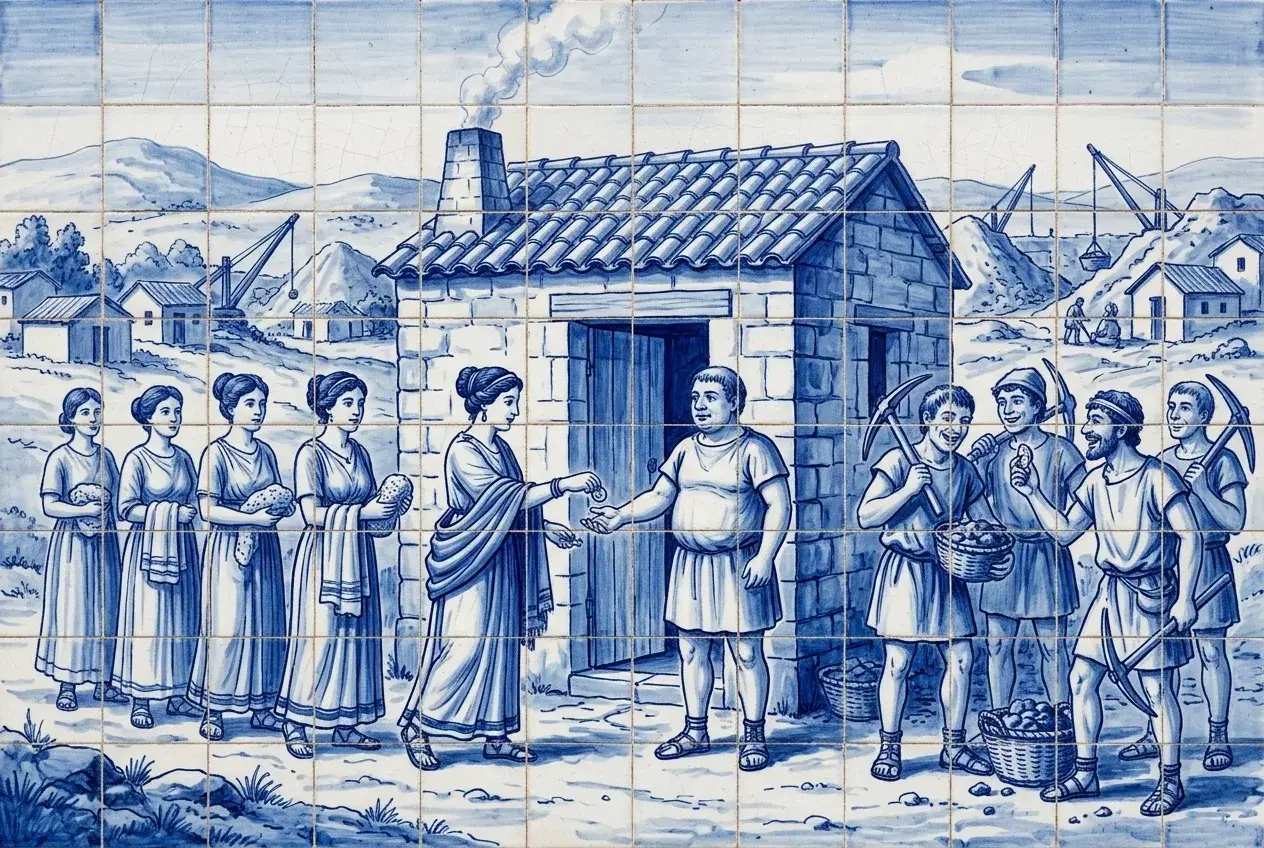
The people of Chaves paid for their Roman bridge themselves
Answer
Fact
Yes: a column in the middle of the bridge says the citizens of Aquae Flaviae built the stone bridge at their own expense.
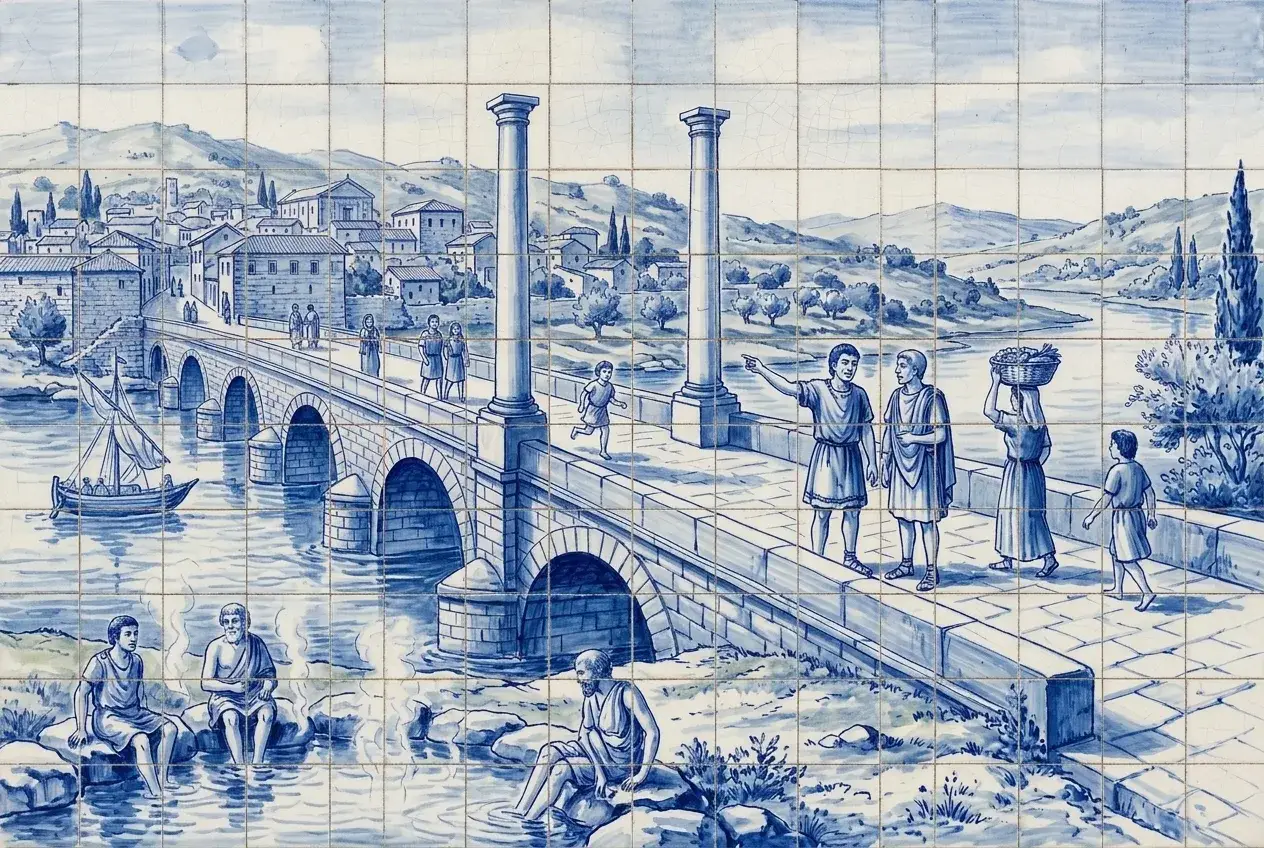
At Aljubarrota, French knights rode straight into wolf pits
Answer
Partly
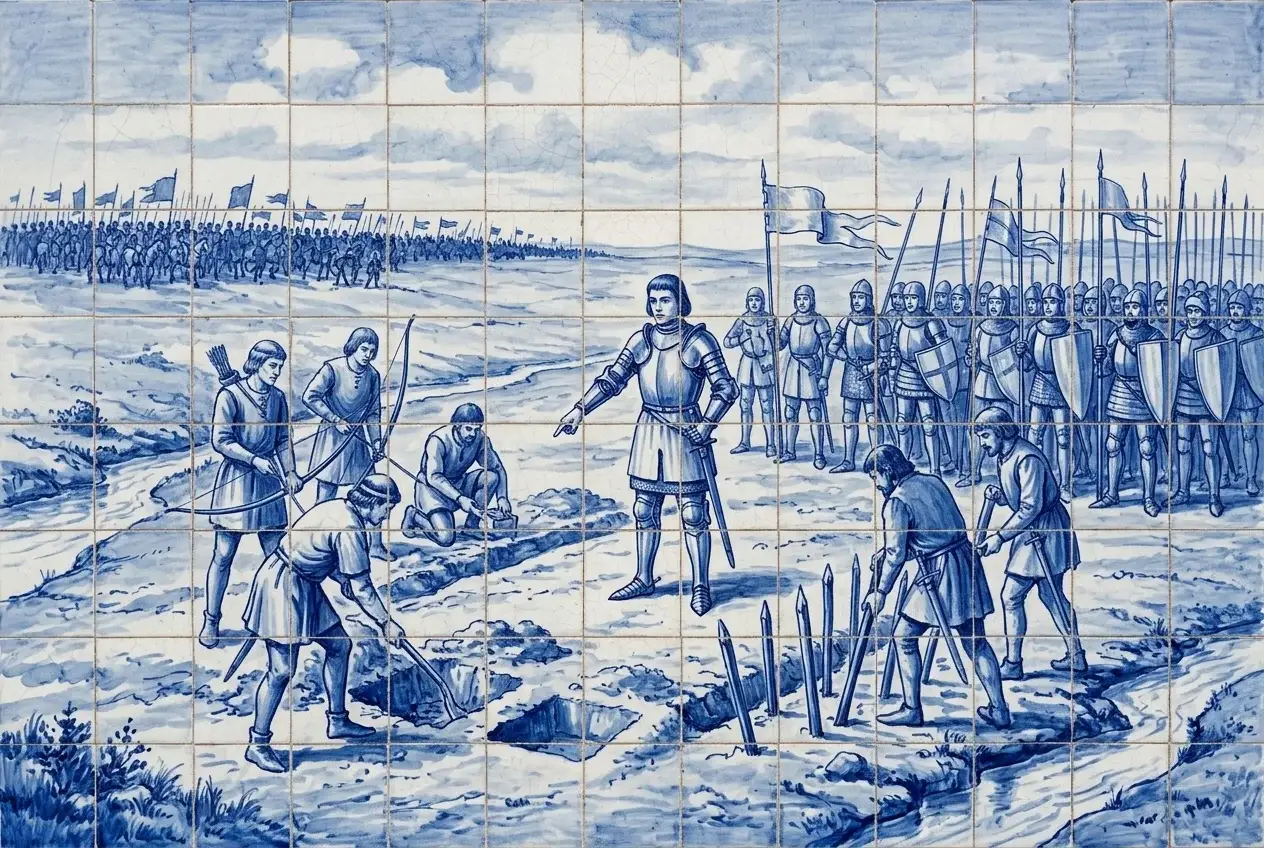
So Froissart writes. Neither Ayala, an eyewitness, nor Fernão Lopes, writing sixty years later, describes the pits. It is the account of a single source.
Porto’s people are “tripe eaters” because they gave the fleet their meat
Answer
Partly
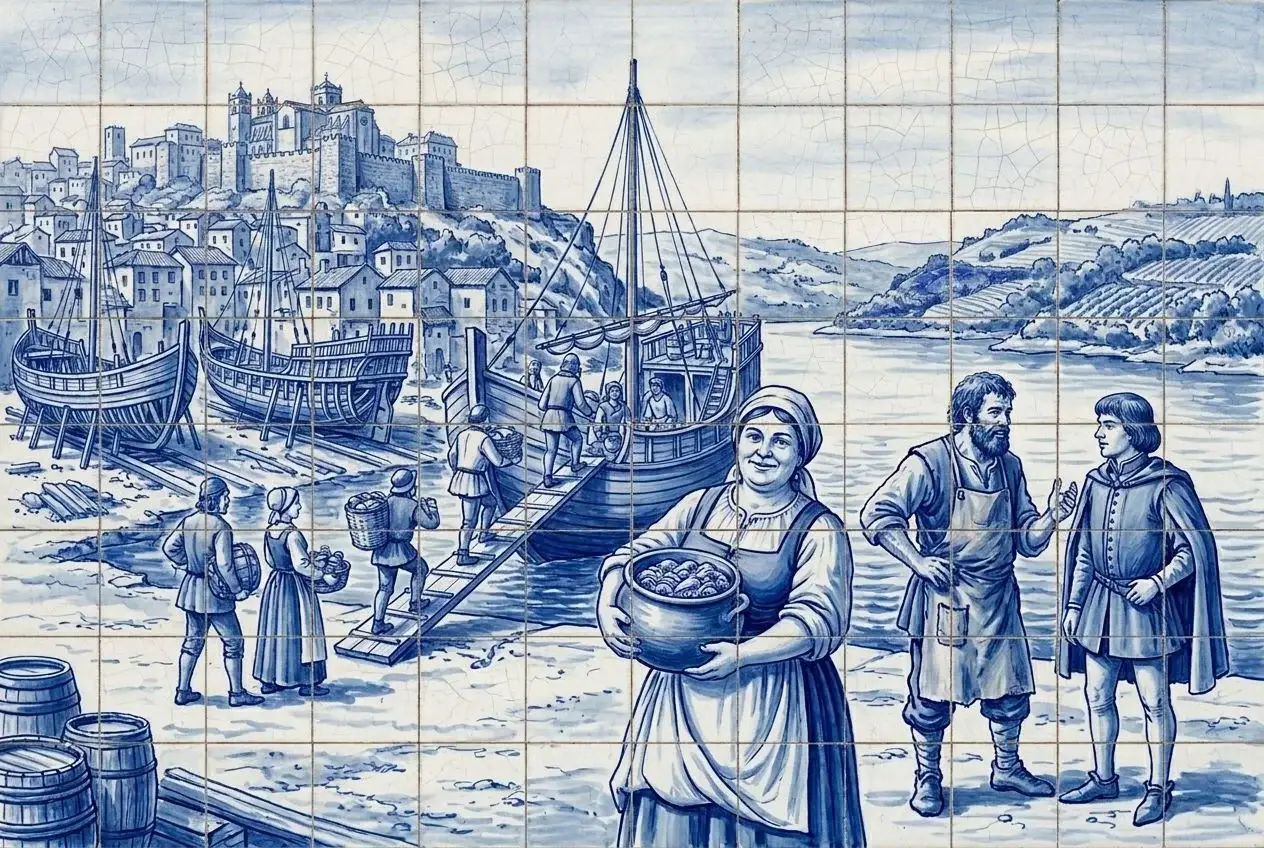
So the legend of 1415 goes. The chronicles don’t mention it, and by another version the nickname is thirty years older. The dish is real.
Nobody could return from beyond Cape Bojador
Answer
Myth
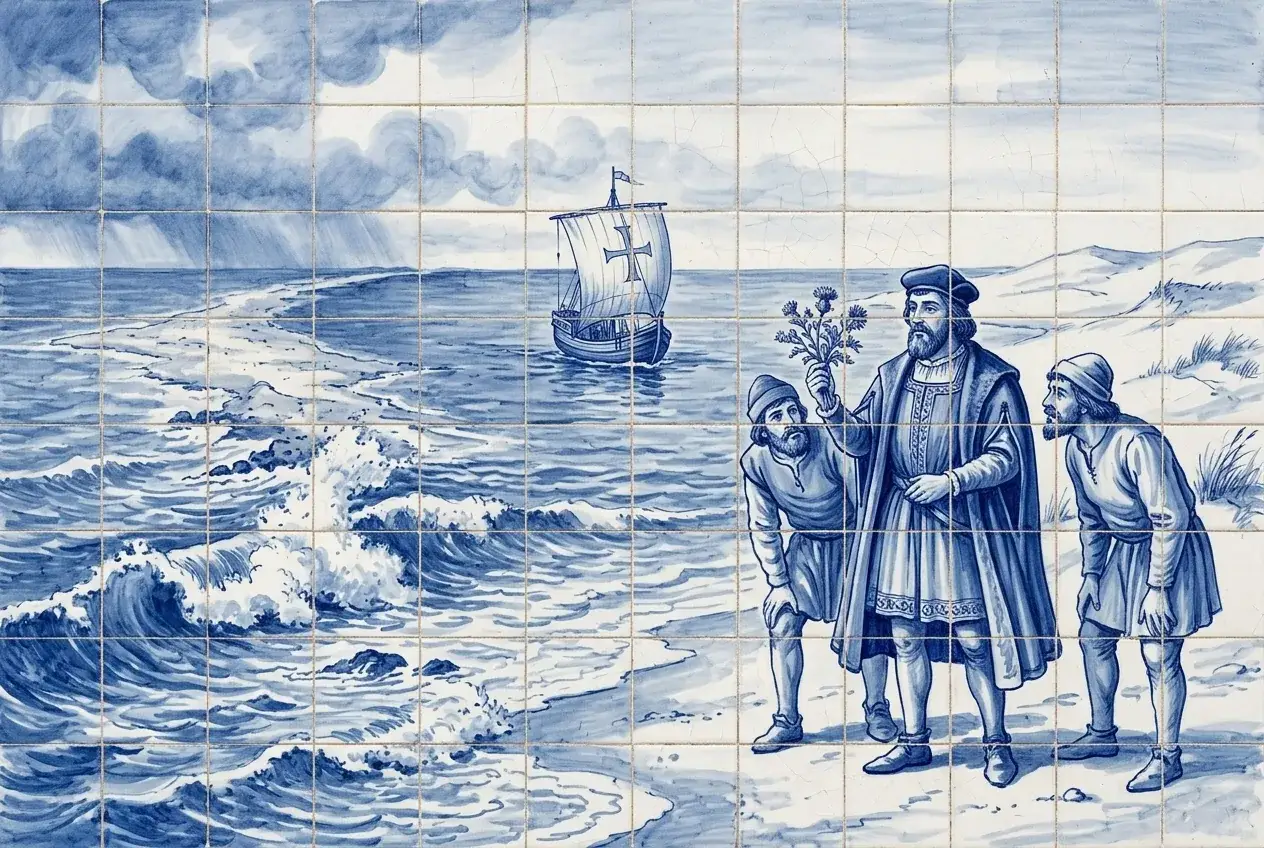
The fear was an invention: in 1434 Gil Eanes rounded the cape, came back alive and brought “roses of Saint Mary.” They say he simply sailed farther out to sea.
Cabral took Brazil for an island
Answer
Fact
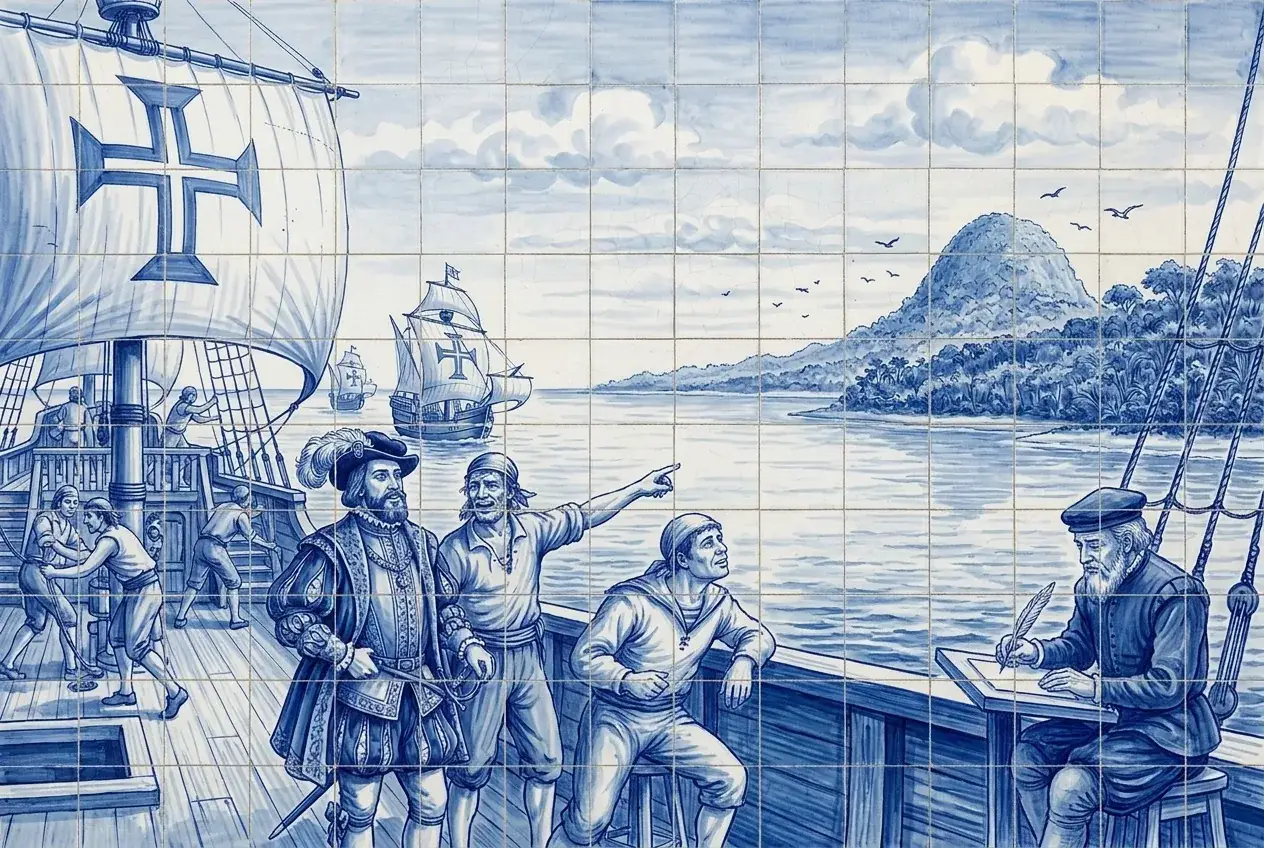
Yes: Cabral took the new land for an island and named it the Island of the True Cross. The first thing the sailors saw was a mountain, Monte Pascoal.
Portugal’s secret map of the world was found in a butcher shop
Answer
Fact
In 1859 a revolt looted the palace, and the library’s director found the Cantino map in a butcher shop, pasted onto a screen.
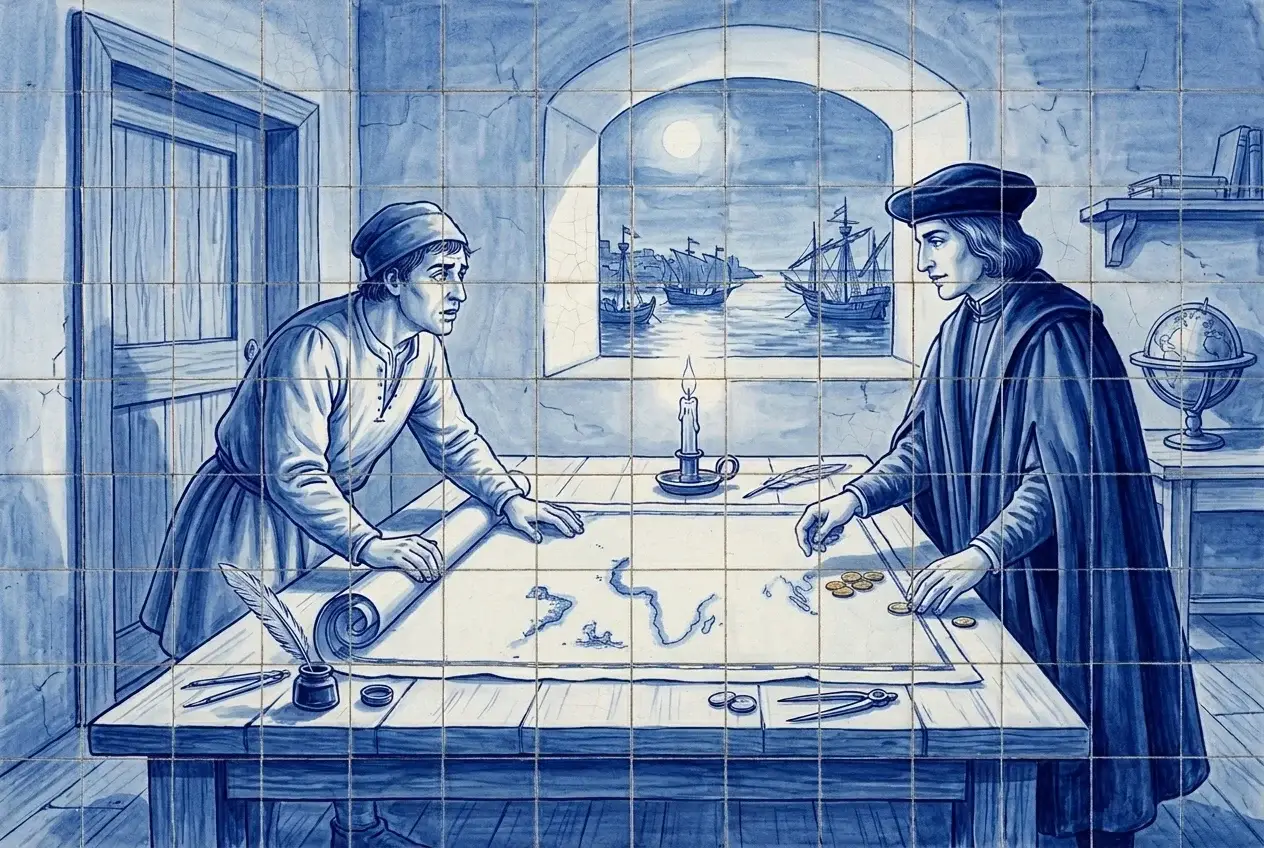
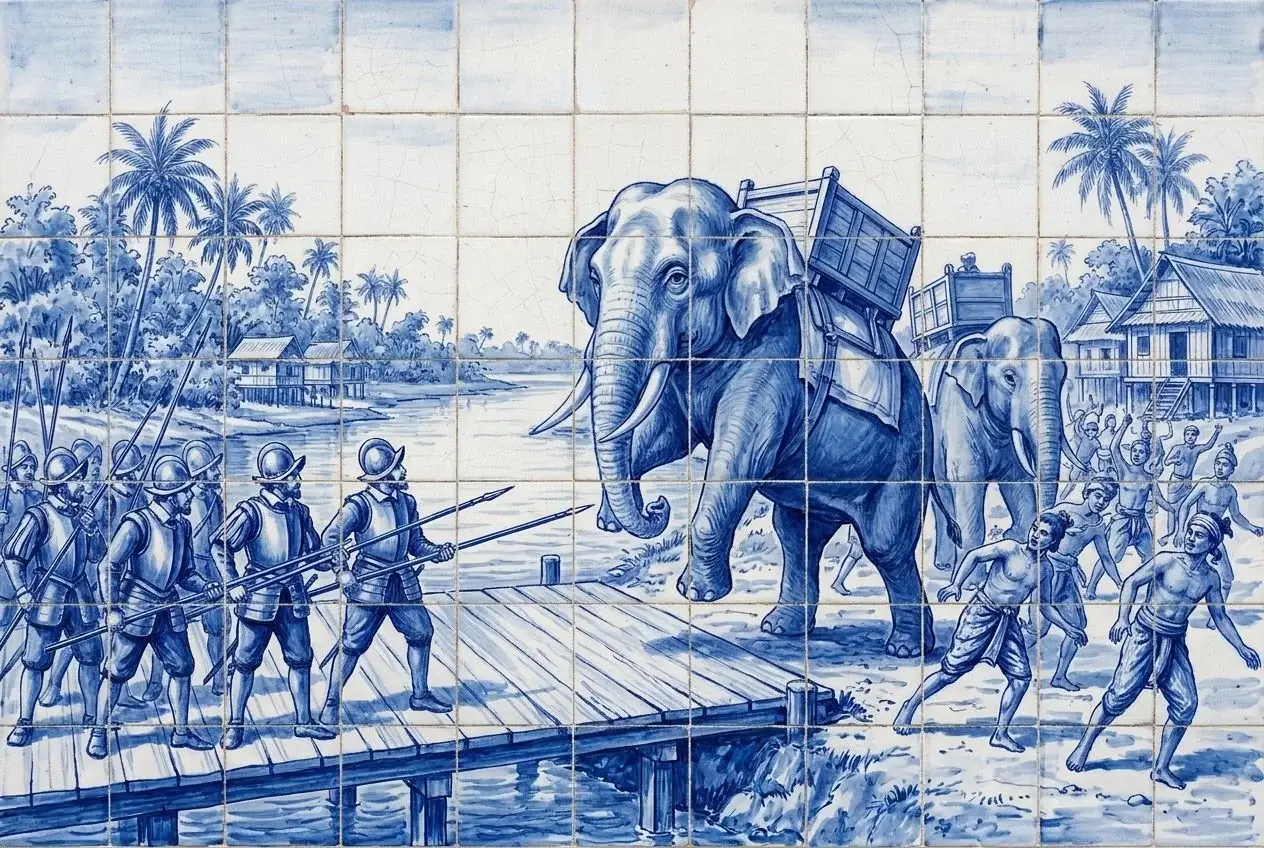
The sultan of Malacca’s war elephants turned on his own army
Answer
Fact
The Portuguese met them with spears. A wounded elephant turned back, and the rest trampled their own side in panic. Sources disagree on the numbers.
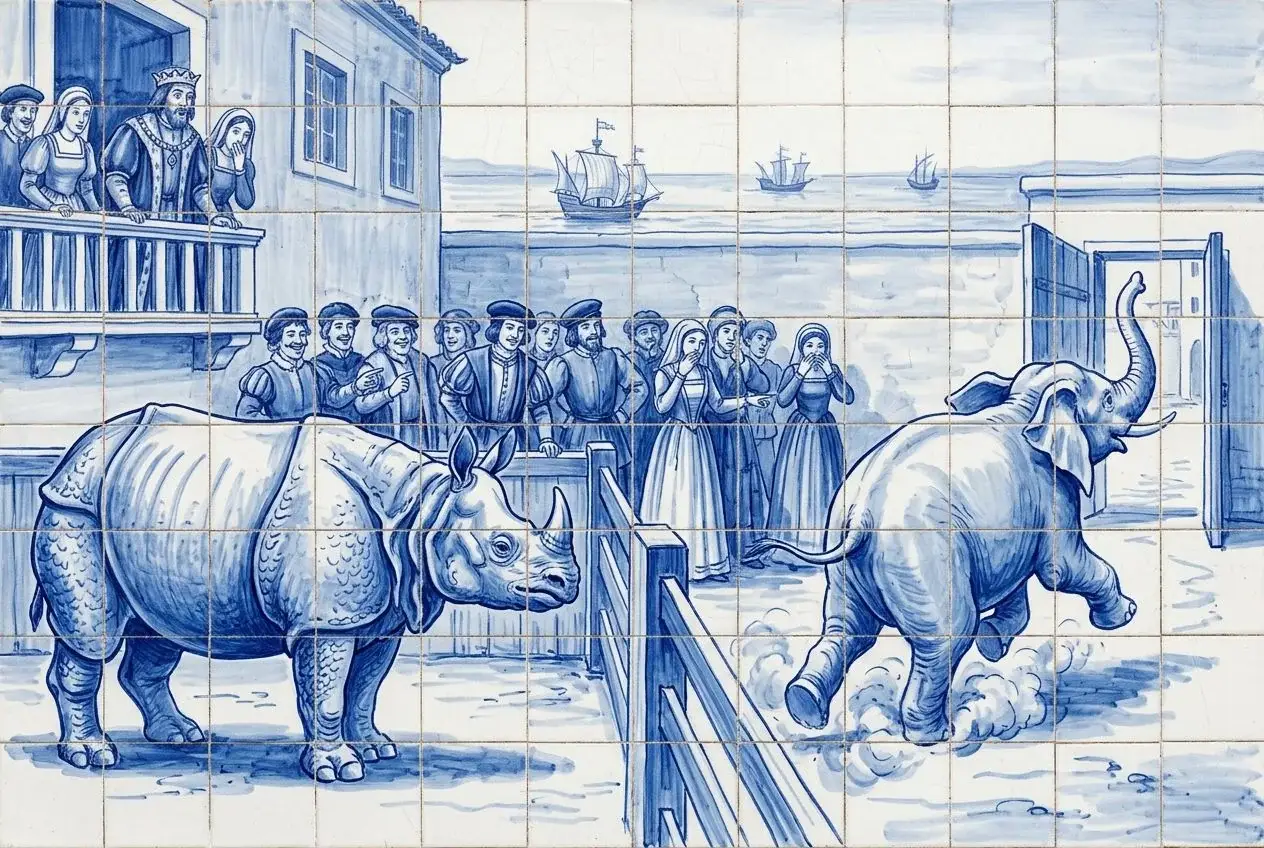
Dürer drew his famous rhinoceros from life
Answer
Myth
No: Dürer never saw the rhinoceros. He worked from a sketch and a merchant’s description, hence the extra horn on the animal’s shoulder.
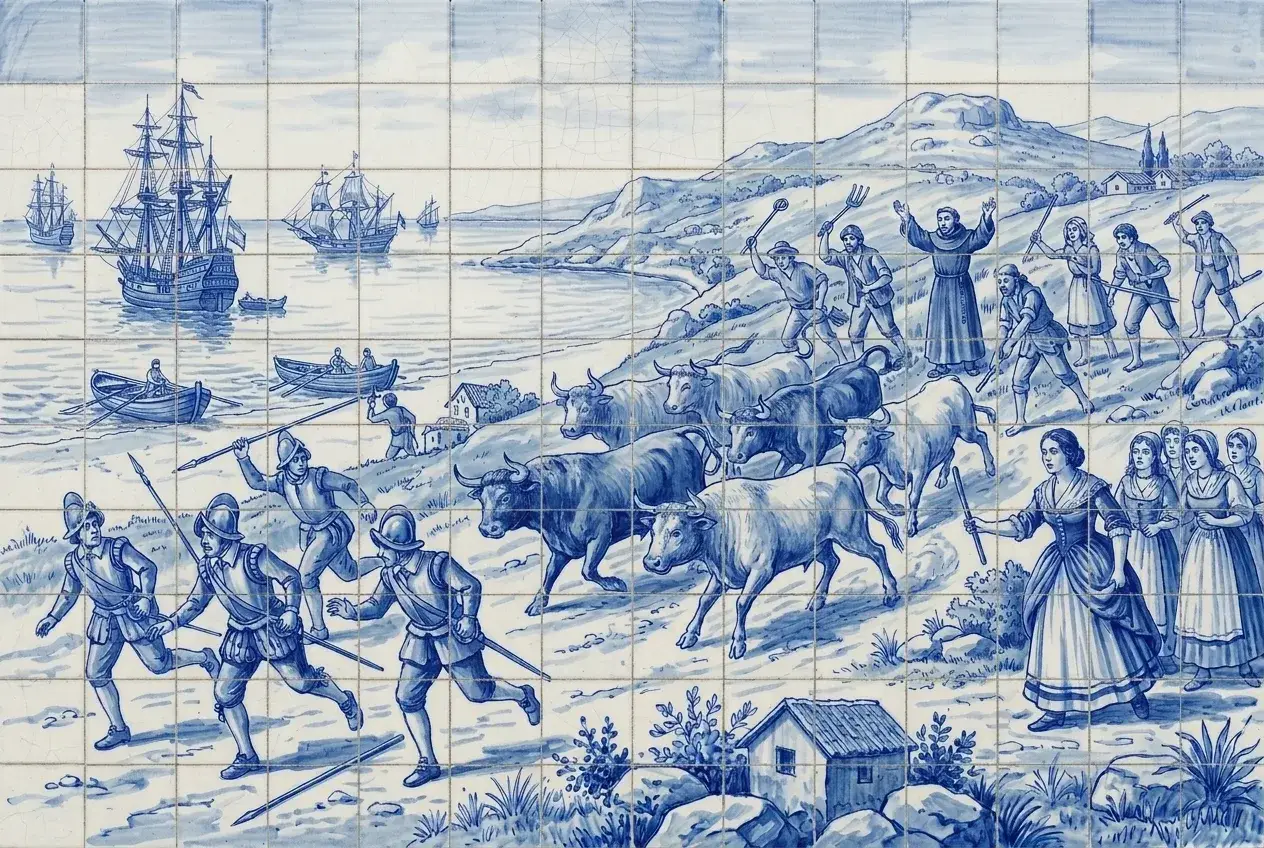
Islanders beat back a Spanish landing with a herd of bulls
Answer
Fact
In 1581 on Terceira, a monk named Pedro proposed sending the bulls at the enemy. Their line broke, and the Spanish fled to their boats.
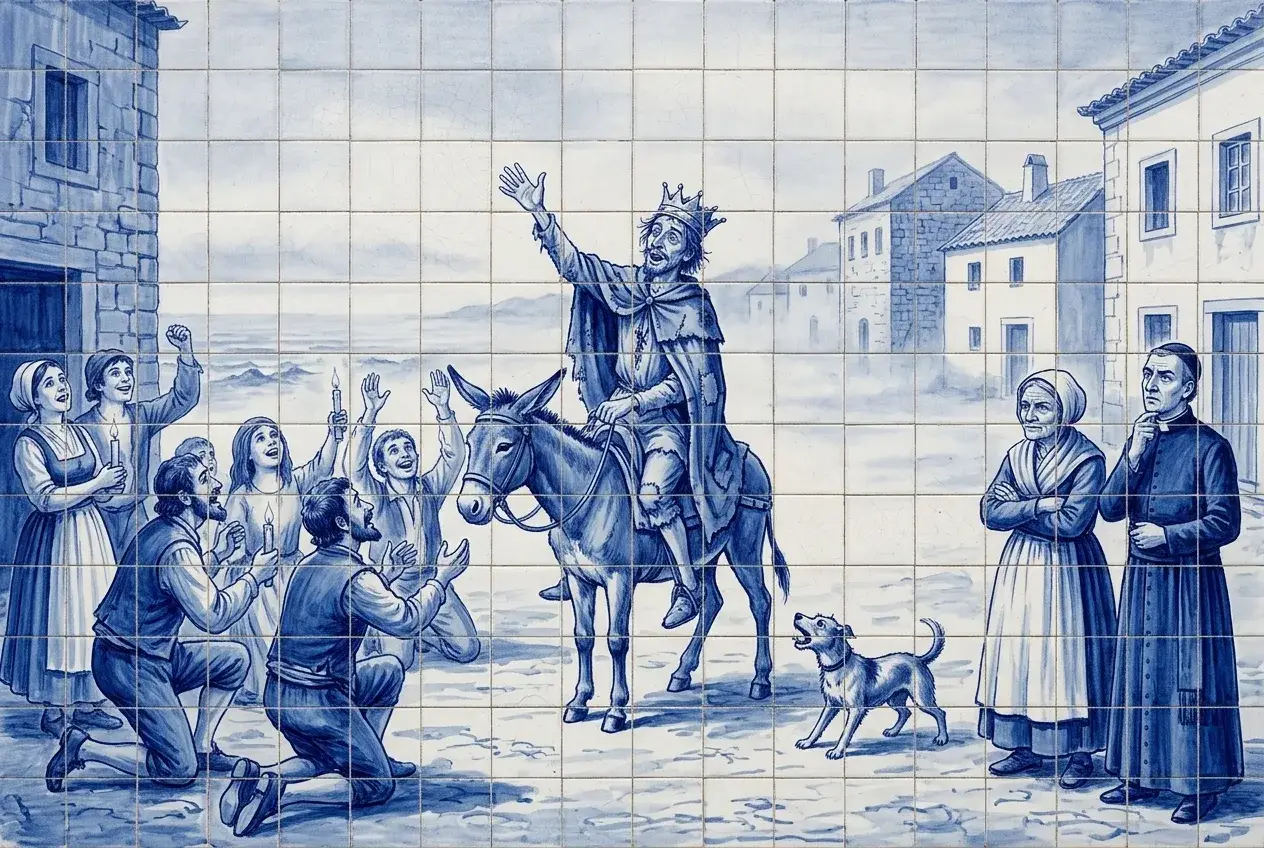
A pastry cook posed as the lost King Sebastian, and was believed
Answer
Fact
Yes: the pastry cook of Madrigal fooled even a nun of royal blood, Sebastian’s cousin. He was exposed, like the other impostors.
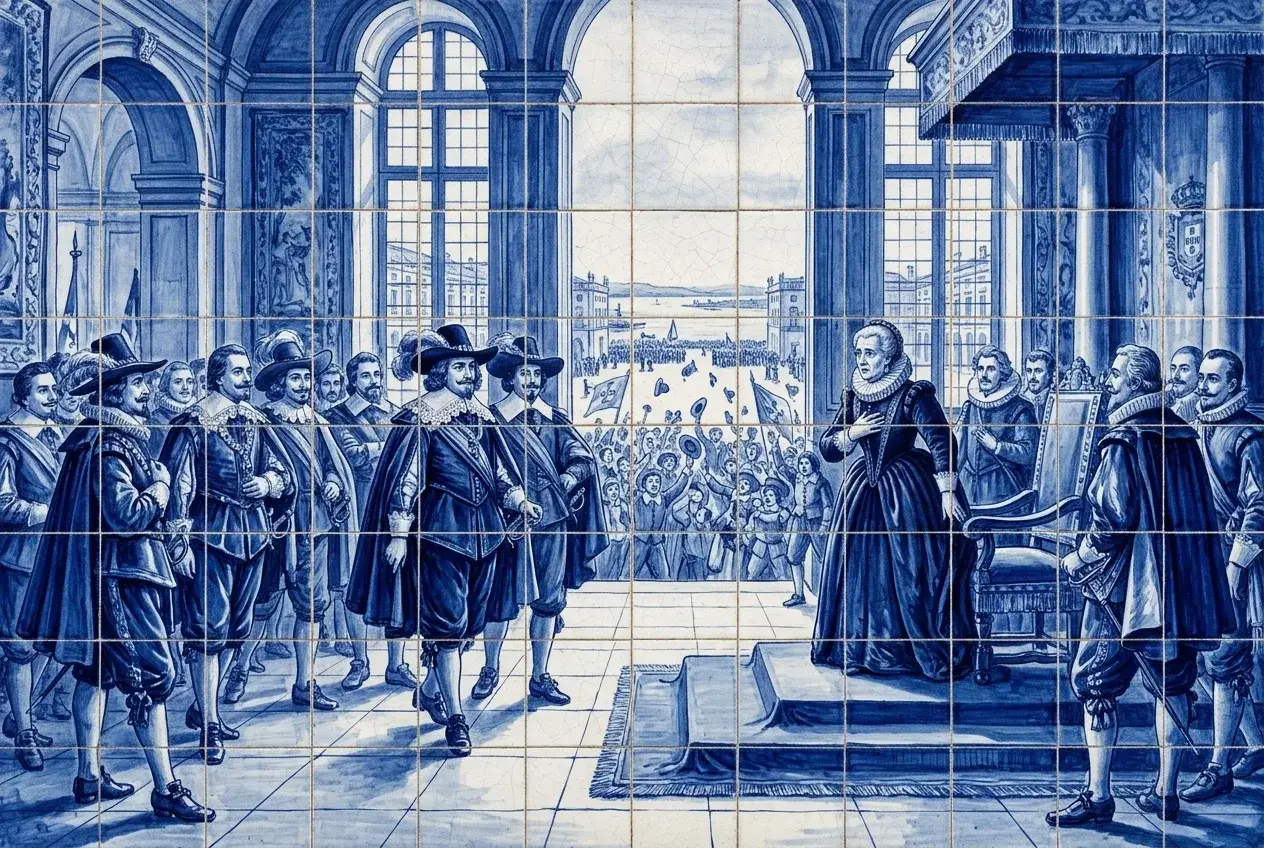
Portugal became independent in a single morning, on December 1, 1640
Answer
Partly
Power changed hands in a morning: the conspirators arrested the Spanish regent and proclaimed John IV. But the war with Spain lasted another 28 years.
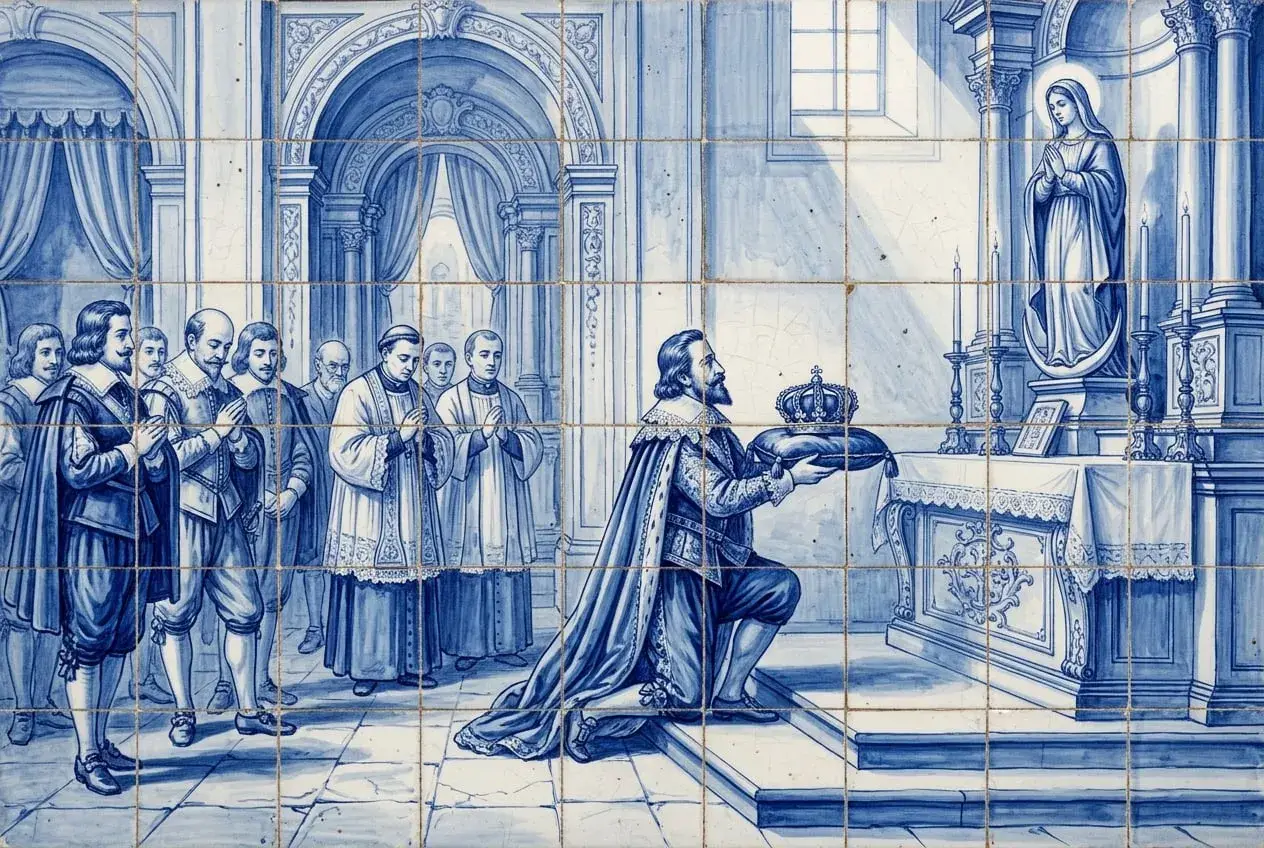
Portugal’s kings were not crowned after 1646
Answer
Fact
So it is believed: King John IV offered his crown to the Virgin Mary, and later kings were only proclaimed, with the crown laid beside them on a cushion.
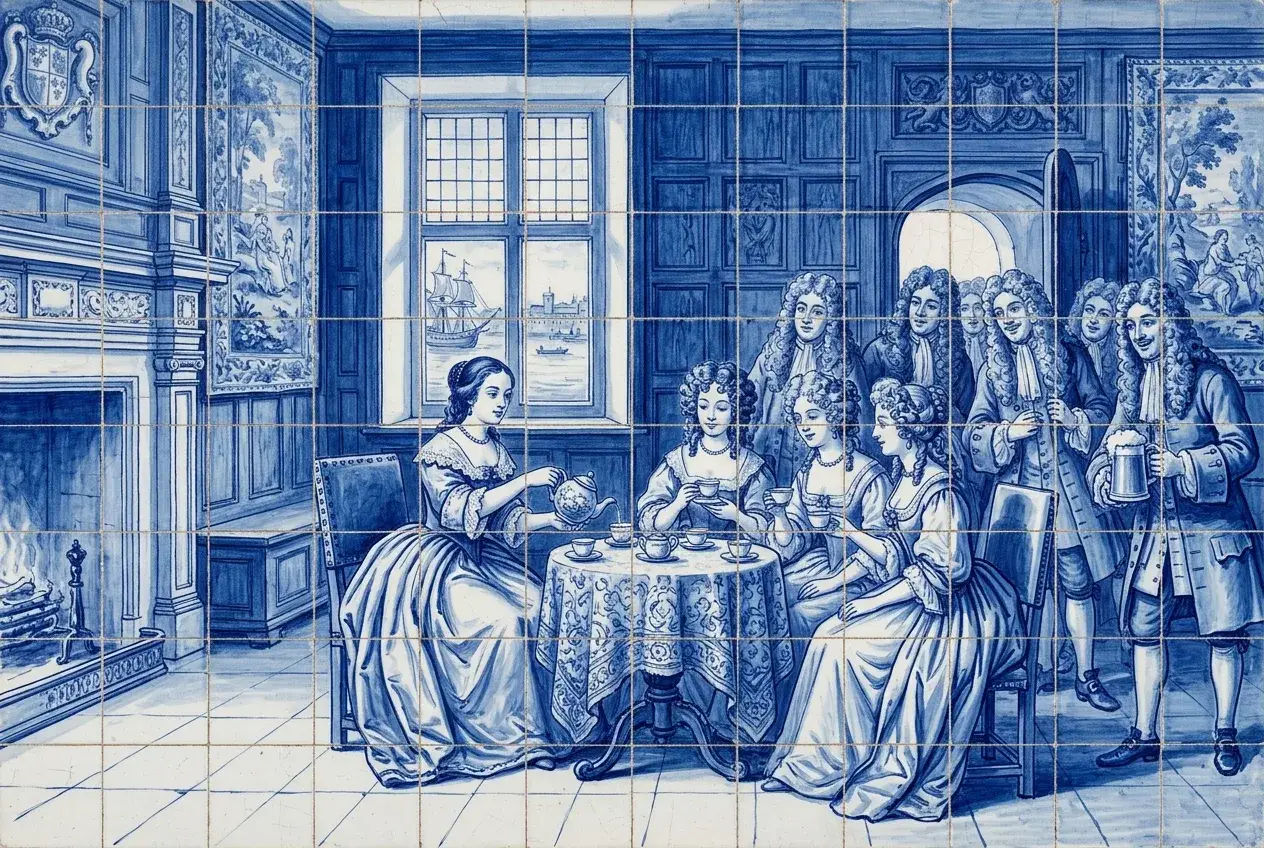
A Portuguese princess made tea fashionable in England
Answer
Fact
Catherine of Braganza, who became queen of England, drank tea every day, and the court followed her. Tea was already sold in London, but she made it fashionable.
The cod for bacalhau is caught off the coast of Portugal
Answer
Myth
Cod lives in the cold northern seas. The Portuguese sailed to Newfoundland for it, and today most bacalhau in Portugal is Norwegian.
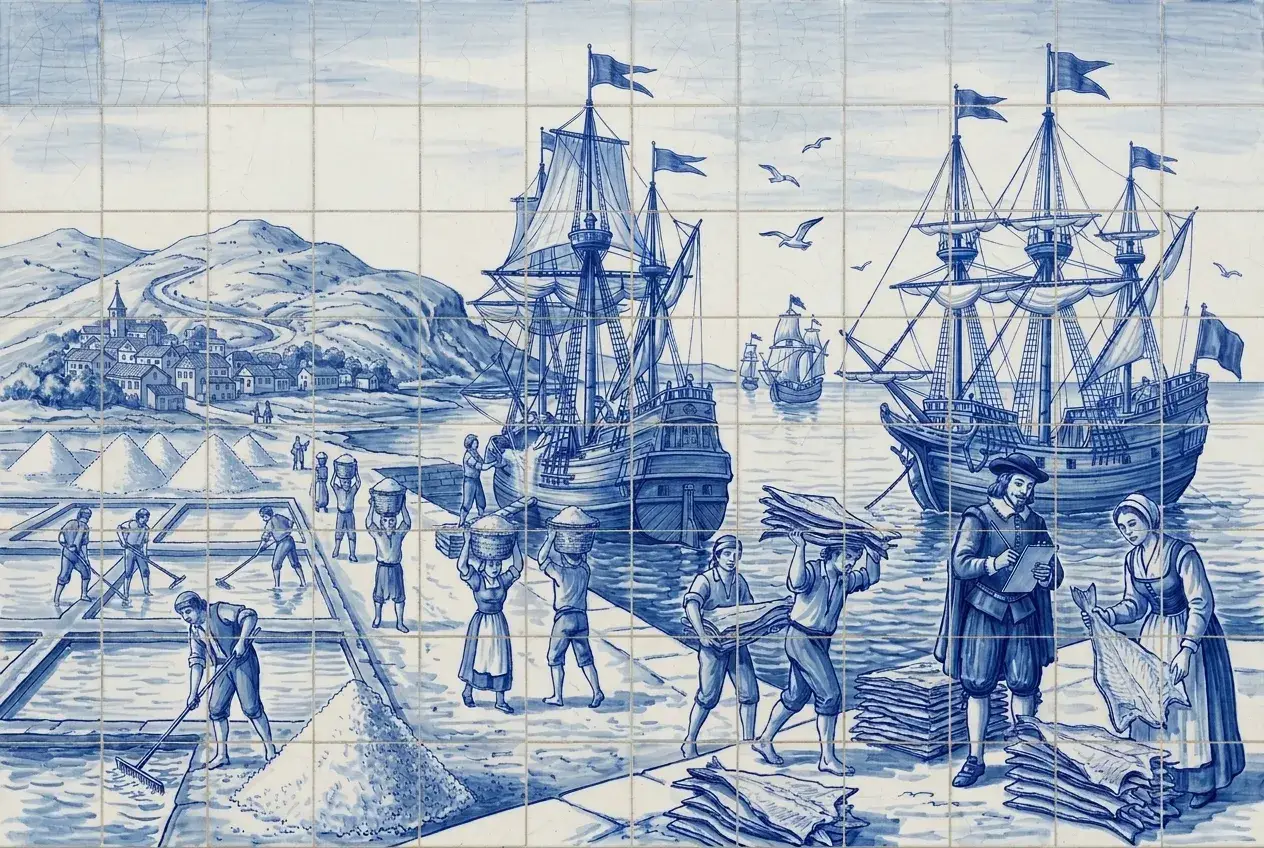
Franciscans, sworn to poverty, covered their own church in gold
Answer
Partly
It is their church, but the Third Order paid for the carving, a brotherhood of rich lay merchants. By some accounts about 400 kilograms of gold went into it.
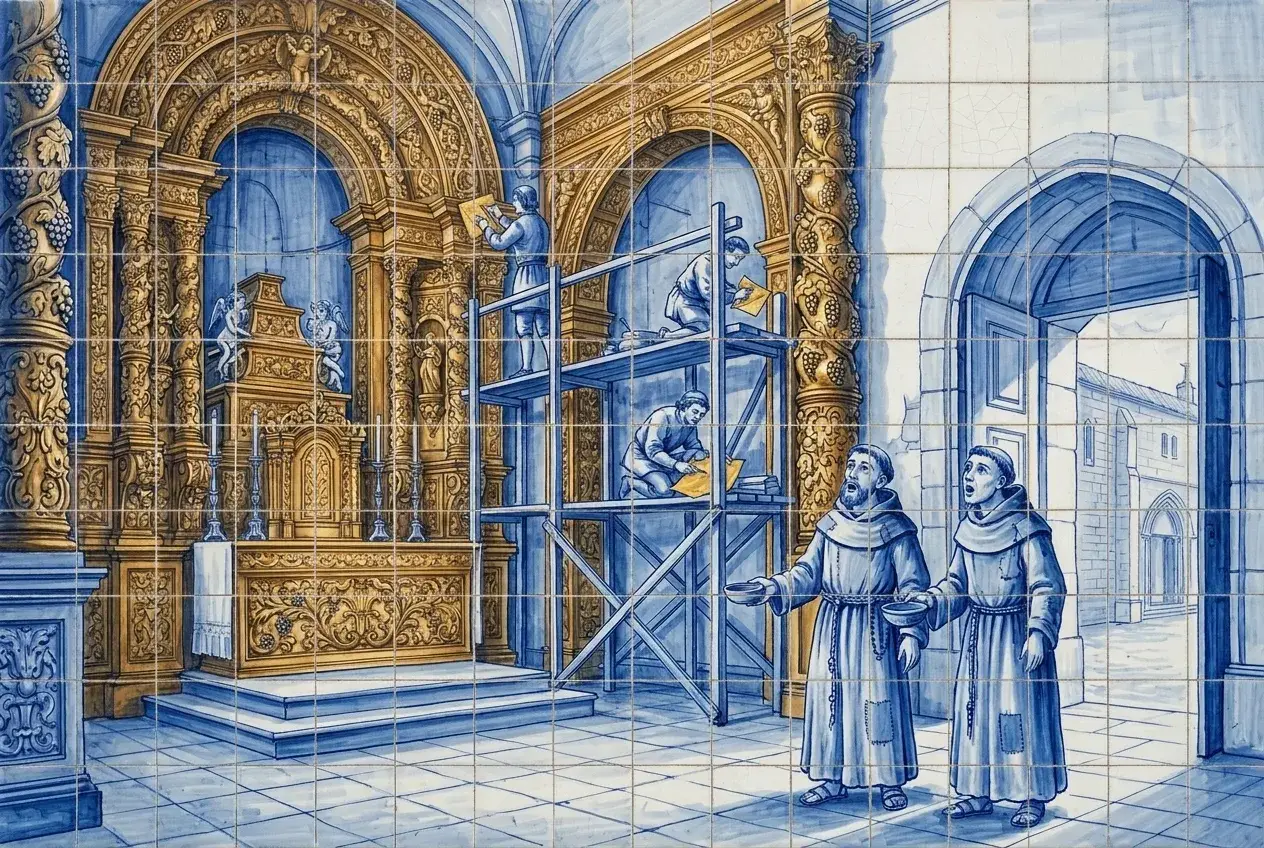
The bells of Mafra are tuned to play melodies
Answer
Fact
Yes: nearly a hundred bells were ordered from Flanders and chosen by tone, like one huge instrument. By tradition, the king doubled the price himself.
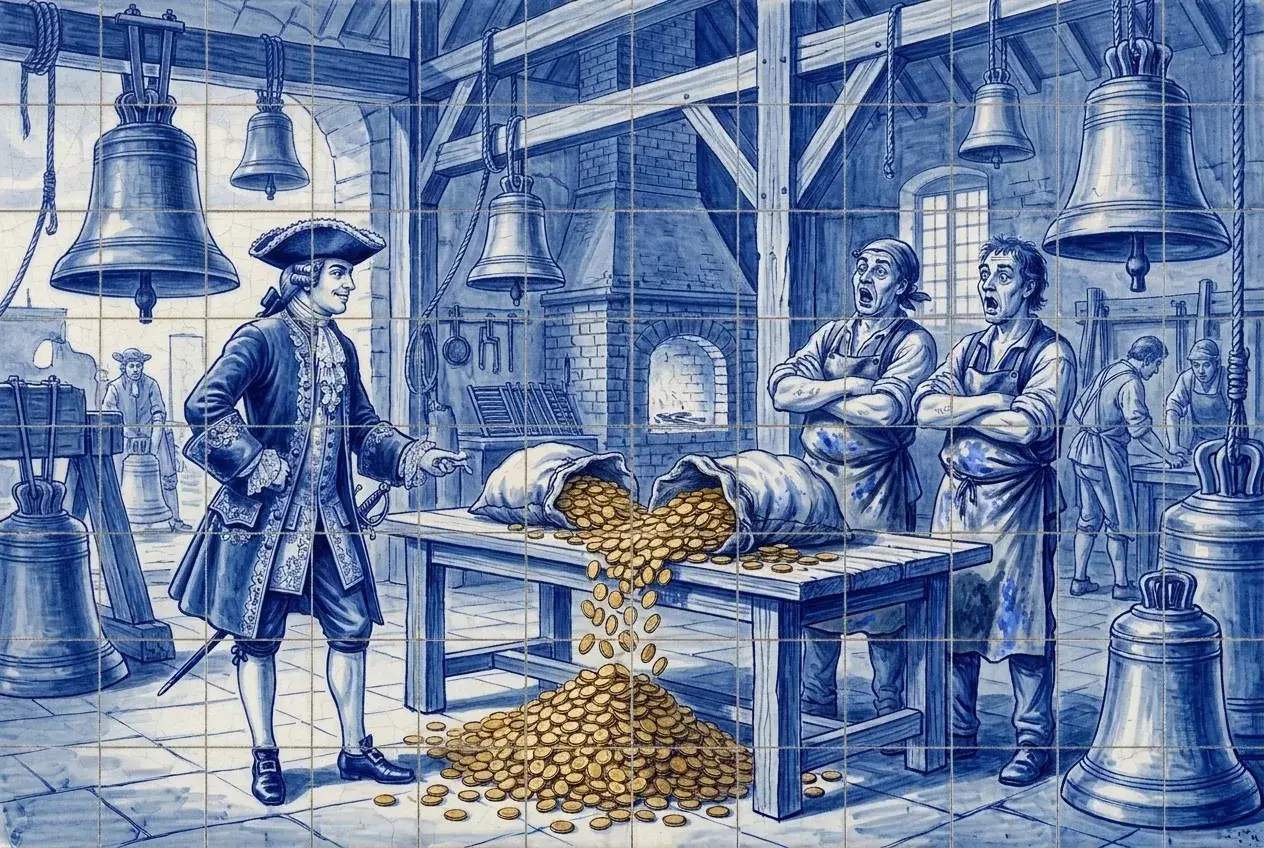
Students were jailed beneath Coimbra’s gilded library
Answer
Fact
Yes: the university tried its own people, and until 1834 the jail under the library held students and even professors, briefly, for misconduct.
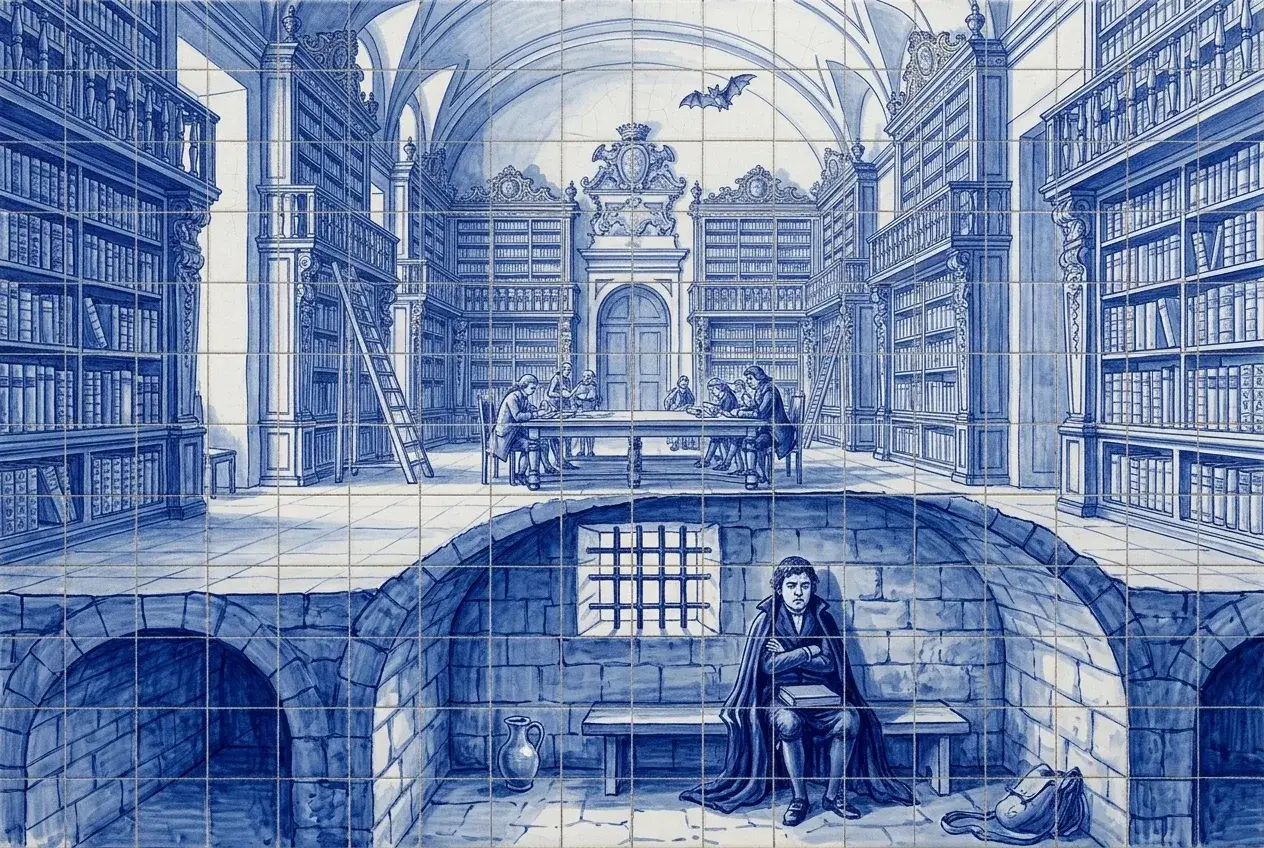
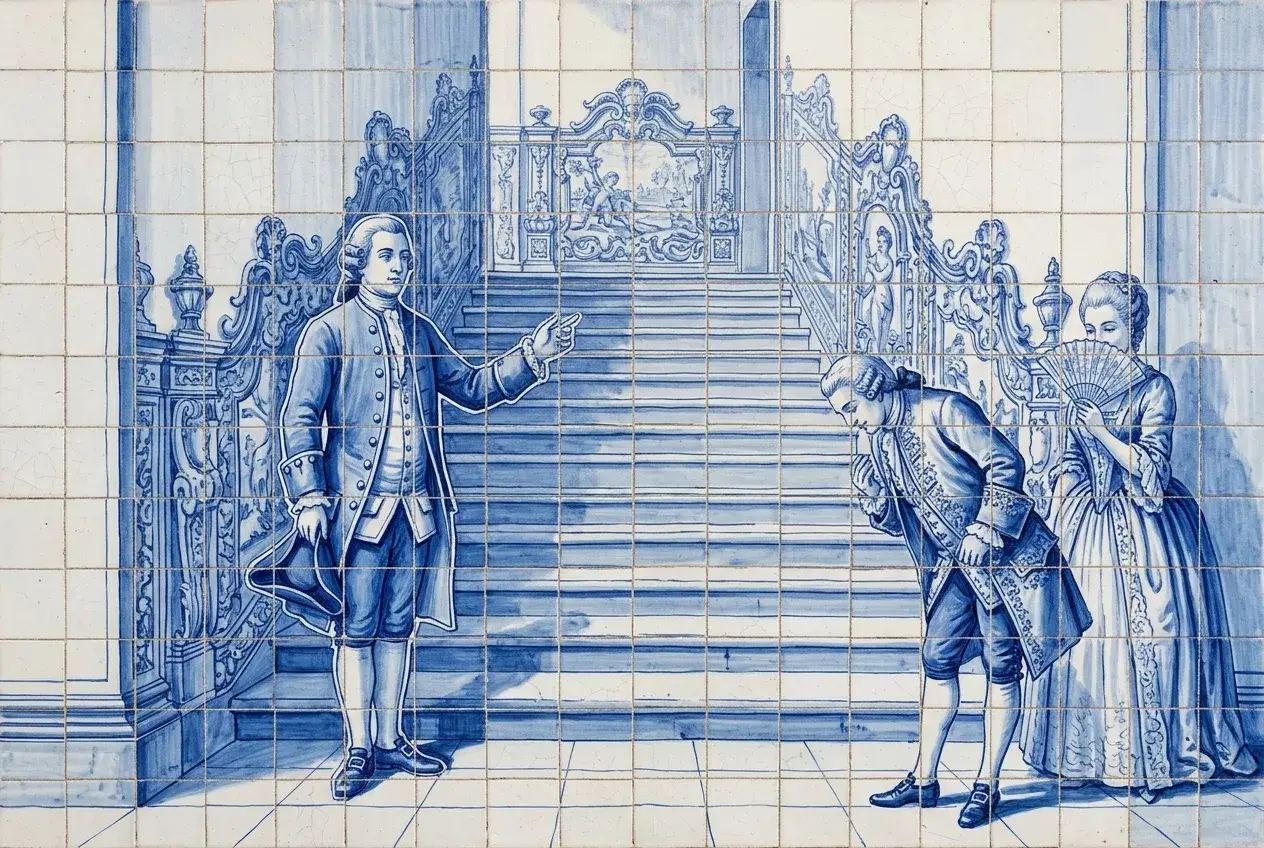
Lisbon’s palaces had servants made of tile standing by the stairs
Answer
Fact
Yes, these are figuras de convite, “welcome figures”: life-size tile footmen and ladies greeted guests at the entrance and on the stairs.
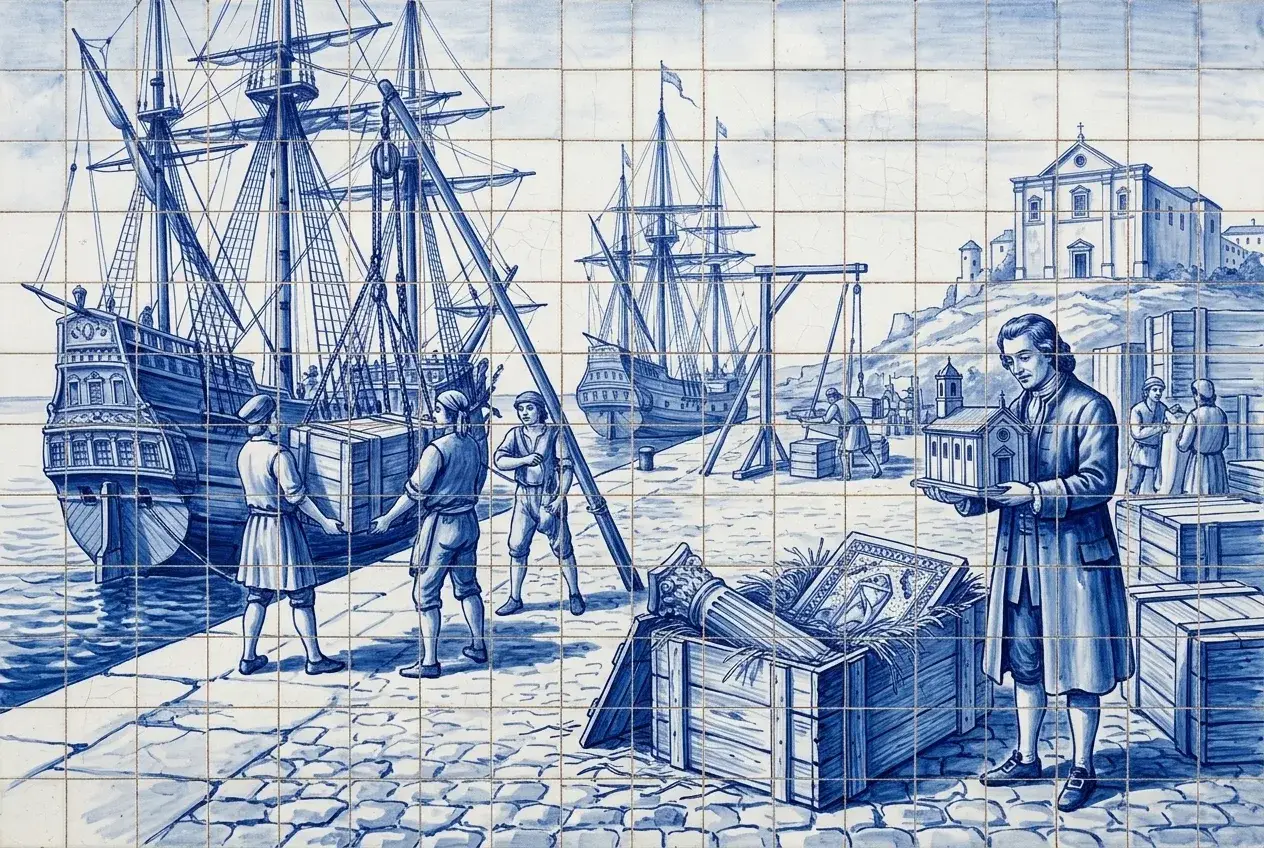
A chapel was built in Rome, taken apart and shipped to Lisbon
Answer
Fact
Yes: the finished chapel was blessed by the pope, then taken apart into 174 pieces. Three ships carried them to Lisbon, where it was put together again.
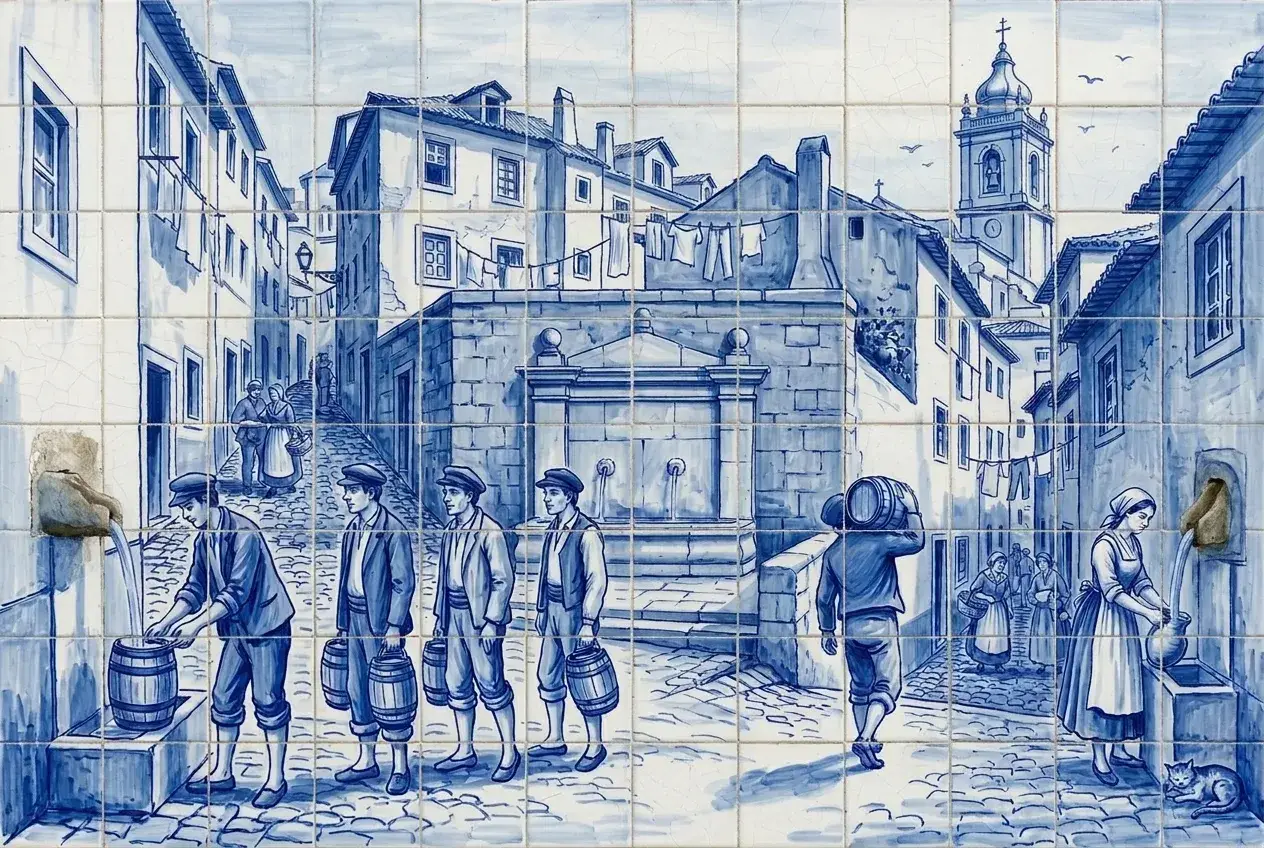
For centuries, Spaniards carried water to Lisbon’s homes
Answer
Fact
Mostly Galicians from northern Spain: a barrel on the shoulder, from the public fountain to the customer’s door, until piped water arrived.
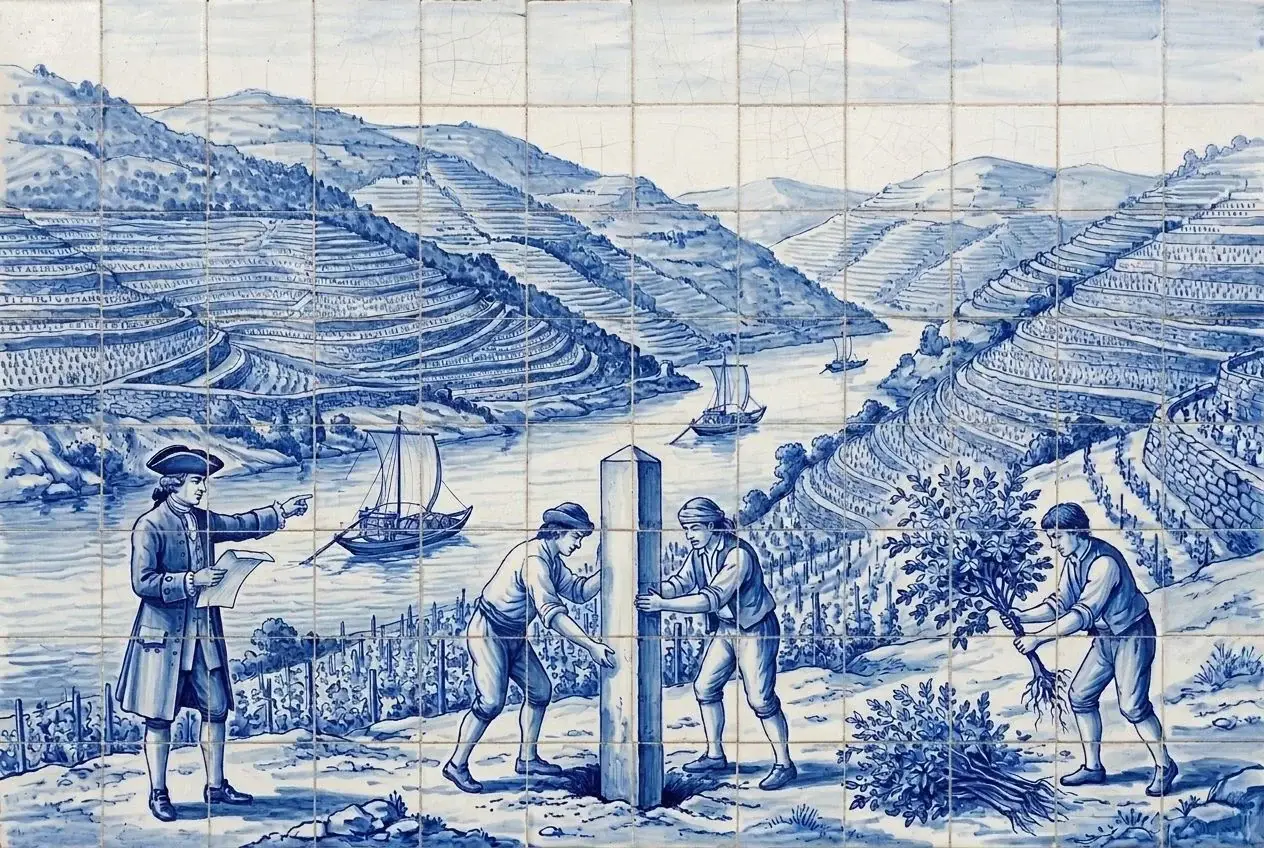
18th-century port wine was dyed with elderberry juice
Answer
Fact
Yes: when there was too much wine, the weak wine was colored with elderberry so it looked thick and dark. Later the elder trees in the valley were pulled out.
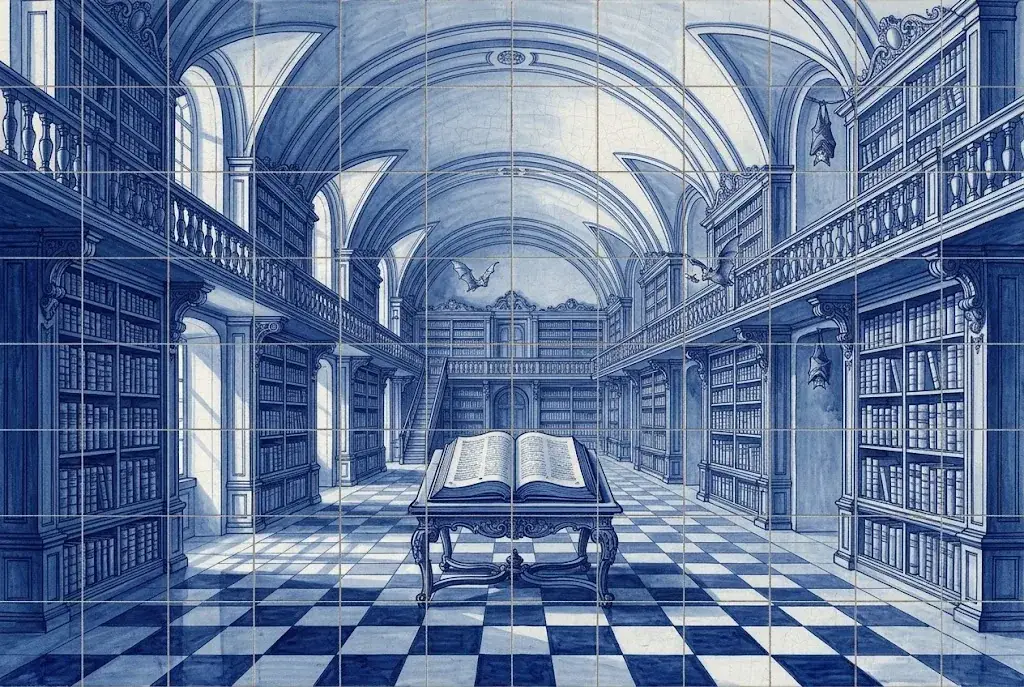
Bats guard the books in the Mafra library
Answer
Partly
The bats are real and hunt paper-eating insects at night. But no one has measured how long they have been there or how much they help the books.
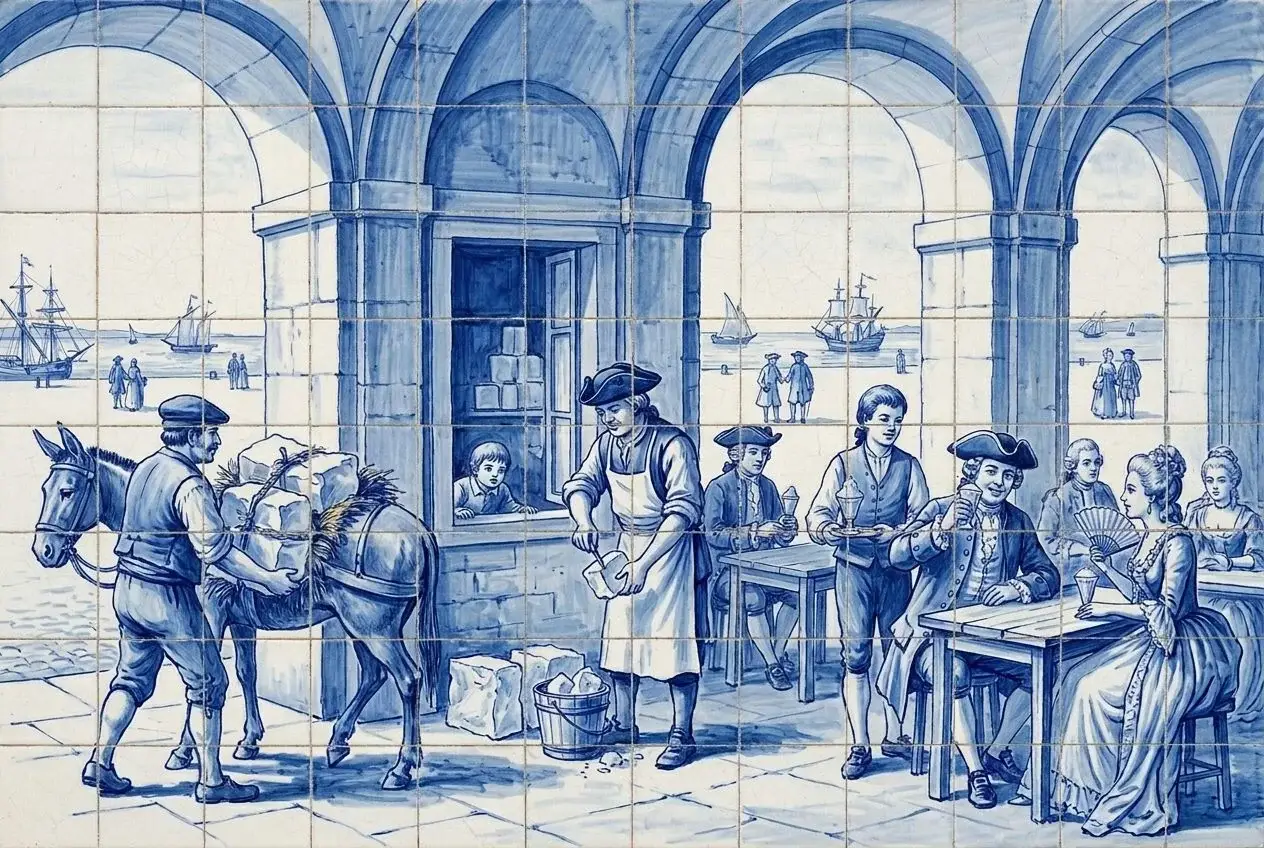
In 18th-century Lisbon, the ice was hauled from the mountains by oxen
Answer
Fact
Yes: snow was gathered in the Serra da Estrela, packed down in pits and carried by oxen and donkeys to the Tagus, then by boat to Lisbon.
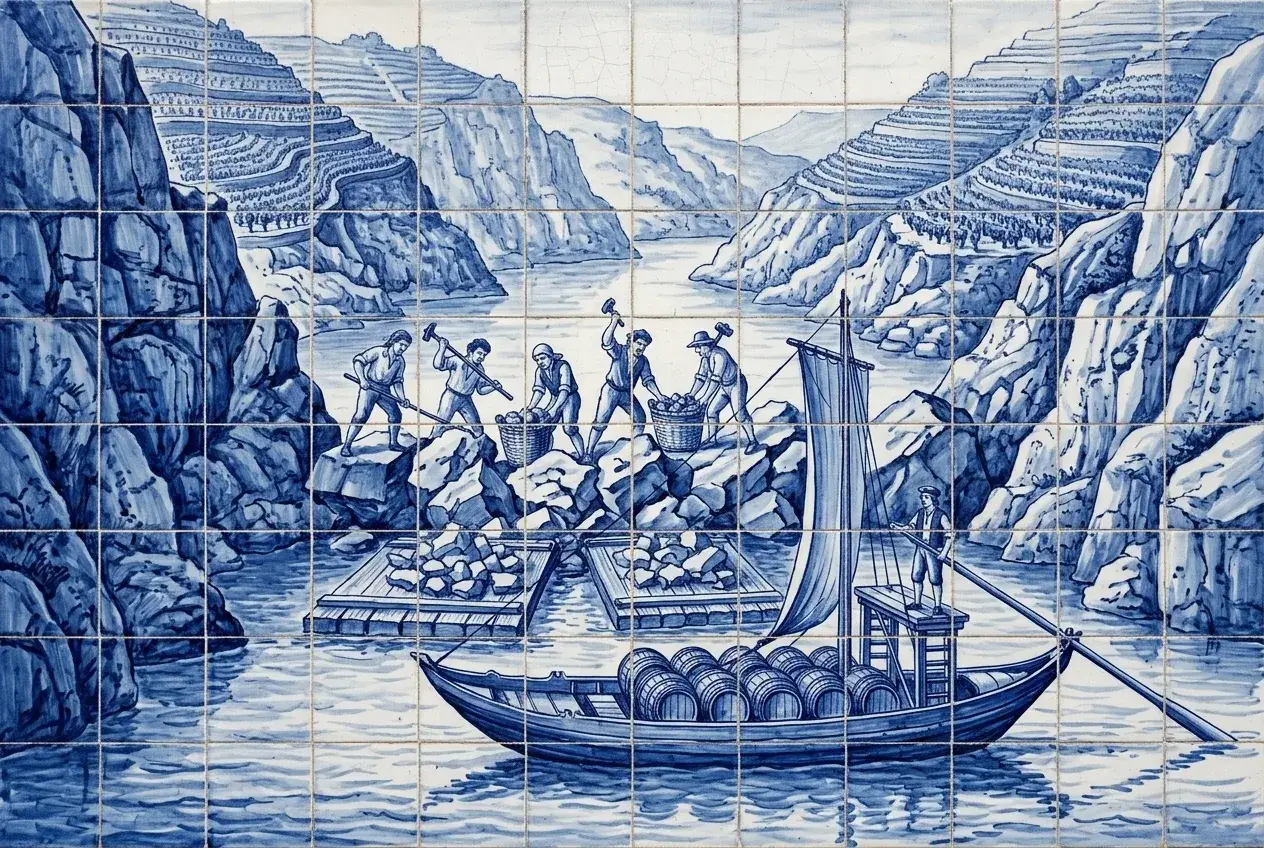
Port wine went to the sea by road along the Douro
Answer
Myth
There were no roads along the steep banks: casks floated downriver on rabelo boats, and for them a rock was even broken up in the Valeira gorge.
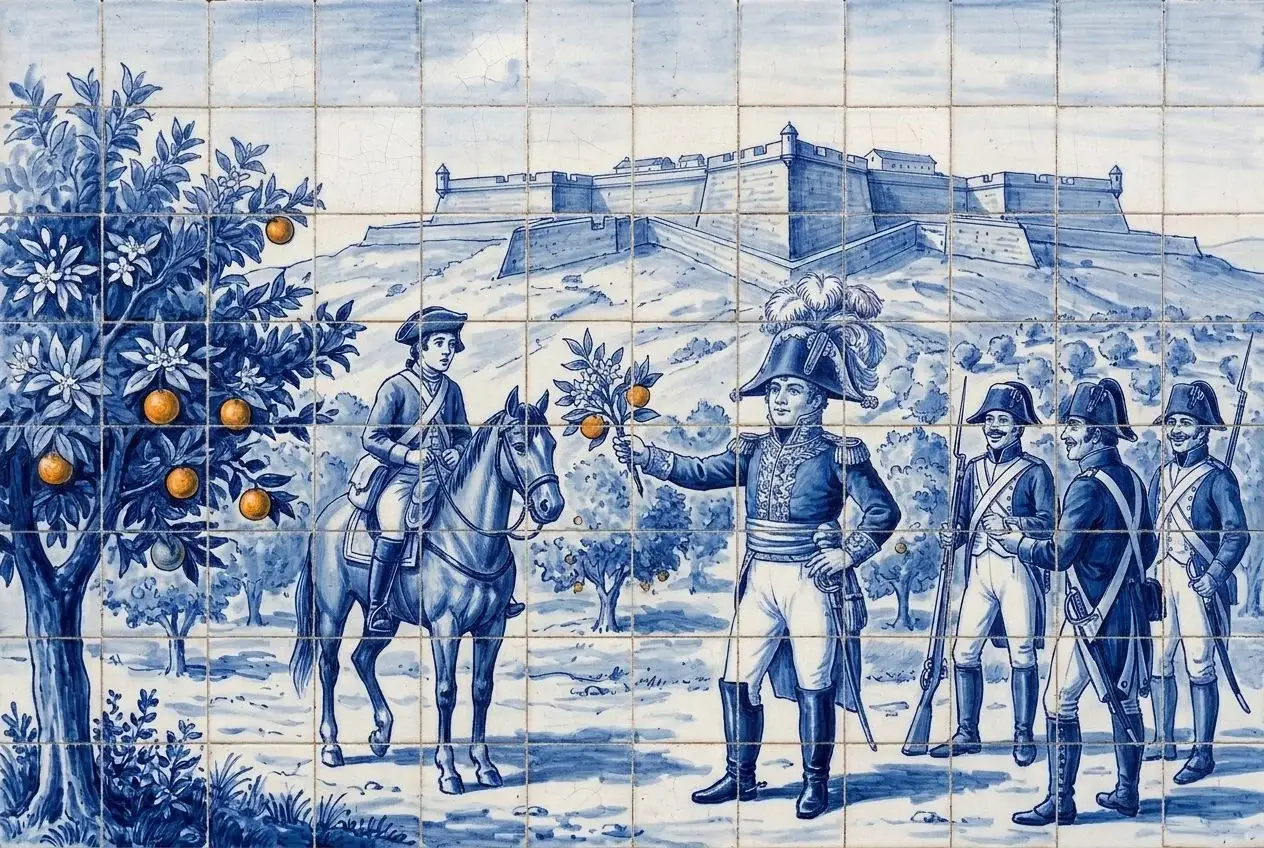
Godoy sent the queen a branch of oranges from the battlefield
Answer
Partly
It is a tradition, not a documented fact. Portuguese sources write of a branch of orange blossoms; Spanish and English ones, of oranges.
A European empire was once ruled from its own colony
Answer
Fact
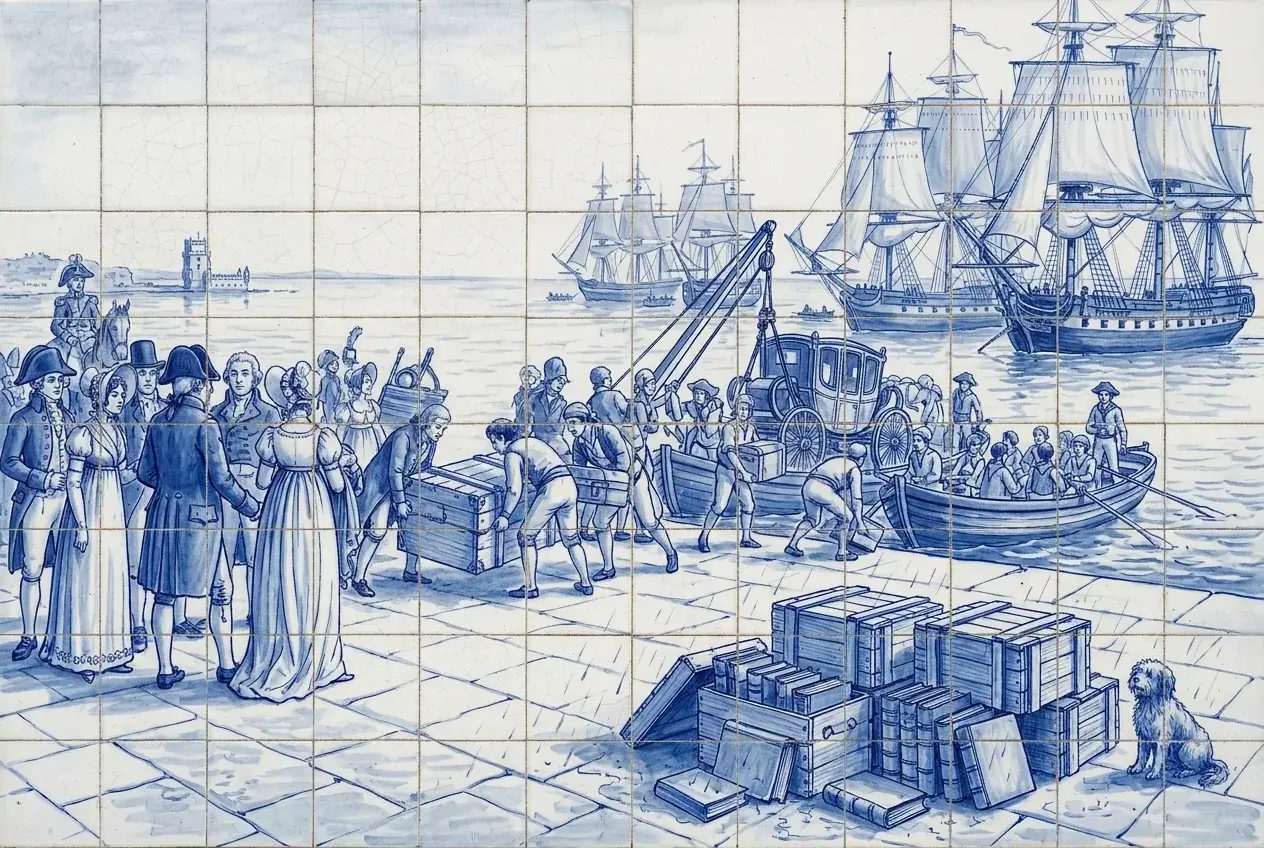
Yes: the court fled Napoleon, and for thirteen years Rio de Janeiro was the empire’s capital. It is the only case of a European monarchy ruling from its colony.
Portuguese soldiers reached Borodino in Napoleon’s army
Answer
Fact
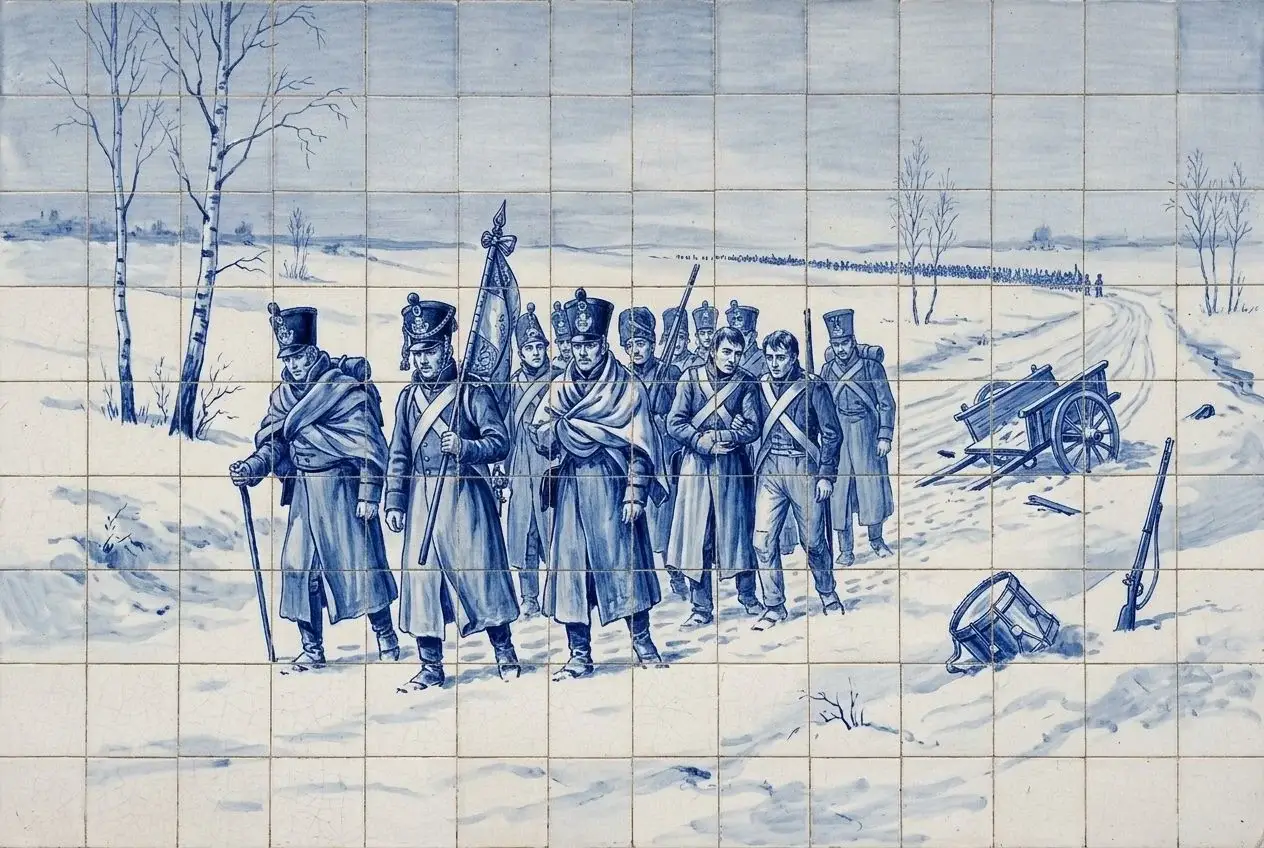
Yes: the Portuguese Legion, about 9,000 men, fought at Wagram and in 1812 marched into Russia, to Smolensk and Borodino. Few survived.
Nuns starched clothes with egg whites and used the yolks for sweets
Answer
Myth
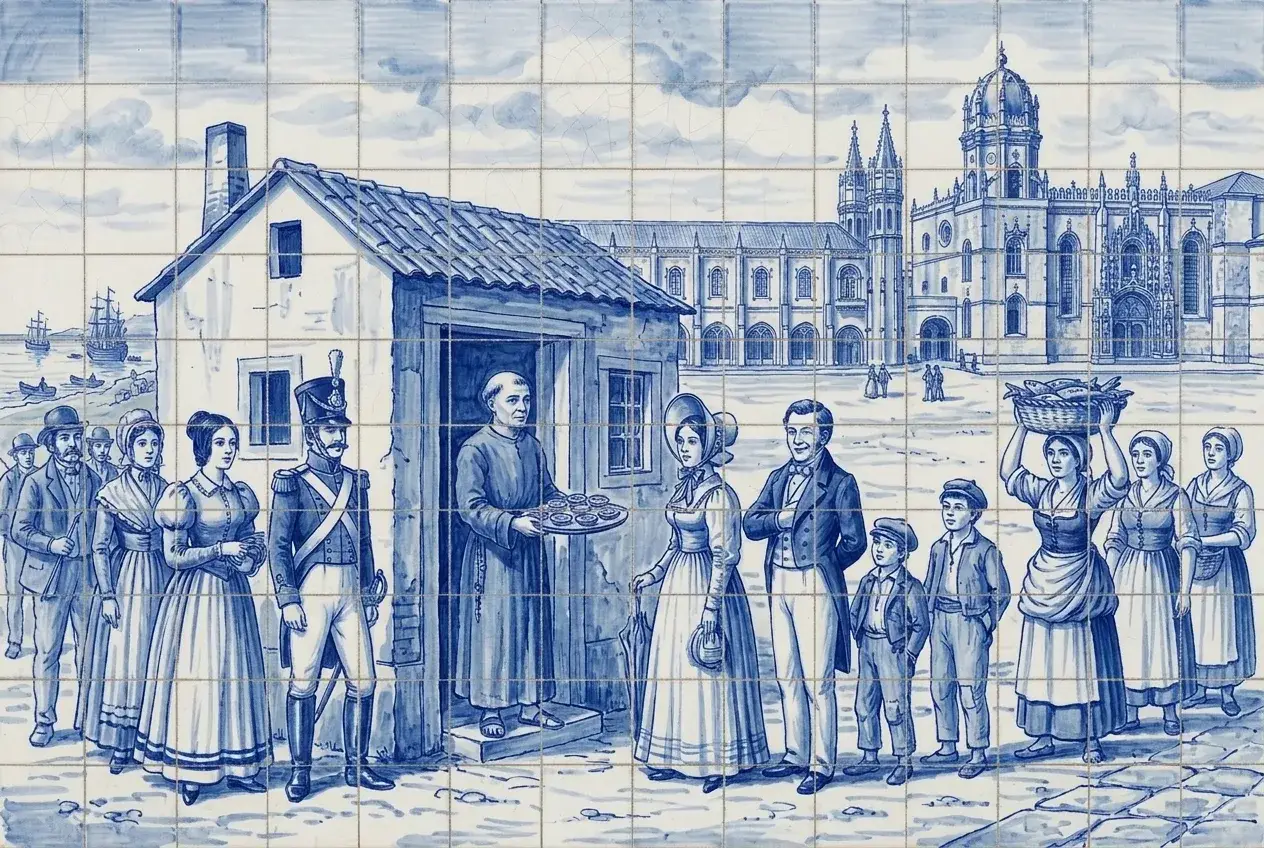
Historian João Pedro Gomes calls it a tall tale: there is no written evidence. “Convent pastry” is largely a 19th-century myth.
Pena Palace was built from scratch as a fairy-tale castle
Answer
Myth
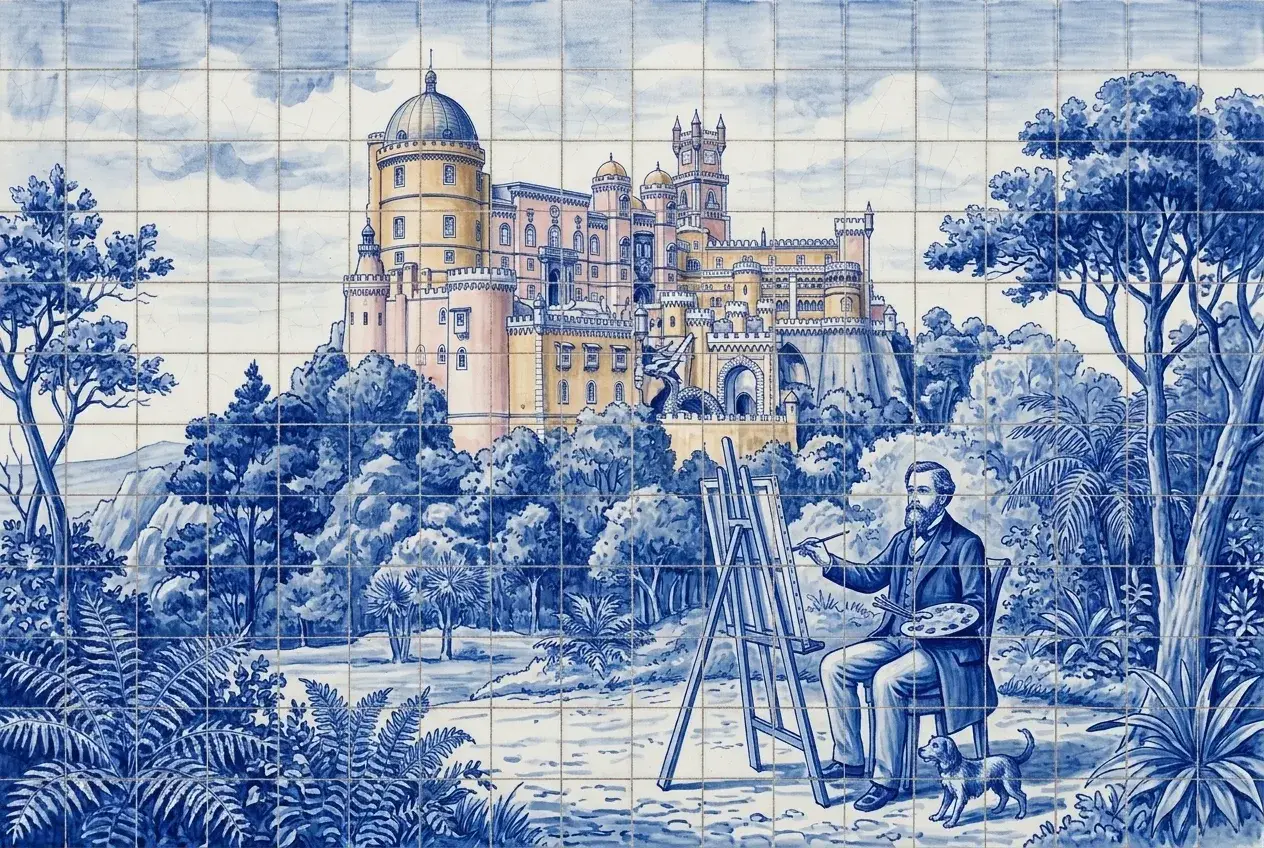
No: in 1838 King Ferdinand II bought an abandoned monastery and added towers and walls to it. The colors were restored only in 1994.
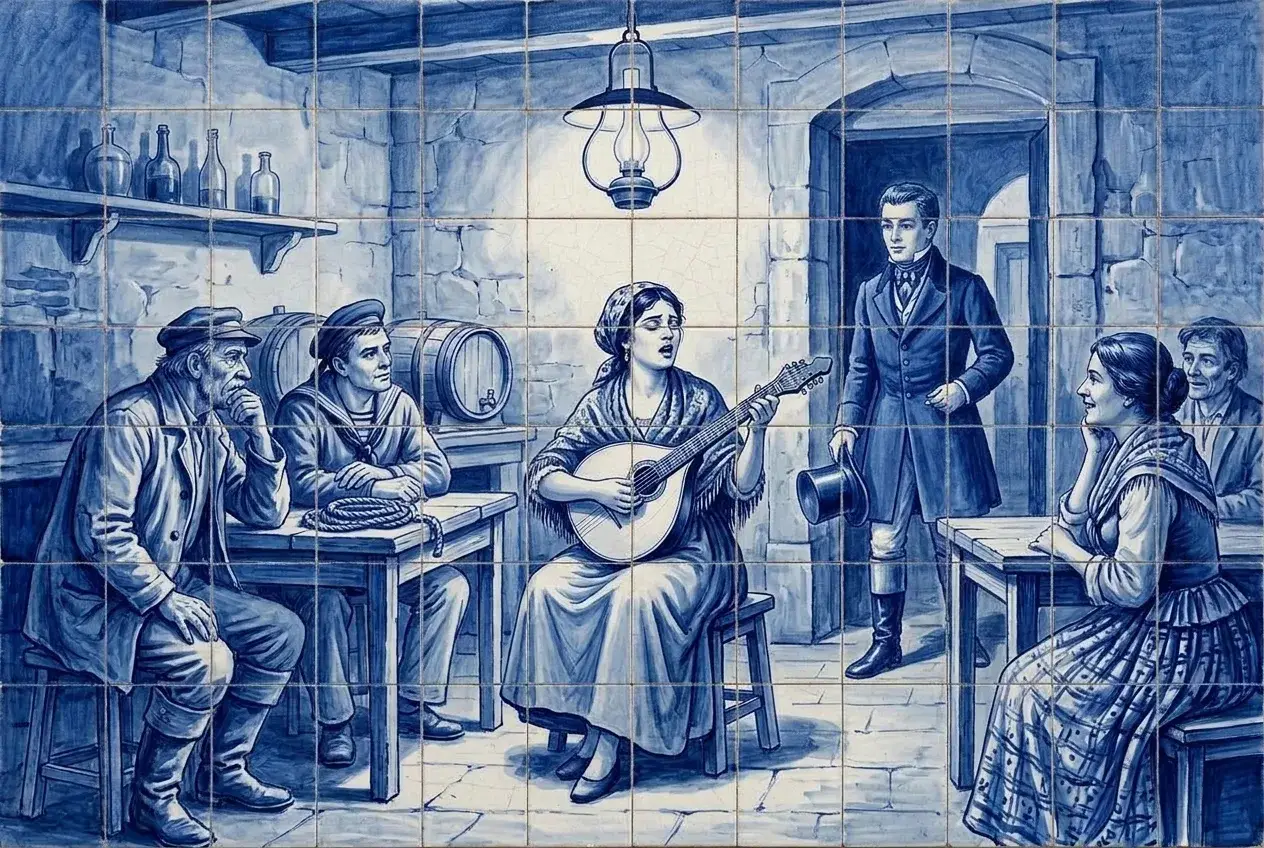
Portugal’s first sound film was about a fado singer
Answer
Fact
“A Severa” (1931) is about Maria Severa, a singer from Lisbon’s taverns who died in 1846. There are hardly any documents about her, but plenty of legends.
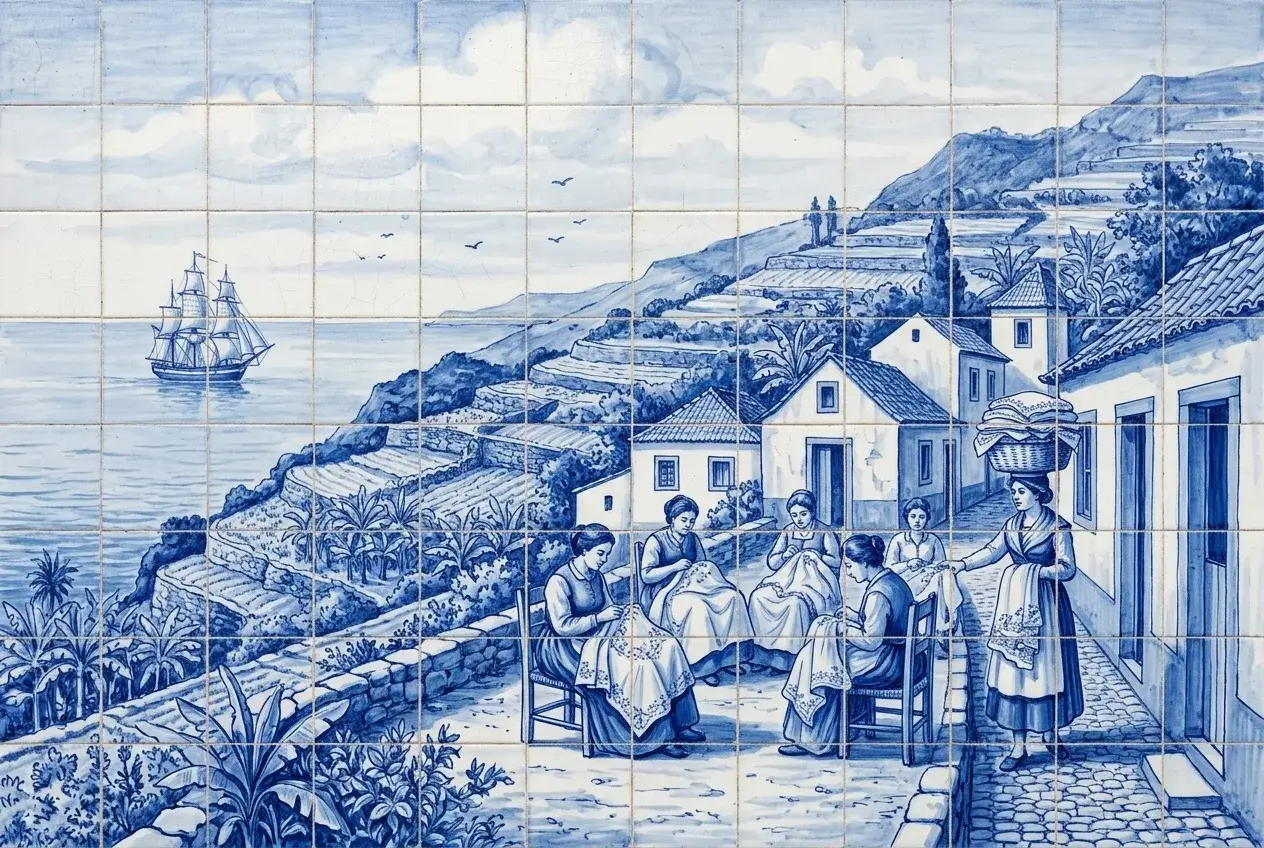
Madeira embroidery was made in big factories
Answer
Myth
Nobody built workshops: tens of thousands of embroiderers worked at home, were brought fabric with the pattern, and the finished work was collected.
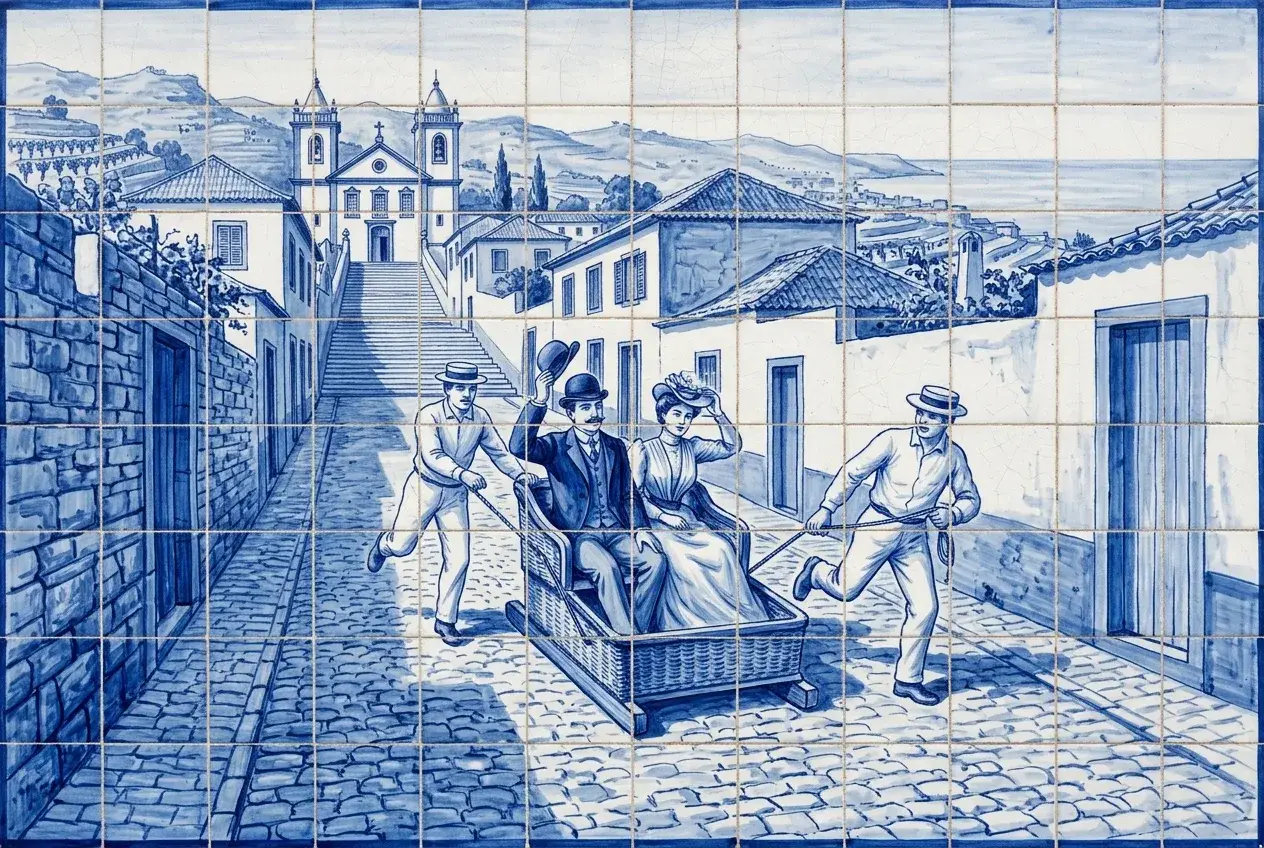
The wicker sleds of Monte were invented as a tourist attraction
Answer
Myth
No: in the 19th century the villagers themselves rode them down into town, and the drivers carried freight too. They became an attraction only later.
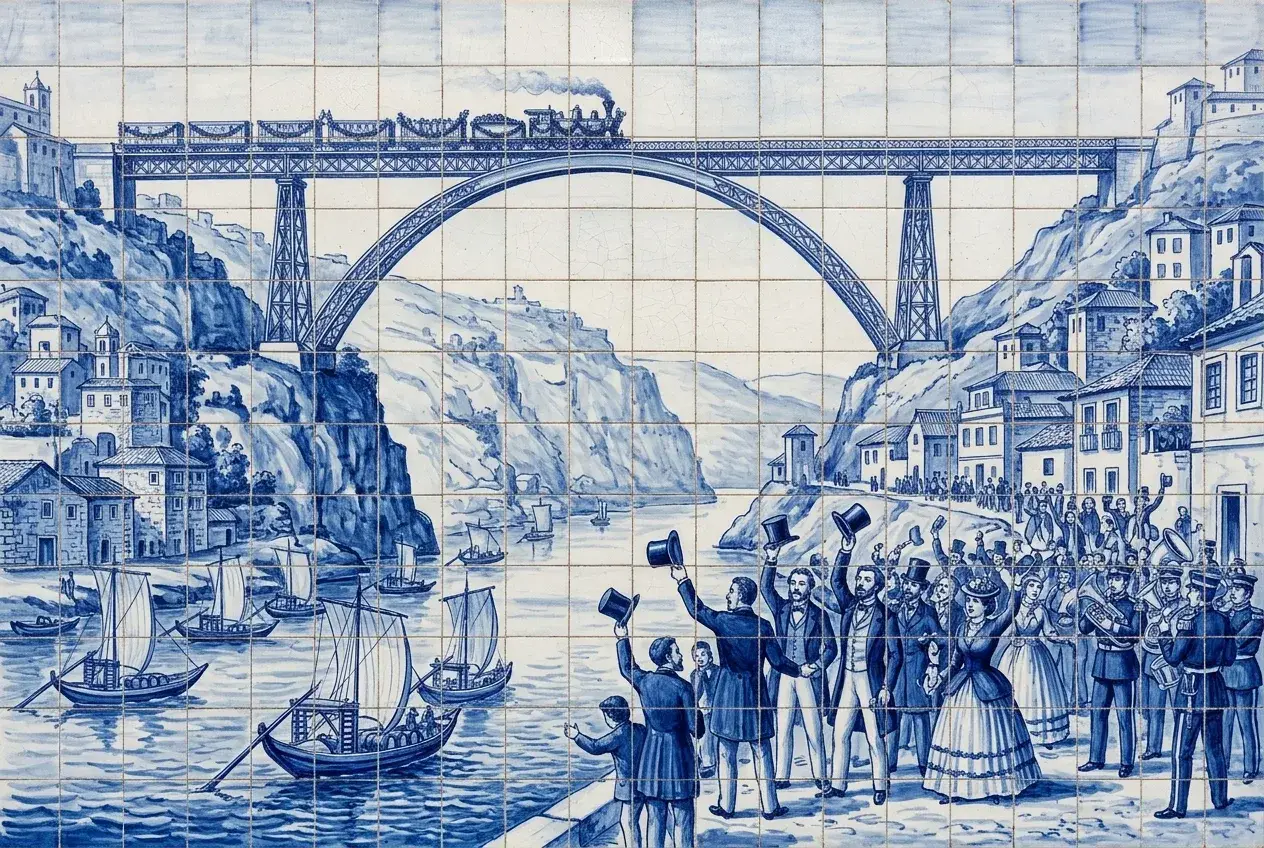
Eiffel’s firm built the Maria Pia Bridge in Porto
Answer
Fact
The bridge was ordered from Gustave Eiffel’s Paris firm. Its 160-meter arch was the longest in the world, twelve years before the tower.
The ukulele was invented in Hawaii
Answer
Partly
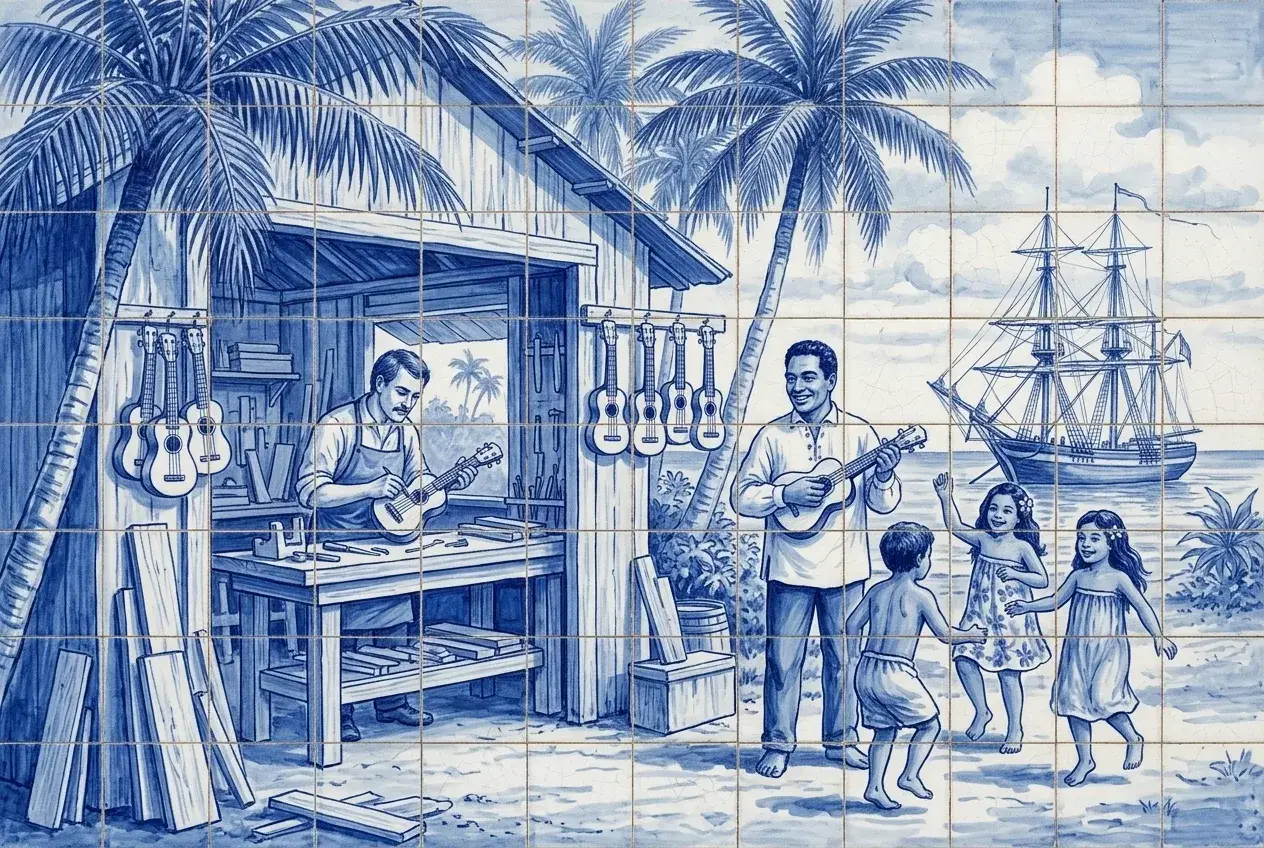
It really was made in Hawaii, but by Madeiran carpenters, who took the body of the braguinha and the tuning of the rajão. Hawaiians gave it the name.
The funicular in Braga runs on water, with no motor
Answer
Fact
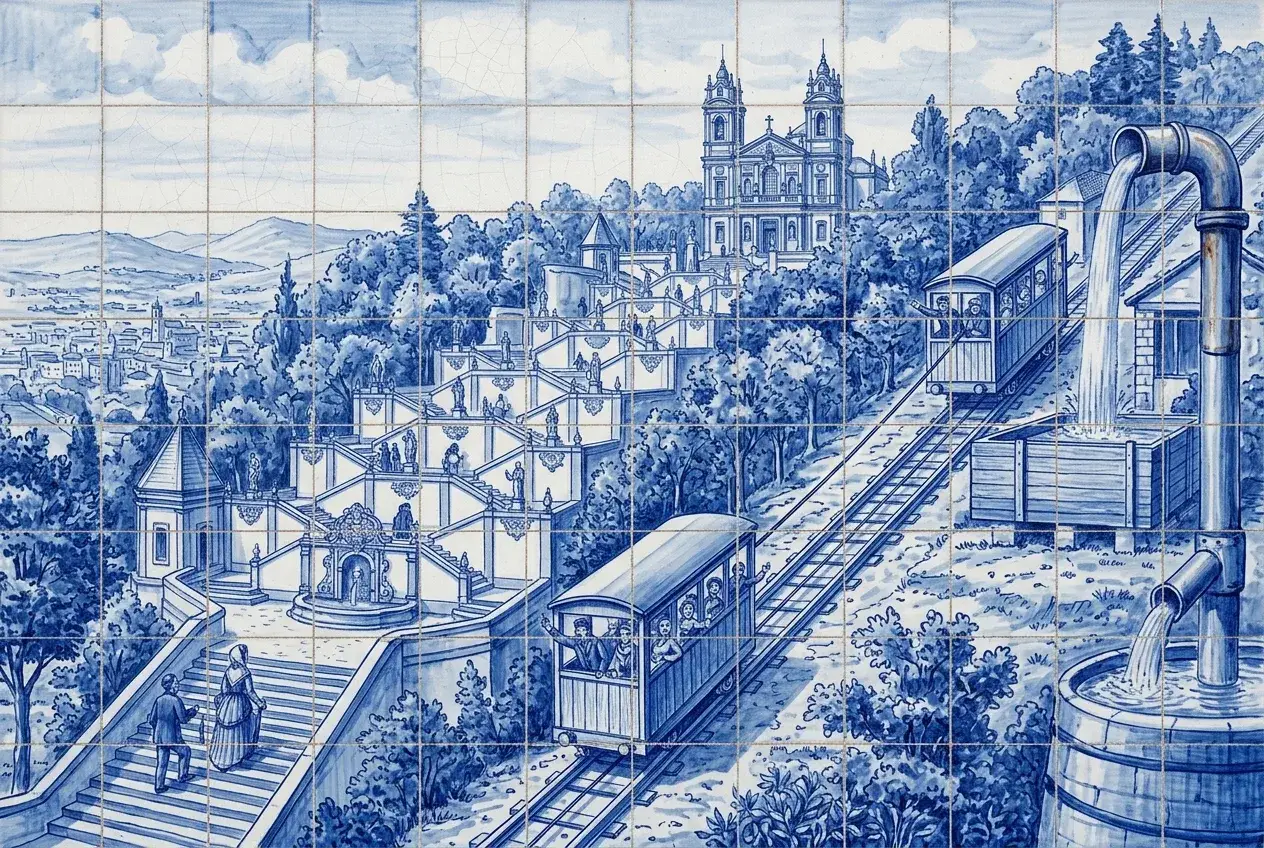
The upper car’s tank is filled with water, so it gets heavier, rolls down, and pulls the lower car up. It still has no motor today.
Portugal’s anthem was written in one night in answer to England’s ultimatum
Answer
Fact
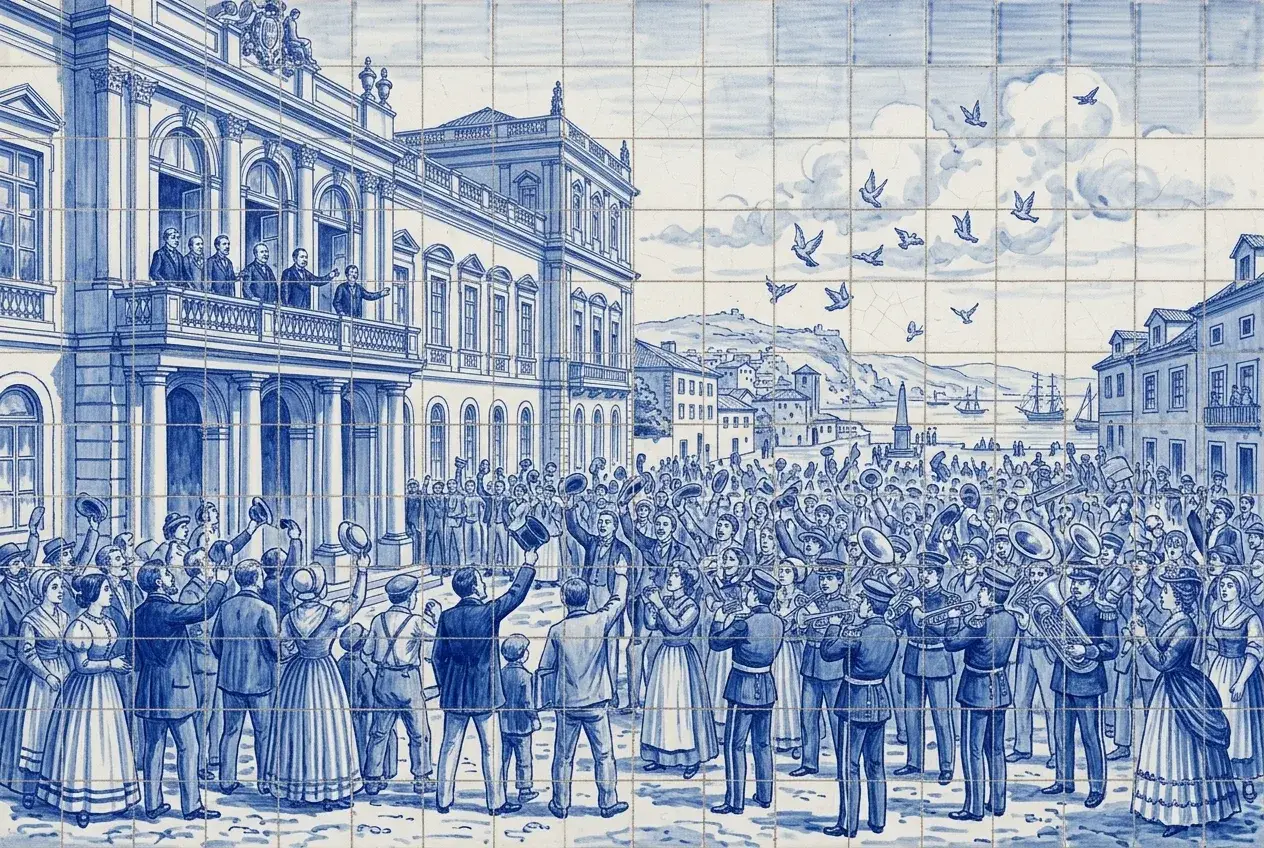
After Britain’s ultimatum of 1890, Keil and Mendonça wrote the march in a night. The monarchy banned it; the republic made it the anthem in 1911.
Portugal’s first car hit a donkey on its very first trip
Answer
Fact
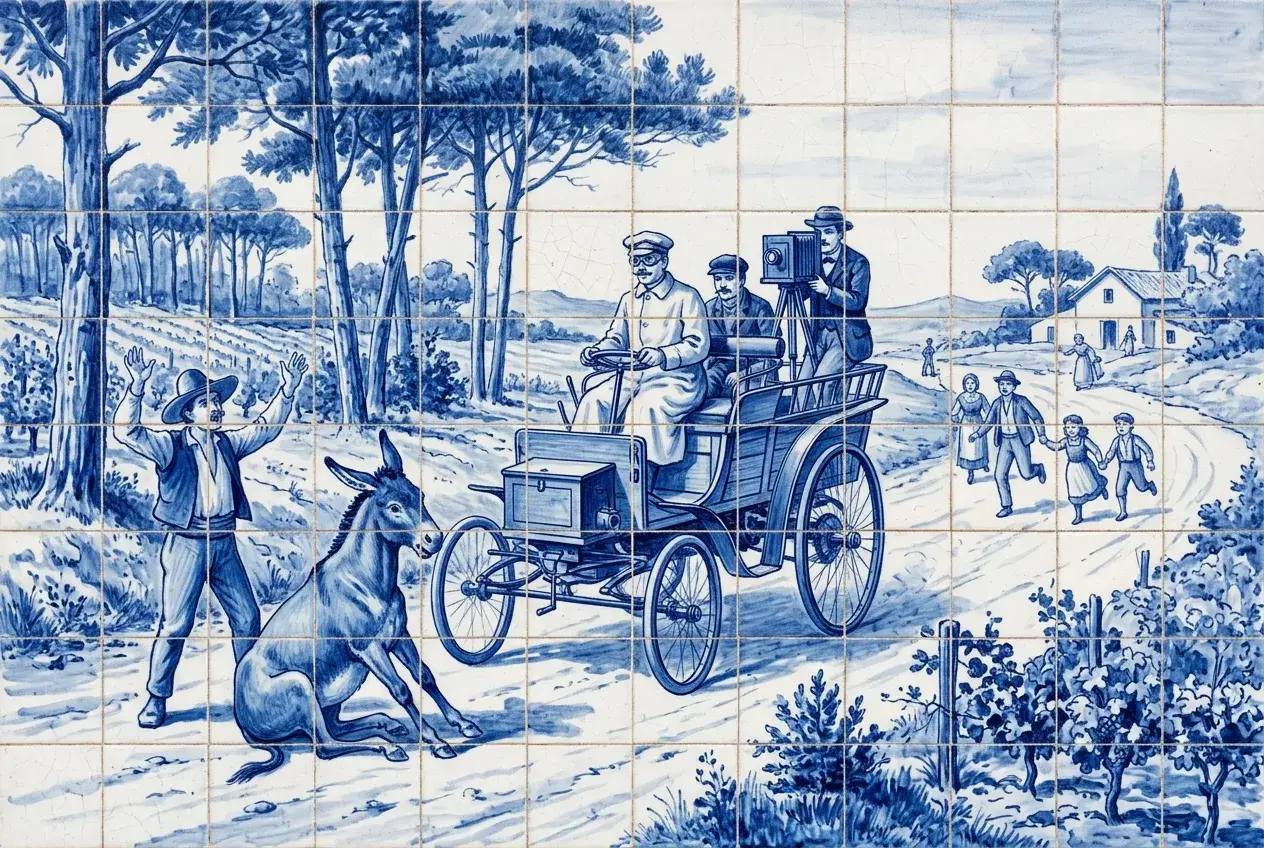
Near Palmela, on the way from Lisbon to Santiago do Cacém in 1895. It’s considered the country’s first car accident.
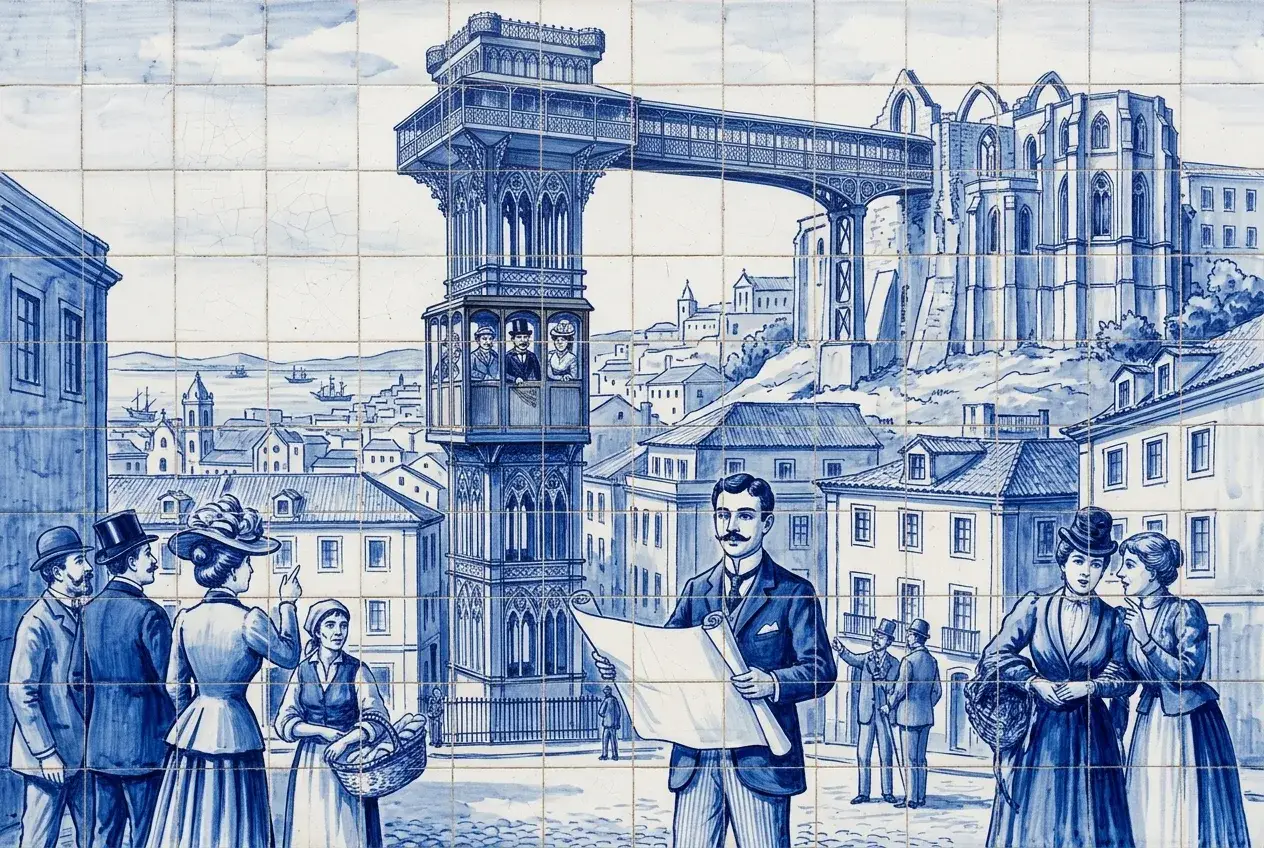
Eiffel built the Santa Justa Lift in Lisbon
Answer
Myth
It was designed by Raoul Mesnier du Ponsard, a Portuguese engineer of French descent. The lacy ironwork in Eiffel’s style gave rise to the legend.
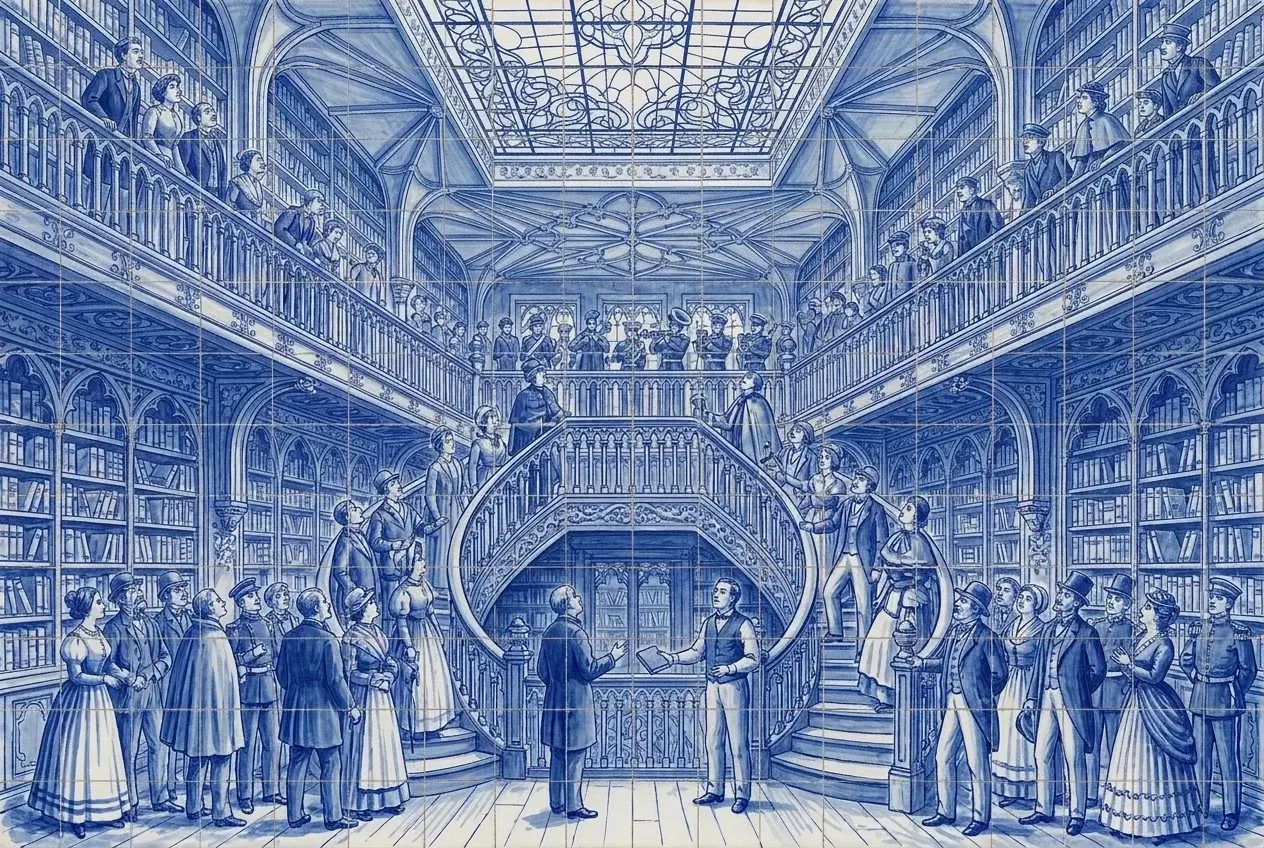
Rowling imagined Hogwarts from the staircase of the Lello bookstore
Answer
Myth
Rowling herself wrote in 2020 that she had never been there. The legend grew out of her living in Porto in the early 1990s.
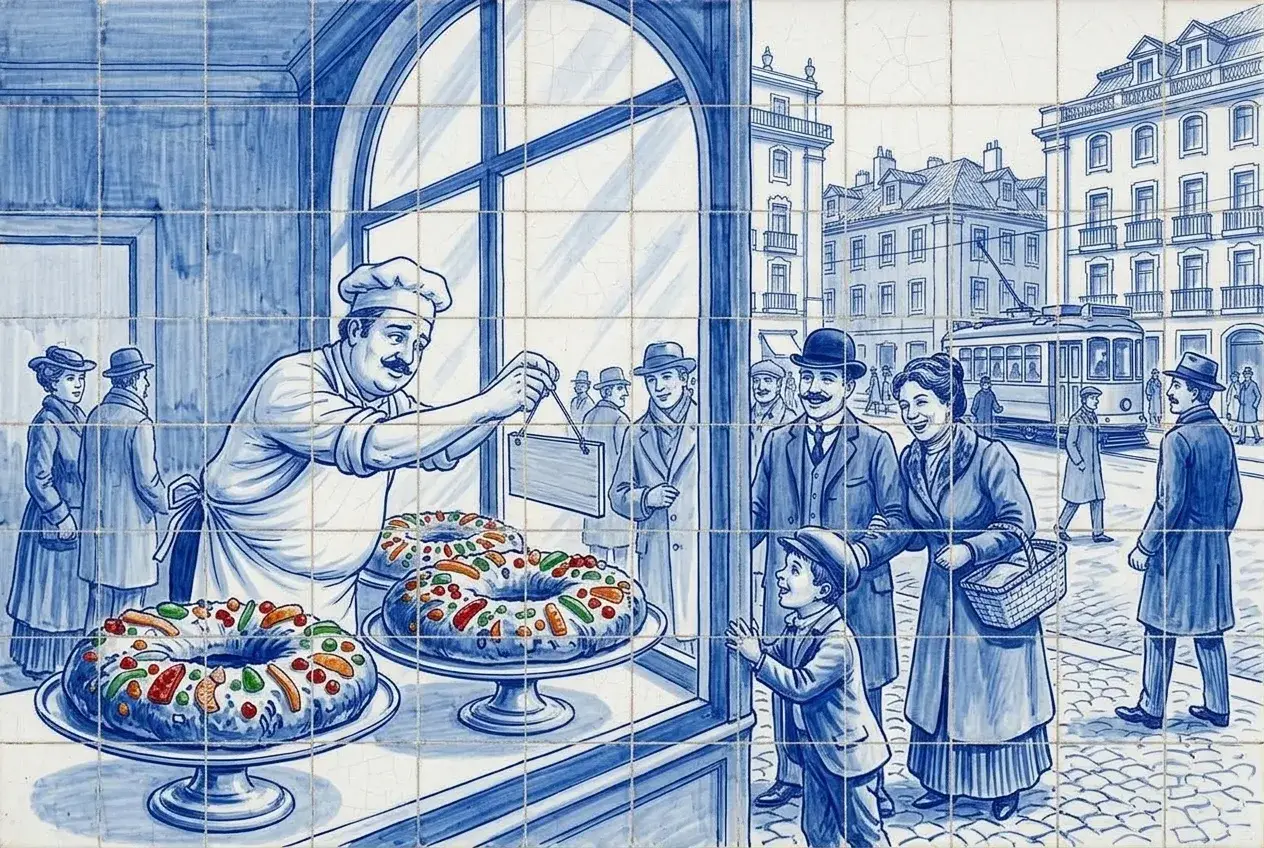
Bolo-rei is named after a Portuguese king
Answer
Myth
Most likely not: the recipe came from France, where a similar cake is baked for Epiphany, and the “king” in the name is the Magi.
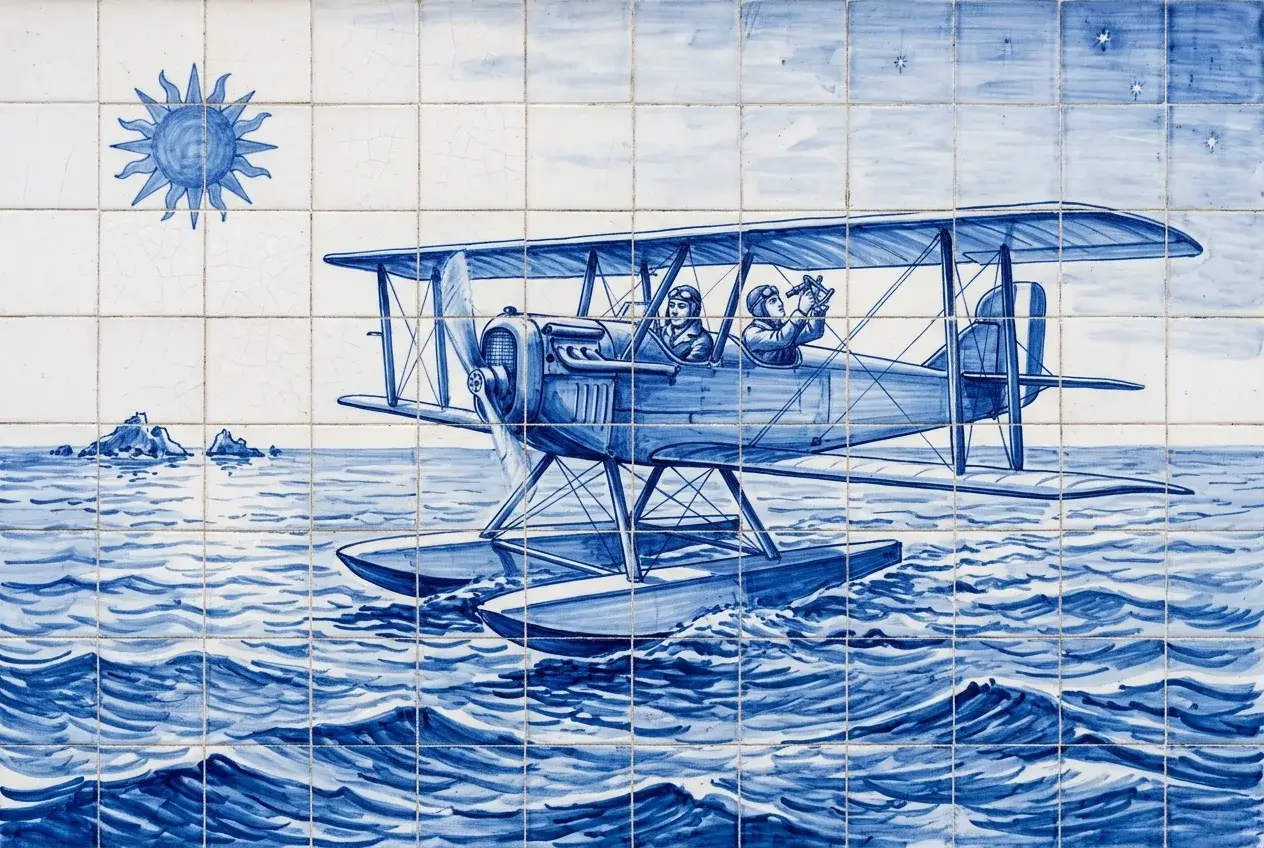
Flying from Lisbon to Rio in 1922 took three airplanes
Answer
Fact
Yes: the first crashed into the waves off the Saint Peter and Saint Paul Rocks, the second came down with engine trouble. The third reached Rio after 79 days.
Answer
Fact
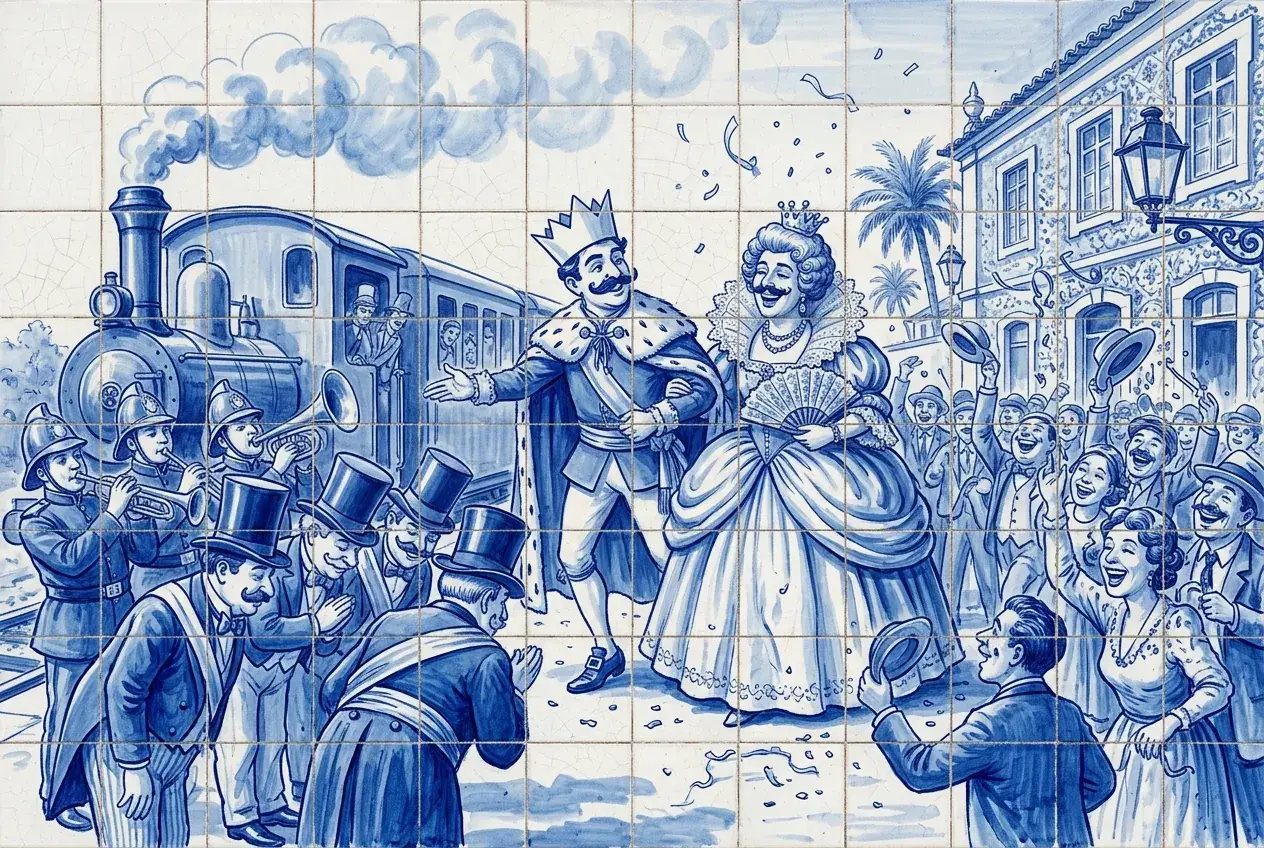
Yes, by tradition: since 1924 the queen has been a man, and the pair is followed by “ministers” and matrafonas. The carnival king reigns for four days.
Heard something else you’d like checked? Tell me →