The Rock in the Middle of the River
Eleven years of breaking a rock so port could reach the sea.
The story
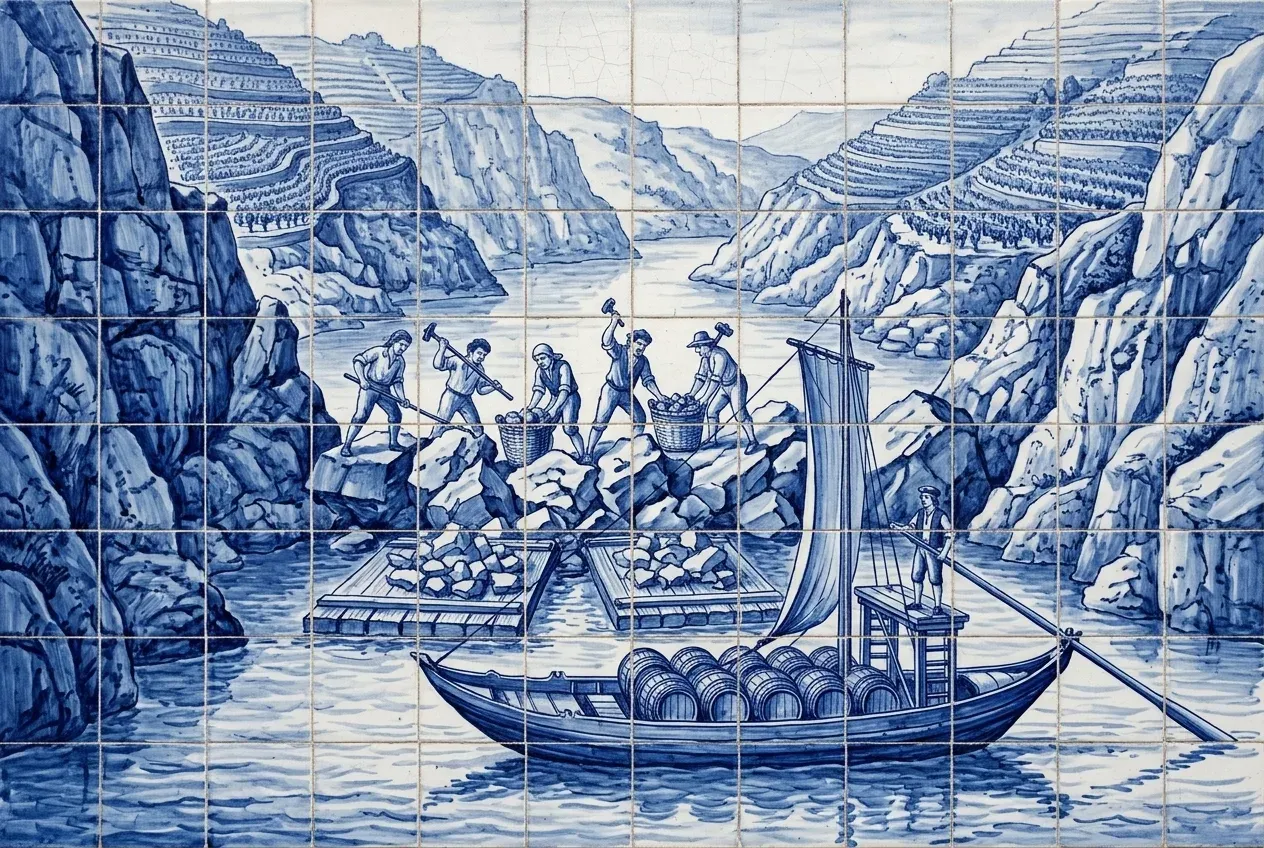
Port is made in the upper Douro valley, but it was aged and sold in Vila Nova de Gaia, by the sea. There were no roads along the steep banks, so the casks went downriver on rabelos, flat-bottomed boats that carried up to a hundred casks.
But at the Valeira gorge, a rock barrier blocked the river, and boats couldn’t go beyond it. In 1780 work began on breaking up the rocks, the first boats passed in 1789, and the job was finished in 1791. From then on, wine could travel by river from the most distant vineyards.
The gorge never became safe. A rabelo was steered with a single long oar at the stern, the helmsman stood on a high platform, and one mistake in the rapids was enough to smash the boat on the rocks.
Route: Cachão da Valeira → Vila Nova de Gaia
Route points
- Cachão da Valeira
- Vila Nova de Gaia
Meanwhile
- 1791Mozart’s The Magic Flute premieres in Vienna.
More
Context
In 1861, at Valeira, a boat carrying the English Baron Forrester and the famous winemaker Antónia Ferreira capsized. Forrester died. He was the first to map the Douro in detail, marked more than two hundred rapids, and wanted to make the river safer. Antónia made it out; according to legend, her crinoline kept her afloat.
In 1887 a railway was built along the Douro, the last commercial rabelo run is said to have taken place in 1964, and in the 1970s the Valeira Dam was built right in the gorge. The rapids disappeared underwater. Rabelos bearing the names of port houses now sit at the Gaia waterfront, and once a year, on June 24, they come out for a regatta.
Where to see it today
São Salvador do Mundo Viewpoint
Miradouro de São Salvador do Mundo
From here you see the gorge where the rock was broken up; now a dam stands there, rapids underwater.


That was the last story of the era “Pombal and the Earthquake.” Your panel is complete →