The Factory Without a Single Workshop
Madeira once had a factory without a single workshop.
The story
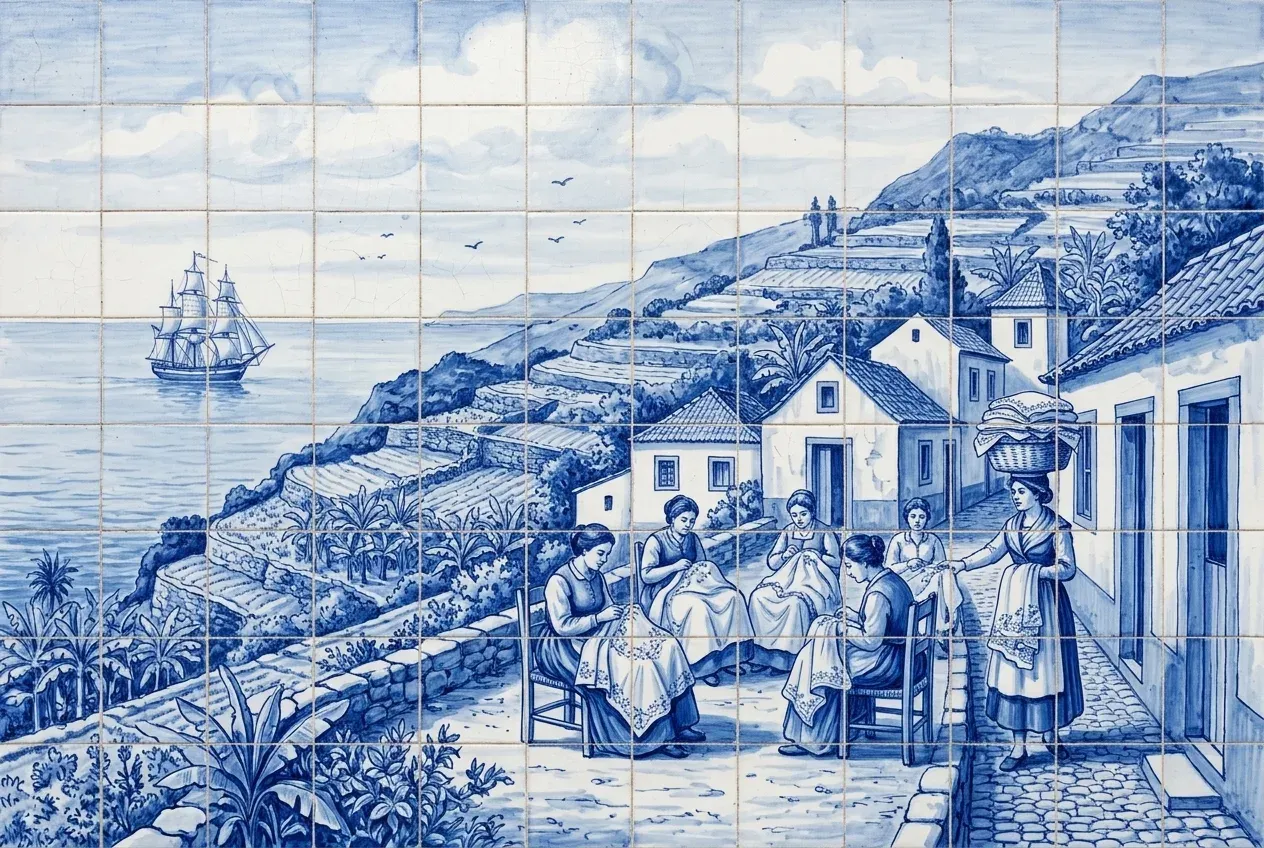
For centuries, the women of Madeira embroidered for themselves: trousseaus, tablecloths, household linen. Elizabeth Phelps, the daughter of an English wine merchant in Funchal, saw a product in it.
Bella Phelps taught local girls to embroider and, in the late 1840s, brought Madeiran embroidery to England. The work got noticed: in 1850 it was shown at an exhibition in the São Lourenço Palace in Funchal, and in 1851 samples reached the Great Exhibition in London.
Orders poured in, but nobody built workshops. The embroiderers worked at home: fabric with the pattern was brought to them, and the finished work was collected. By the late 19th century, the island had some 70,000 bordadeiras, embroiderers. The whole factory fit inside their homes.
Meanwhile
- 1851The Great Exhibition opens in London, in the Crystal Palace.
More
Context
Bella Phelps herself didn’t go to the London exhibition or show anything under her own name. But her initiative made embroidery the main source of income for the island’s women.
After World War I demand fell, new embroidery firms appeared in the 1920s, and from the 1970s cheap imitations took over the market. But embroidery is still made on Madeira today.
Where to see it today
Embroidery and Handicraft Museum
Museu do Bordado
The museum holds 19th-century embroidery, from the time when tens of thousands of embroiderers worked on the island.


Sources (3)· links checked on
That was the last story of the era “Monarchy and Republic.” Your panel is complete →