The Church a Begging Order Covered in Gold
Friars sworn to poverty covered their church in gold.
The story
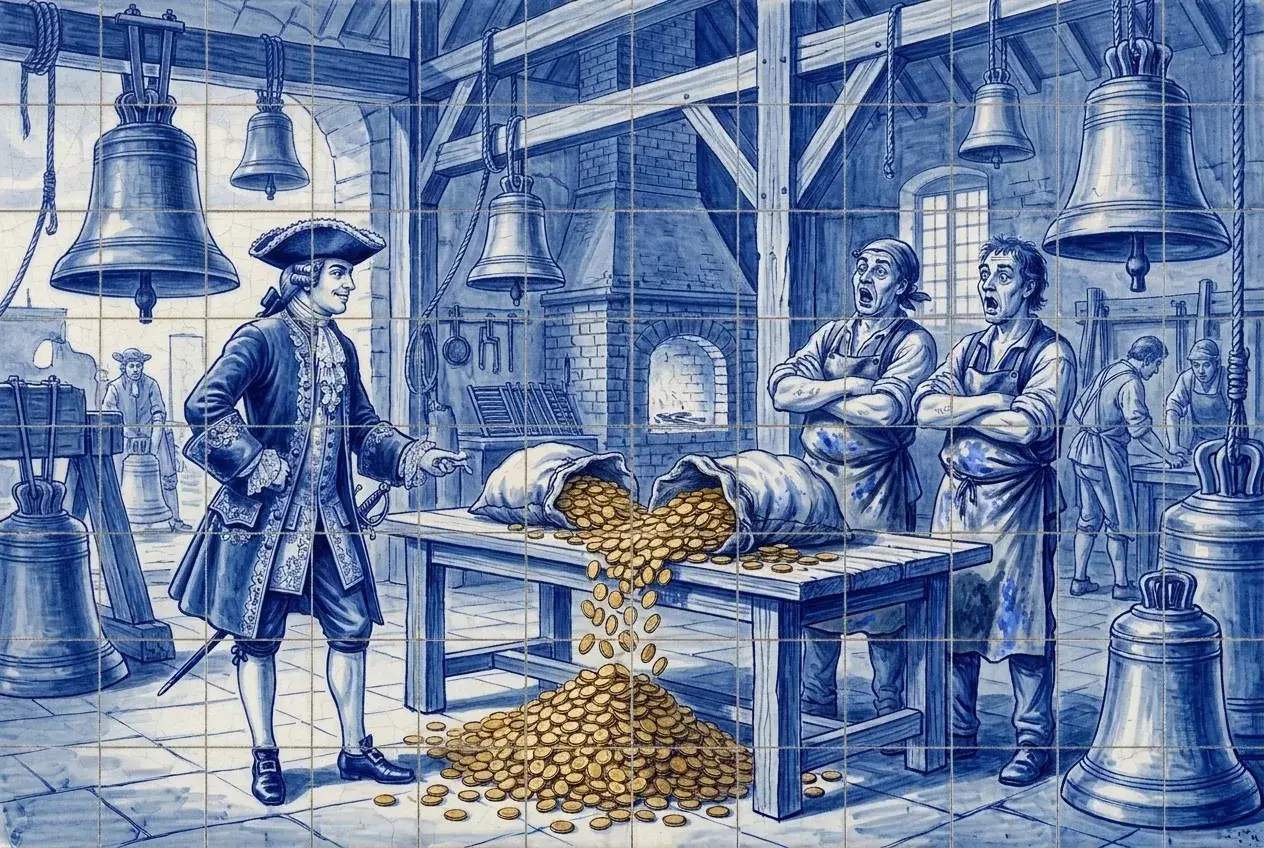
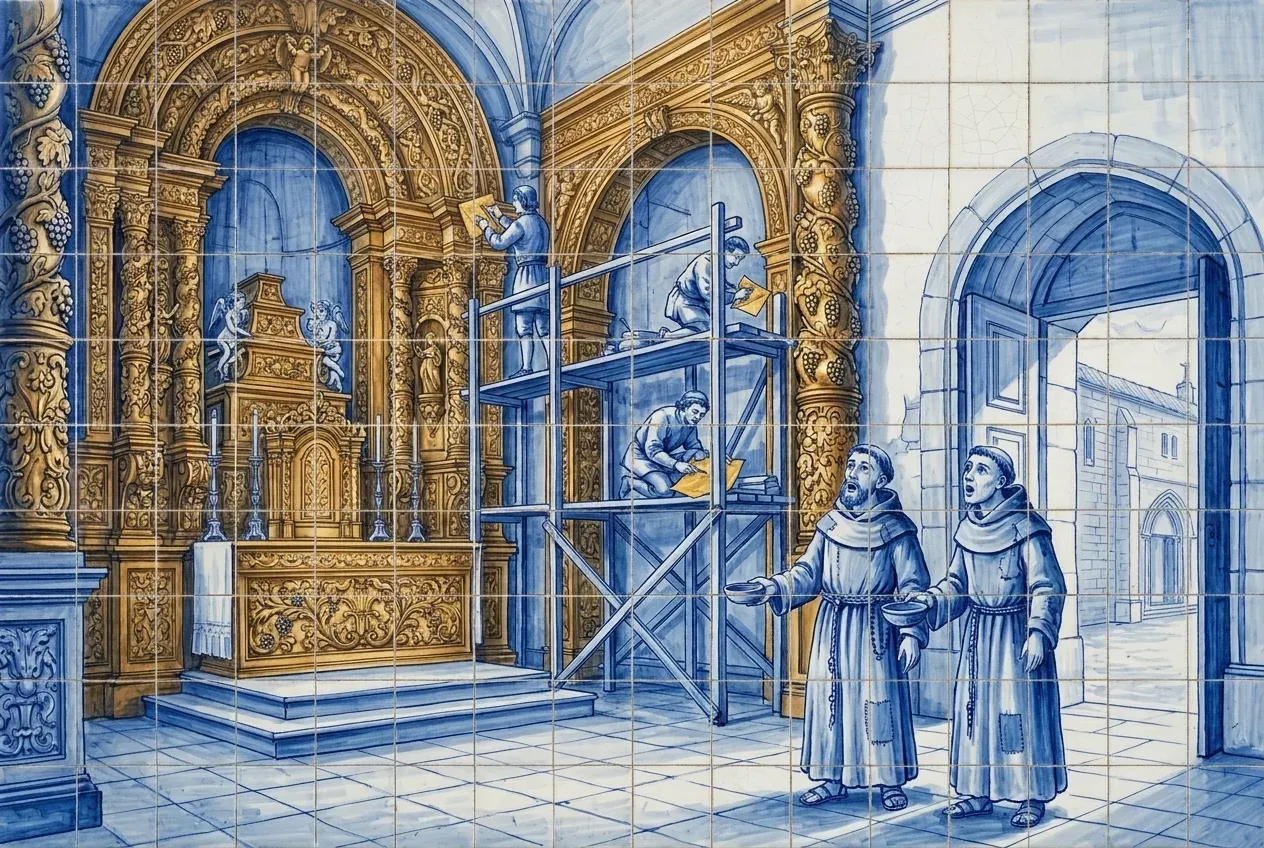
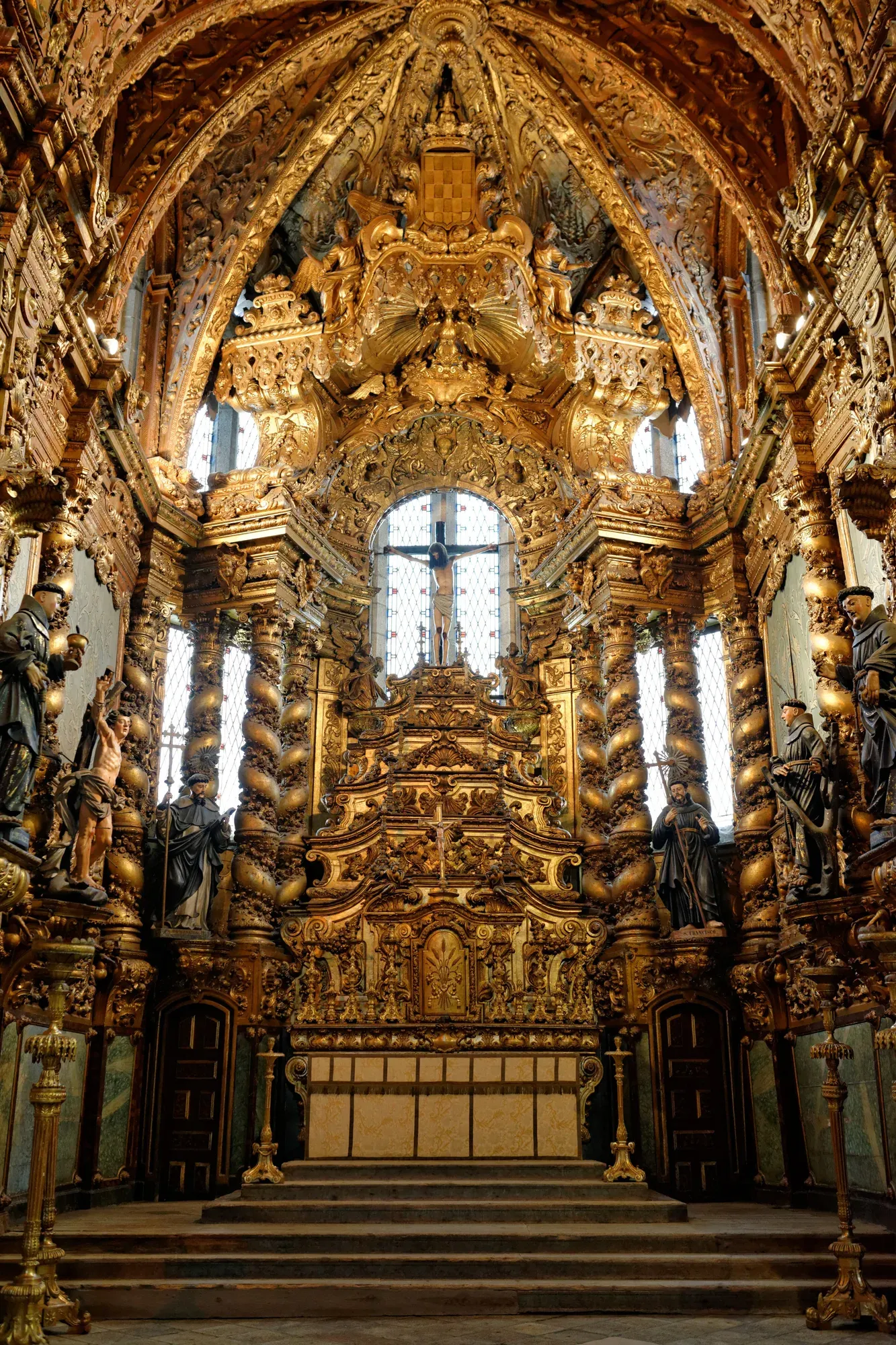
At the end of the 17th century gold was found in Brazil, and ships with precious cargo set sail for Portugal. Some of that gold went to churches: all over the country they were dressed in talha dourada, gilded wood carving. The Franciscans in Porto, an order sworn to poverty, did not pay for the carving in their Gothic church: the Third Order, a brotherhood of wealthy lay merchants, did. The carving covers the interior: columns, vaults, altars, angels, and grapevines. It is said to have taken about 400 kilograms of Brazilian gold. From the outside the church is plain and gray, which is why the interior takes your breath away.
More
Context
The gold was found in the mountains of Minas Gerais, and thousands of prospectors rushed there. The Crown took a fifth of everything mined, the “quinto.” That money built Mafra and the São Roque chapel, and churches all over the country were dressed in talha dourada, gilded carving: wood was carved, covered with the thinnest sheets of gold, and used to line entire walls.
The Church of São Francisco outlived its own monastery. In 1832, during the Siege of Porto, a fire destroyed the cloisters, and the Stock Exchange Palace was built in their place; today it stands wall to wall with the church. And under the floor are the catacombs where the city’s wealthy families were buried for centuries.
Where to see it today
Church of São Francisco
Igreja de São Francisco
The church stands above the Ribeira waterfront, next to the Stock Exchange Palace.