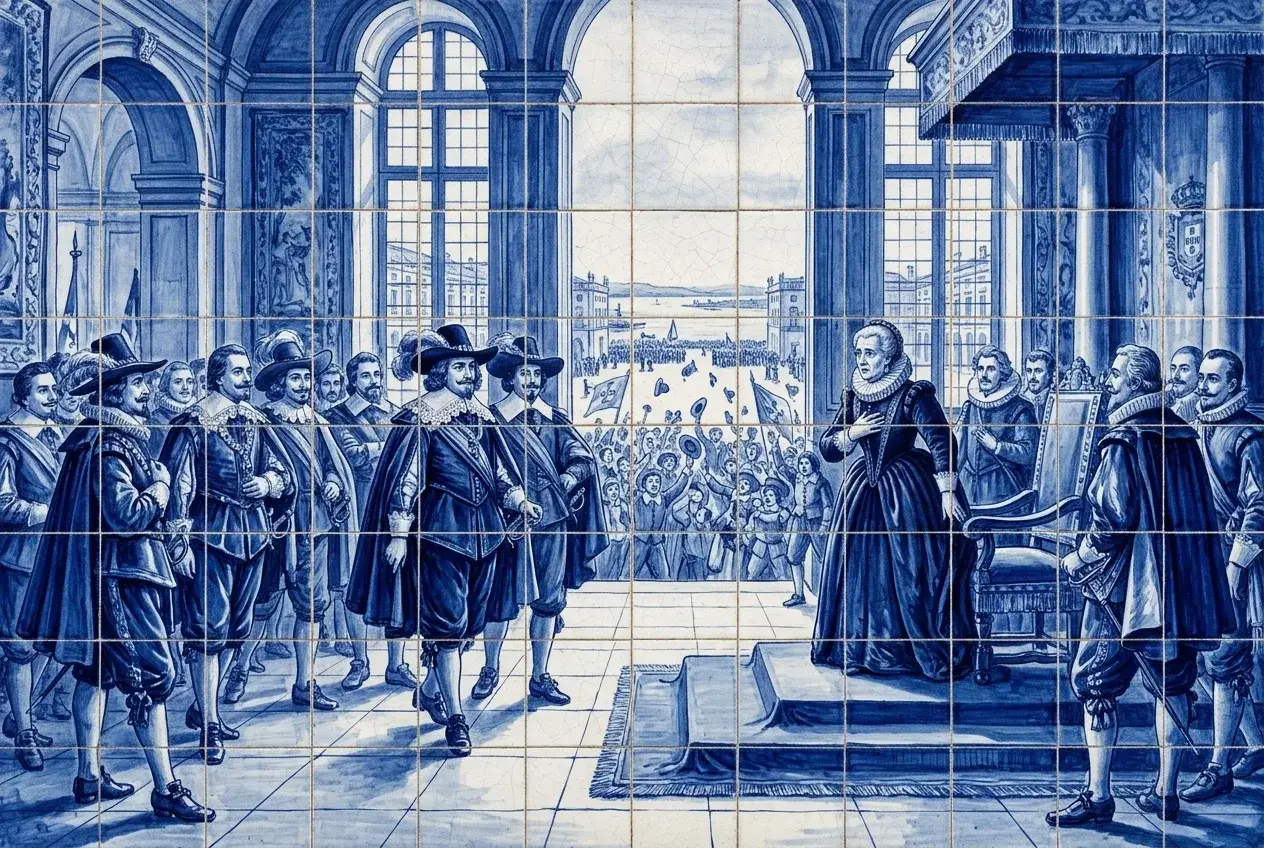
The King Who Came Back Four Times
The missing king kept being “found” for almost twenty years.
The story
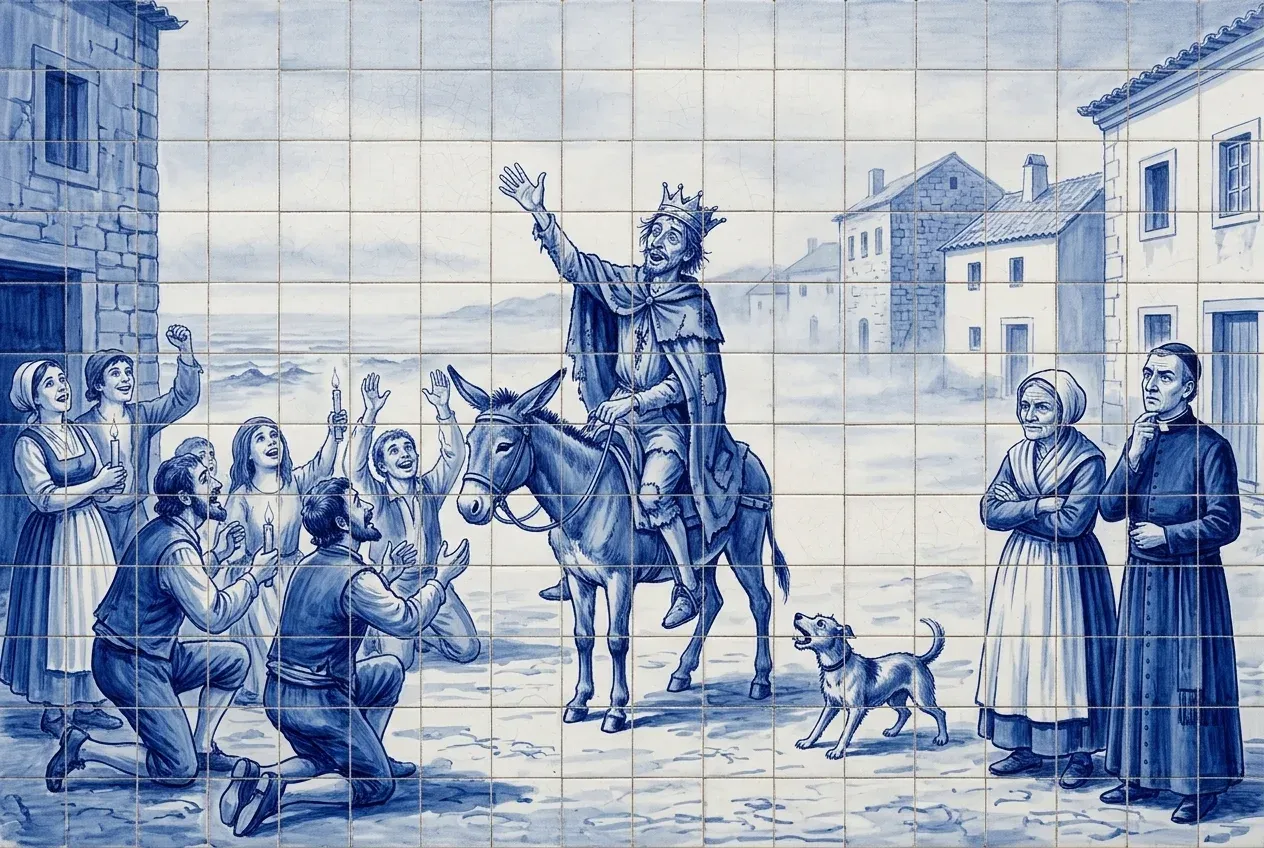
In 1578, the young King Sebastian vanished in a battle in Morocco. No one got a good look at the body, and the Portuguese believed the king would return one foggy morning to save the country from the Spanish, who had ruled it since 1580. Impostors took advantage: by calling yourself king you could raise a band of followers and hand out titles. In 1584 a former novice from Penamacor claimed to be the king, in 1585 a hermit from Ericeira, then a pastry cook from Madrigal in Spain, and a Calabrian in Venice. All were exposed, but the faith in his return lived on.
Meanwhile
- 1599The Globe Theatre opens in London.
More
Context
This faith in the king’s return is called Sebastianism. The Ericeira impostor, Mateus Álvares, the son of a stonemason from the Azores, managed to gather a whole band of followers and hand out titles to them. The pastry cook Gabriel de Espinosa fooled even a nun of royal blood, Sebastian’s own cousin. But none of them lasted long: the one who kept it up longest, about four years, was the Italian Marco Tullio Catizone.
In Portuguese, “waiting for King Sebastian” still means waiting for a miracle that will never come.
Where to see it today
Statue of King Sebastian
Estátua de D. Sebastião
João Cutileiro’s statue was unveiled in 1973, and opinions about it were divided.