
Rome Doesn’t Pay Traitors
This story is for readers 12+. Open?
Rome couldn’t defeat the shepherd. So it bought his friends.
The story
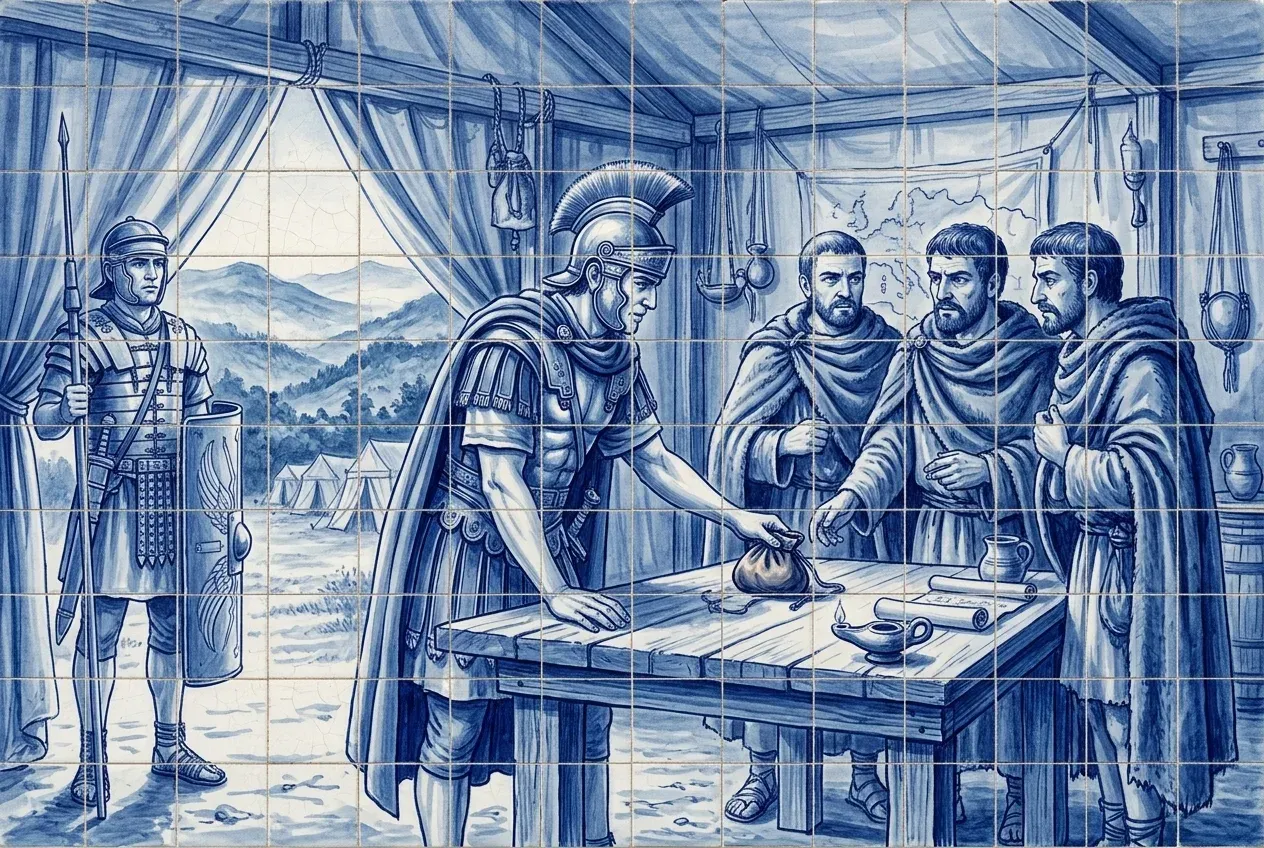
Viriathus was a A Roman province in the west of the Iberian Peninsula: Portugal south of the Douro and part of today’s Spain. “Lusitanian” often just means Portuguese.All words → shepherd who became the leader Rome fought for eight years. He lured the legions into ambushes and forced Rome to sign a peace treaty. The Roman general Caepio won the Senate’s permission to resume the war and decided to get rid of the leader through others. Three of Viriathus’s companions came to him to negotiate, and Caepio promised them a reward for their leader’s death. They killed Viriathus in his sleep but, when they came for the money, were told, according to tradition: “Rome doesn’t pay traitors.” Without him, the Lusitanians soon surrendered.
More
Context
The story comes from the Greek historians Appian and Diodorus, and they disagree on the details: they don’t even give the same name for the third conspirator. According to legend, when the killers came for their reward, Caepio told them, “Rome doesn’t pay traitors.” Appian tells it differently: Caepio paid them part of the money and sent them to Rome for the rest.
For the Portuguese, Viriathus became the country’s first hero, long before Portugal existed. They see in him a small people that won’t give in to a great empire. Streets, schools, and soccer clubs carry his name, and in Viseu, where his camp is believed to have stood, he has a monument.
Where to see it today
Viriathus Monument, Cava de Viriato
Monumento a Viriato
Next to it is a huge octagonal earthwork that Viseu has long called Viriathus’s camp.


Sources (2)· links checked on
- Appian: Roman History, The Spanish Wars (Iberike), 69–75 · English translation, Perseus
- Infopédia: Viriato
That was the last story of the era “Lusitania and Rome.” Your panel is complete →