
The Battle of Aljubarrota
This story is for teenagers 12+. Open?
At 25, he left the war council and chose the battlefield himself.
The story
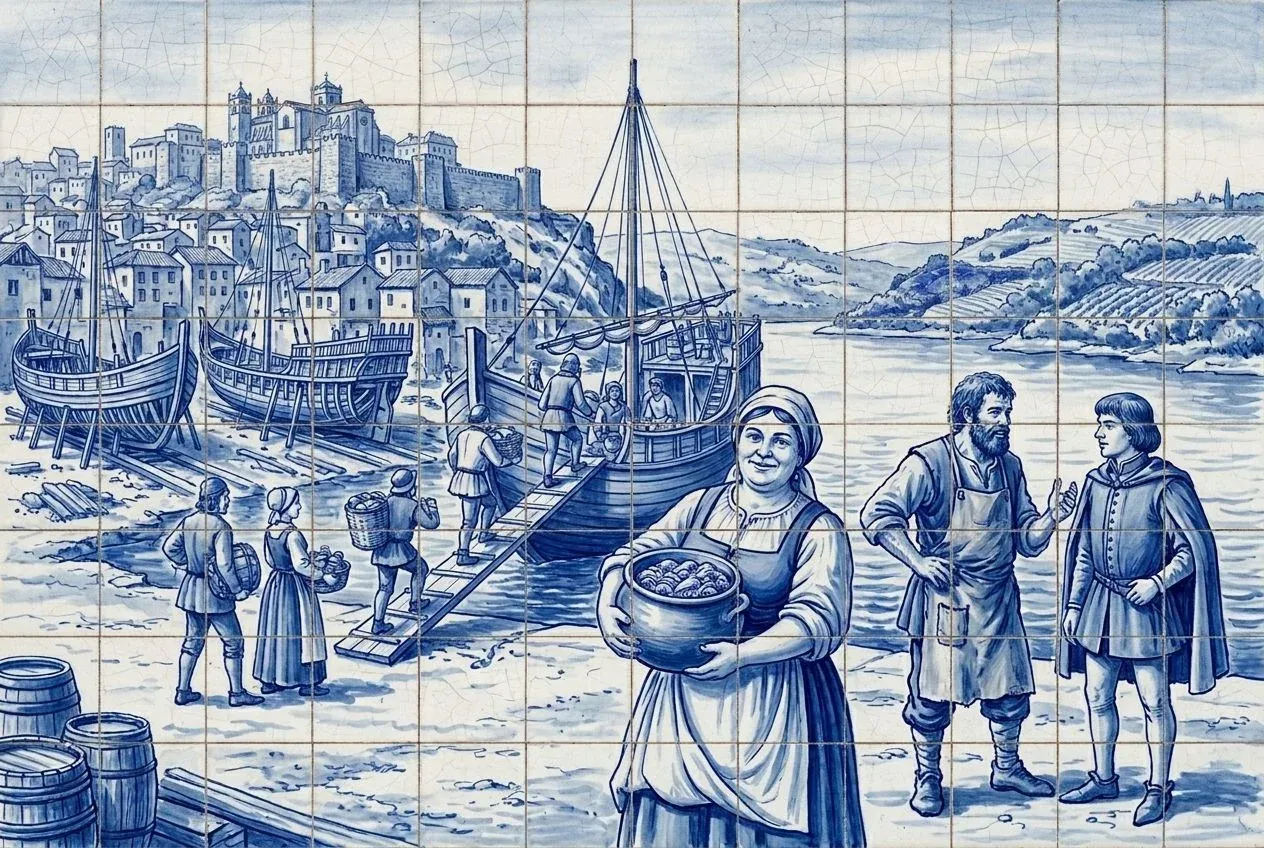
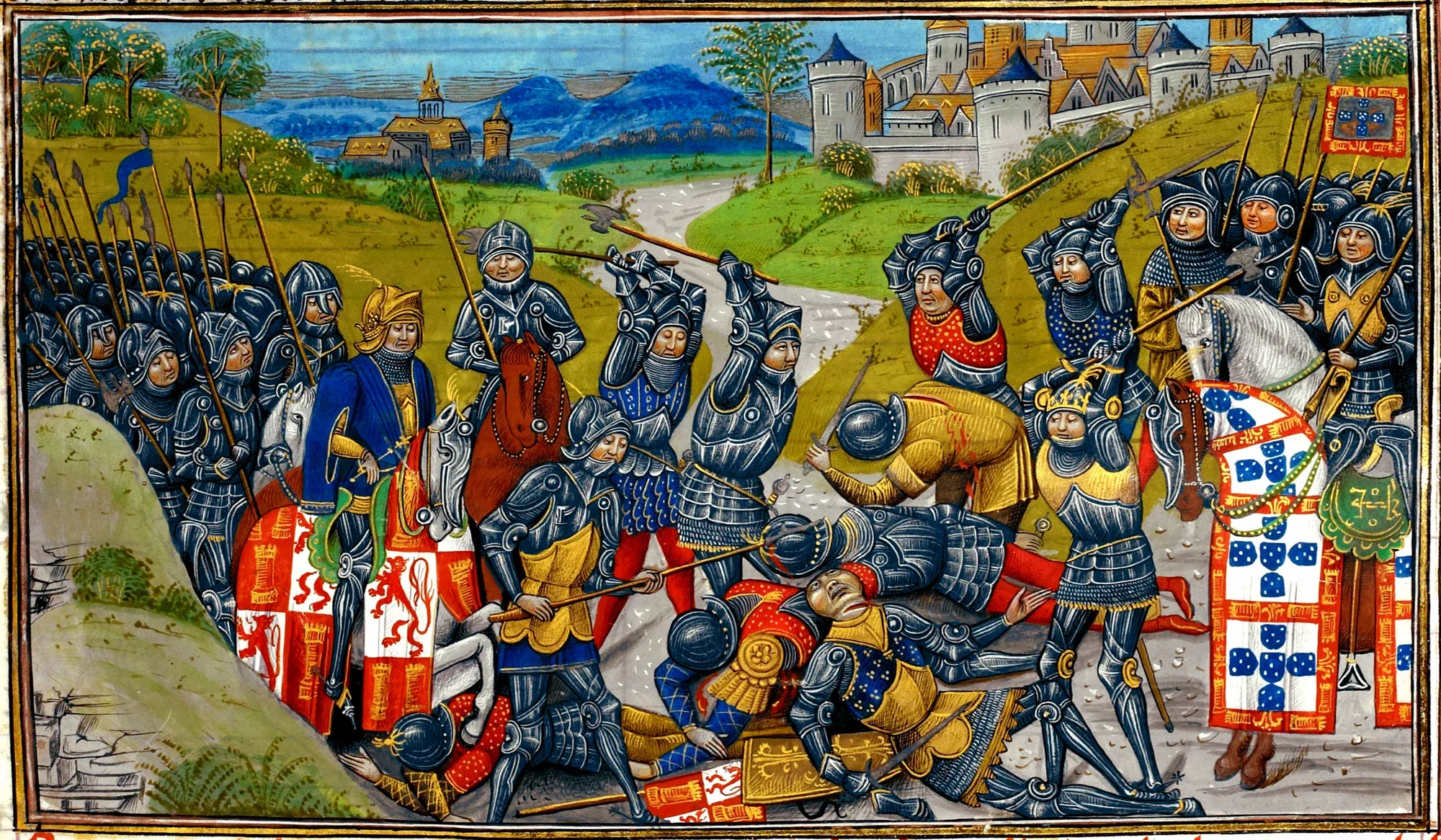
In 1385 Nuno Álvares Pereira was 25 and Portugal's constable. The war council could not agree where to fight, so on 6 August he left the camp with about 2,000 men and chose the battlefield himself. Froissart says he had ditches and wolf pits dug across a narrow plateau. On 14 August, at the hour of vespers, the French knights who charged first rode straight into them. The Castilians, several times more numerous, lost.
More
Context
After the victory, Nuno gave most of his wealth to his veterans. In 1423, aged 63, he entered the Carmo convent he had founded in Lisbon and became Friar Nuno of Saint Mary. The 1755 earthquake destroyed the convent's roof; today its nave stands open to the sky. Numbers for the armies vary widely: the Aljubarrota Battle Foundation puts the Portuguese at about 7,000 and the Castilians at 31,000–44,000, of whom only about 10,000 fought. The 'Portuguese square' is now called a myth, and the baker woman who killed fleeing Castilians first appears in sources in the 16th century. He was canonised in 2009. The ditches and pits come from Froissart; Ayala, the Castilian eyewitness chronicler, and Fernão Lopes, sixty years later, do not describe them.

One against five
Each dot stands for 1,000 people. Filled dots show the lowest estimate; empty dots, the rest of the range up to the highest estimate.
According to historians' estimates.
| Group | Estimate | Note |
|---|---|---|
| Portuguese | 7,000 people | About 7,000 men. |
| Castilians (total) | from 31,000 to 44,000 people | Between 31,000 and 44,000, according to the Aljubarrota Battle Foundation. |
| Castilians who fought | 10,000 people | Only about 10,000 actually fought. |
The group “Castilians (total)” has about 5.4 times as many people as the group “Portuguese” (comparing the middle of the estimates).
Bridge to today
Aljubarrota Battle Interpretation Centre
Centro de Interpretação da Batalha de Aljubarrota (CIBA)
On the São Jorge plateau, an interpretation centre explains the field where the battle was fought.
Calvaria de Cima, Porto de MósBridge to today: Aljubarrota Battle Interpretation Centre


Sources (9)· links checked on
- Fundação Batalha de Aljubarrota, painel «The Battle»: composição das forças, baixas, formaçãoAccessed on
- Diário de Notícias: «Vitória em Aljubarrota não é graças ao quadrado que não existe» · on the book “Aljubarrota”, DesassossegoAccessed on
- João Gouveia Monteiro (coord.), «Aljubarrota Revisitada», Imprensa da Universidade de Coimbra, 2001Accessed on
- The Holy See (vatican.va): Nuno De Santa Maria Álvares Pereira (1360-1431) - Biography
- Britannica: St. Nuno Álvares Pereira
- Visit Portugal: Museu Arqueológico do Carmo / Convento do Carmo
- The Portugal News: The Battle of Aljubarrota
- Wikipedia: Battle of Aljubarrota
- The Battle of Aljubarrota (Antiquity, 1963)Accessed on