
The cape of fear
For twelve years sailors feared one cape. Gil Eanes brought back flowers.
The story
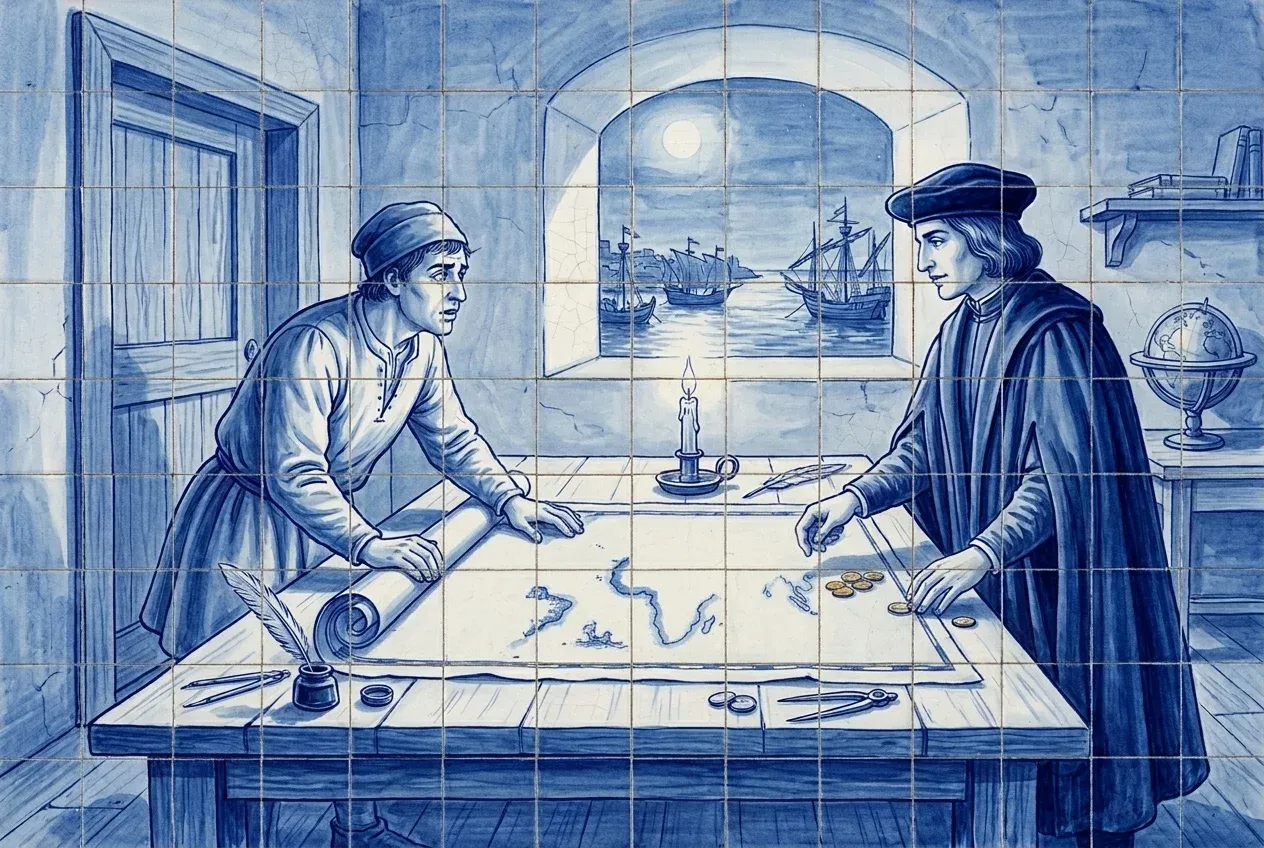
Cape Bojador, on the coast of Western Sahara, was thought to be a place of no return. People said that beyond it there were no people, the sea was shallow and the currents would never let a ship come back. Prince Henry sent ship after ship, and every one turned back. In 1433 Gil Eanes of Lagos turned back too. The prince sent him again, and in 1434 he got through. As proof, he brought the prince plants the Portuguese called "Saint Mary's roses".
More
Context
We know all this from the chronicle of Gomes Eanes de Zurara, written around 1453. Zurara lists the sailors' fears: beyond the cape there are no people or villages, the land is like a desert, and the sea is so shallow and the currents so strong that a ship cannot return. He is also the one who writes that the prince sent ships to Bojador for twelve years. What those plants were is not known for certain. The real cape turned out to be less terrible. Gil Eanes is said to have simply headed further out to sea and gone round the shoals. A year later he went back with Afonso Gonçalves Baldaia, and they sailed further south still.
Bridge to today
Statue of Gil Eanes
Estátua de Gil Eanes, Jardim da Constituição
Gil Eanes was born in Lagos; his statue stands in the garden by the waterfront.
Jardim da Constituição, LagosBridge to today: Statue of Gil Eanes


