The Car vs. the Donkey
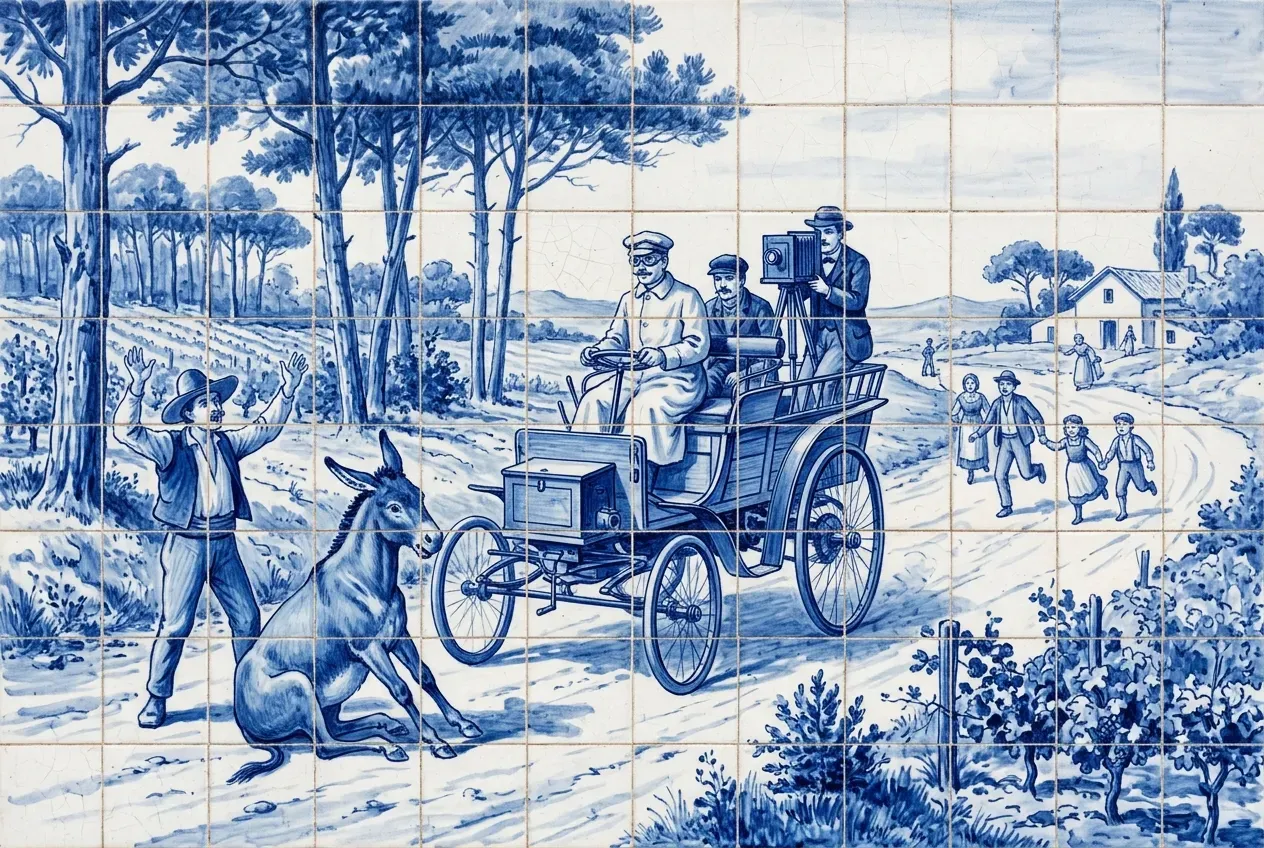
On its first trip, Portugal’s first car hit a donkey.
The story
In 1895, the Count of Avillez bought a Panhard & Levassor automobile in Paris and brought it to Lisbon. It was the first car in Portugal: iron wheels with no tires and a top speed of about 15 km/h (9 mph).
The count decided to drive it to his estate in Santiago do Cacém, more than a hundred kilometers to the south. The roads were made for carts and donkeys, and people along the way had never seen a carriage without a horse.
Near Palmela, the car hit a donkey. It was the country’s first car accident, before there were any traffic rules. On October 15, the car finally made it to Santiago do Cacém.
Route: Lisbon → Santiago do Cacém, 1895
Route points
- Lisbon, 1895
- Palmela, 1895
- Santiago do Cacém, October 15, 1895
Meanwhile
- 1895In December, the Lumière brothers give the first public film screening in Paris.
More
Context
At first they filled the tank with kerosene, because no one in Portugal knew what the car ran on. Only later did they figure out it needed gasoline. A French mechanic and a photographer rode along with the count.
A few years later, cars had become a toy of the nobility, and the country’s biggest car enthusiast was King Carlos I himself: he owned several and drove them himself. In 1903 the Royal Automobile Club of Portugal was founded, and the king is said to have drawn its emblem. The club pushed for clear laws for drivers and for good roads, and in 1913 it published Portugal’s first road map.
The roads where the car met the donkey in 1895 stayed cart roads for a long time. Only after World War I did the number of cars multiply, and in 1927 an agency was created to look after roads across the whole country.
Where to see it today
Monument to Portugal’s First Automobile
Homenagem ao primeiro automóvel de Portugal
A replica of Portugal’s first car stands in the town it reached in 1895.


That was the last story of the era “Monarchy and Republic.” Your panel is complete →