The Cake That Outlived the King
The king fell in 1910, but nobody managed to rename the bolo-rei.
The story
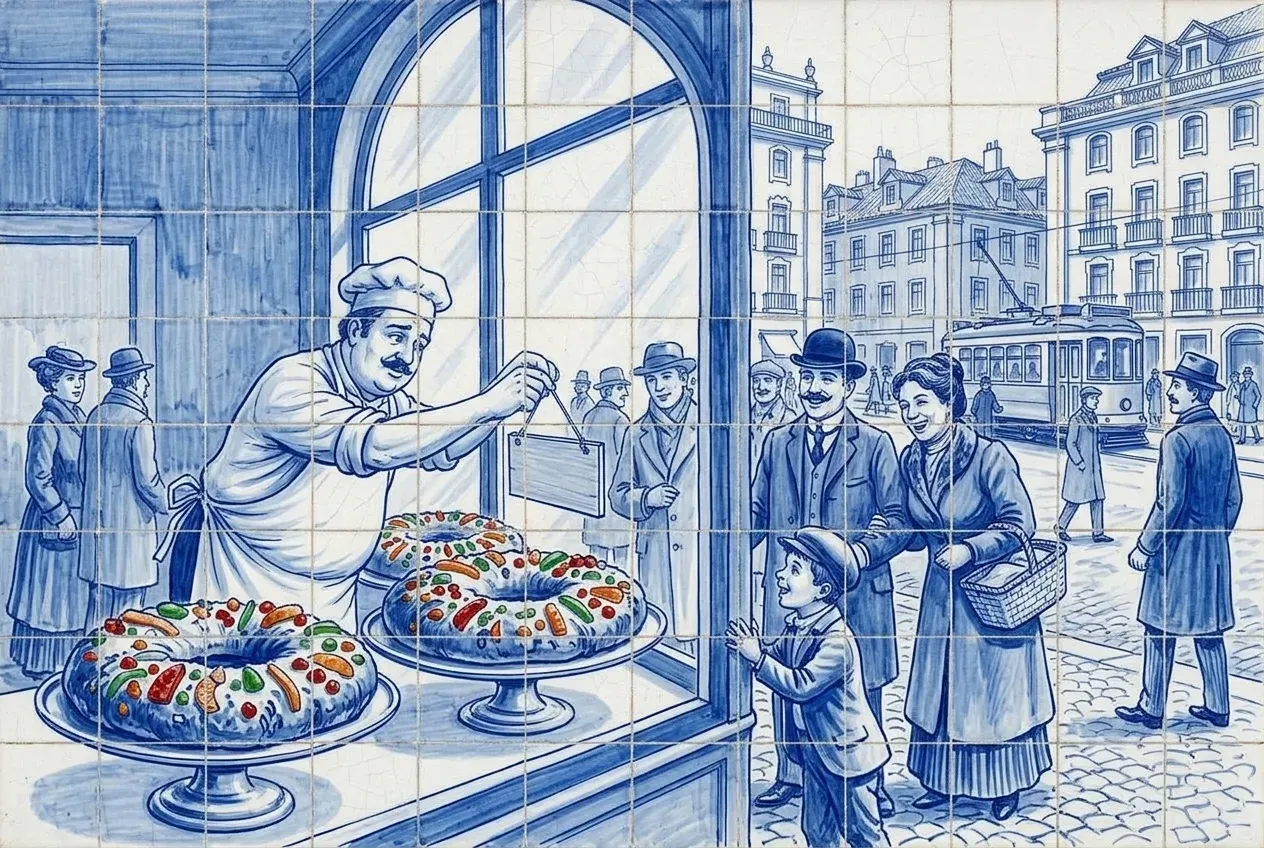
Bolo-rei, a ring of sweet dough topped with candied fruit and nuts that looks like a crown, is Portugal’s great Christmas cake. The recipe is said to have come from France in the second half of the 19th century, to the Confeitaria Nacional in Lisbon. When Portugal became a republic in 1910, a “king cake” in the shop window suddenly looked out of place. Bakers tried selling it as “bolo-presidente,” “bolo-Arriaga” after the first president, and even “ex-bolo-rei.” None of the names stuck, and the cake stayed king.
More
Context
The Confeitaria Nacional was founded in 1829 by Baltazar Rodrigues Castanheiro. His son brought the recipe back from Paris, and according to the shop itself, the cake first went on sale there in 1875. In France, a similar cake is eaten at Epiphany, the day of the Three Kings. So the “king” in the name most likely isn’t a Portuguese monarch at all, but the Magi. That’s why bolo-rei is eaten both at Christmas and on Three Kings’ Day, January 6.
None of that helped the republicans: the word “king” in the window still reminded people of the fallen monarchy. According to some sources, someone even proposed “bolo-república” in parliament, but that didn’t catch on either. Something similar happened in France: during the Revolution, people tried to ban the “cake of kings,” and failed there too.
By custom, a dried fava bean and a small trinket were baked into the cake. Whoever found the trinket was in luck; whoever got the bean had to buy next year’s bolo-rei.
Where to see it today
Confeitaria Nacional
The shop where bolo-rei is said to have first gone on sale; it still stands on the same spot.


That was the last story of the era “Monarchy and Republic.” Your panel is complete →