The Engravings That Can’t Swim
A dam was scrapped over Stone Age rock art.
The story
In the early 1990s, work began on a dam on the Côa River in northeastern Portugal. Its reservoir was going to flood the valley.
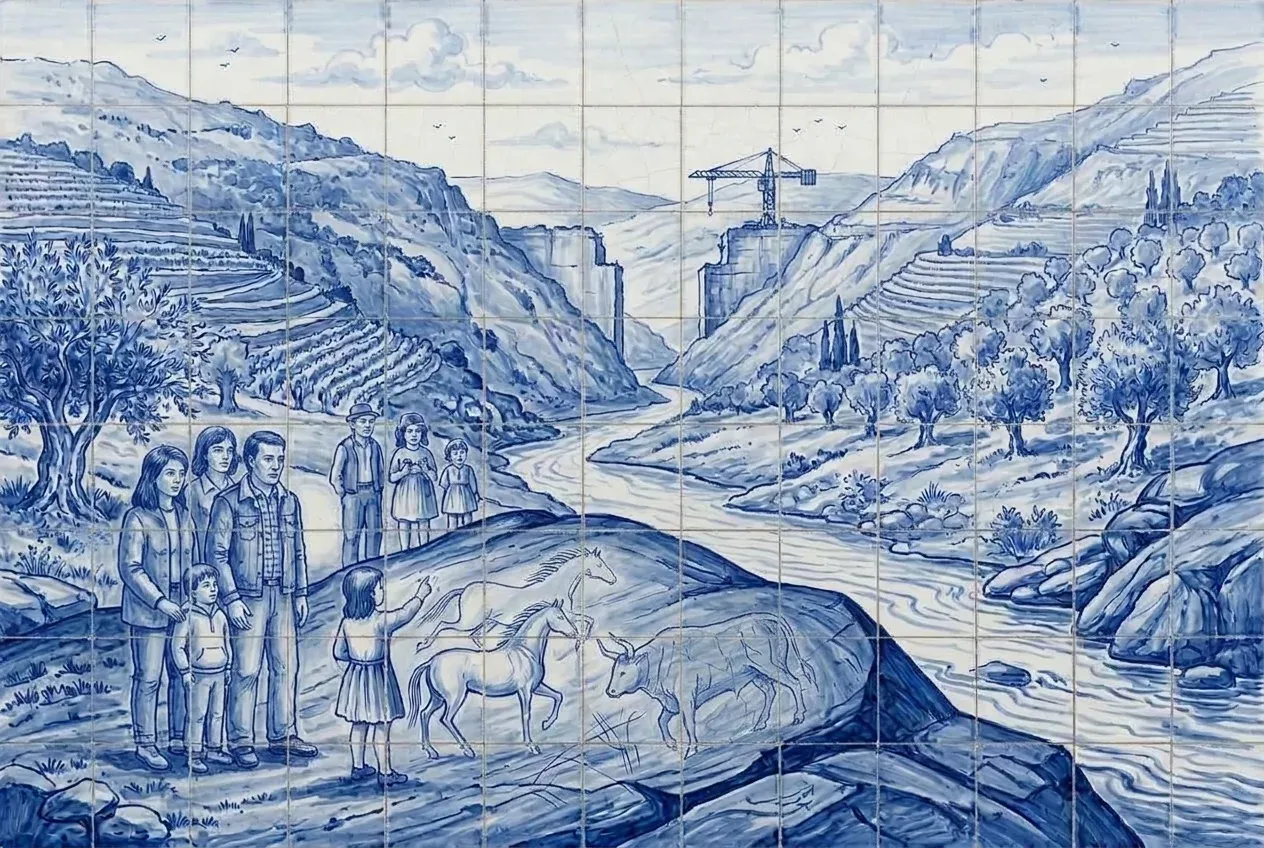
While construction went on, archaeologists noticed figures carved into the schist rocks by the river: horses with manes, aurochs, deer, and wild goats. The oldest are more than 20,000 years old. If the dam had been finished, they would have been underwater forever.
In 1994 the newspapers reported the find, and locals, scientists, and journalists across the country rallied to save the engravings. Their slogan became “The engravings can’t swim.” In November 1995 the new prime minister, António Guterres, canceled the project, and instead of a reservoir the valley got an archaeological park.
Meanwhile
- over 20,000 years agoGlaciers covered Scandinavia, and the southern North Sea was dry land.
More
Context
Who saw the engravings first is still debated: both 1991 and 1993 come up. But they only became widely known in the fall of 1994, with construction already underway, and that’s when the campaign began. The slogan played on “Nadar” (“Swimming”), a song by Black Company, a rap group that was hugely popular at the time.
What was saved was not a single rock but an entire gallery. The engravings were made over many thousands of years, and the oldest are more than 20,000 years old. Stone Age art like this is usually found in caves; here it stands in the open air.
In 1998 the valley was added to UNESCO’s World Heritage list. And Guterres, who stopped the dam, later became Secretary-General of the United Nations.
Where to see it today
Penascosa rocks, Côa Valley
Penascosa
The horses and aurochs are carved into rocks right by the water.


Sources (2)· links checked on
- Wikipedia: Prehistoric Rock Art Sites in the Côa Valley and Siega Verde · The slogan, Guterres in 1995, the dating, UNESCO in 1998
- TRACCE: Côa Valley: the Discovery
That was the last story of the era “Prologue: Dinosaurs and Stones.” Your panel is complete →