Across the Atlantic With a Sextant
One seaplane broke up, one landed at sea, the third reached Rio.
The story
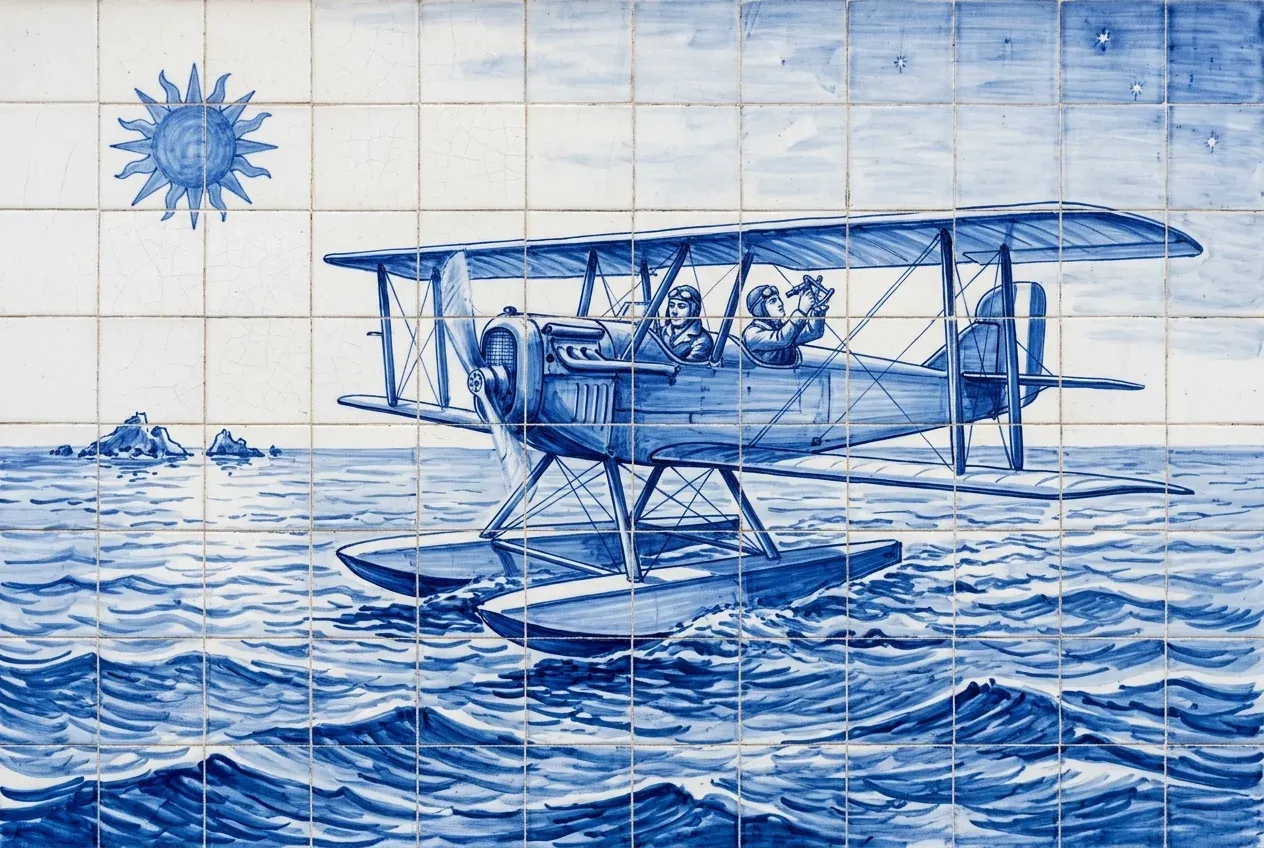
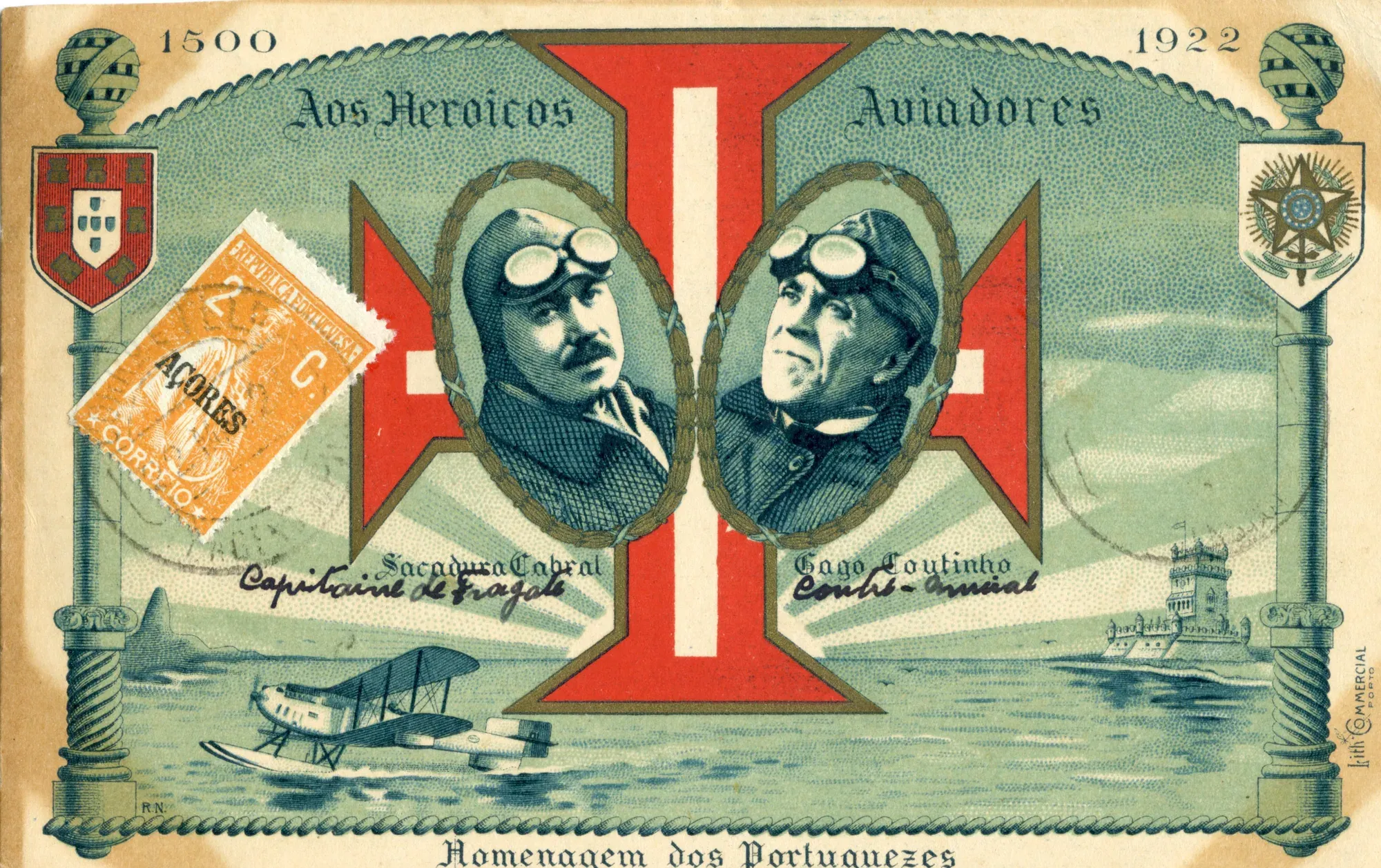
In 1922, navy officers Gago Coutinho and Sacadura Cabral set out to fly from Lisbon to Brazil for its independence centennial. Over the ocean there’s nothing to fix your eyes on, so Coutinho navigated by the sun and stars with a sextant to which he had added an artificial horizon, because the real one can’t be seen in haze. The first seaplane broke up in the waves near the Saint Peter and Saint Paul Rocks in the middle of the ocean, and the second came down on the water with engine trouble. The navy brought a third, and on June 17, 79 days after takeoff, the aviators landed in Rio.
Route: Lisbon → Rio de Janeiro, 1922
Route points
- Lisbon, 1922
- Saint Peter and Saint Paul Rocks
- Rio de Janeiro, June 17, 1922
Meanwhile
- 1922The Lincoln Memorial is dedicated in Washington.
More
Context
An ordinary sextant needs a horizon, and from up in the haze you can’t see one. Coutinho fitted his sextant with an artificial horizon, a bubble level, so he could measure the sun’s height in mid-flight. The instrument was later mass-produced.
The hardest leg was the hop to the tiny Saint Peter and Saint Paul Rocks: an islet a few hundred meters across in the middle of the ocean. Coutinho brought the plane there exactly as calculated, but landing on a steep wave, the “Lusitânia” lost a float and sank. The crew of the second plane, the “Pátria,” drifted for nine hours before they were picked up.
Where to see it today
Maritime Museum
Museu de Marinha
The only surviving seaplane, the “Santa Cruz,” is in the Royal Barges Pavilion.


That was the last story of the era “Monarchy and Republic.” Your panel is complete →