Monks’ Pastries, or Maybe the Best Ad of the 19th Century
When Portugal’s monasteries closed in 1834, the tarts went on sale.
The story
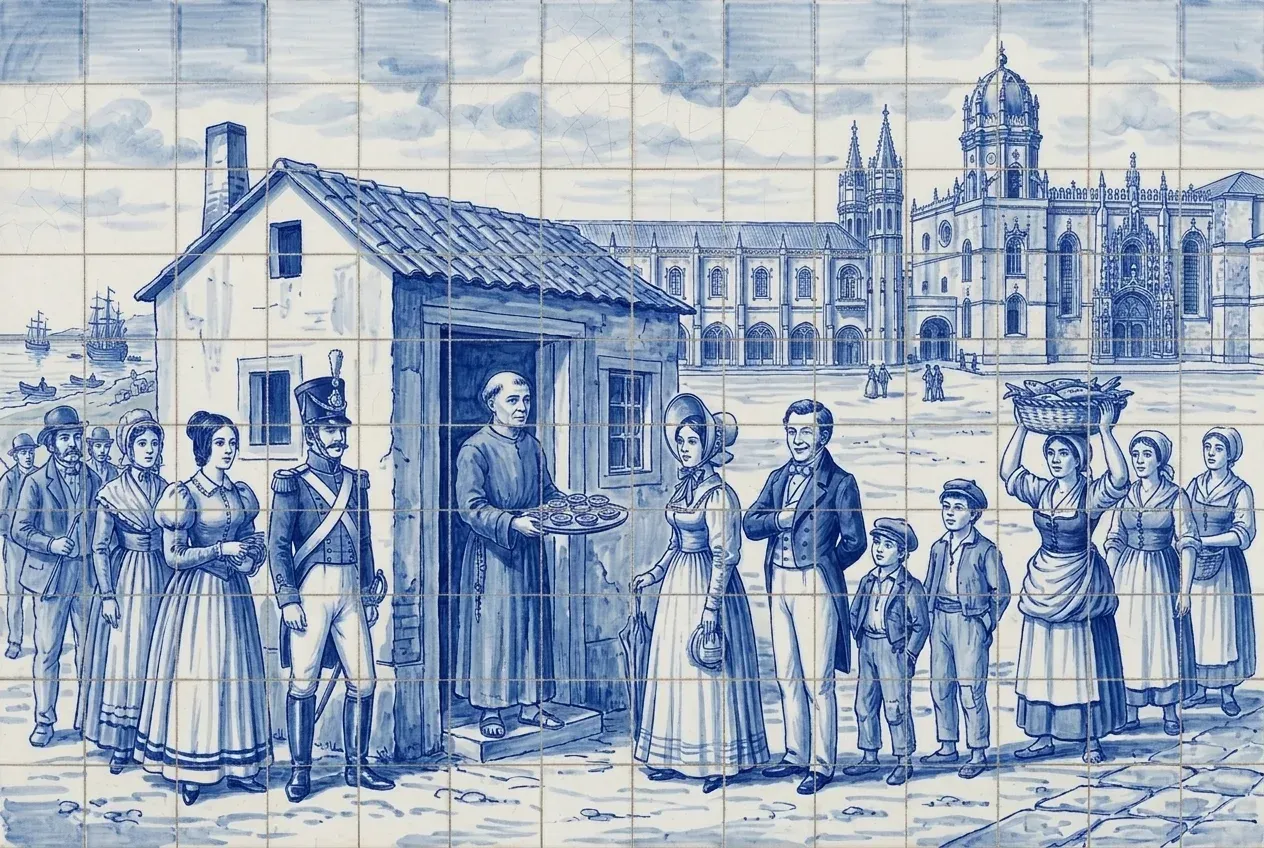
In 1834 every monastery in Portugal was shut down and the monks sent home. To make a living, someone from the Jerónimos Monastery in Belém started selling custard tarts in a shop next door. In 1837 they began baking them “from the monastery recipe” in a building by an old sugar refinery, and the recipe has been kept secret for almost two hundred years. But the historian João Pedro Gomes considers “convent confectionery” largely a myth that became advertising once the monasteries were closed.
Meanwhile
- 1837Hans Christian Andersen publishes The Little Mermaid.
More
Context
In 2022, historian João Pedro Gomes of the University of Coimbra defended a dissertation on Portuguese desserts and came to a surprising conclusion. “Convent pastry” is largely a myth. Convents made desserts, like everyone else, but the legend of nuns’ secret recipes blossomed in the 19th century, when the convents closed and bakeries were happy to sell pastries with a “convent” backstory.
Even the most widely told version takes a hit: that nuns starched their clothes with egg whites and used the leftover yolks in desserts. Gomes calls it a tall tale: there’s no written evidence.
The tarts are no worse for it.
Where to see it today
Pastéis de Belém
The tarts get a dusting of cinnamon and powdered sugar right at the table.


Sources (2)· links checked on
That was the last story of the era “Monarchy and Republic.” Your panel is complete →