The Bridge That’s Served for 1,900 Years
The Roman bridge the townspeople paid for themselves.
The story
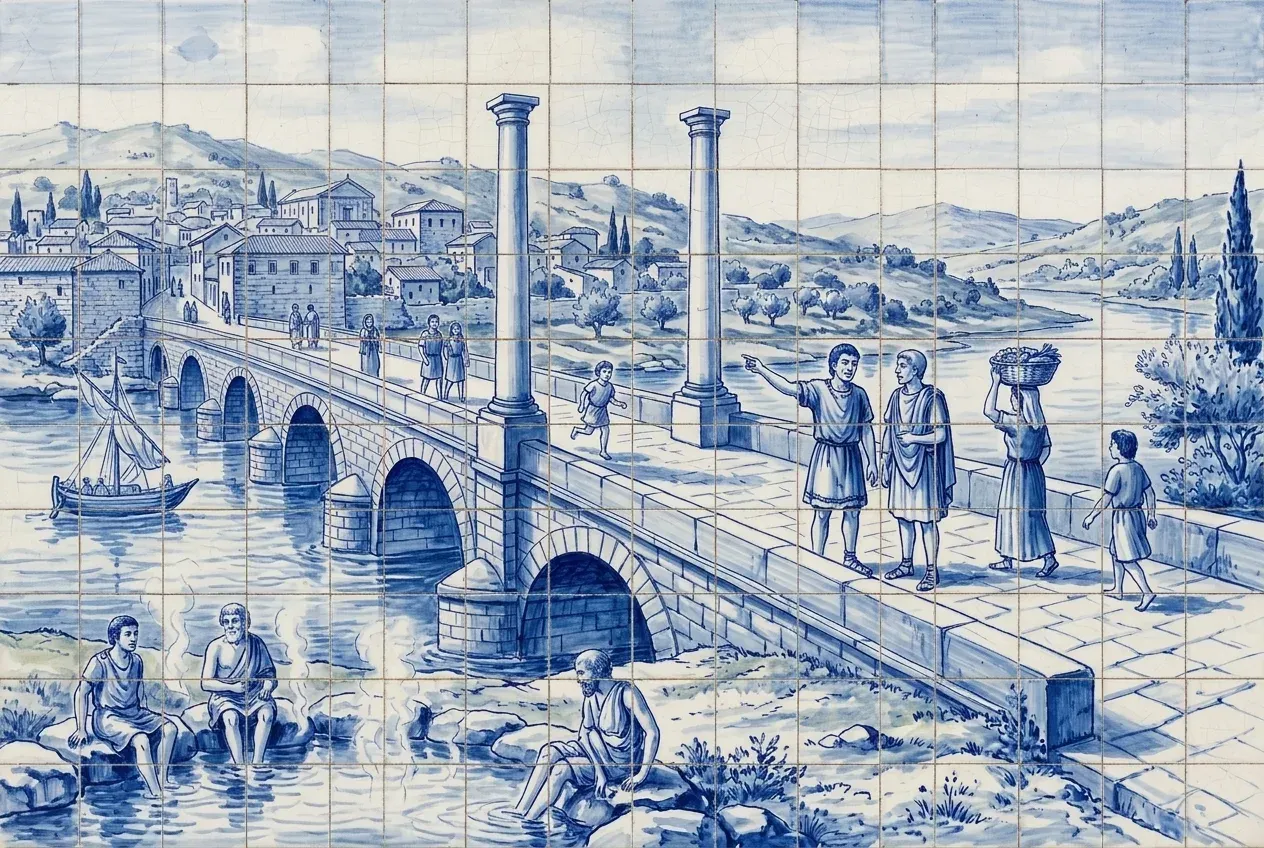
The Romans covered A Roman province in the west of the Iberian Peninsula: Portugal south of the Douro and part of today’s Spain. “Lusitanian” often just means Portuguese.All words → with roads, and on the road from Braga to Astorga they needed a bridge over the Tâmega River. In the town of Aquae Flaviae, today’s Chaves, they built it around the turn of the 2nd century, under Emperor Trajan. The bridge outlived the fall of Rome, the Moors, floods, and wars. It has been repaired and its railings replaced, but the Roman arches still carry the road across the river.
Meanwhile
- AD 105Cai Lun presents paper to the Chinese emperor.
More
Context
The Romans settled here for the hot springs, and Chaves is still known for them. The bridge connected the springs to the empire’s great highway.
The bridge started with 16 arches, and 12 can be seen today: the rest disappeared under houses and river silt. In the 16th century a flood partly destroyed it, and in 1880 the stone railings were replaced with iron ones. In 2001, 50 meters of Roman paving were dug up at the entrance to the bridge.
Halfway across stand two Roman columns with Latin inscriptions. The one dedicated to Trajan says the people of Aquae Flaviae built the stone bridge at their own expense. The other, known as the Padrão dos Povos, or “stone of the peoples,” lists ten local communities.
Where to see it today
Roman Bridge (Trajan’s Bridge)
Ponte Romana (Ponte de Trajano)
Walk across the river and look for the two columns with Latin inscriptions halfway over.


Sources (3)· links checked on
That was the last story of the era “Lusitania and Rome.” Your panel is complete →