Granite Pigs Older Than the Romans
A pig more than two thousand years old.
The story
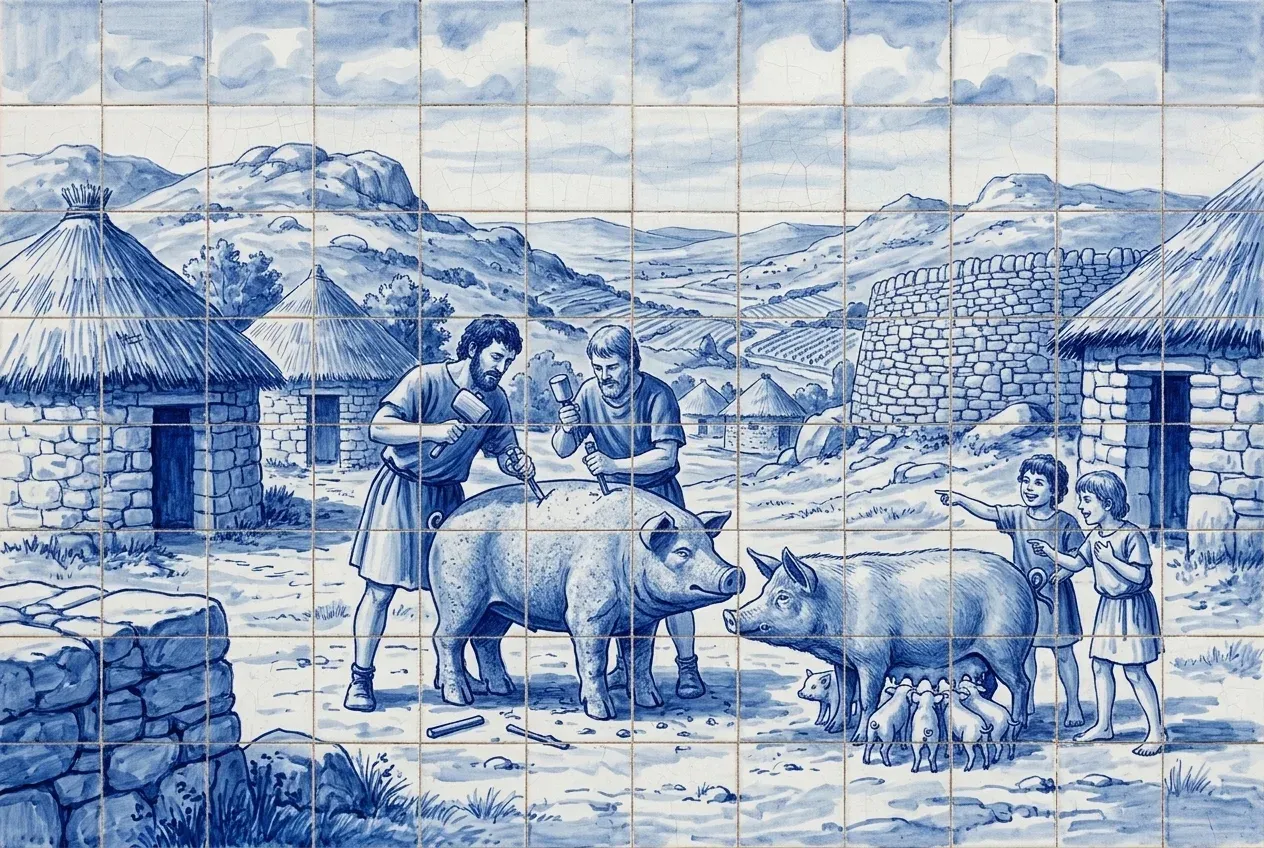
Even before the Romans, tribes in northeastern Portugal and western Spain carved boars, pigs, and bulls out of granite. They’re called berrões. More than four hundred have been found. No one knows for sure what they were for: maybe to protect herds, maybe as boundary markers or grave markers. The most famous, the Porca de Murça, is almost two meters long, and the townspeople see it as the symbol of their town.
Meanwhile
- 387 BCPlato founds his Academy in Athens.
More
Context
The Murça pig was carved from a single block of granite: 1.7 meters long and about a meter high. It most likely came from the hillfort on the hill facing the town.
The stone animals outlived the people who made them. In Roman times, some were carved with Latin funeral inscriptions. In Bragança, the medieval pillory stands on a granite base shaped like the same kind of boar.
In Spain, these animals made it into literature. The stone bull by the Roman bridge in Salamanca appears in “Lazarillo de Tormes”: the boy’s blind master slams his head against the stone to “smarten him up.” And Cervantes mentions the “Bulls of Guisando” in “Don Quixote.”
Where to see it today
Murça Pig (Porca de Murça)
Porca de Murça
The figure stands right in the square, and you can touch it; the Douro vineyards start here.


Sources (4)· links checked on
That was the last story of the era “Lusitania and Rome.” Your panel is complete →