The Baths Where Women Paid Double
At the Roman baths, women paid twice as much as men.
The story
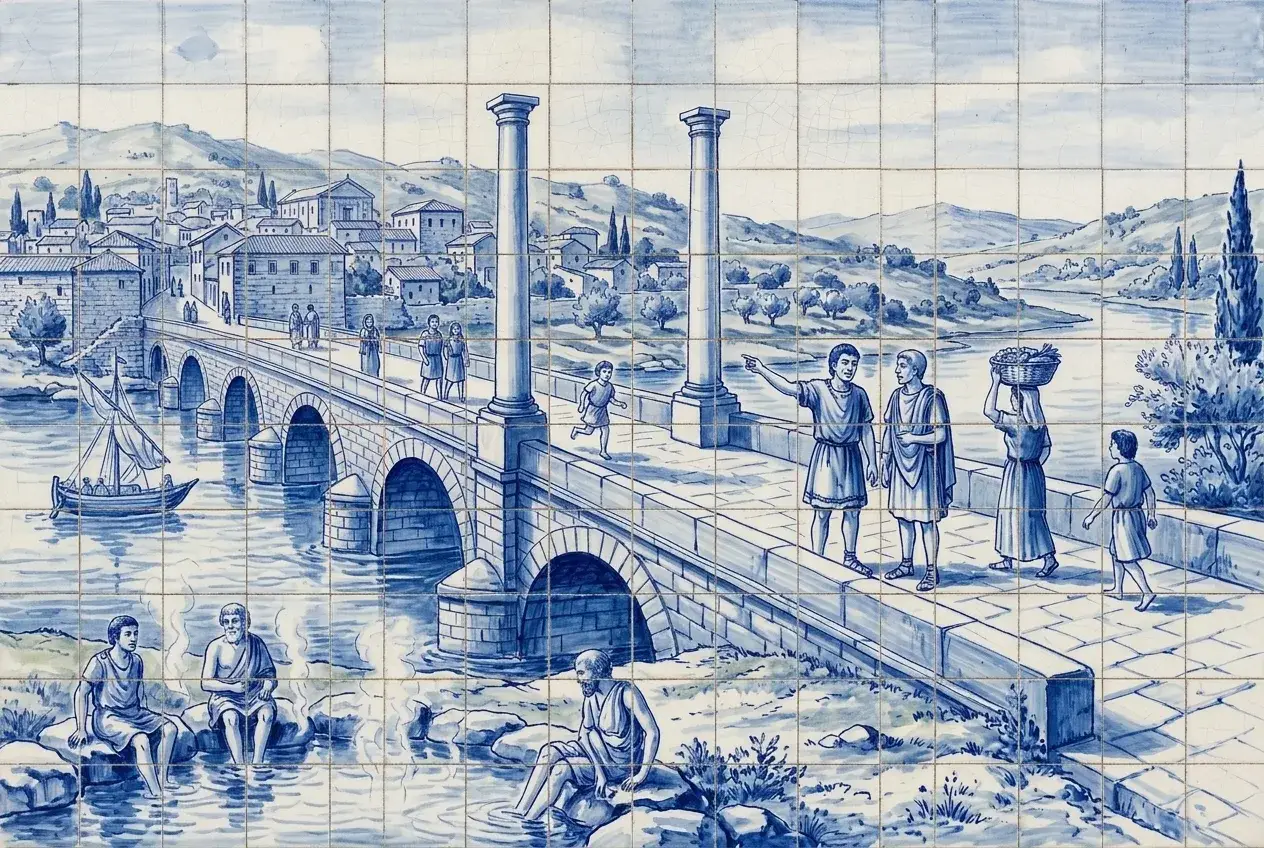
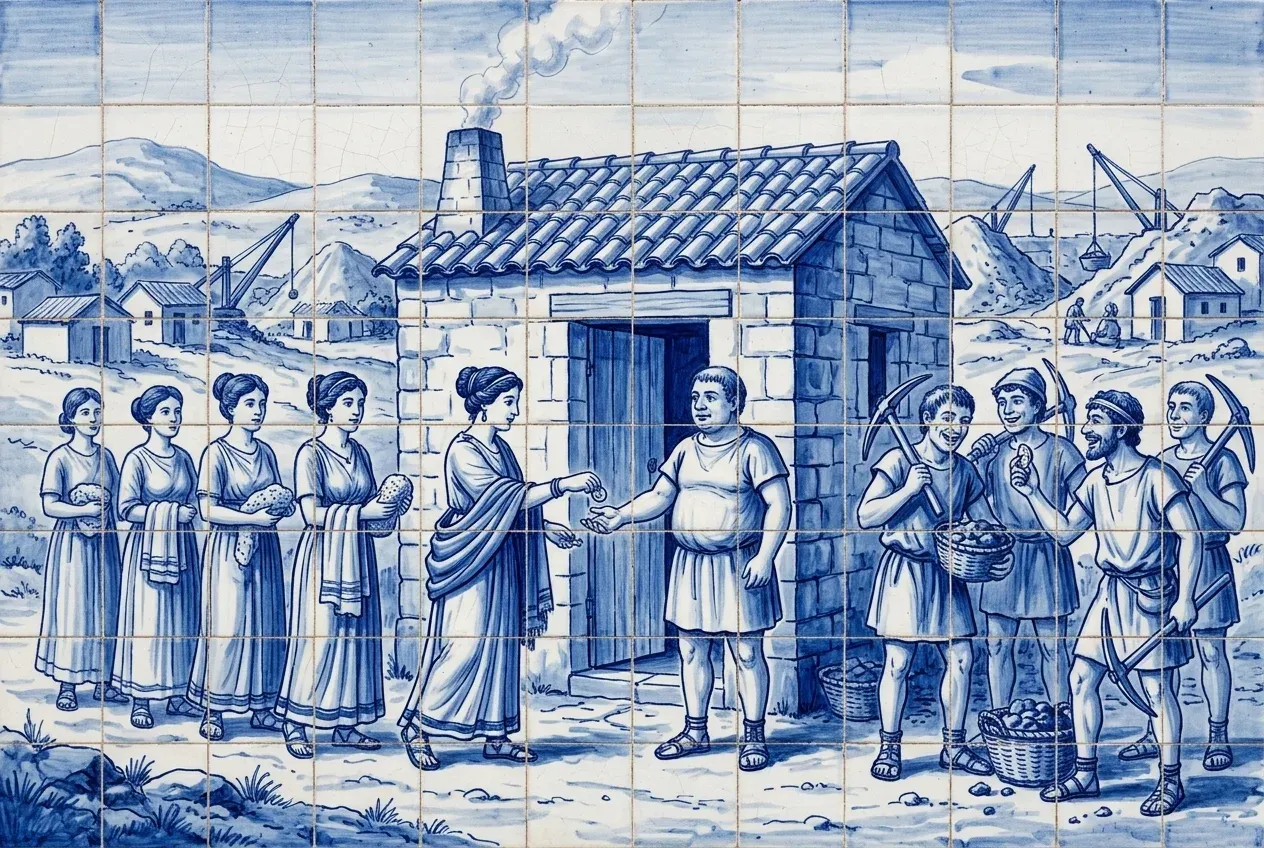
By the Vipasca mine, today’s Aljustrel in the Alentejo, a Roman miners’ village grew up. Its life was laid down by law on bronze tablets. At the baths, the morning until the seventh hour belonged to women, and men bathed from the eighth hour of the day until the second hour of the night. A man paid half a coin, a woman a whole one; historians argue why; one theory is that the boiler had to be relit in the morning. Children, soldiers, and imperial slaves got in free. The tablets were found in the mine’s old slag heaps in 1876 and 1906.
Meanwhile
- AD 80The Colosseum opens in Rome.
More
Context
Historians argue over whether women were really being treated unfairly. One theory: their hours fell in the morning, when the baths had to be heated up again, and the leaseholder charged more to cover his costs. He was also required to heat the baths every day and keep the bronze boilers full.
The tablets describe the whole village. The right to cut hair belonged to a single licensed barber, traveling barbers were sent away, and masters were allowed to cut their own slaves’ hair. Schoolteachers were exempt from taxes.
The first tablet is in the Geological Museum in Lisbon, the second in the National Archaeology Museum. The Aljustrel mine is still working today.
Where to see it today
Geological Museum
Museu Geológico
The first of the two bronze tablets with the laws of Vipasca is kept here.


That was the last story of the era “Lusitania and Rome.” Your panel is complete →