The Singer Behind Portugal’s First Sound Film
Few records of her survive, yet she inspired Portugal’s first sound film.
The story
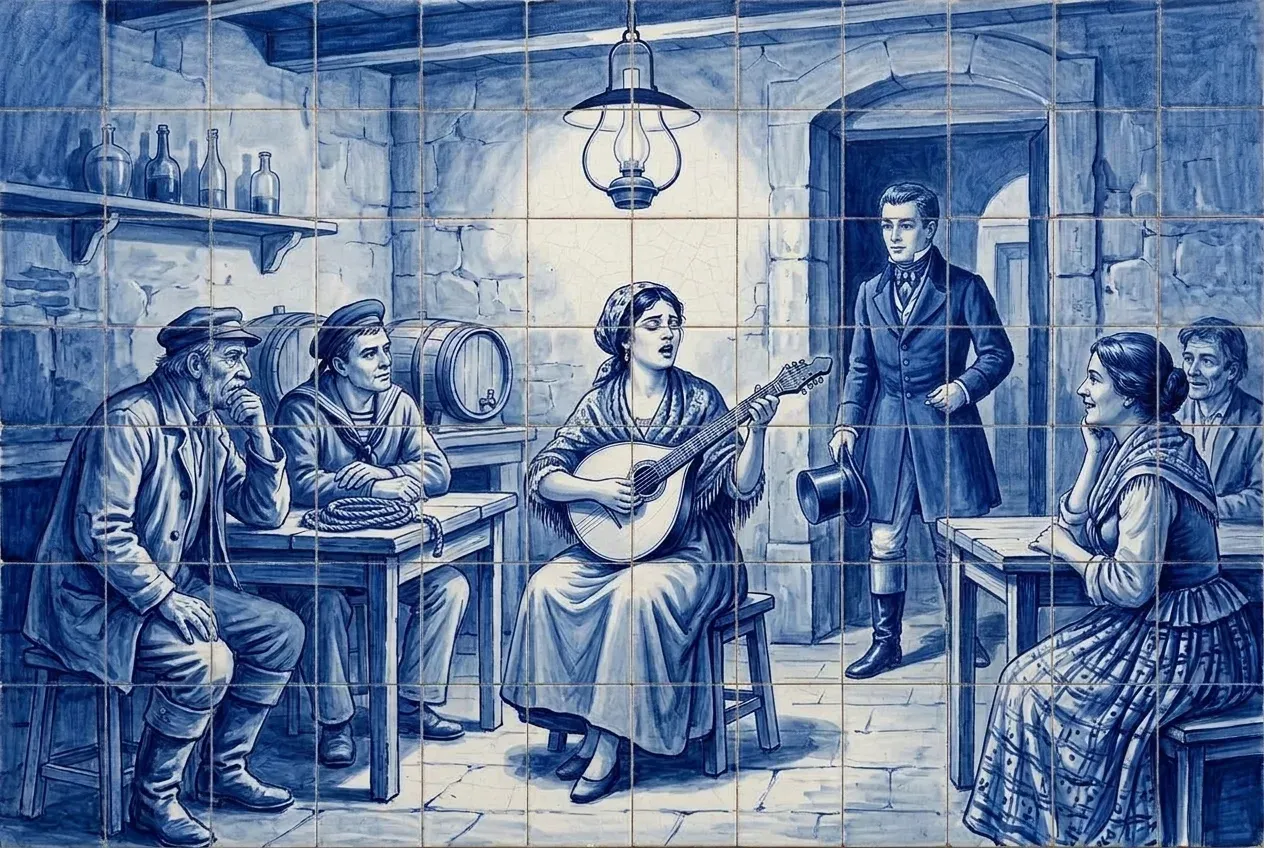
In the 1840s, An urban song of longing and fate, sung to the Portuguese guitar. It was born in Lisbon’s taverns in the 1800s and has been on UNESCO’s heritage list since 2011.All words → was sung in the taverns of Lisbon’s poor neighborhoods, and respectable people kept their distance from it. Maria Severa sang in the taverns of Mouraria and played the guitar herself.
According to legend, her singing won over the Count of Vimioso, a famous cavaleiro, a bullfighter who faces the bull on horseback. She found herself in his circle of bullfighting fans, among young aristocrats. That’s how songs from the poor neighborhoods reached people who never set foot in a tavern.
Severa died in 1846, at 26. There are hardly any records about her, which made it easy for her life to turn into legend. In 1901 a novel and a play were written about her, and in 1931 the film A Severa was made. It was Portugal’s first sound film.
Meanwhile
- 1846Astronomers discover the planet Neptune.
More
Context
More than 200,000 people saw the film, and Severa became a lasting symbol of fado: the heroine with whom the music supposedly “began.” Historians are cautious, though. Almost everything told about her life comes from Júlio Dantas’s novel, not from documents.
Little remains of Severa herself. She was buried in a common grave at Alto de São João Cemetery. In Mouraria, on Rua do Capelão, the house where she lived has carried a plaque since 1989, unveiled by Amália Rodrigues. Next to it is Largo da Severa, with a guitar laid into the cobblestones.
Where to see it today
Fado Museum
Museu do Fado
The museum tells fado’s path from taverns to film; Severa’s house is in Mouraria, on Rua do Capelão.


That was the last story of the era “Monarchy and Republic.” Your panel is complete →