The Temple a Butcher Shop Saved
Évora’s Roman temple survived because meat was sold inside it.
The story
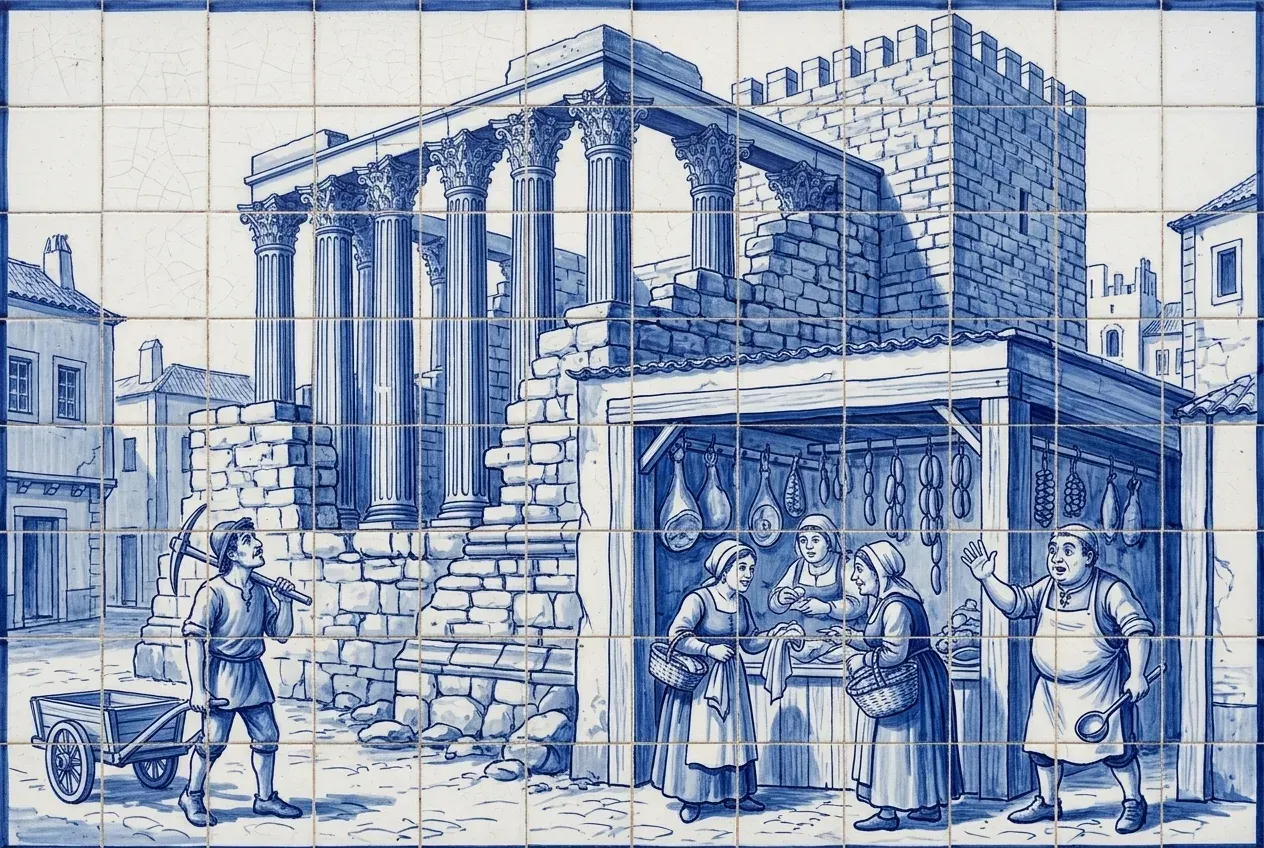
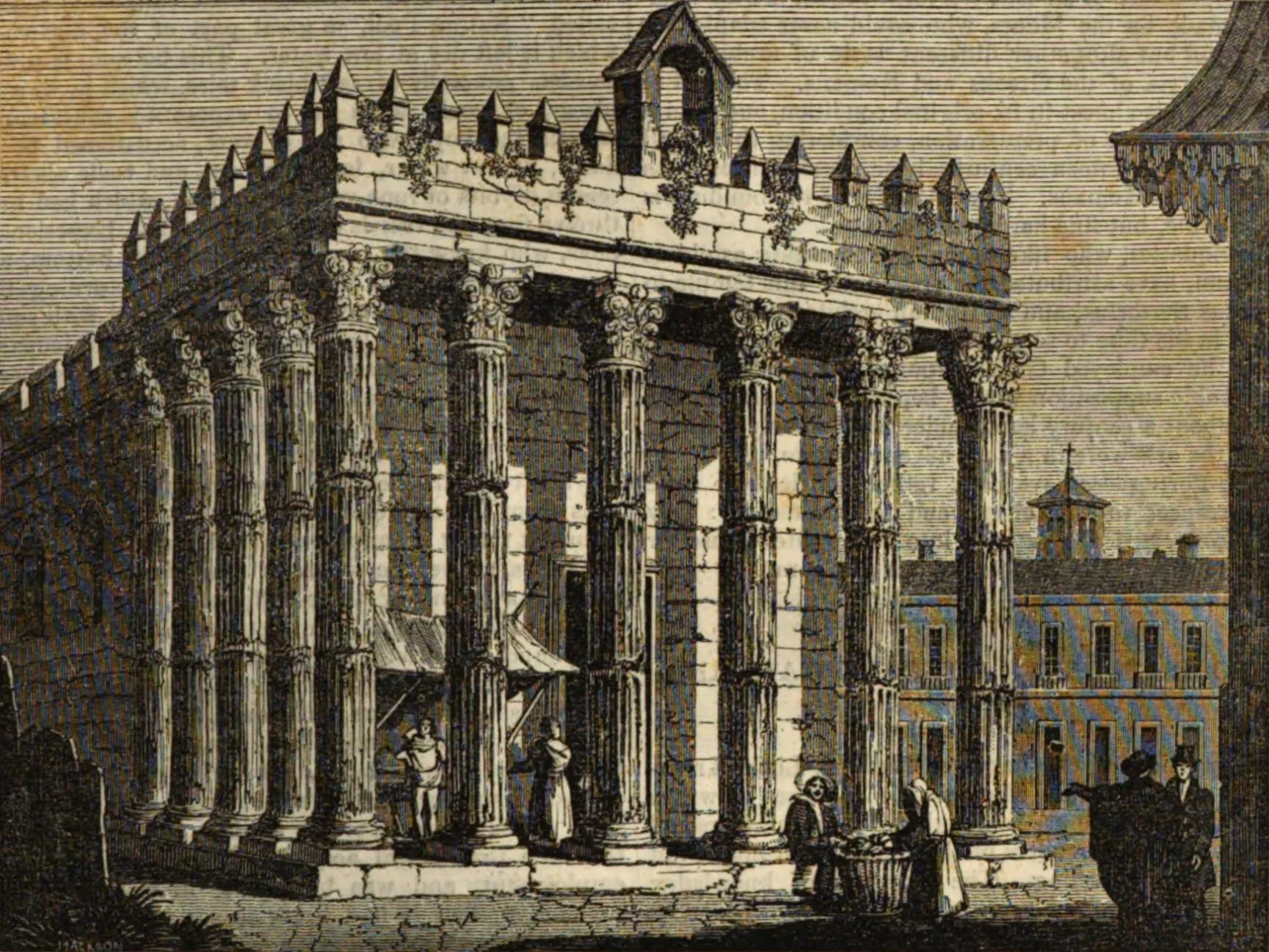
In the 1st century a temple was built in the center of Évora, probably in honor of Emperor Augustus. After the empire fell, old temples all over the country were taken apart for stone to build houses and walls. Évora got lucky: in the Middle Ages the temple was built into a castle tower, the gaps between the columns were walled up, and from the 14th century until 1836 the town’s butcher shop operated inside. The town needed its butcher, so nobody took the building apart.
More
Context
The danger was real. In 1467 King Afonso V allowed stone to be taken from the temple for building and defense. But as long as meat was being sold inside, no one touched the tower, and the columns spent almost five hundred years inside medieval walls.
In the 1870s those walls were torn down under the Italian architect Giuseppe Cinatti, and the temple opened up to the town again.
Many people still call it the “Temple of Diana.” A Portuguese priest came up with that name in the 17th century, and archaeology doesn’t back it up.
Where to see it today
Roman Temple of Évora
Templo Romano de Évora
The columns stand in the open air, a short walk from the cathedral.


Sources (2)· links checked on
- Wikipedia: Roman Temple of Évora
- Wikipédia: Templo romano de Évora · butcher shop until 1836, Cinatti, the “Temple of Diana” name from the Jesuit Manuel Fialho
That was the last story of the era “Lusitania and Rome.” Your panel is complete →