The Footman Made of Tiles
Lisbon’s politest footman is three hundred years old. He’s made of tiles.
The story
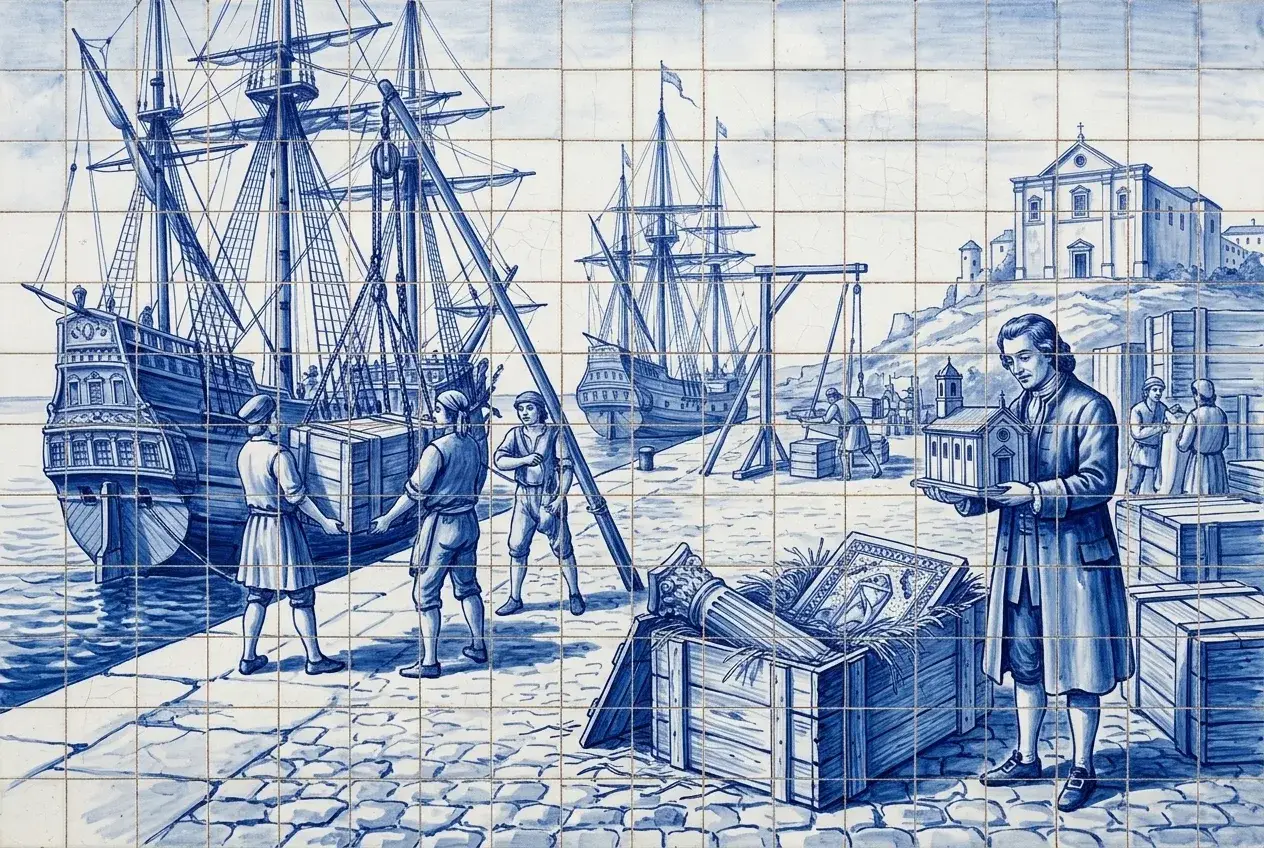
In the first half of the 18th century, Brazilian gold was flowing into Lisbon, and the nobility was rebuilding its palaces. Entrance halls and staircases were covered in blue-and-white tiles, and the workshops couldn’t keep up with orders.
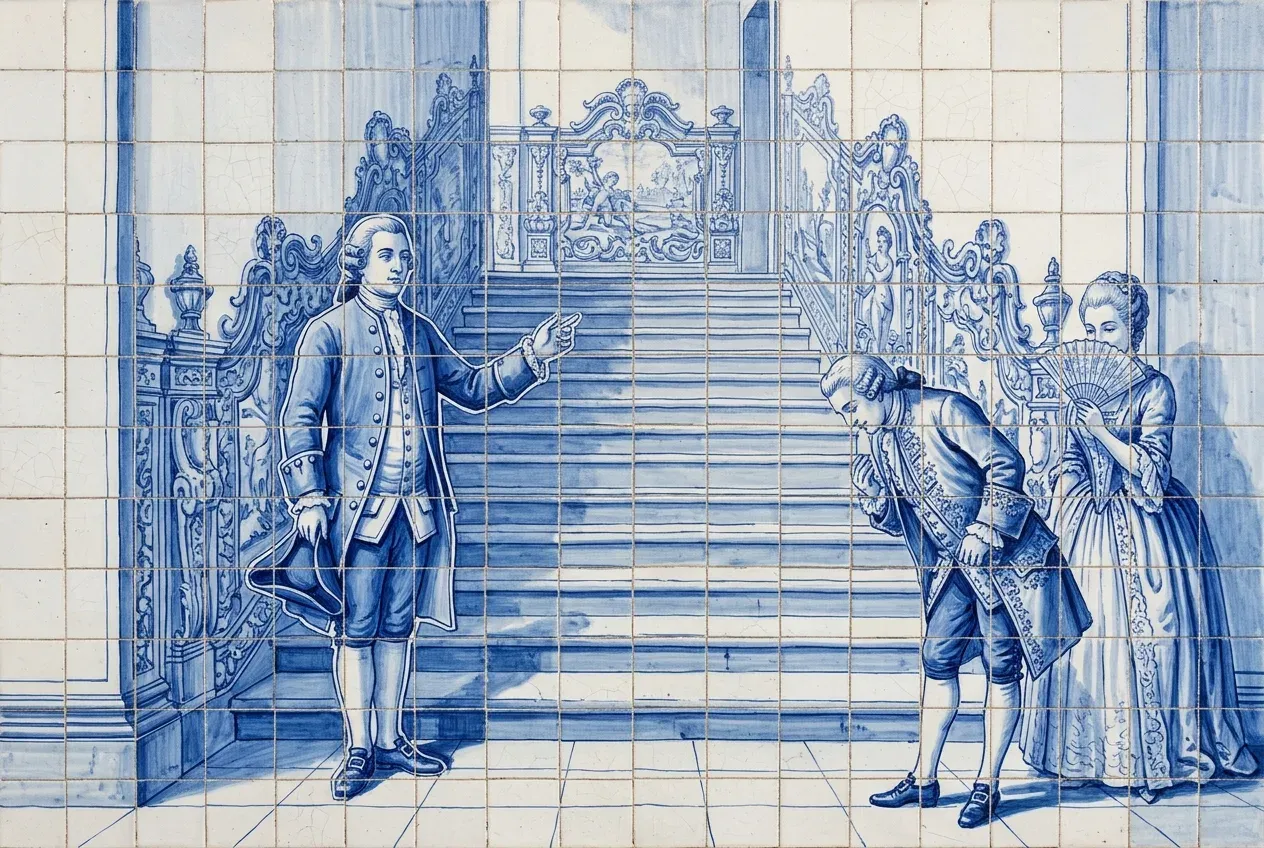
At the door of a wealthy house, a servant would greet a guest and lead them upstairs. Tile painters found a way to make that welcome permanent: by entrances and on landings, they began painting life-size servants in tile. Footmen, halberdiers, and ladies stand by the entrance and on the stairs and welcome the guests.
They’re called figuras de convite, “welcome figures.” A real servant had to be fed and clothed, but a tile one stands by the stairs for centuries and tells every visitor that the owner of the house is rich.
Meanwhile
- 1723In Leipzig, Bach becomes cantor of St. Thomas Church and writes cantatas.
More
Context
The figures were placed at main entrances, on landings, and by doors to gardens and courtyards. Historians call this period the “Great Production”: Lisbon workshops turned out tiles in huge quantities, mostly in blue and white.
One of these figures, a full-length lady, is in the National Tile Museum. She is almost 1.8 m (6 ft) tall, the height of a real person.
Where to see it today
National Tile Museum
Museu Nacional do Azulejo
The museum holds a life-size tile “welcome lady” from 1725–1750.