The Fish Someone Else Caught
For centuries, Portugal ate cod that other people caught.
The story
Cod lives in the cold northern seas, off Newfoundland, Iceland, and Norway. It isn’t found in Portugal’s warm waters. And yet salted, dried cod, bacalhau, became the country’s signature fish.
It all came down to keeping it. Salted and dried, cod doesn’t spoil for months, travels well across the ocean, and could be eaten on fast days, when the Church banned meat. And there were lots of those: every Friday, all of Lent, and other holy days.
The Portuguese were already fishing for cod off Newfoundland around 1501, after the voyages of the Corte-Real brothers. But in the 17th century they were pushed out by English and French sailors and privateers. Historians have found no Portuguese ship that brought home cod in that period: it was bought from the English.
Meanwhile
- 1667John Milton publishes Paradise Lost.
More
Context
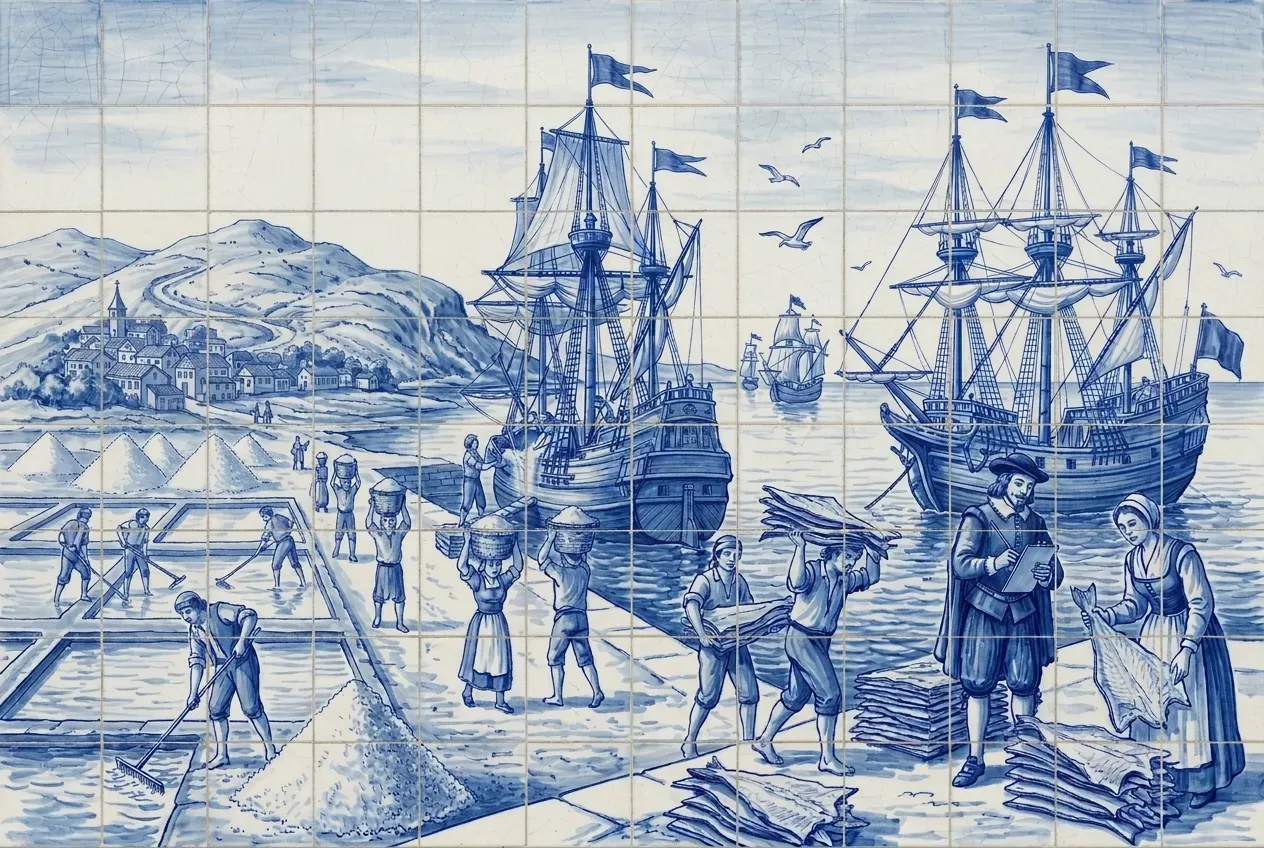
Portugal’s profit came from salt. You can’t make salt cod without salt, and Portugal was famous for its salt from Setúbal and Aveiro. The Dutch salted herring, the English salted cod, and their ships came to Portugal for salt.
Salt was so valuable that it paid for peace. In 1669, Portugal made peace with the Dutch Republic and agreed to pay in Setúbal salt: 500,000 cruzados of compensation and the rest of the debt, spread over twenty years. In 1680, about a hundred Dutch ships came to Setúbal to load salt.
The Portuguese only started catching cod again in the 19th century, and in the 20th century the “White Fleet” sailed every year for Newfoundland and Greenland. But according to historian Álvaro Garrido, since the Age of Discovery the country never caught more than 15% of the cod it ate. Today, most bacalhau in Portugal is Norwegian, and there are said to be 365 recipes, one for every day of the year, or even 1,001.
Where to see it today
Ílhavo Maritime Museum
Museu Marítimo de Ílhavo
A museum of the cod fishermen, with an aquarium of live Atlantic cod since 2013.


Sources (5)· links checked on
- Diário de Notícias: «Centralidade do bacalhau na identidade portuguesa é um belo mistério» (entrevista a Álvaro Garrido)
- Virgínia Rau: Os holandeses e a exportação do sal de Setúbal nos fins do século XVII
- Revista Mneme: o tratado de 1669 e o sal de Setúbal
- Wikipedia: Bacalhau
- Wikipedia (pt): Museu Marítimo de Ílhavo