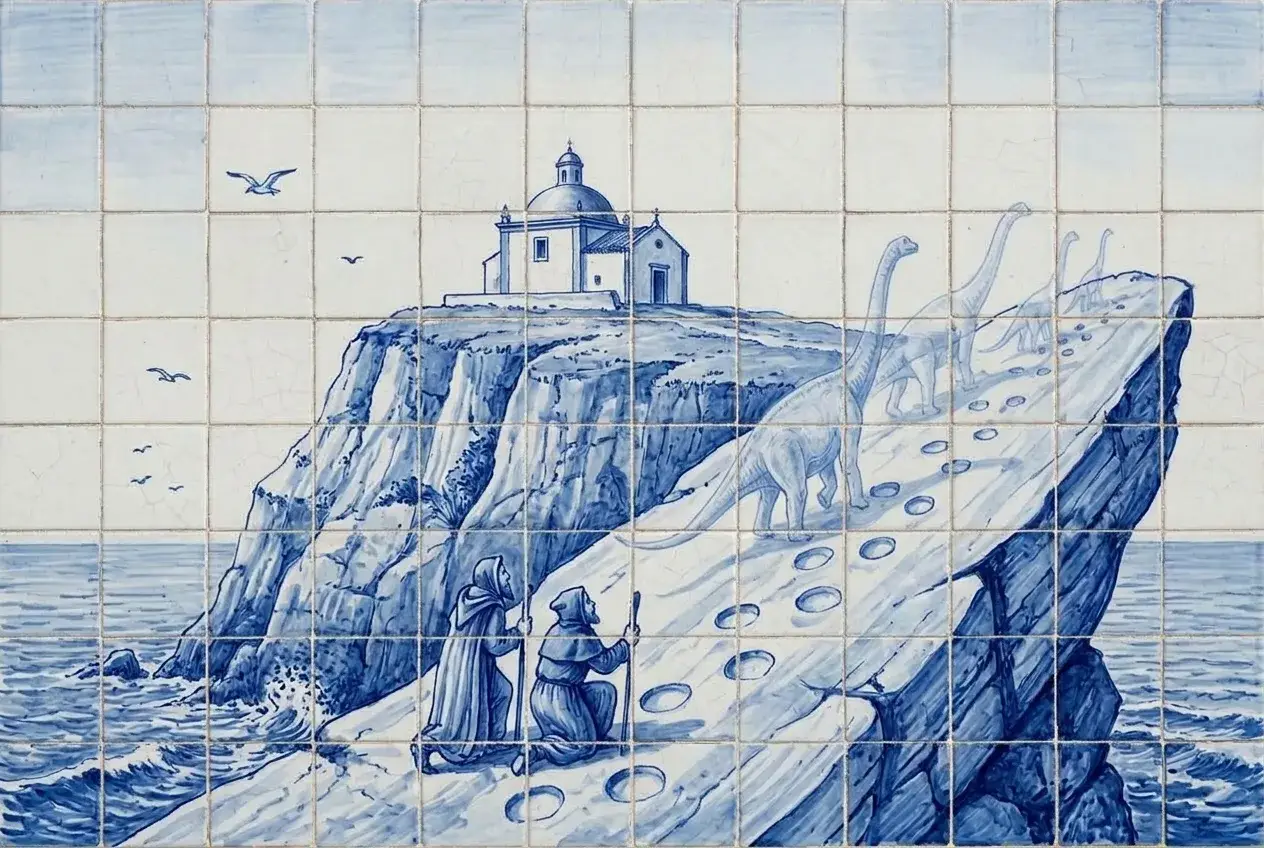
The Nest the Flood Took
A flood destroyed a dinosaur nest and saved it for us.
The story
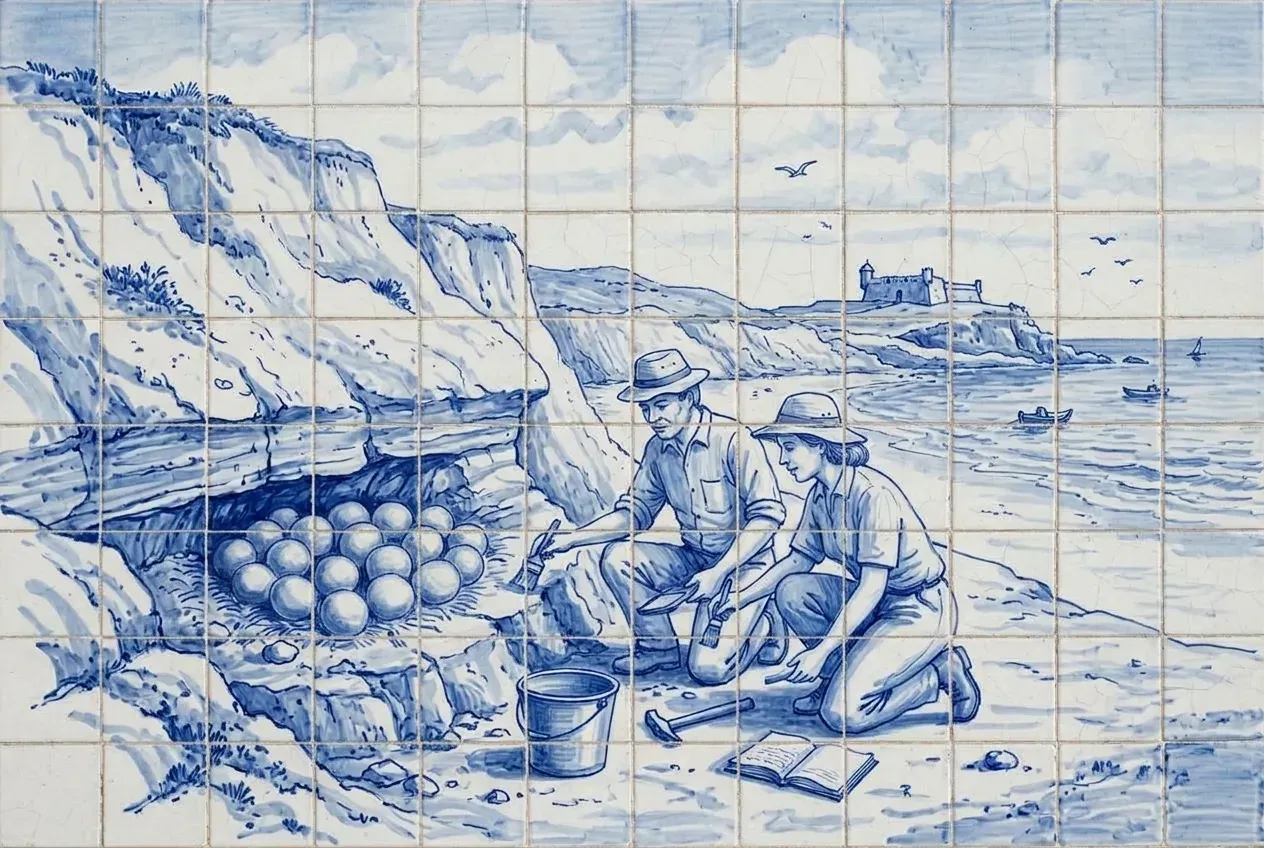
In 1984, Isabel and Horácio Mateus and a group of friends founded a small museum in Lourinhã and began collecting fossils along the local coast. They kept searching, and in 1993, in a cliff above Paimogo beach, they spotted bits of eggshell in the rock.
There was a lot of shell because it was a whole nest: about a hundred eggs of a meat-eating dinosaur, most likely Lourinhanosaurus. And inside some of the eggs were the tiny bones of babies that never hatched.
Dinosaur eggs turn up fairly often, but embryos inside them almost never do: their fragile bones rarely survive. So paleontologists around the world heard about the little museum, and Lourinhã came to be called Portugal’s dinosaur capital.
Meanwhile
- about 152 million years agoBrachiosaurus grazed in North America.
More
Context
Why the babies stayed in their eggs was only explained in 2024. Spanish and Portuguese researchers studied the nest for four years and found that at least two females had laid the eggs. Then a flood came: the water shifted the eggs, piled them up, and buried them in mud. The babies never hatched, but the mud is what preserved their bones.
The same study hinted at how these predators built their nests. It seems they laid their eggs not in a hole but in a mound of earth, as some birds do today.
The Paimogo nest is still at the Lourinhã Museum, which the Mateuses started with a handful of finds. Today it holds the specimens that new species were described from, Miragaia among them.
Where to see it today
Lourinhã Museum
Museu da Lourinhã
The finds from the Paimogo nest are kept here.


Sources (3)· links checked on
- Wikipedia: Lourinhanosaurus · 1993, about 100 eggs
- FCT NOVA, 2024: Portuguese and Spanish paleontologists unveil mysteries of Jurassic dinosaur reproduction · Two females, the flood, mound nests; the find of Isabel and Horácio Mateus
- Wikipédia: Museu da Lourinhã · Founded in 1984 by Isabel and Horácio Mateus; holotypes
That was the last story of the era “Prologue: Dinosaurs and Stones.” Your panel is complete →