The Chapel Shipped From Rome in Pieces
The king ordered a chapel from Rome and shipped it in pieces.
The story
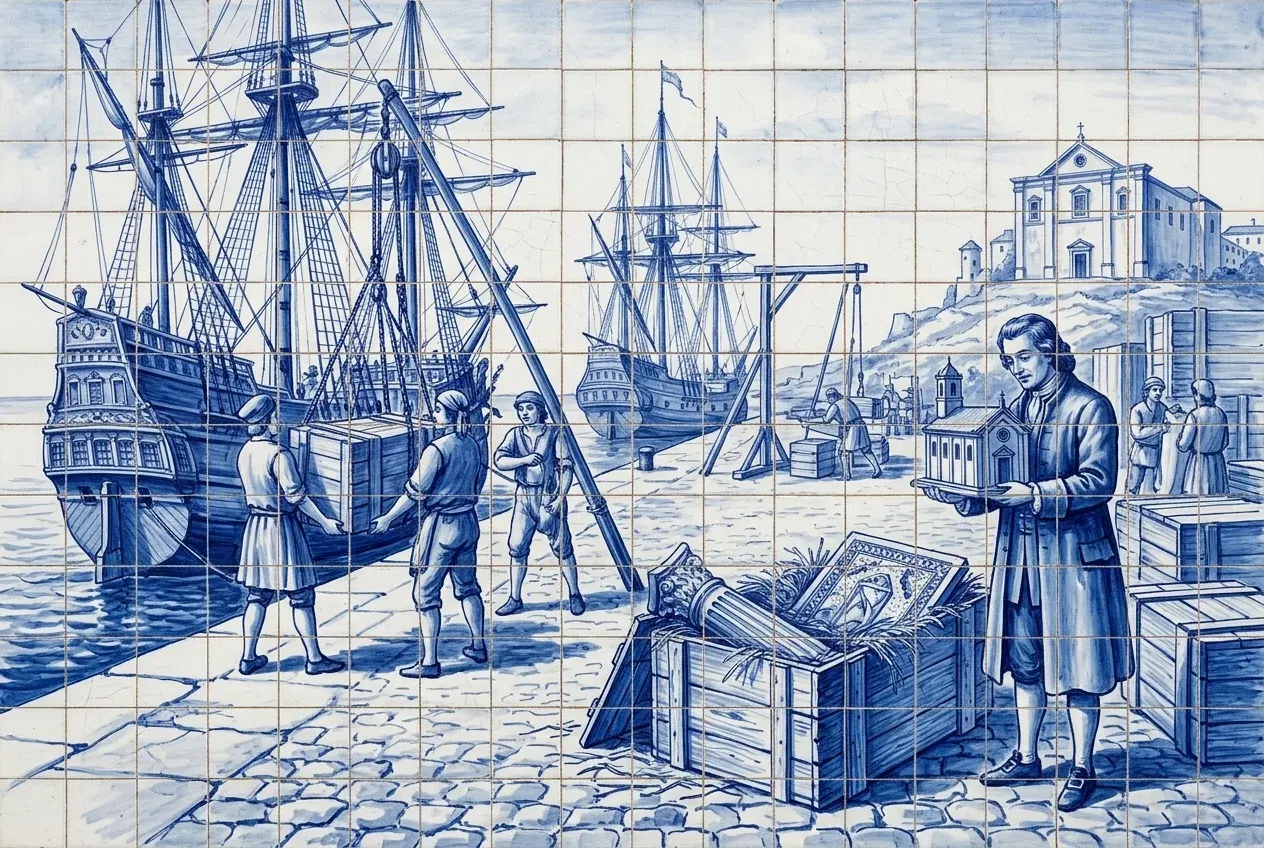
John V wanted a chapel as fine as any in Rome. In 1742 it was commissioned from Rome’s best craftsmen, and more than 130 people spent five years making it from marble, lapis lazuli, amethyst, and gilded bronze. The king never went to Rome and approved the design from a model. Once finished, the chapel was assembled in Rome and blessed by Pope Benedict XIV, then taken apart into 174 pieces. Three ships carried them to Lisbon, where the chapel was put back together in the Church of São Roque. It survived the 1755 earthquake.
Route: Rome → Lisbon, 1742
approximate
Route points
- Rome, 1742
- Lisbon
Meanwhile
- 1742Anders Celsius proposes the temperature scale that bears his name.
More
Context
The king never went to Rome to see his chapel. Instead, the craftsmen made him an exact walnut model, with gilding and tiny paintings on copper. The king approved the design from it, and the chapel was later reassembled in Lisbon with it as a guide. The model survived and is in the museum next door.
The paintings in the chapel are actually mosaics. The painter Agostino Masucci painted them in oil, and the craftsmen translated them into stone. Unlike paint, mosaic doesn’t darken from candle smoke and damp.
A few years after the chapel was assembled, the 1755 earthquake struck, but the church and the chapel survived.
Where to see it today
Chapel of St. John the Baptist, Church of São Roque
Capela de São João Baptista, Igreja de São Roque
The chapel is one of the church’s side chapels, and the model is in the museum next door.