The Prison Under the Library
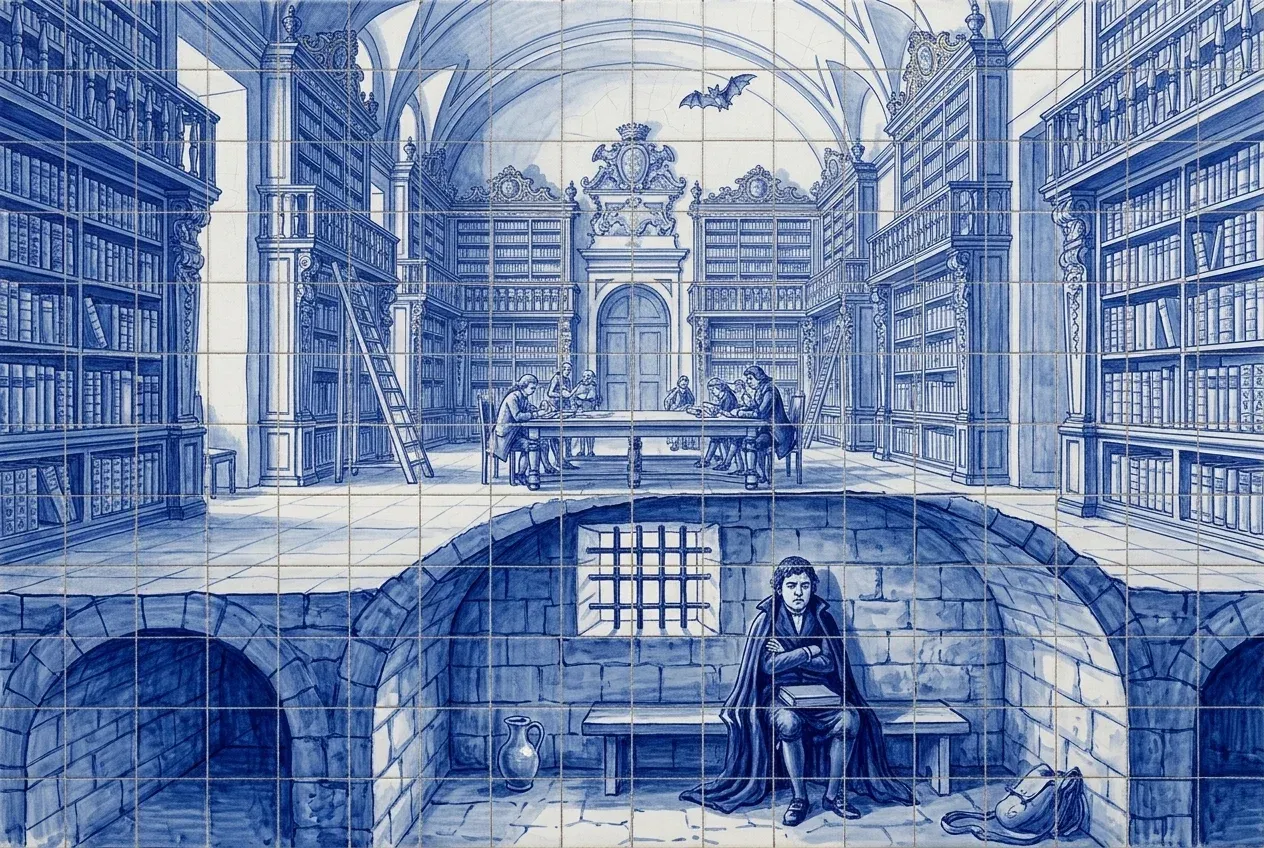
Beneath Coimbra’s golden library was a jail for students.
The story
In 1717, John V gave the University of Coimbra money for a new library. Over eleven years, three halls were built in gold and red and green lacquer, with bookshelves up to the ceiling. The library was named the Joanina in the king’s honor. The university tried its own students and professors, and in the late 18th century its jail was moved to the library’s lower floor. So there was a prison under the halls, and until 1834 it held students who’d broken the rules, and even professors.
Meanwhile
- 1719Daniel Defoe publishes Robinson Crusoe.
More
Context
The university lived by its own laws and judged its own people: students, teachers, and staff. Its jail was first under the university’s great hall, and in the late 18th century it moved under the library, into the remains of an even older royal prison built under John I at the end of the 14th century. Sentences were short: it was punishment for misconduct, not hard labor.
Upstairs, meanwhile, bats are on duty. They live behind the shelves and hunt the insects that damage books at night, so the tables are covered before closing to protect them from droppings.
Where to see it today
Joanina Library, University of Coimbra
Biblioteca Joanina
The cells on the lower floor are part of the library visit.