Monarchy and Republic

1820–1926

From king to republic

For a whole century Portugal argued about what it wanted to be: a constitution, a civil war between two royal brothers, and in 1910, a republic. And while politicians argued, the country built iron bridges, elevators, and funiculars.

Each story reveals part of the panel

Panel of the era: 54 of 54 tiles open

Timeline of this era

  1. 1837
    readNew
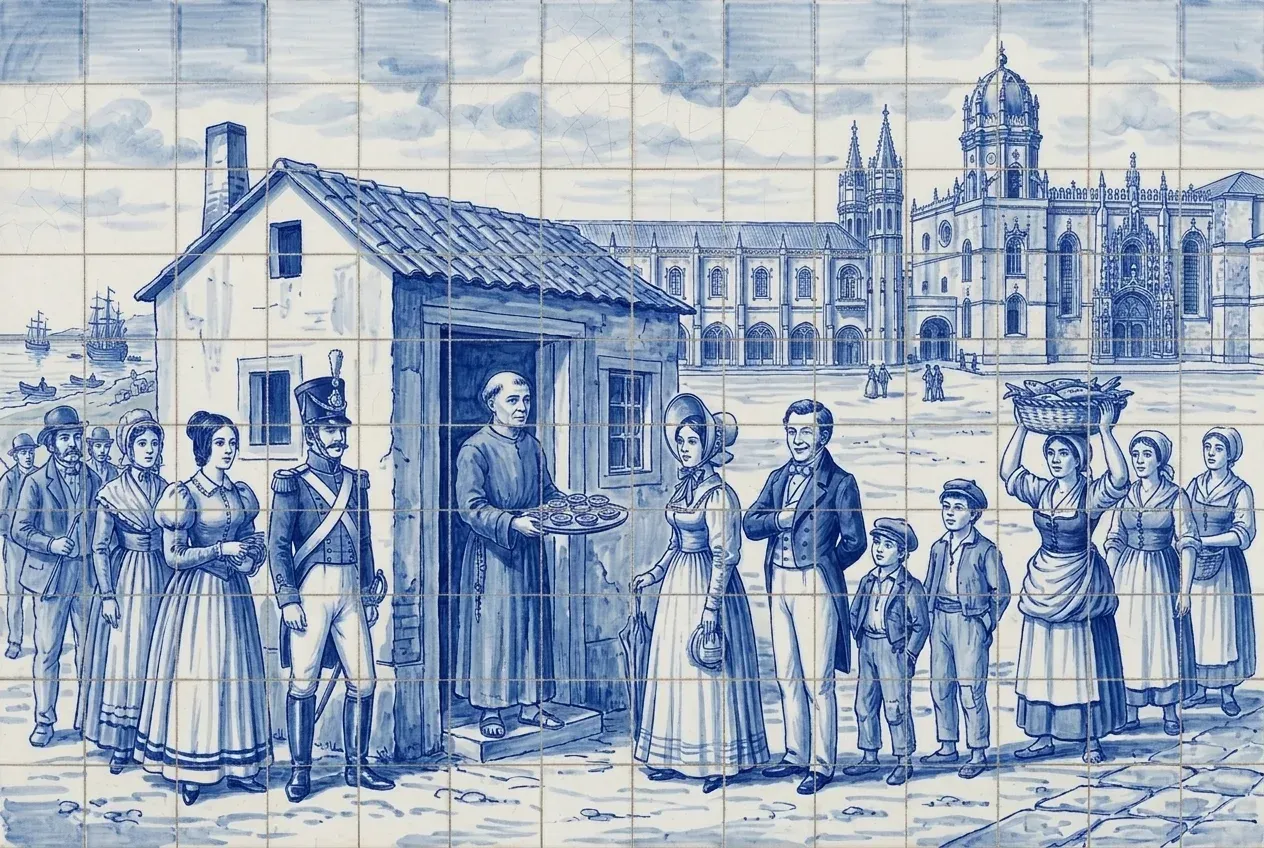
    When Portugal’s monasteries closed in 1834, the tarts went on sale. (Read the story)

    In 1834 every monastery in Portugal was shut down and the monks sent home. To make a living, someone from the Jerónimos Monastery in Belém started selling custard tarts in a shop next door. In 1837 they began baking them “from the monastery recipe” in a building by an old sugar refinery, and the recipe has been kept secret for almost two hundred years. But the historian João Pedro Gomes considers “convent confectionery” largely a myth that became advertising once the monasteries were closed.

    More →
  2. 1838
    readNew
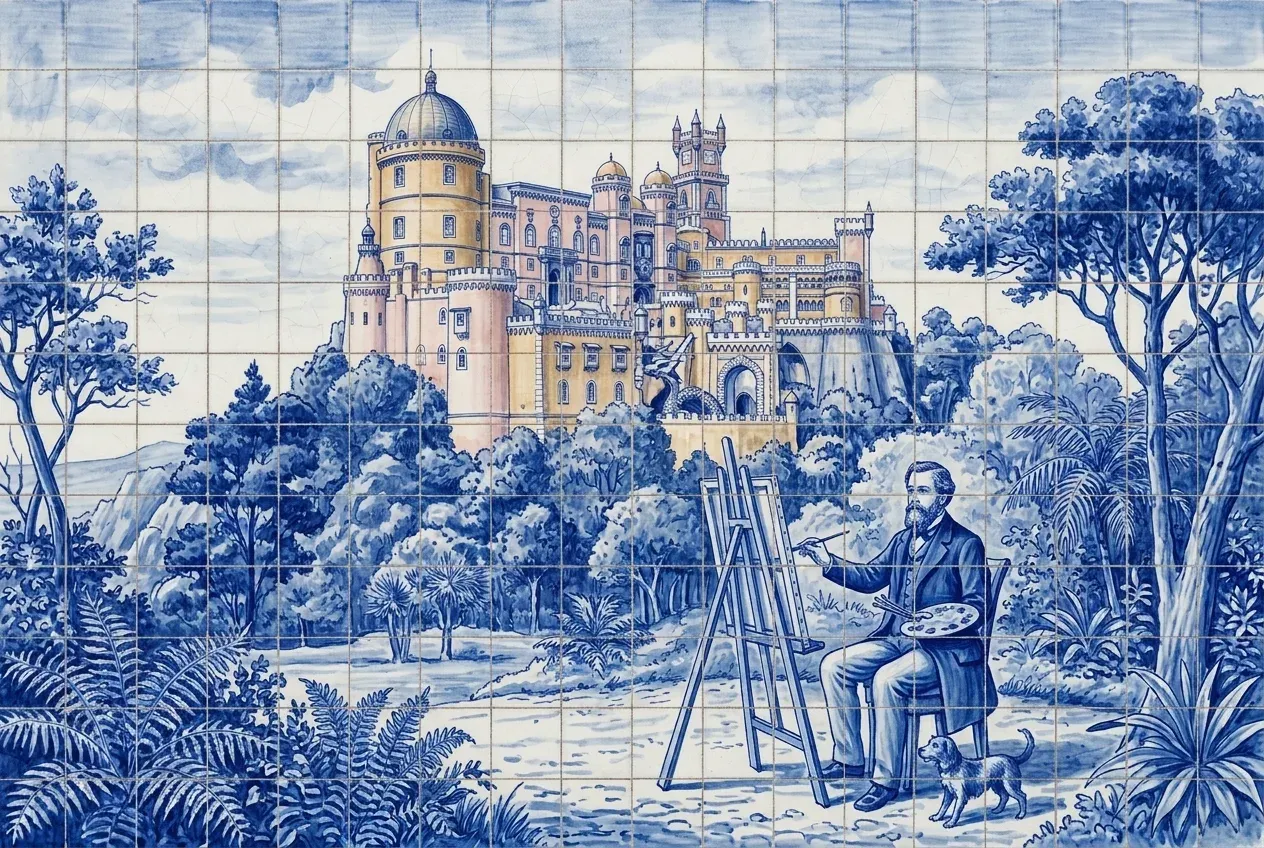
    Blue-and-white azulejo-style illustration: a bearded man with a palette paints at an easel, a dog beside him, in a garden of ferns and trees, with a palace of yellow towers and domes on a hill behind.

    1838 – the 1860s · Sintra

    The Artist King and His Fairy-Tale Palace

    The abandoned monastery that became a fairy tale. (Read the story)

    The German prince Ferdinand of Saxe-Coburg married Portugal’s Queen Maria II and became King Ferdinand II. He painted, collected art, and loved romantic castles. In 1838 he bought a monastery on a hilltop in Sintra that had stood empty since the monasteries were closed in 1834. Towers, gates, and walls in the boldest colors were added to the old building. That’s how the pink and yellow towers of Pena Palace rose over the old monastery.

    More →
  3. 1846
    readNew
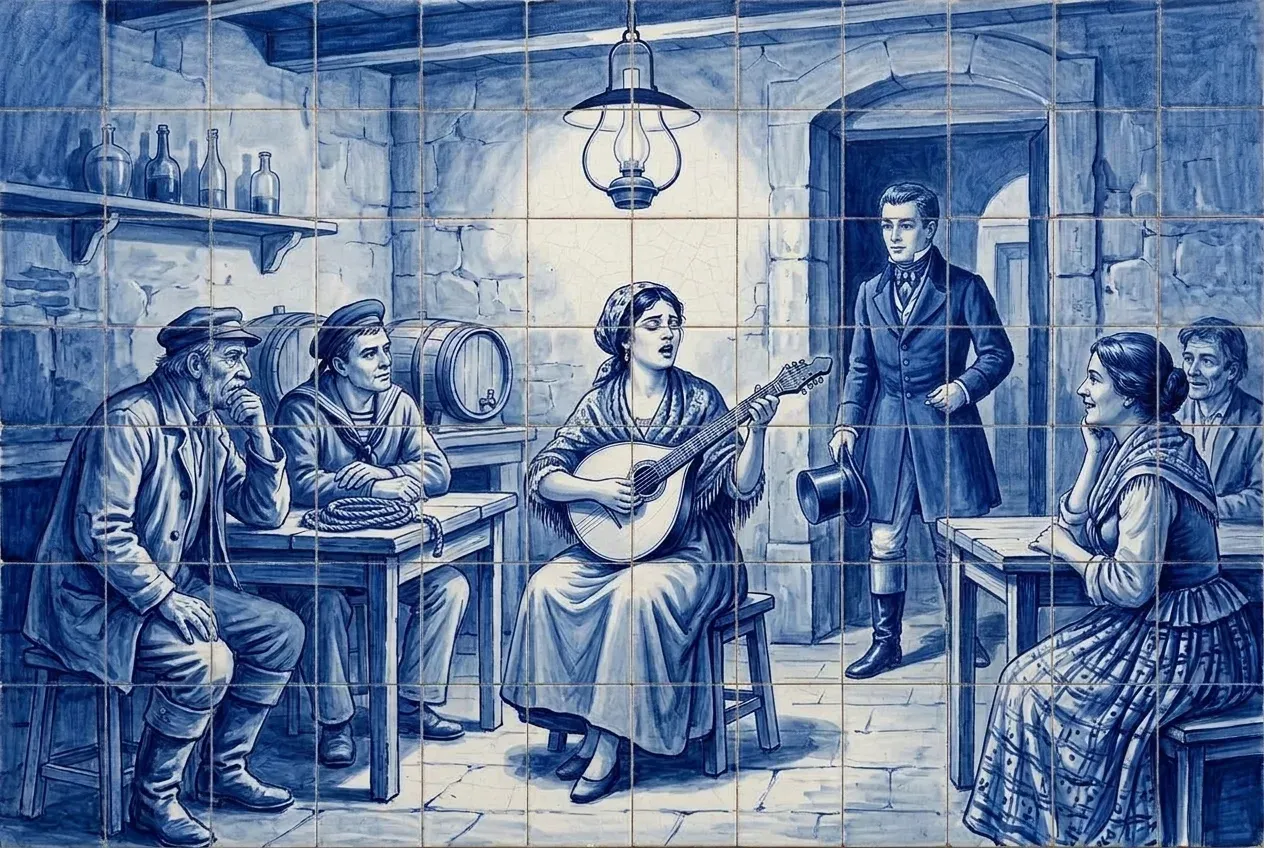
    Few records of her survive, yet she inspired Portugal’s first sound film. (Read the story)

    In the 1840s, fado was sung in the taverns of Lisbon’s poor neighborhoods, and respectable people kept their distance from it. Maria Severa sang in the taverns of Mouraria and played the guitar herself. According to legend, her singing won over the Count of Vimioso, a famous cavaleiro, a bullfighter who faces the bull on horseback. She found herself in his circle of bullfighting fans, among young aristocrats. That’s how songs from the poor neighborhoods reached people who never set foot in a tavern. Severa died in 1846, at 26. There are hardly any records about her, which made it easy for her life to turn into legend. In 1901 a novel and a play were written about her, and in 1931 the film A Severa was made. It was Portugal’s first sound film.

    More →
  4. 1850
    readNew
    Madeira once had a factory without a single workshop. (Read the story)

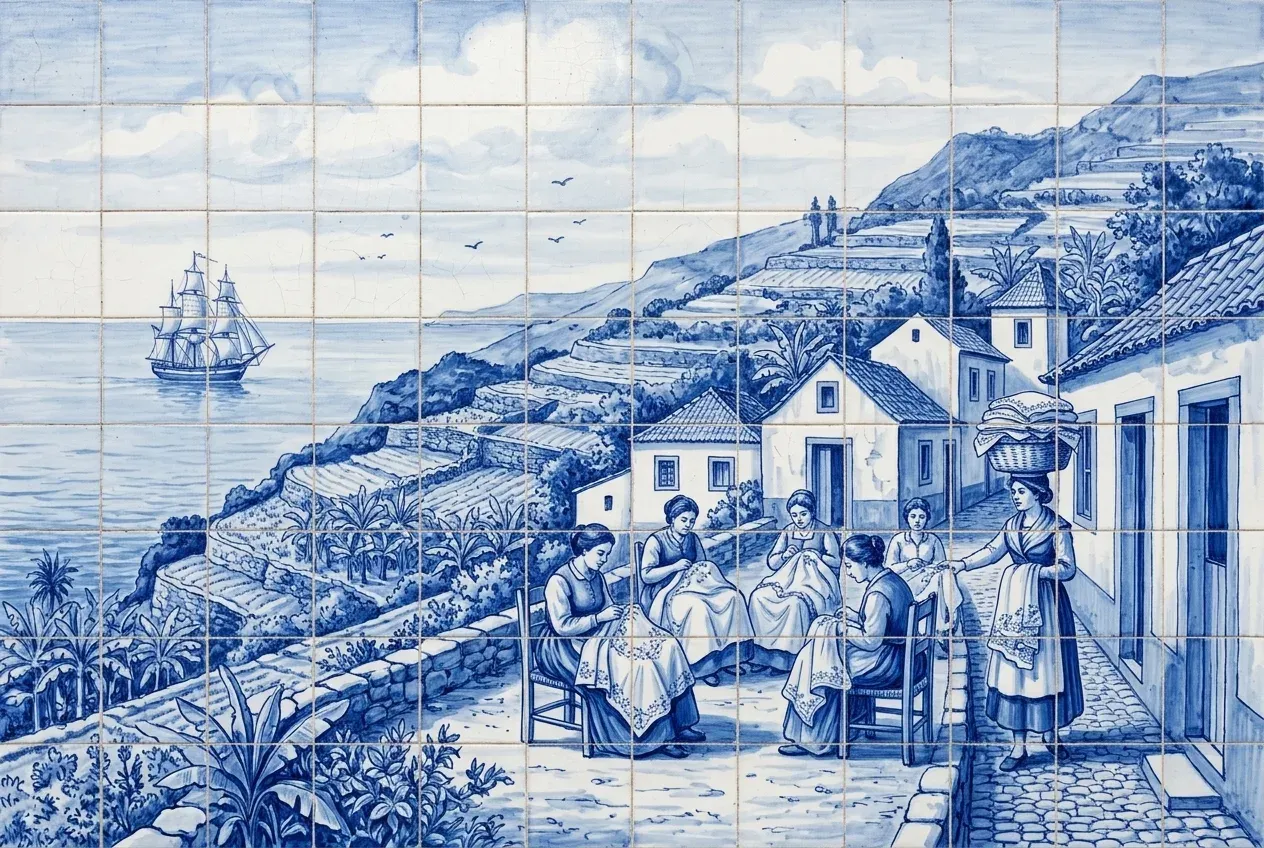
    For centuries, the women of Madeira embroidered for themselves: trousseaus, tablecloths, household linen. Elizabeth Phelps, the daughter of an English wine merchant in Funchal, saw a product in it. Bella Phelps taught local girls to embroider and, in the late 1840s, brought Madeiran embroidery to England. The work got noticed: in 1850 it was shown at an exhibition in the São Lourenço Palace in Funchal, and in 1851 samples reached the Great Exhibition in London. Orders poured in, but nobody built workshops. The embroiderers worked at home: fabric with the pattern was brought to them, and the finished work was collected. By the late 19th century, the island had some 70,000 bordadeiras, embroiderers. The whole factory fit inside their homes.

    More →
  5. c. 1850
    readNew
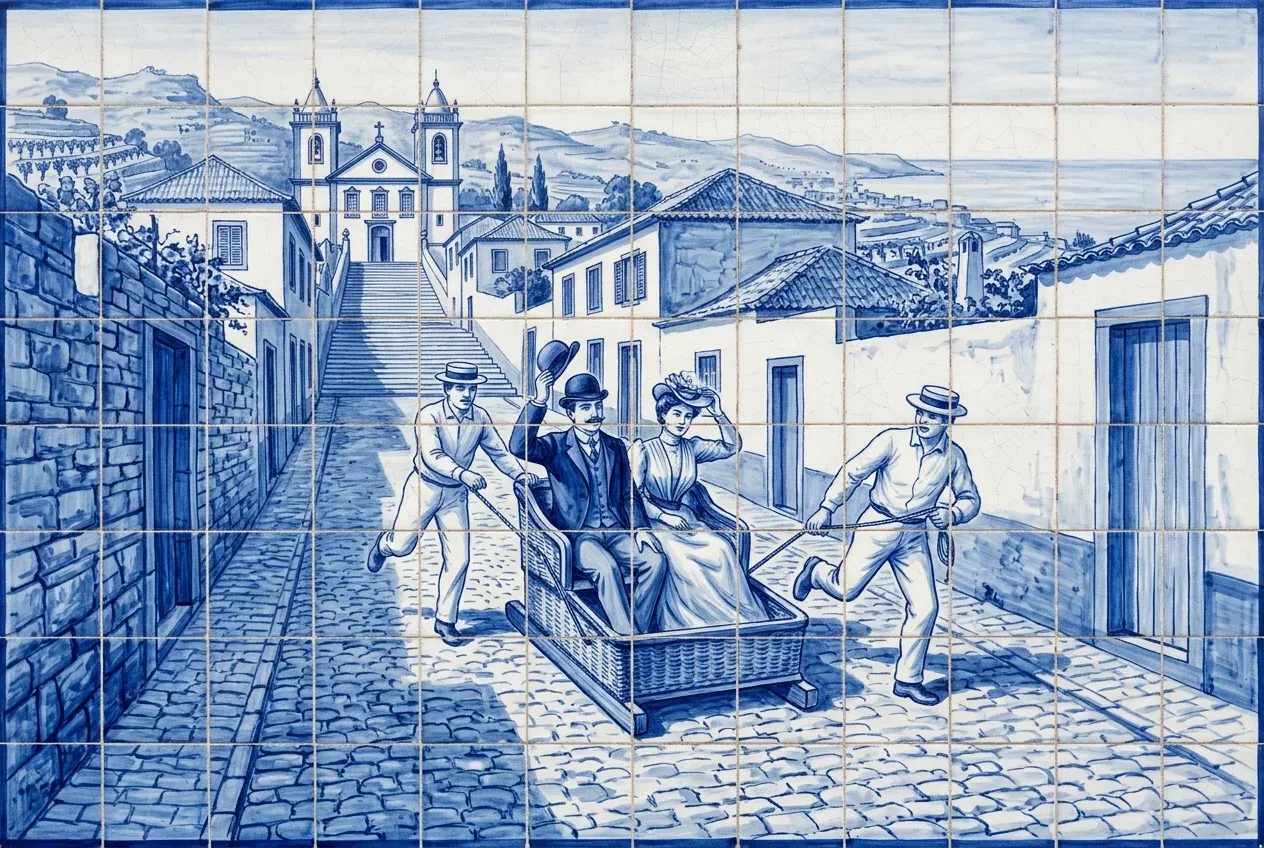
    Blue-and-white azulejo-style illustration: on a steep cobbled street, two men in white and straw hats push a wicker sled carrying a man in a hat and a woman; a twin-towered church stands at the top.

    c. 1850 · Funchal

    Sleds Without Snow

    On Madeira, wicker sleds race downhill with no snow at all. (Read the story)

    The village of Monte sits on a steep slope above Funchal. In the 19th century, its residents came up with a fast way to get down to town: a wicker armchair-basket on wooden runners slides over the smooth cobblestones like a sled. Two men in white with straw hats run alongside, pushing and steering, and brake with the soles of their boots. The ride long ago became a tourist attraction, but the drivers’ boots haven’t changed: thick rubber soles.

    More →
  6. 1877
    readNew
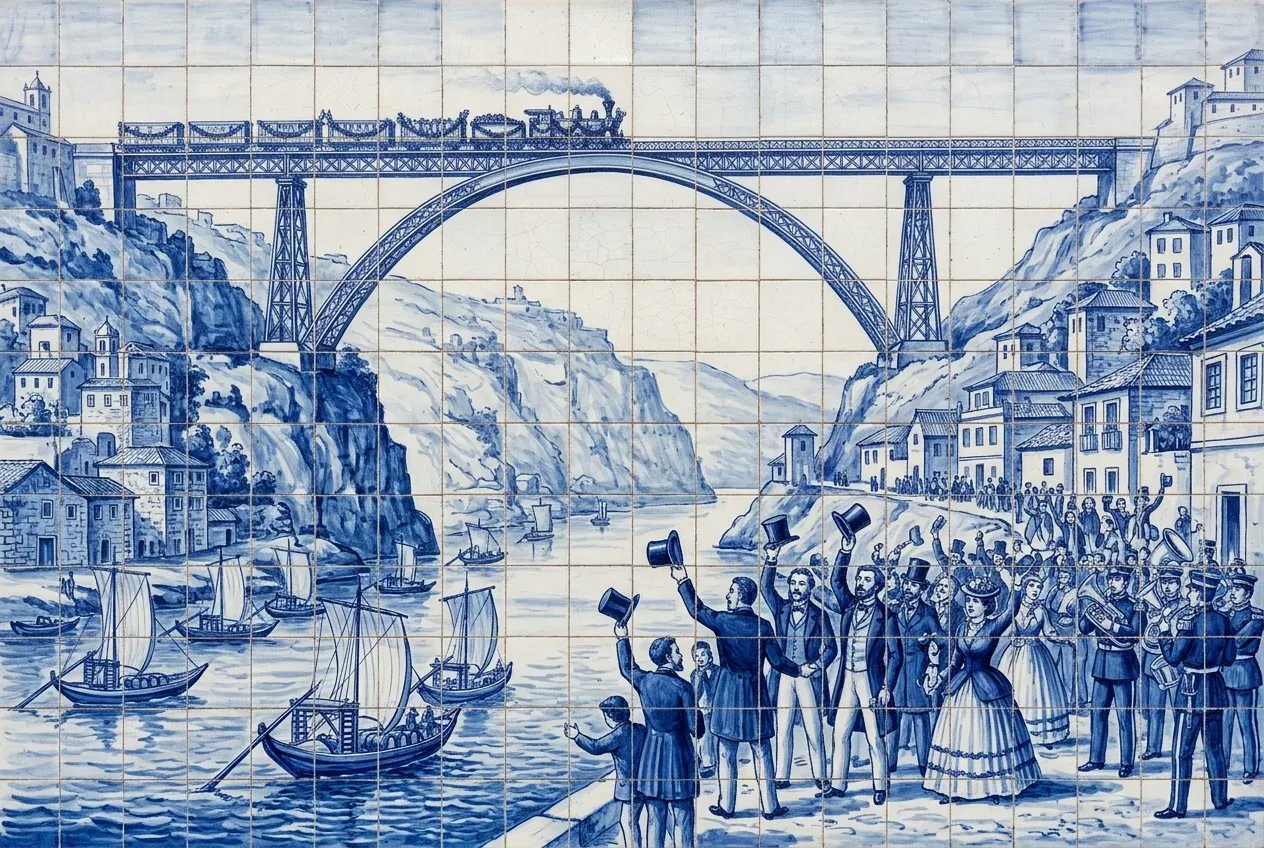
    Blue-and-white azulejo-style illustration: an iron bridge with a single high arch and a smoking train on top, over a river with sailing boats; on the bank a crowd with top hats in the air celebrates, among ladies and soldiers.

    November 4, 1877 · Porto

    Eiffel’s Bridge Over the Douro

    Eiffel’s record isn’t in Paris. It’s in Porto. (Read the story)

    The railroad from Lisbon dead-ended at the Douro River: trains couldn’t get into Porto. The bridge was ordered from Gustave Eiffel’s Paris firm. Its single iron arch, 160 meters long, became the longest in the world, topping the 158.5 meters of the Eads Bridge in the United States. On November 4, 1877, the bridge was opened by King Luís and Queen Maria Pia, who gave it her name. The Eiffel Tower wouldn’t appear for another twelve years.

    More →
  7. 1879
    readNew
    Hawaii’s ukulele sailed in from Madeira. (Read the story)

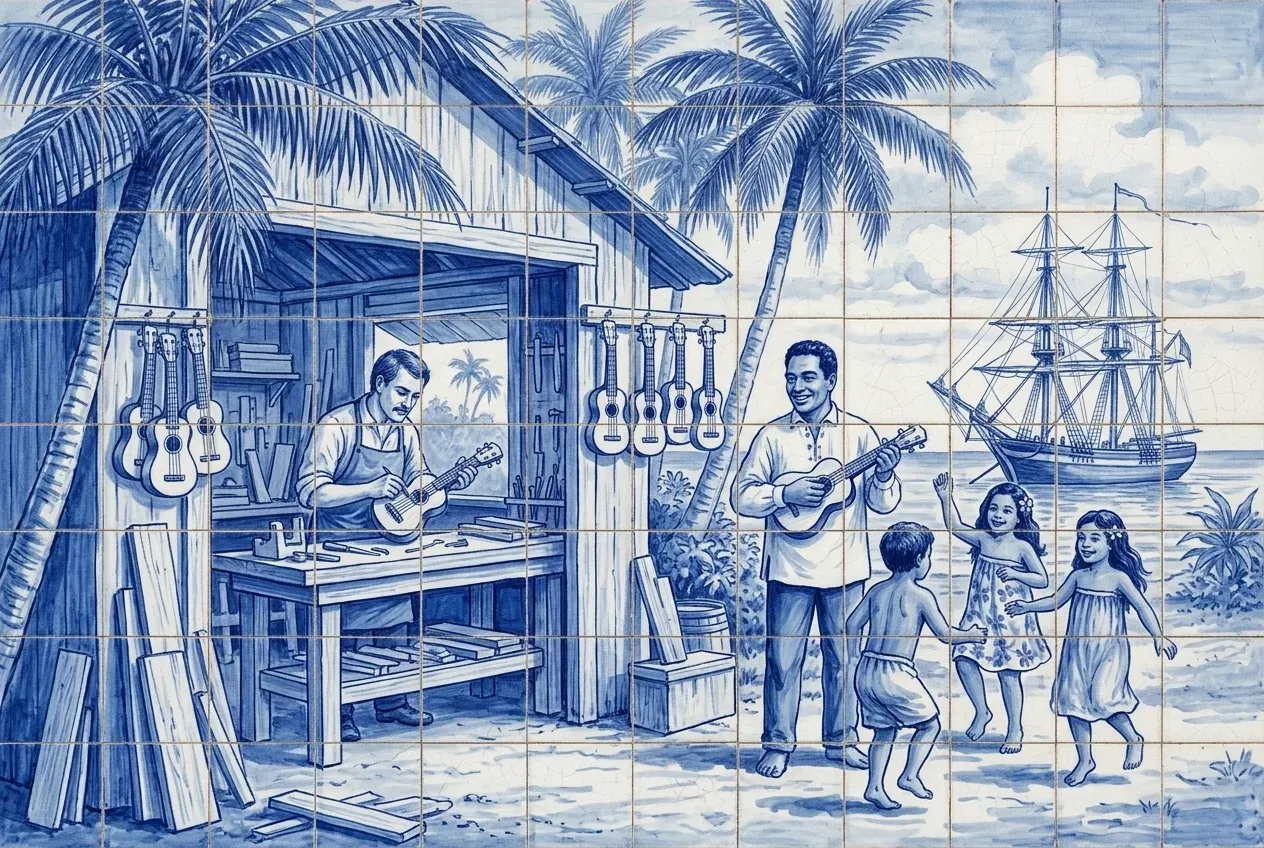
    In 1879, the ship Ravenscrag carried hundreds of emigrants from Madeira to Hawaii, bound for the sugar plantations. Among them were three cabinetmakers. The emigrants also brought along a small guitar, the braguinha. Once their contracts were up, the cabinetmakers opened workshops in Honolulu. From Hawaiian koa wood they built new instruments: the body of the braguinha, with the tuning of another Madeiran instrument, the rajão. King Kalakaua took to them, and Hawaiians called them “ukulele.” By one account the word means “jumping flea” in Hawaiian, because that is what the players’ fingers looked like.

    More →
  8. 1882
    readNew
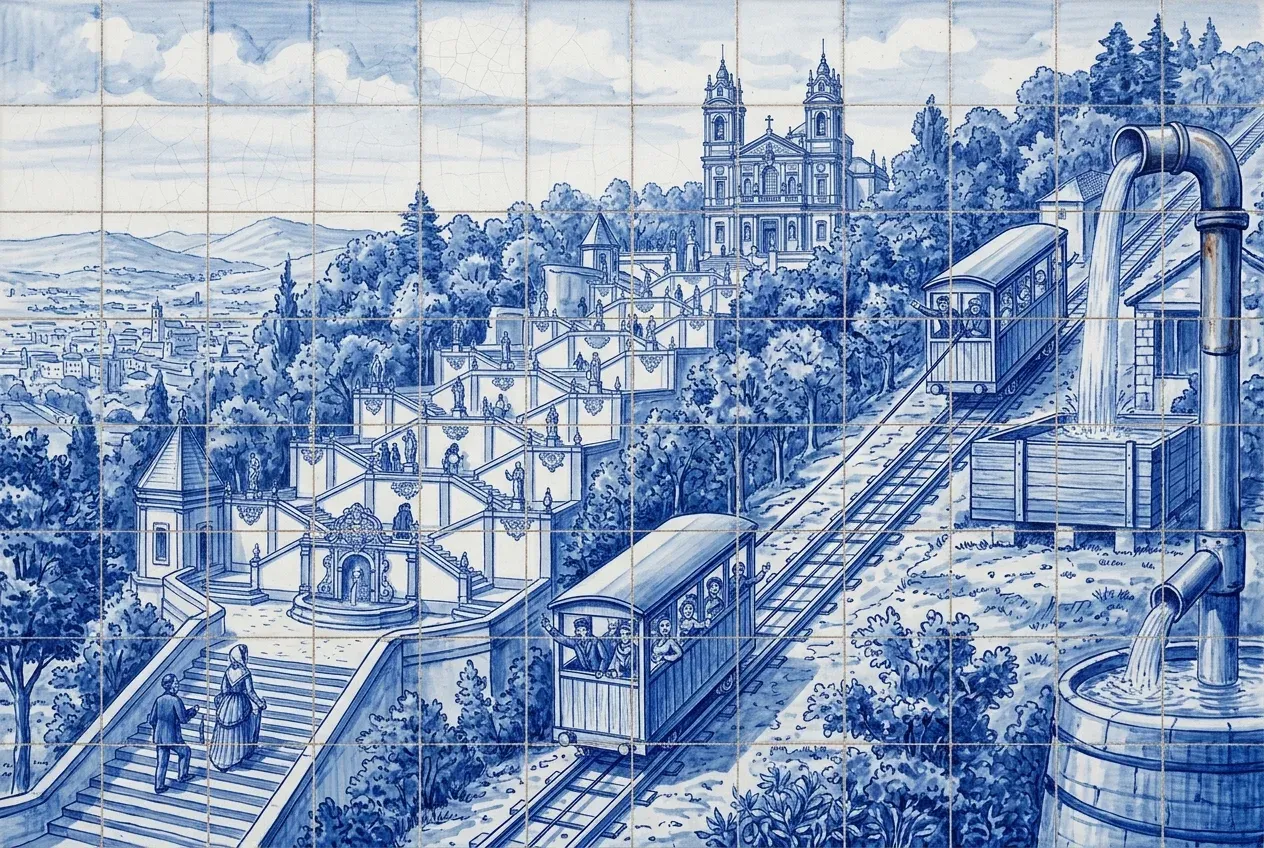
    Blue-and-white azulejo-style illustration: a two-car funicular climbs a hillside beside a Baroque staircase leading to a twin-towered church; on the right a pipe pours water into a wooden tank and a barrel.

    March 25, 1882 · Braga

    The Funicular That Runs on Water

    Two cars, one cable, and water instead of a motor. (Read the story)

    Above Braga stands the sanctuary of Bom Jesus do Monte, with a huge Baroque staircase. In 1882, a funicular made the climb easier for pilgrims. Its two cars are linked by a single cable. At the top, the upper car’s tank is filled with almost six thousand liters of water; it gets heavier, rolls down, and pulls the lower car up. At the bottom the water is drained, and it all starts again. The funicular still has no motor.

    More →
  9. 1883
    readNew
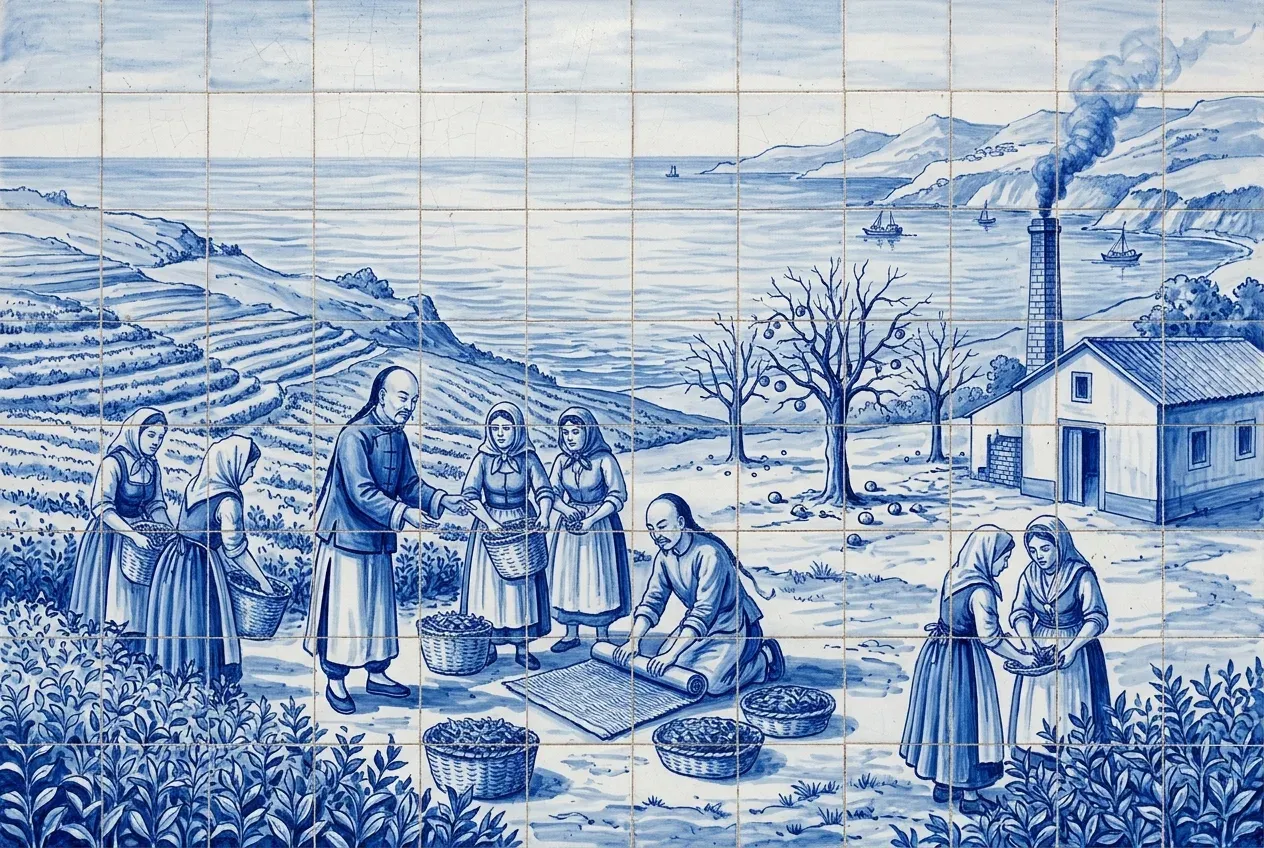
    Europe’s oldest tea exists because of a disease that hit oranges. (Read the story)

    The island of São Miguel in the Azores lived on oranges, shipped by boat to England. Tea had been tried on the island before, but it was taken up in earnest only when, around 1864, a blight nearly wiped out the orchards. In 1878 two Chinese tea masters, Lau-a-Pan and his interpreter Lau-a-Teng, were brought in from Macau, and they taught the locals to grow and dry the leaf. In 1883 Ermelinda Gago da Câmara founded the Gorreana plantation. It’s still running, and it’s the oldest tea plantation in Europe.

    More →
  10. 1890
    readNew
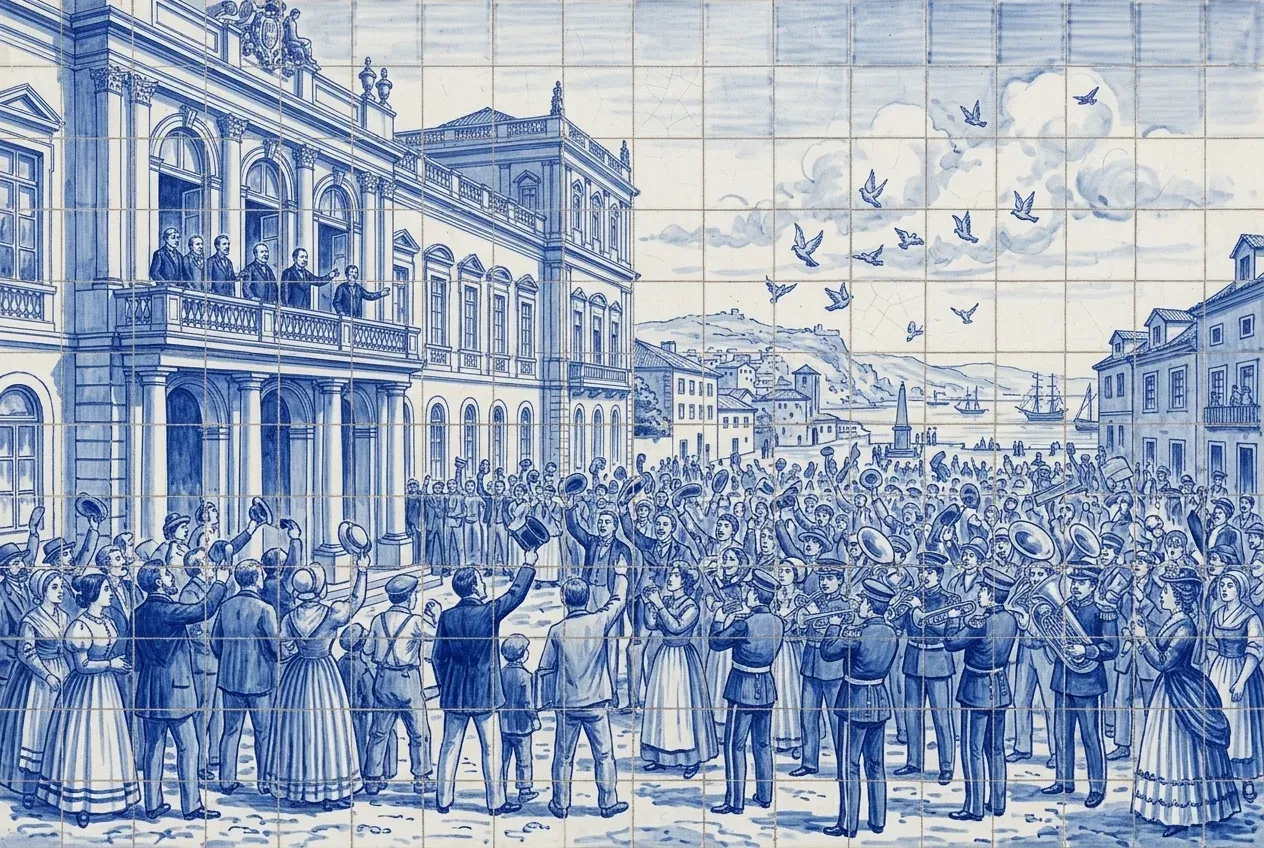
    The monarchy banned this song, and the republic made it the anthem. (Read the story)

    In January 1890, Britain demanded that Portugal pull out of the lands between Angola and Mozambique. The king gave in, and the country took it as a humiliation. In reply, composer Alfredo Keil and poet Henrique Lopes de Mendonça wrote the march “A Portuguesa” in a single night. In 1891 it was sung by the republicans who rose up in Porto, and the monarchy banned it. On October 5, 1910, the republic was proclaimed from the balcony of Lisbon City Hall, the banned song rang out in the squares, and in 1911 the march became the national anthem.

    More →
  11. 1895
    readNew
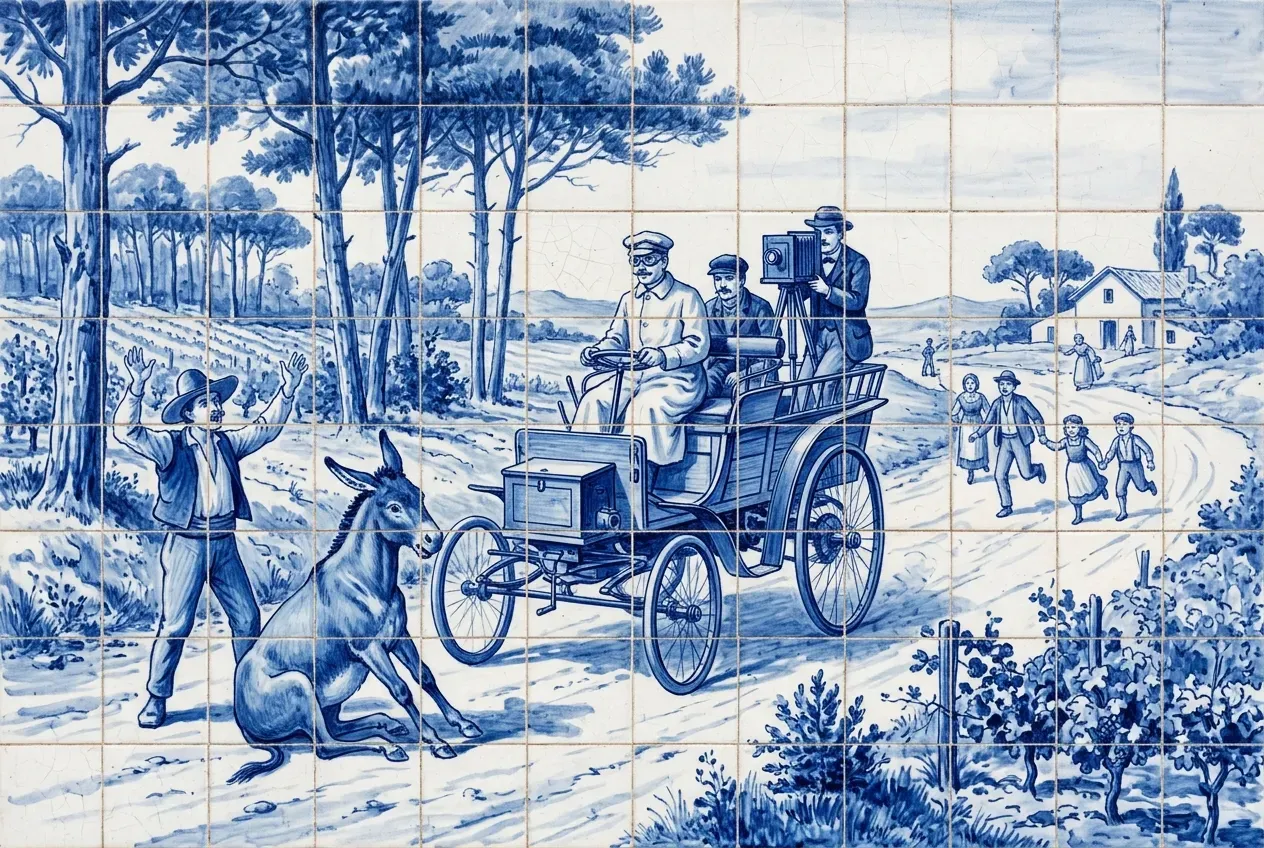
    Blue-and-white azulejo-style illustration: on a dirt road among pines and vines, an early automobile with iron wheels carries a driver in goggles, a passenger, and a photographer with a tripod camera; in front of it a donkey sits on the ground and a man in a hat throws up his arms, while a family runs up in the background.

    1895 · Palmela

    The Car vs. the Donkey

    On its first trip, Portugal’s first car hit a donkey. (Read the story)

    In 1895, the Count of Avillez bought a Panhard & Levassor automobile in Paris and brought it to Lisbon. It was the first car in Portugal: iron wheels with no tires and a top speed of about 15 km/h (9 mph). The count decided to drive it to his estate in Santiago do Cacém, more than a hundred kilometers to the south. The roads were made for carts and donkeys, and people along the way had never seen a carriage without a horse. Near Palmela, the car hit a donkey. It was the country’s first car accident, before there were any traffic rules. On October 15, the car finally made it to Santiago do Cacém.

    More →
  12. 1902
    readNew
    Everyone is sure Eiffel built this elevator. A different engineer designed it. (Read the story)

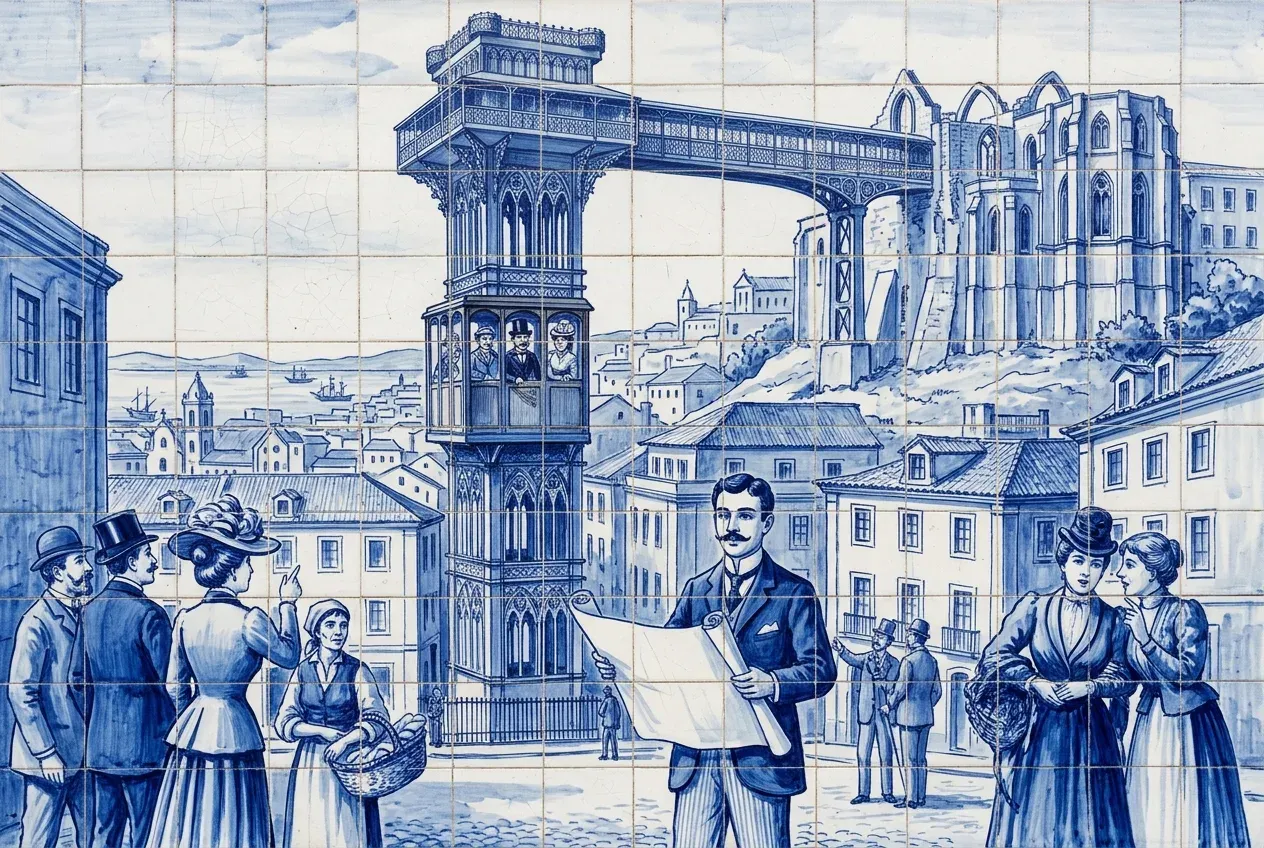
    The Baixa lies down low, and the Chiado district sits on the hill above it. To spare people the stairs, construction began in 1900 on an iron tower with an elevator. Two years later, the 45-meter Santa Justa Lift carried its first passengers. At first it ran on a steam engine, and from 1907 on an electric motor. The lacy ironwork looks so much like the Eiffel Tower that many people still credit it to Eiffel, but it was built by a Portuguese engineer of French descent, Raoul Mesnier du Ponsard.

    More →
  13. 1906
    readNew
    The bookstore J.K. Rowling never set foot in. (Read the story)

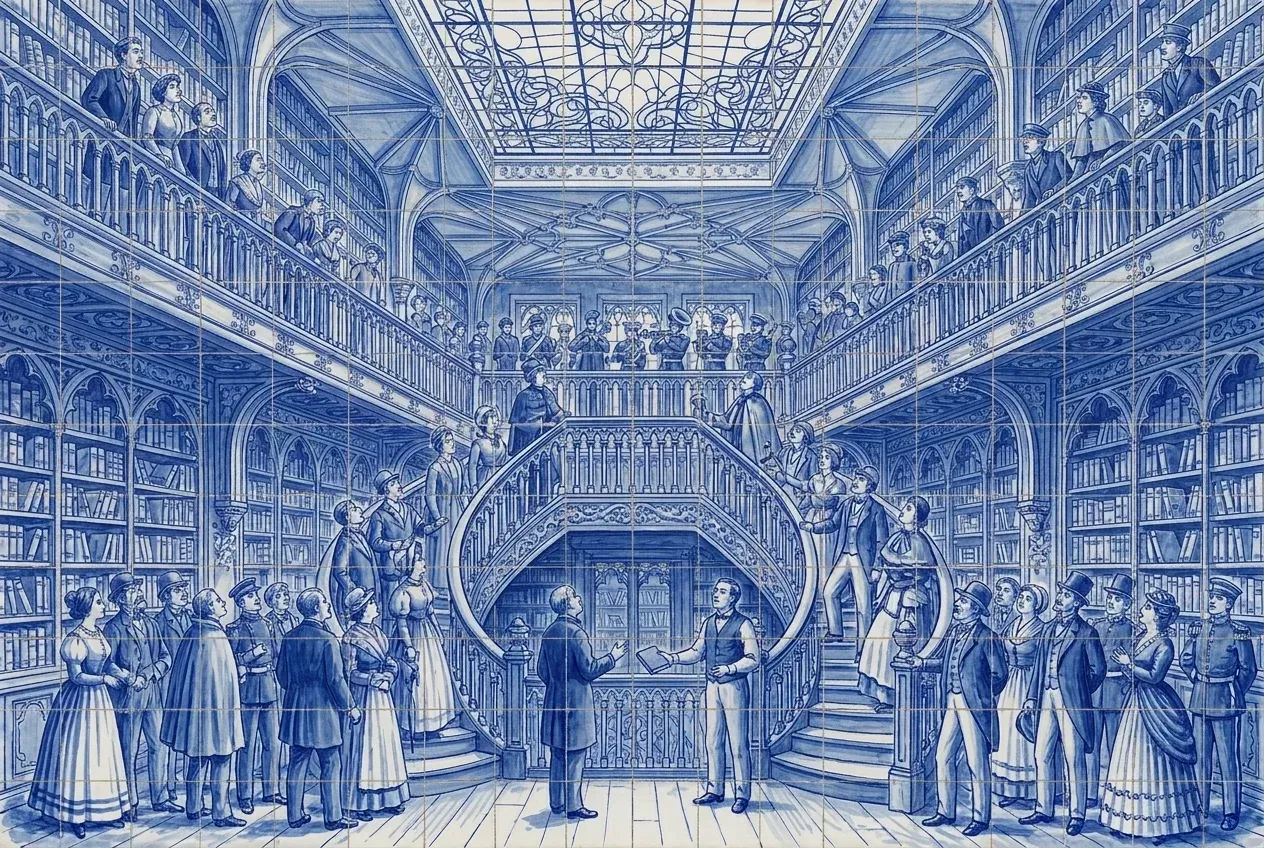
    Livraria Lello opened in Porto in 1906: a neo-Gothic facade, stained glass, and a red staircase that seems to pour down from the second floor. In the early 1990s, a young Joanne Rowling lived in Porto, taught English, and wrote her first chapters here. That’s how the legend was born that Lello’s staircase inspired Hogwarts. The shop became one of the most visited bookstores in the world, with more tourists than buyers. In 2020, Rowling wrote: “I never visited this bookshop.”

    More →
  14. 1910
    readNew
    The king fell in 1910, but nobody managed to rename the bolo-rei. (Read the story)

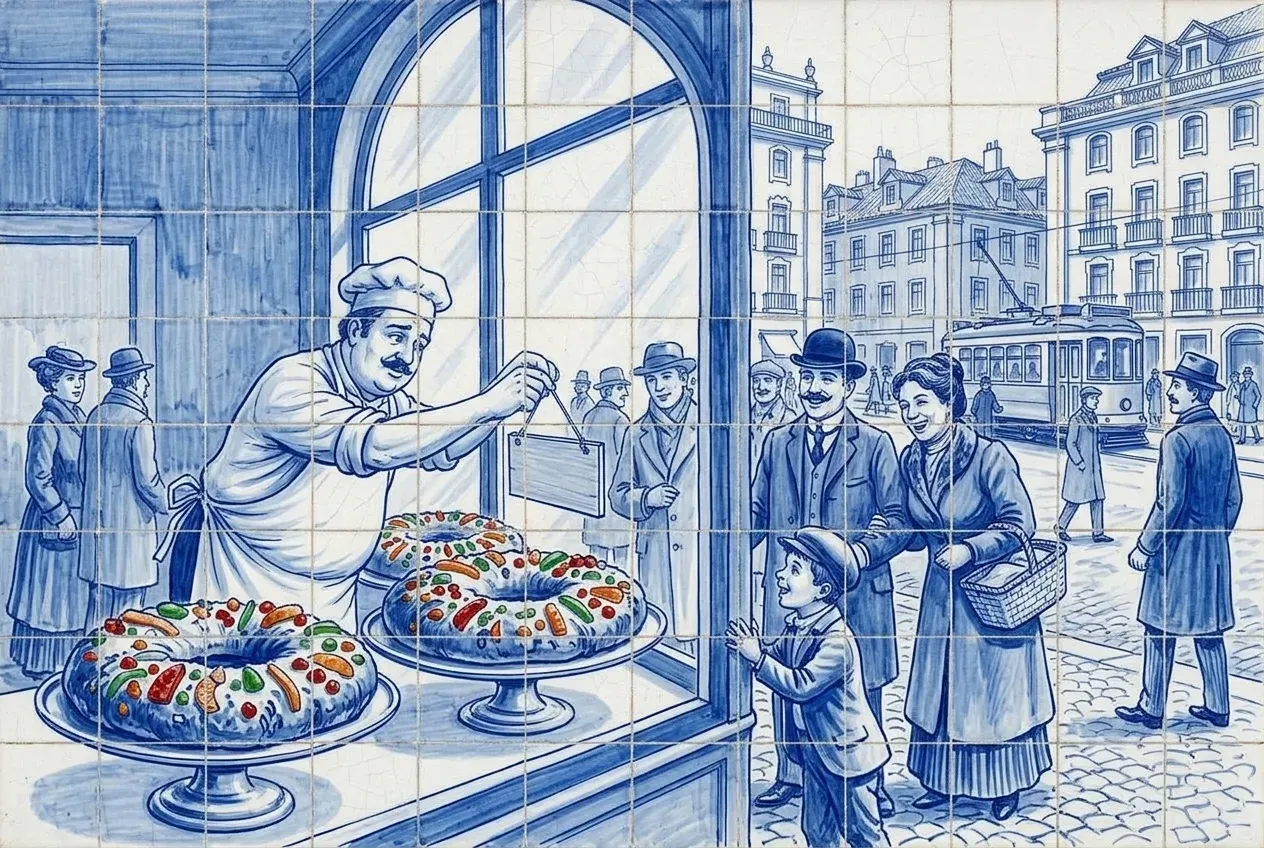
    Bolo-rei, a ring of sweet dough topped with candied fruit and nuts that looks like a crown, is Portugal’s great Christmas cake. The recipe is said to have come from France in the second half of the 19th century, to the Confeitaria Nacional in Lisbon. When Portugal became a republic in 1910, a “king cake” in the shop window suddenly looked out of place. Bakers tried selling it as “bolo-presidente,” “bolo-Arriaga” after the first president, and even “ex-bolo-rei.” None of the names stuck, and the cake stayed king.

    More →
  15. 1922
    readNew
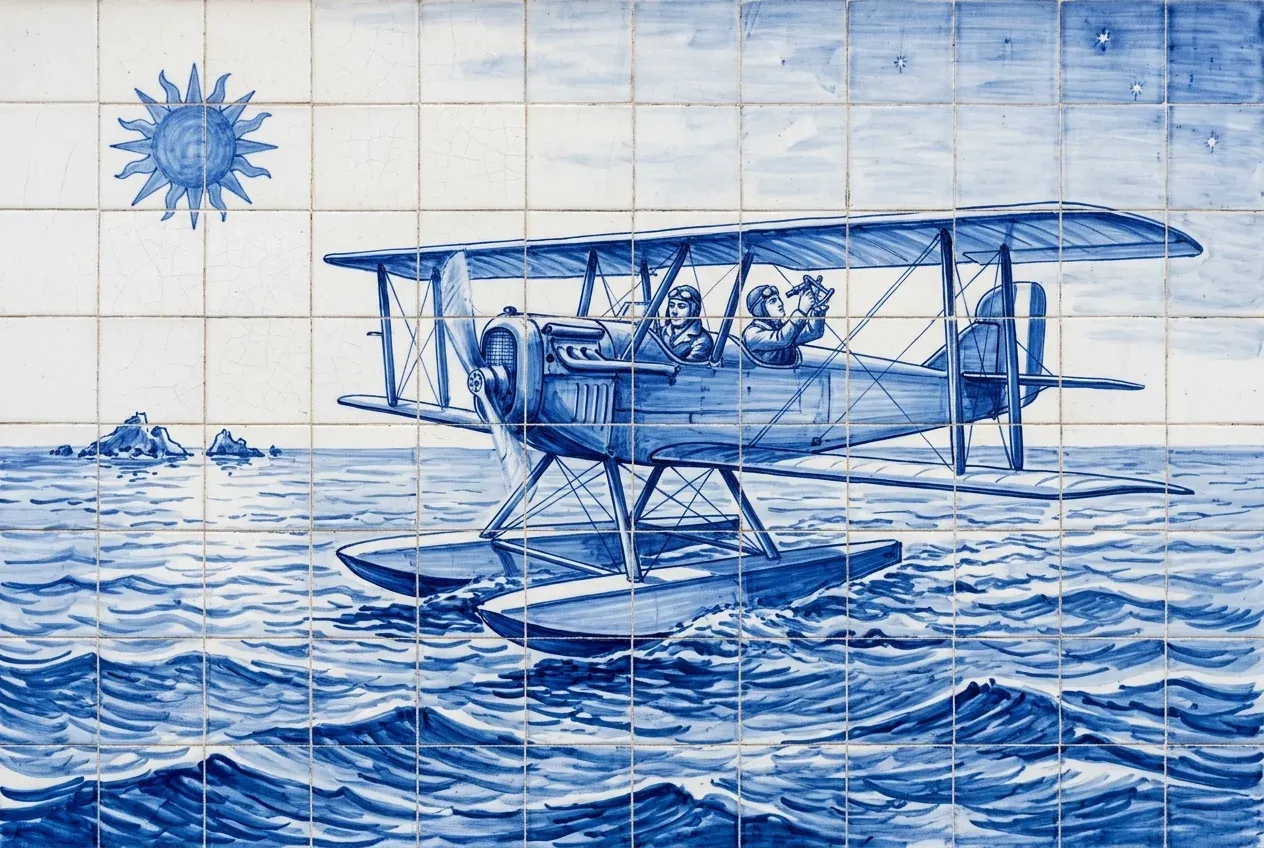
    Blue-and-white azulejo-style illustration: a biplane seaplane with two aviators, one holding a sextant, flies low over the waves, with the sun and a few stars in the sky and some rocks in the distance.

    March 30 – June 17, 1922 · South Atlantic

    Across the Atlantic With a Sextant

    One seaplane broke up, one landed at sea, the third reached Rio. (Read the story)

    In 1922, navy officers Gago Coutinho and Sacadura Cabral set out to fly from Lisbon to Brazil for its independence centennial. Over the ocean there’s nothing to fix your eyes on, so Coutinho navigated by the sun and stars with a sextant to which he had added an artificial horizon, because the real one can’t be seen in haze. The first seaplane broke up in the waves near the Saint Peter and Saint Paul Rocks in the middle of the ocean, and the second came down on the water with engine trouble. The navy brought a third, and on June 17, 79 days after takeoff, the aviators landed in Rio.

    More →
  16. 1923
    readNew
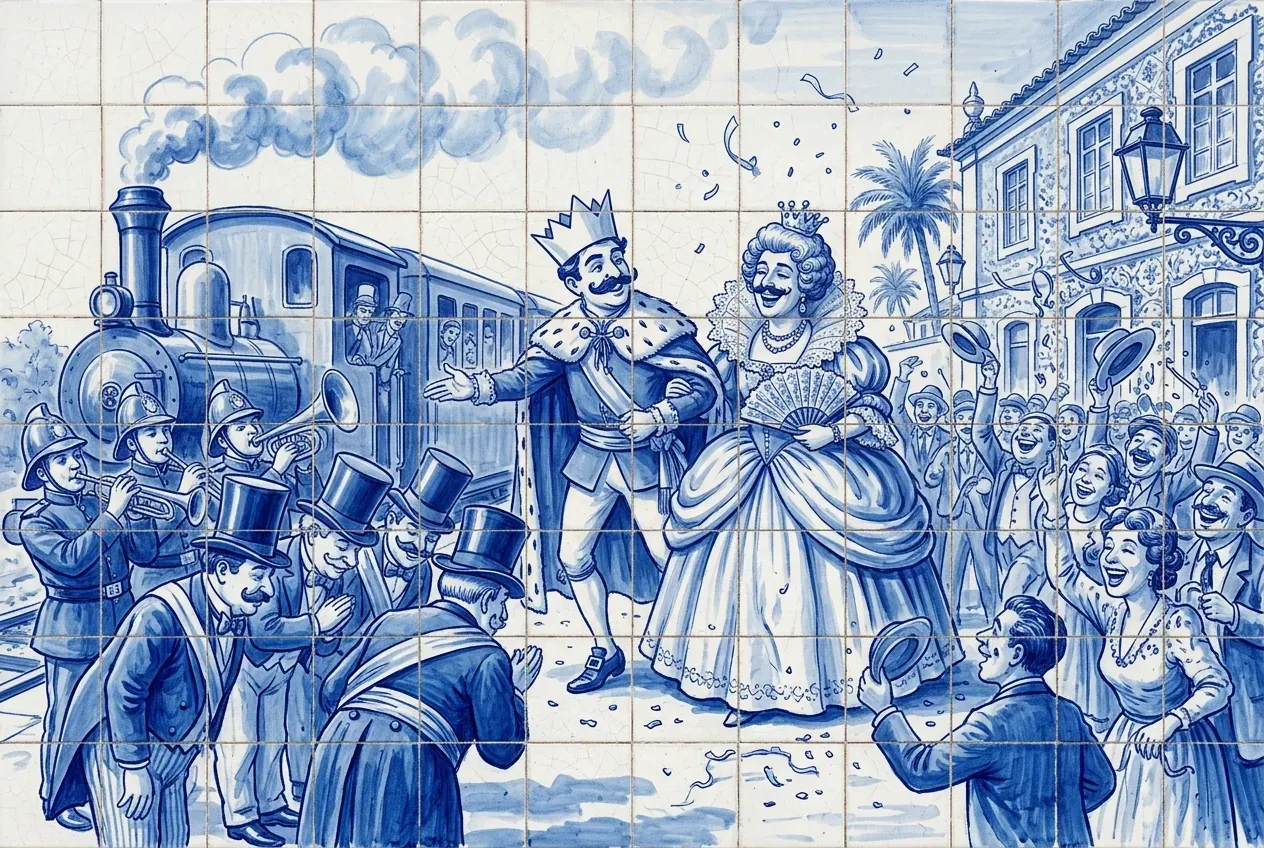
    Blue-and-white azulejo-style illustration: at a railway station, a king in a paper crown and an ermine cape walks arm in arm with a queen in a curly wig, lace ruff and fan, both with mustaches; “ministers” in top hats bow, a firemen’s band plays and the crowd throws hats in the air, with a steam locomotive behind them.

    1923 · Torres Vedras

    The Queen with a Mustache

    Thirteen years after the fall of the monarchy, republicans crowned a king. (Read the story)

    In 1910, Portugal overthrew its king and became a republic. In 1923, republicans and shopkeepers in Torres Vedras, a town north of Lisbon, threw a big street party at Carnival and seated a king on a throne. The next year the king got a queen. A man played her, and behind the couple came a retinue of “ministers” and “matrafonas,” men in women’s dresses. Ever since, by tradition, the queen of the Torres Vedras Carnival has always been played by a man.

    More →

Then and now

  • 79 daysnow: about 10 h

    In 1922 Gago Coutinho and Sacadura Cabral took 79 days to reach Rio, with 62 h 26 min in the air. A direct flight now takes about 10 hours: in those 79 days you could fly there about 200 times.

    → Across the Atlantic With a Sextant

  • 7 in 10now: 3 in 100

    In 1911 seven in ten Portuguese over the age of seven could not read. In the 2021 census it is about three in a hundred; the baselines differ: then, ages seven and up; now, ages ten and up.

  • 1837now: 20,000 a day

    Since 1837 the Pastéis de Belém have been baked from a secret recipe in buildings next to a sugar refinery. Today the shop turns out about 20,000 a day on average.

    estimate→ Monks’ Pastries, or Maybe the Best Ad of the 19th Century

Estimate: a historians’ reconstruction.

Sources