Avis and the Discoveries

1385–1580

Discoveries: the world on the map

A new dynasty saved the country at Aljubarrota and turned to the sea. In a century and a half, tiny Portugal reached Africa, India, Brazil and Japan. Pepper, elephants and rhinos began arriving in Lisbon.

Timeline of this era

Hidden stories: 2.

  1. 1385
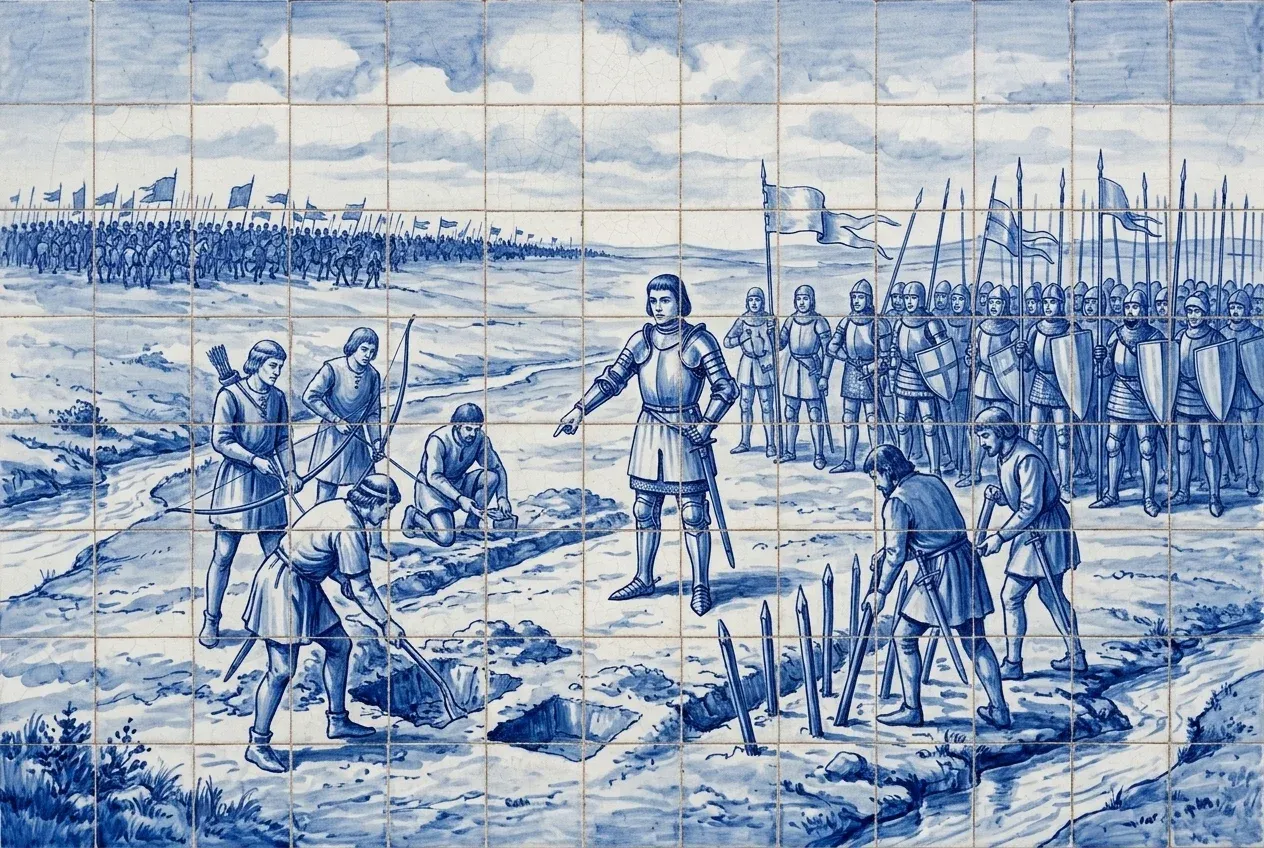
    A young knight in armour points at the ground, soldiers dig ditches and drive in stakes, an army with banners in the distance.

    14 August 1385 · Aljubarrota

    The Battle of Aljubarrota

    At 25, he left the war council and chose the battlefield himself. (Read the story)

    In 1385 Nuno Álvares Pereira was 25 and Portugal's constable. The war council could not agree where to fight, so on 6 August he left the camp with about 2,000 men and chose the battlefield himself. Froissart says he had ditches and wolf pits dug across a narrow plateau. On 14 August, at the hour of vespers, the French knights who charged first rode straight into them. The Castilians, several times more numerous, lost.

    More →
  2. 1415
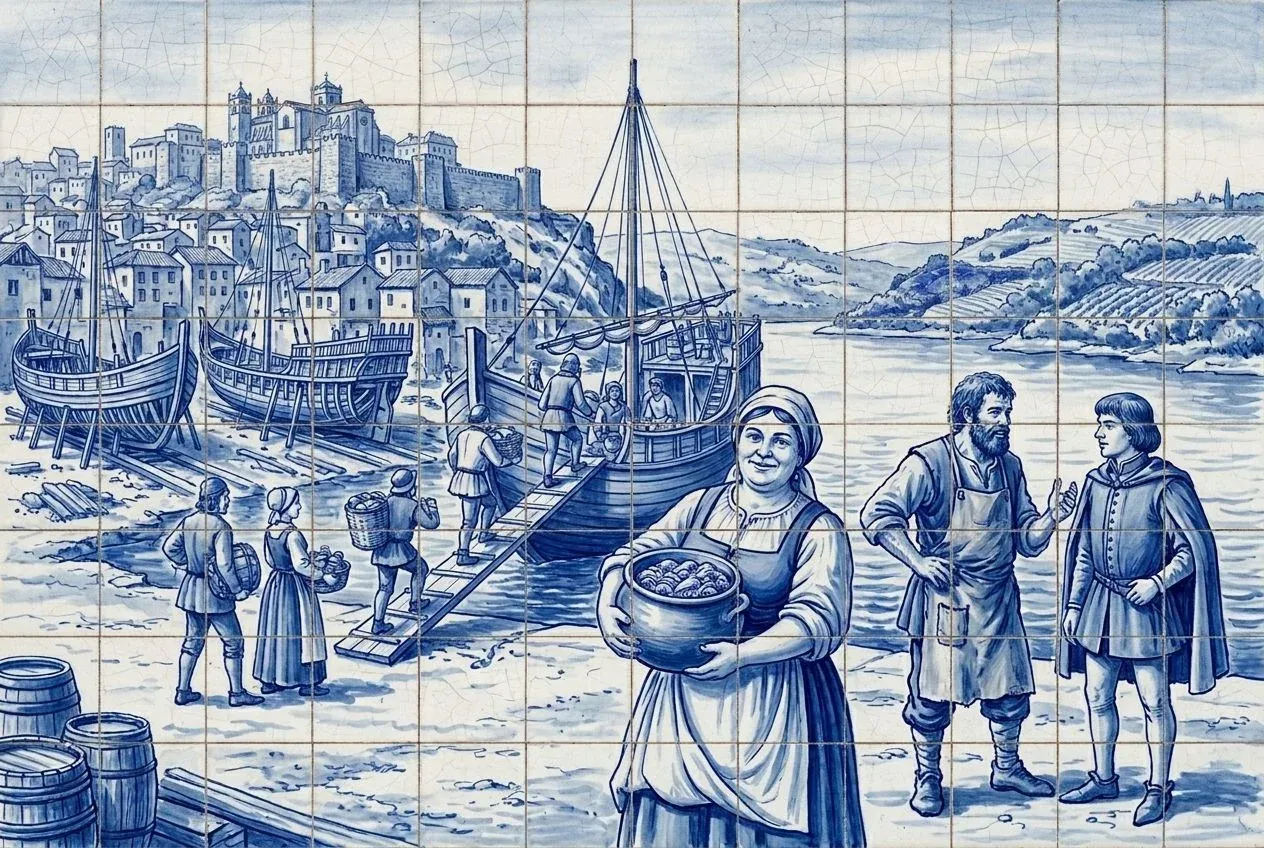
    Porto gave away its meat, kept the tripe, and got a nickname. (Read the story)

    According to legend, in 1415 Porto's shipyards were secretly building a fleet for Ceuta. Prince Henry, born in the city, turned up unannounced and told the foreman, Master Vaz, the real target. Vaz promised the ships all the city's meat; the people would keep the tripe. Henry called the nickname 'tripe-eaters' an honour. Porto has worn it ever since.

    More →
  3. 1434
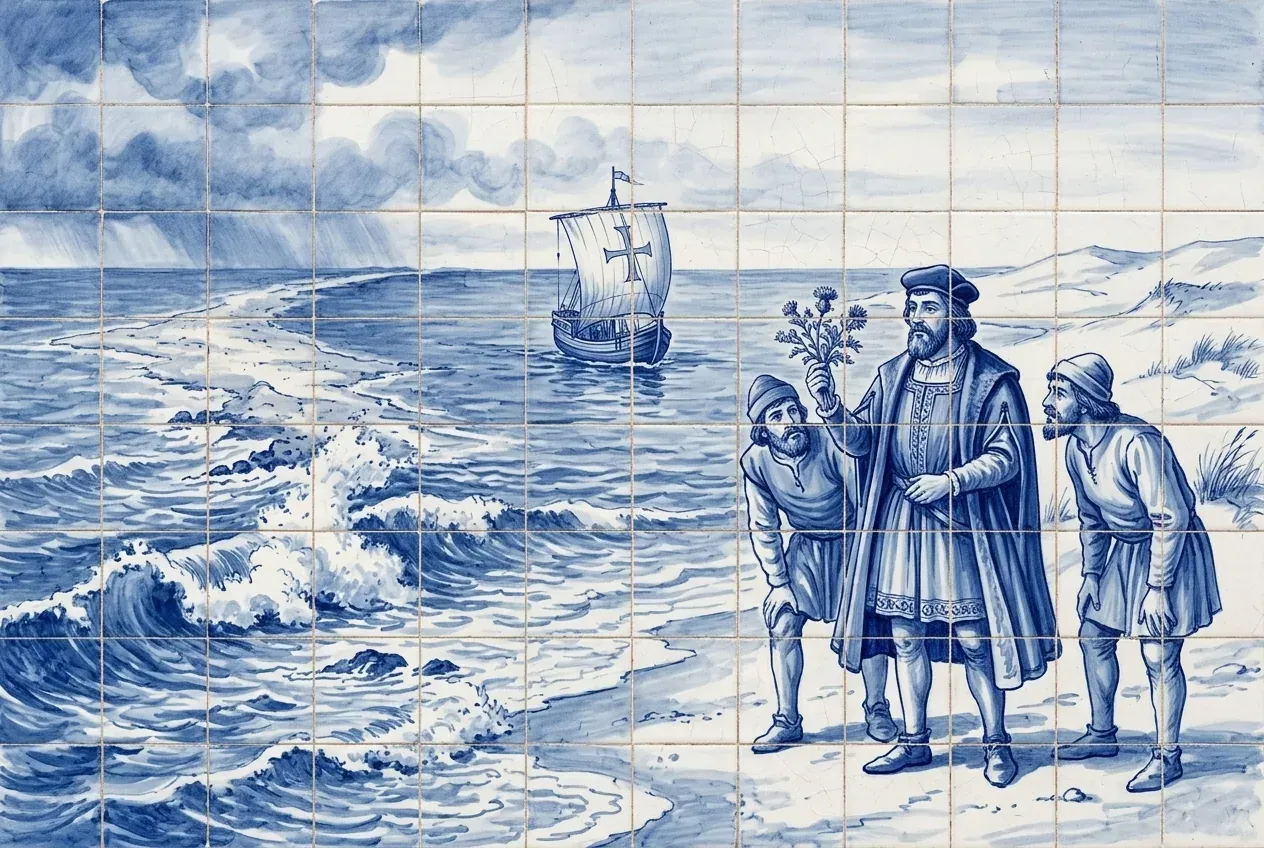
    On an empty shore a captain shows his sailors a sprig of wild flowers; out at sea, a sailing boat with a cross on its sail.

    1434 · Cape Bojador

    The cape of fear

    For twelve years sailors feared one cape. Gil Eanes brought back flowers. (Read the story)

    Cape Bojador, on the coast of Western Sahara, was thought to be a place of no return. People said that beyond it there were no people, the sea was shallow and the currents would never let a ship come back. Prince Henry sent ship after ship, and every one turned back. In 1433 Gil Eanes of Lagos turned back too. The prince sent him again, and in 1434 he got through. As proof, he brought the prince plants the Portuguese called "Saint Mary's roses".

    More →
  4. 1502
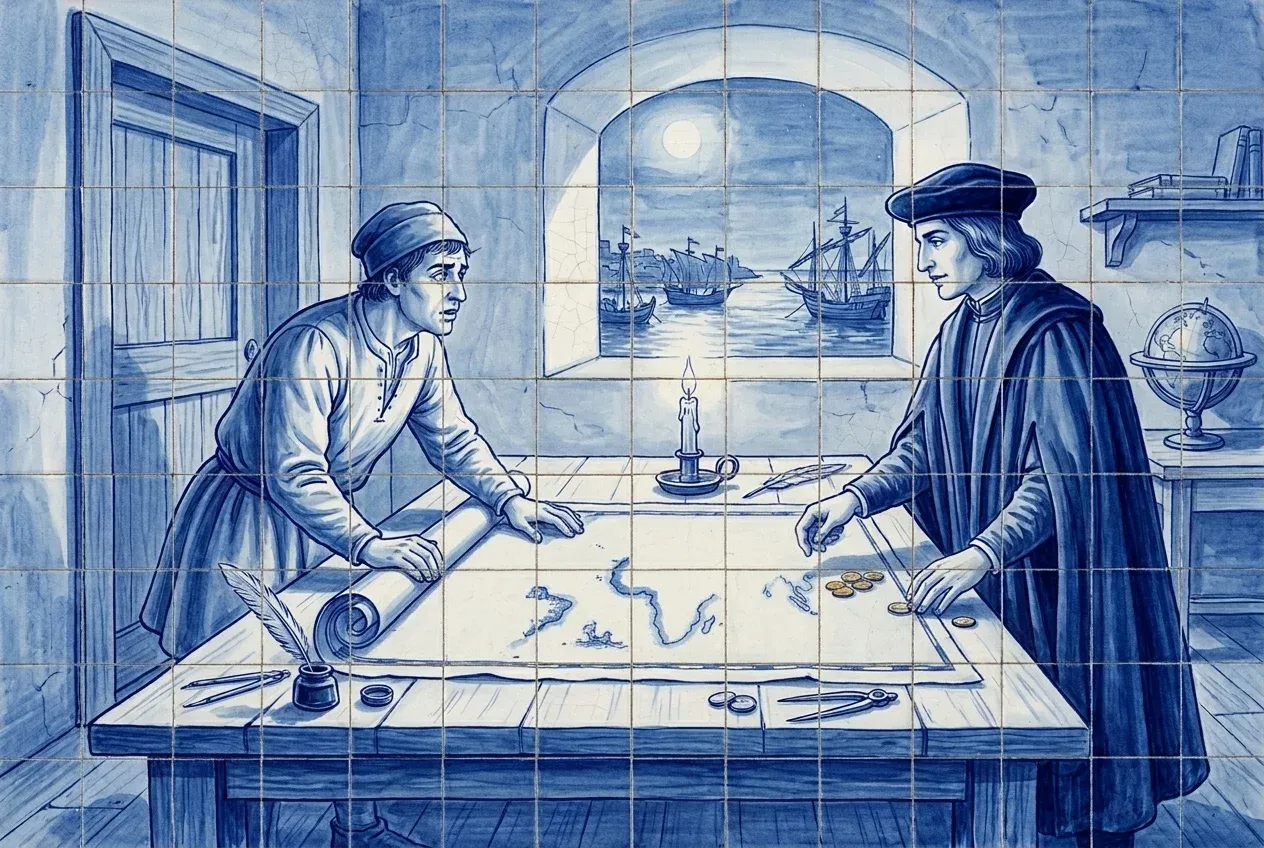
    Two people at a table with a map of the world; a candle and gold coins on the table, ships in the harbour through the window.

    1502 · Lisbon

    A Map Worth 12 Ducats

    He came to trade horses. He left with the world. (Read the story)

    Alberto Cantino arrived in Lisbon in 1501 as a horse dealer. He was really a spy for the Duke of Ferrara, sent to learn what Portuguese captains found. Maps of the new routes were state secrets, yet for 12 gold ducats someone in Lisbon drew him a copy of the world: Brazil, Africa, the way to India. In 1502 he slipped it out of Portugal. In Genoa a mapmaker copied it, and from there its coastlines reached Waldseemüller's 1507 map, the one that gave America its name.

    More →
  5. 1511
    • Documented
    • Nature
    • Minimum age: 12+ (Has scenes of battle or violence.)
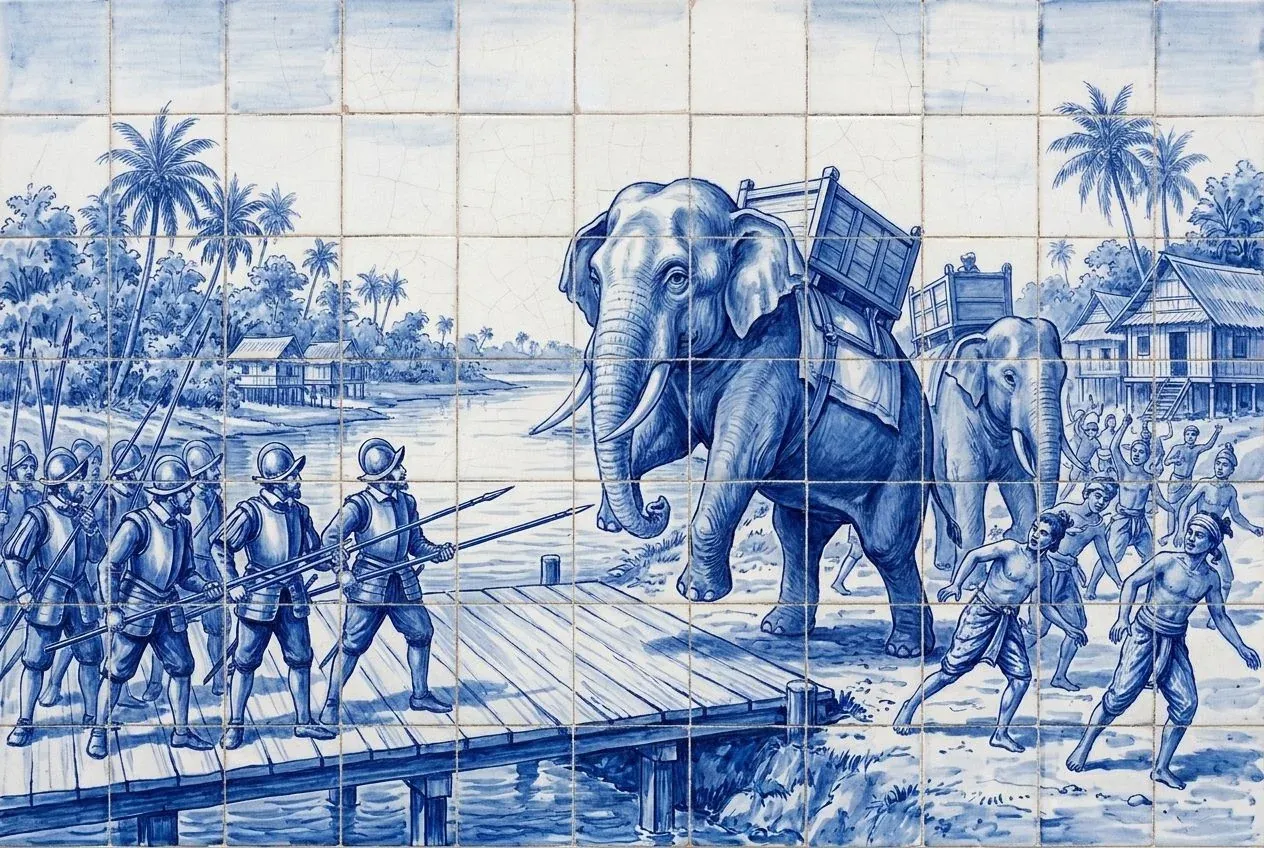
    The sultan unleashed war elephants. They turned on his own men. (Read the story)

    «Whoever is lord of Malacca has his hand on the throat of Venice,» wrote the Portuguese apothecary Tomé Pires, because Malacca controlled the spice route. On 25 July 1511 Afonso de Albuquerque attacked it with about a thousand men. The sultan answered with war elephants. The Portuguese met them with lances. The sultan's elephant, wounded, turned back howling, the others panicked and trampled their own side, and the sultan, wounded too, left his mount. A month later the city was Portuguese.

    More →
  6. 1514
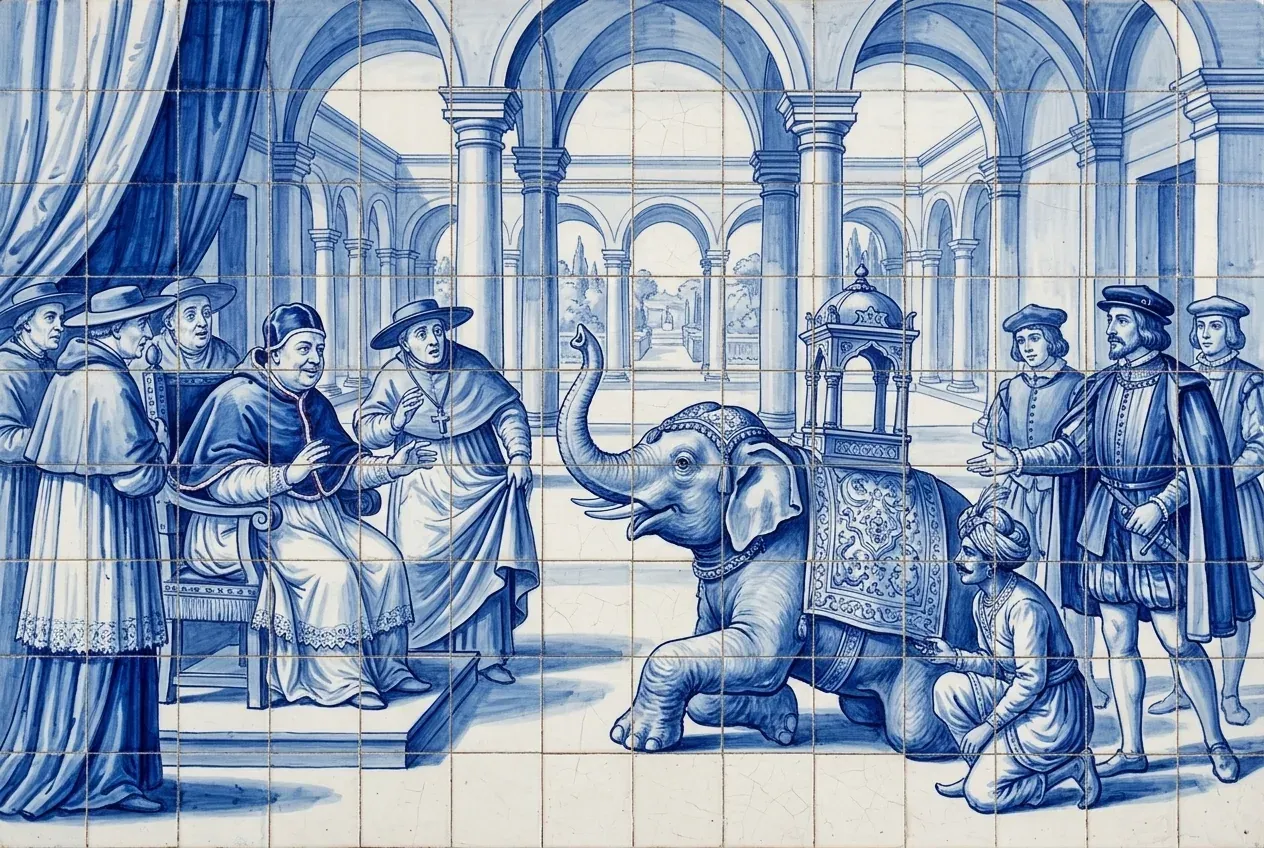
    The Pope was given an elephant, and the elephant knelt before him. (Read the story)

    In 1514 King Manuel I sent an embassy to Rome with gifts for the new pope, Leo X. The main gift was a young white elephant from India, about four years old. At the audience the elephant knelt before the Pope and trumpeted. Leo X was delighted and gave him a home in the Vatican. The elephant was called Hanno: he marched in festive processions, poets wrote verses about him, and all Rome came running to see him.

    More →
  7. 1515
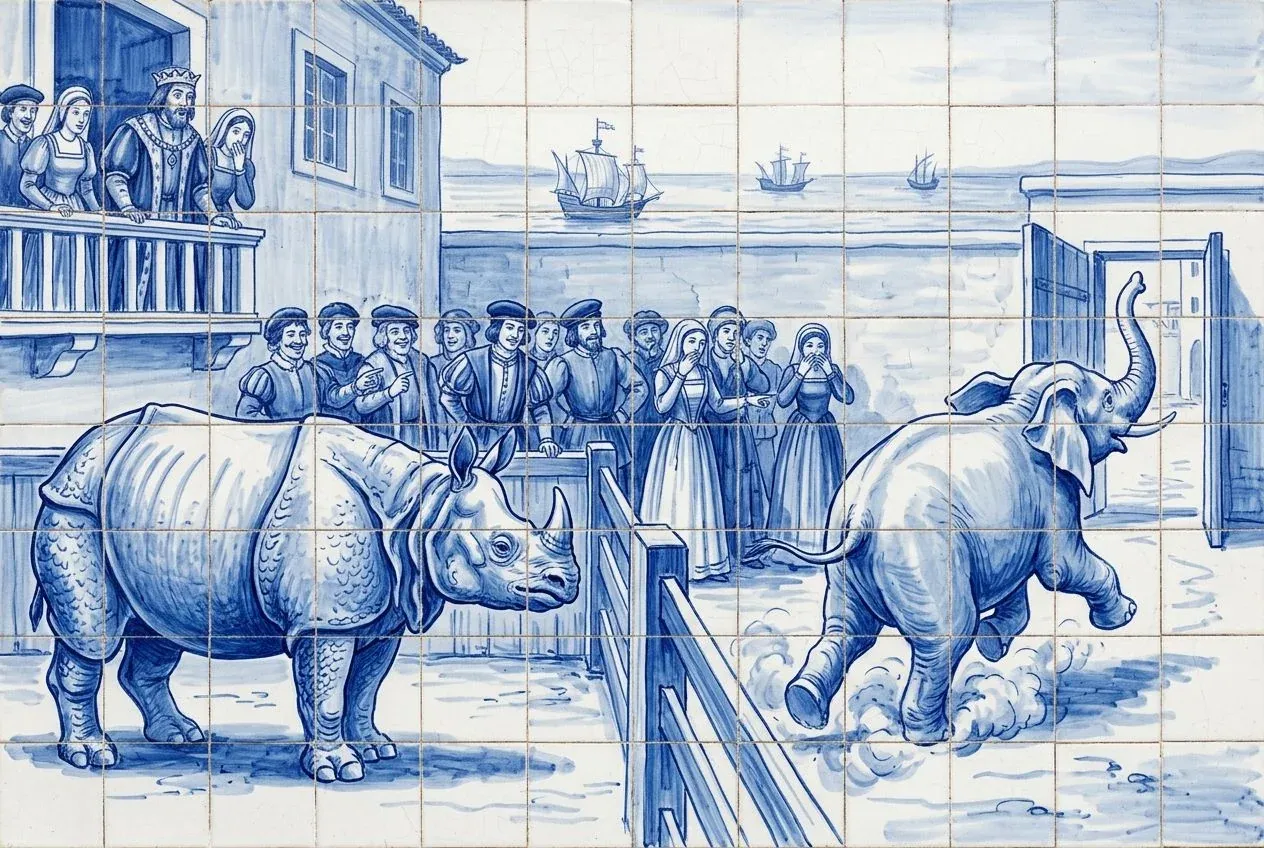
    The king pitted a rhino against an elephant. The elephant fled. (Read the story)

    In May 1515 a rhinoceros arrived in Lisbon from India, the first live one in Europe since Roman times. On 3 June King Manuel I decided to test Pliny's claim that elephants and rhinos are bitter enemies. A young elephant was brought out before a crowd. It panicked at the noisy crowd and fled before a single blow was struck.

    More →