Pombal and the Earthquake

1755–1820

Earthquake and rebuilding

On 1 November 1755 an earthquake, a tsunami and fire destroyed the heart of Lisbon. The Marquis of Pombal rebuilt the city with a ruler and ran the country with an iron hand. Half a century later Napoleon's troops arrived, and the royal court sailed for Brazil.

Timeline of this era

Hidden stories: 5.

Hidden stories: 4.

  1. 1755
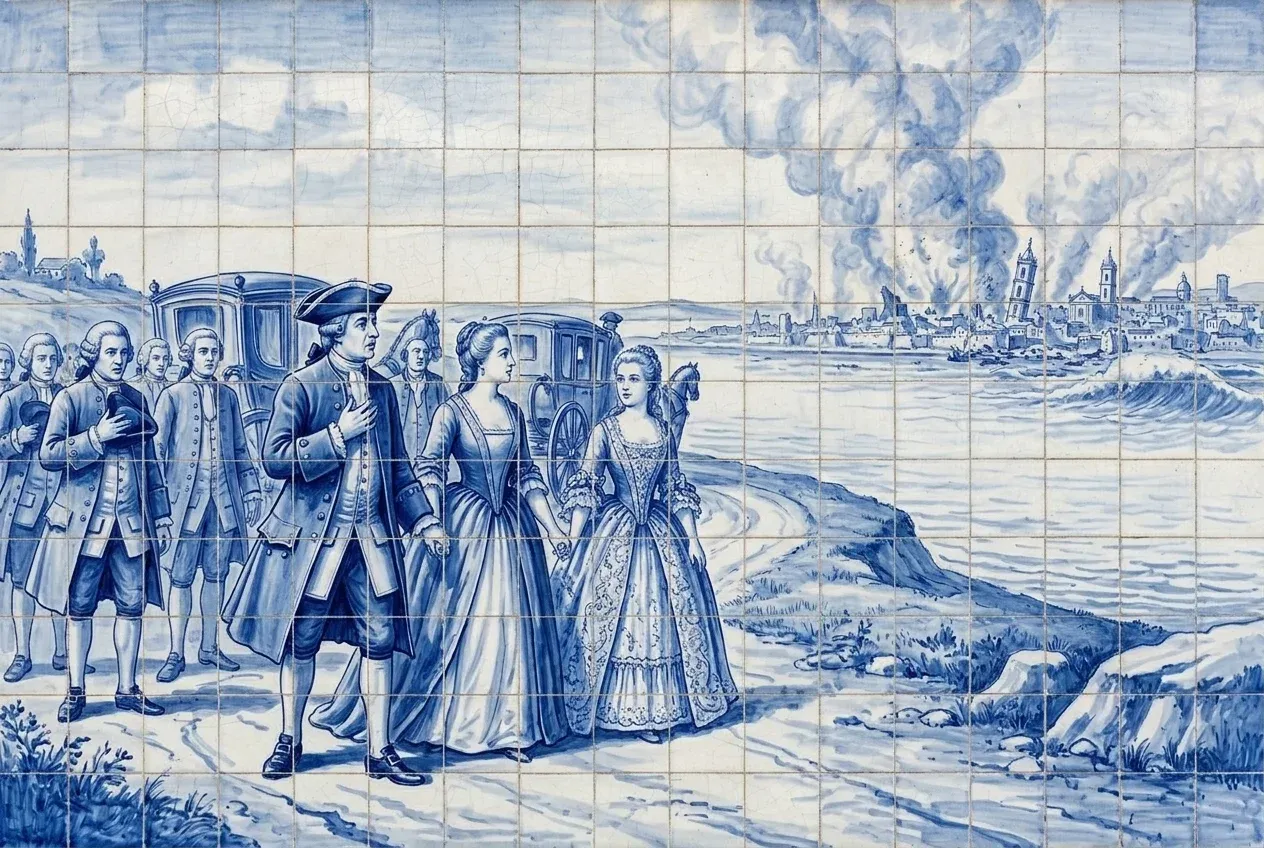
    The king, the queen and the princess by the carriages on the shore; in the distance over the city, smoke and a big wave.

    1 November 1755 · Lisbon

    The Lisbon Earthquake

    • Documented
    • Nature
    • Minimum age: 12+ (Has scenes of battle or violence.)
    • Heavy topic
    The king left Lisbon that morning because his daughter asked. (Read the story)

    On 1 November 1755, All Saints' Day, King José I heard Mass at sunrise and left Lisbon, because a daughter wanted to spend the holiday outside the city. At 9:40 the earthquake hit; the churches were full. A tsunami and days of fire followed; tens of thousands died. The king lived, but afterwards feared living within walls, and the court moved into tents on the hills of Ajuda.

    More →
  2. 1756
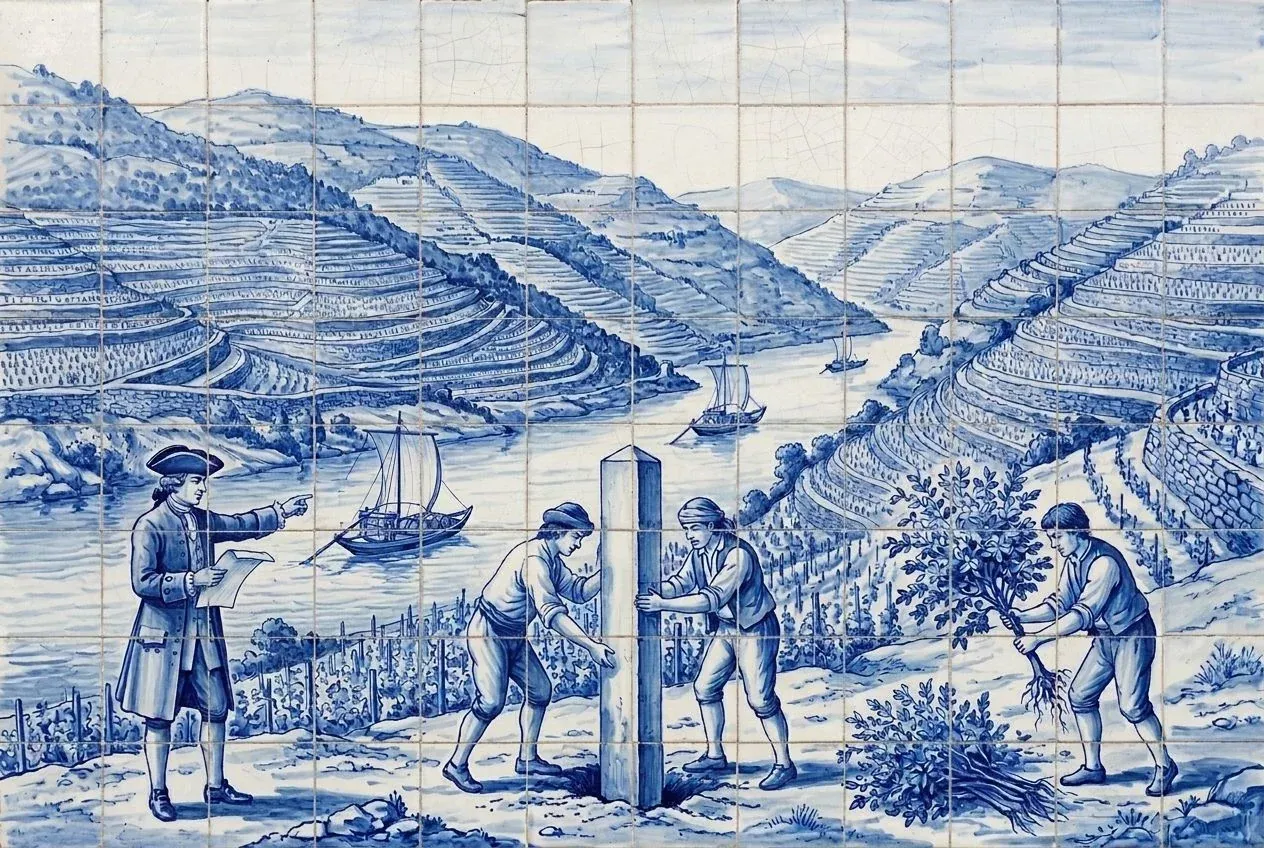
    Blue-and-white azulejo-style illustration: on the Douro terraces, workers set up a granite boundary marker, an official in a tricorne points out the boundary and another man pulls up elder bushes.

    1756 · Douro Valley

    Stones to Guard the Wine

    To save port, Pombal had the Douro's elder trees uprooted. (Read the story)

    By the 1750s the port wine trade was in crisis: too much wine, too many fakes, and most of it sold by British merchants in Porto. In 1756 Sebastião José de Carvalho e Melo, the future Marquis of Pombal, created a company with a monopoly on the trade with England and Brazil, and the elder trees were uprooted. Two years later the first of 335 granite pillars went up to mark the region's borders, often called the world's first demarcated wine region.

    More →
  3. 1757
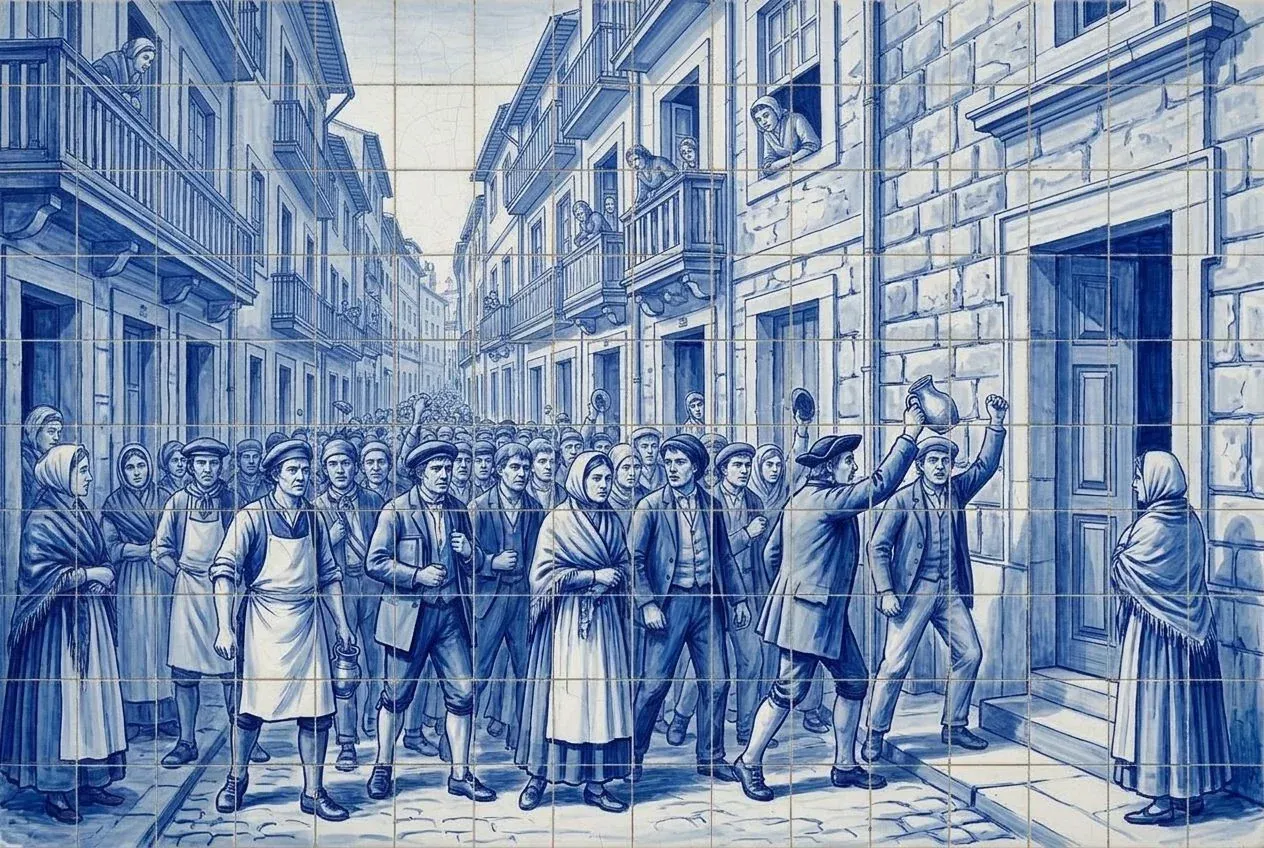
    Blue-and-white azulejo-style illustration: a crowd fills a narrow street in Porto, protesting with raised arms.

    23 February 1757 · Porto

    Death to the Company!

    Porto rose against the king's minister, shouting 'Long live the king!' (Read the story)

    On Ash Wednesday, 23 February 1757, crowds filled the streets of Porto, shouting for the king and against the new Wine Company. Tavern-keepers saw only a monopoly. People roughed up a judge and wrecked property. Pombal answered with troops and trials. By October, between 14 and 17 people were put to death.

    More →
  4. 1760
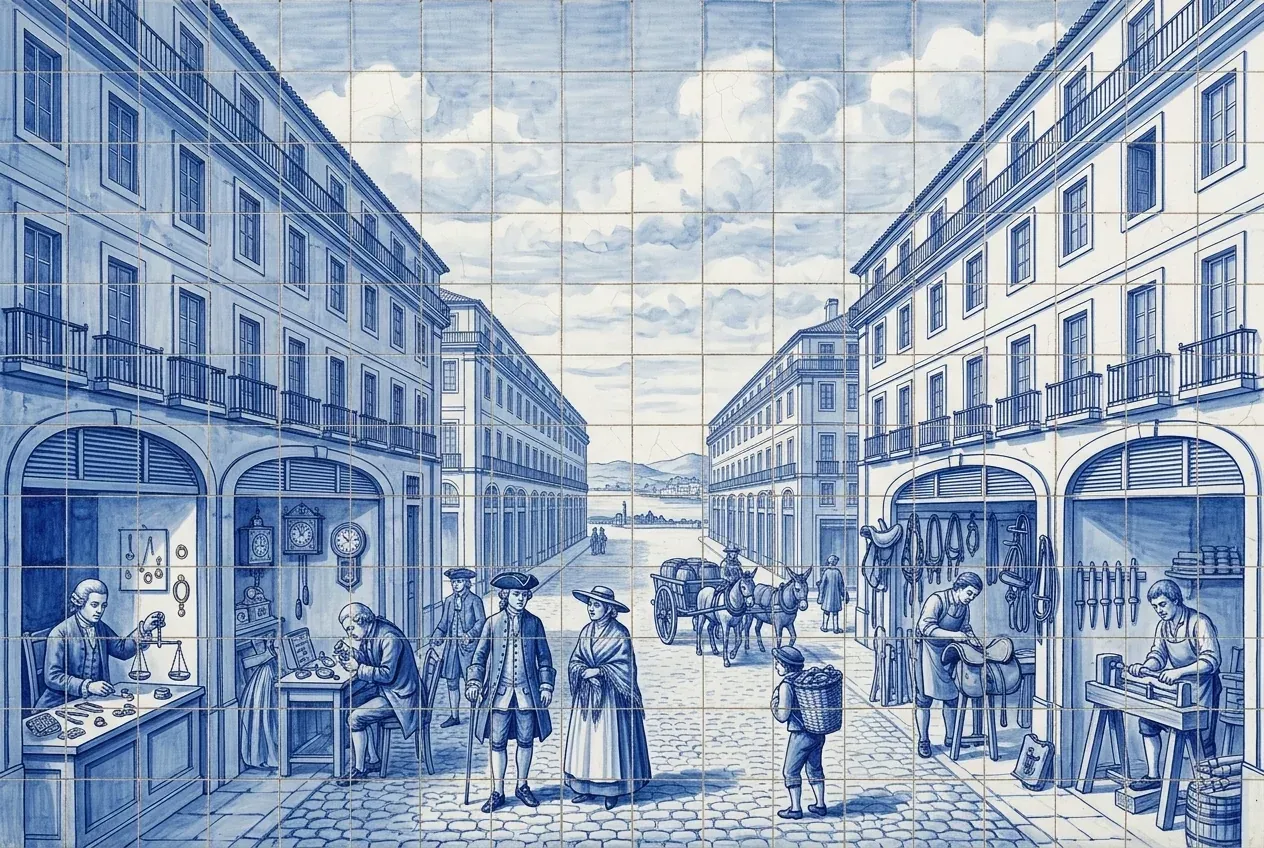
    A Baixa street of identical buildings; in the arches a goldsmith, a watchmaker, a saddler and a turner work, and townspeople walk along the cobbles.

    1760 · Lisbon

    The streets of trades

    After the earthquake, the Baixa's streets were shared out among the trades. (Read the story)

    After 1755, Lisbon's lower town was rebuilt with a ruler: straight streets, identical buildings. A royal order of 5 November 1760 named the streets and assigned certain trades to some of them. Goldsmiths were to work on Rua Áurea, and harness-makers, saddlers and turners on Rua dos Correeiros. Lisbon people still say Rua do Ouro, Gold Street, although the sign reads Rua Áurea.

    More →
  5. 1771
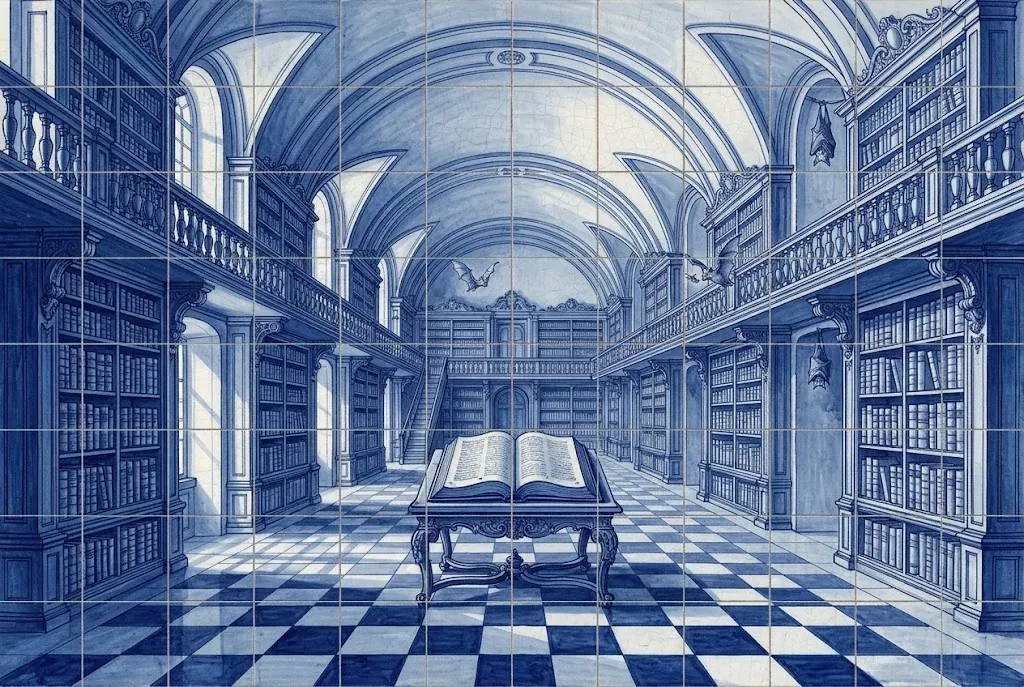
    A long library hall with two tiers of shelves; bats fly under the vault and an open book lies on a table.

    18th century · Mafra

    The library's night watch

    In Mafra, old books are guarded at night by bats. (Read the story)

    The palace-convent of Mafra, northwest of Lisbon, has a huge library: about 36,000 volumes on wooden shelves that reach the ceiling. By day it is quiet and empty. But at night small bats fly out from behind the shelves and hunt the insects that eat paper and leather bindings. People say it has always been this way, but nobody knows when the bats moved into the library.

    More →
  6. 1782
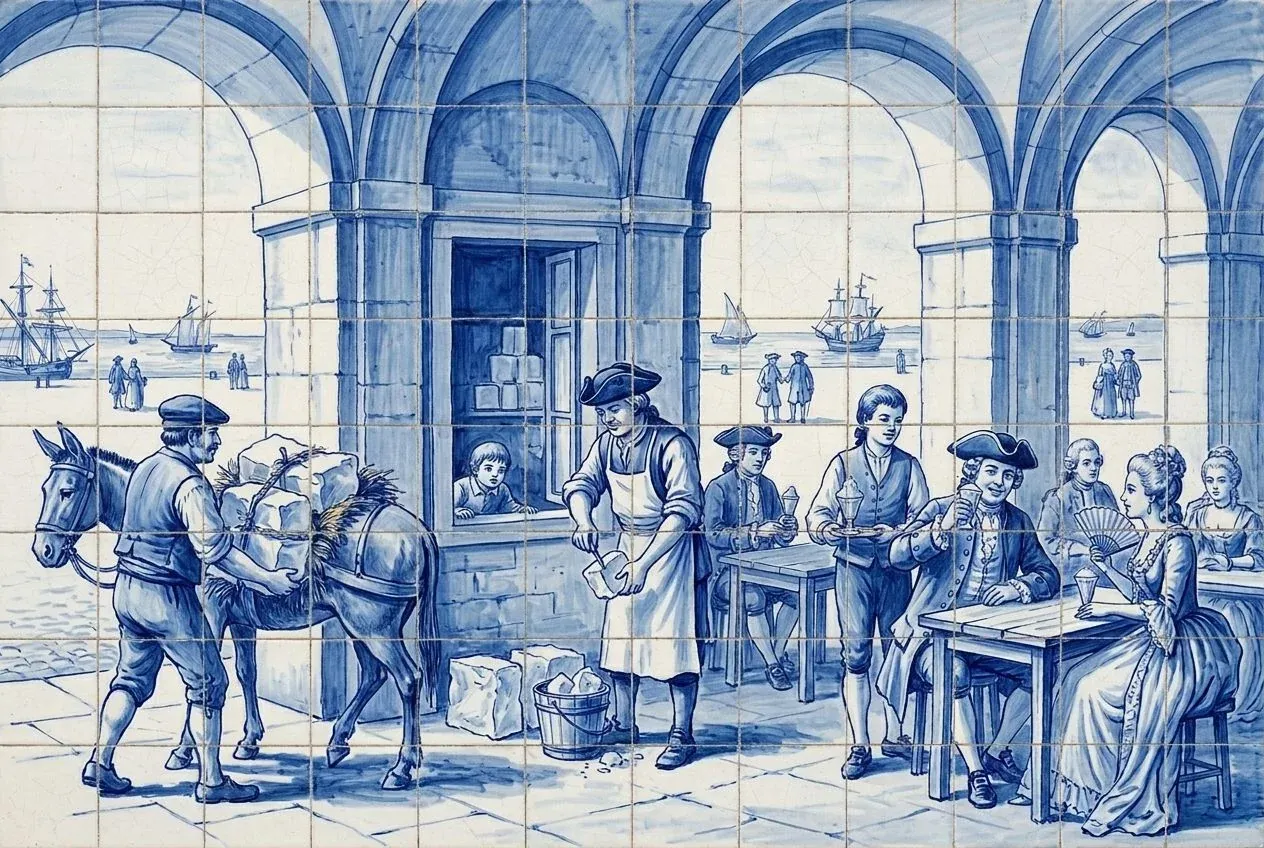
    Blue-and-white azulejo-style illustration: under the arcades by the Tagus, a man unloads straw-wrapped blocks of ice from a donkey while café guests taste ices.

    1778 or 1782 · Lisbon

    The House of Snow

    Lisbon's oldest café was opened by the king's own ice-master. (Read the story)

    In the second half of the 18th century, under the arcades of what is now Praça do Comércio, Lisbon got a shop that sold a luxury: ice (sources say 1778 or 1782). Its founder, Julião Pereira de Castro, was the royal household's chief snow-keeper. In a city of taverns, his Casa da Neve served cold drinks and flavoured ices to those who could pay. Today it is Lisbon's oldest café, Martinho da Arcada, and Fernando Pessoa's table is still reserved.

    More →
  7. 1801
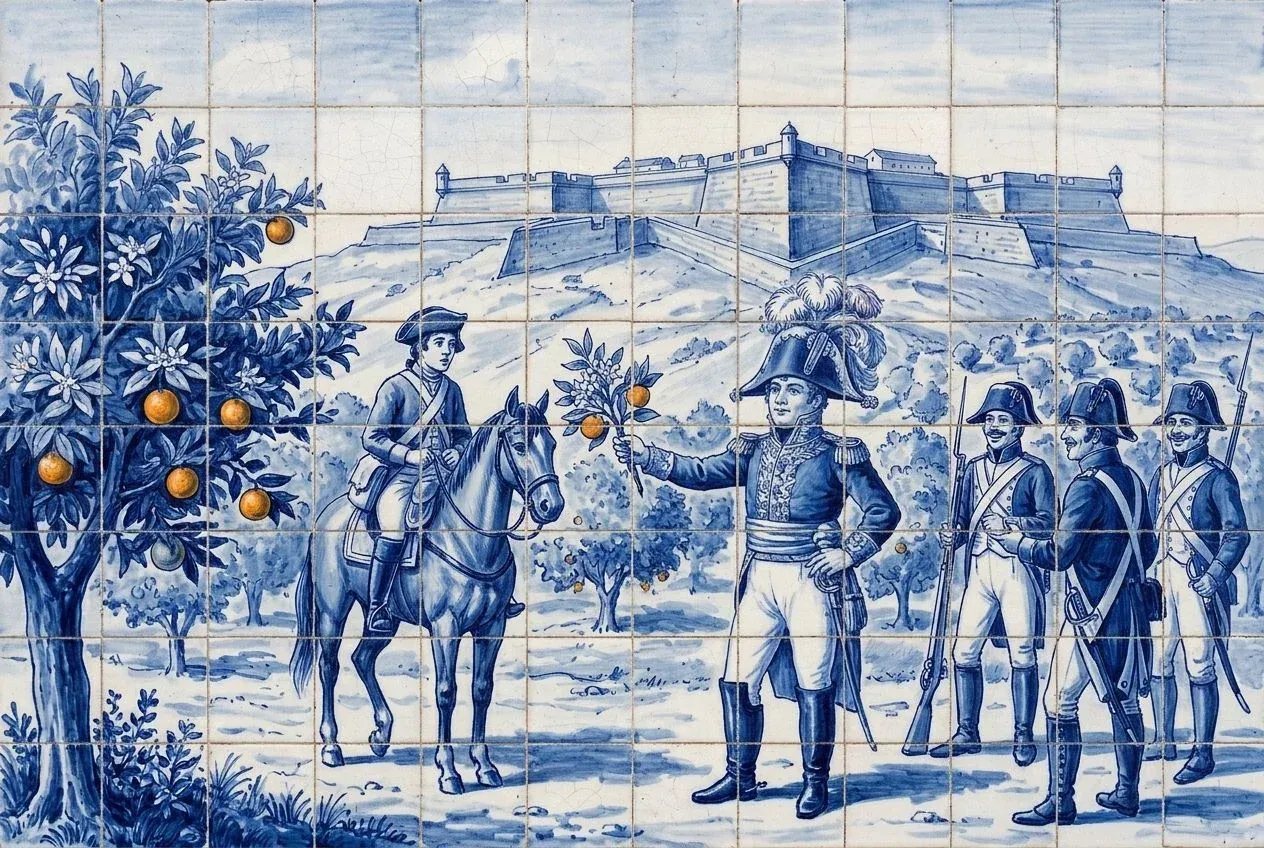
    Blue-and-white azulejo-style illustration: a Spanish commander holds up an orange branch in front of his soldiers, with the bastioned fortress of Elvas behind.

    May–June 1801 · Upper Alentejo

    The War of the Oranges

    The war named after a sprig of oranges sent to a queen. (Read the story)

    In May 1801 Spain, pushed by Napoleon's France, invaded Portugal. The army was led by Manuel Godoy, the prime minister and, people said, the queen's lover. He could not take the fortress of Elvas, but he took Olivença and a few border towns. Outside Elvas, says the tradition, Godoy picked a branch of oranges and sent it to Queen María Luisa as a token of victory. His enemies turned it into a joke, and the war became the War of the Oranges.

    More →
  8. 1807
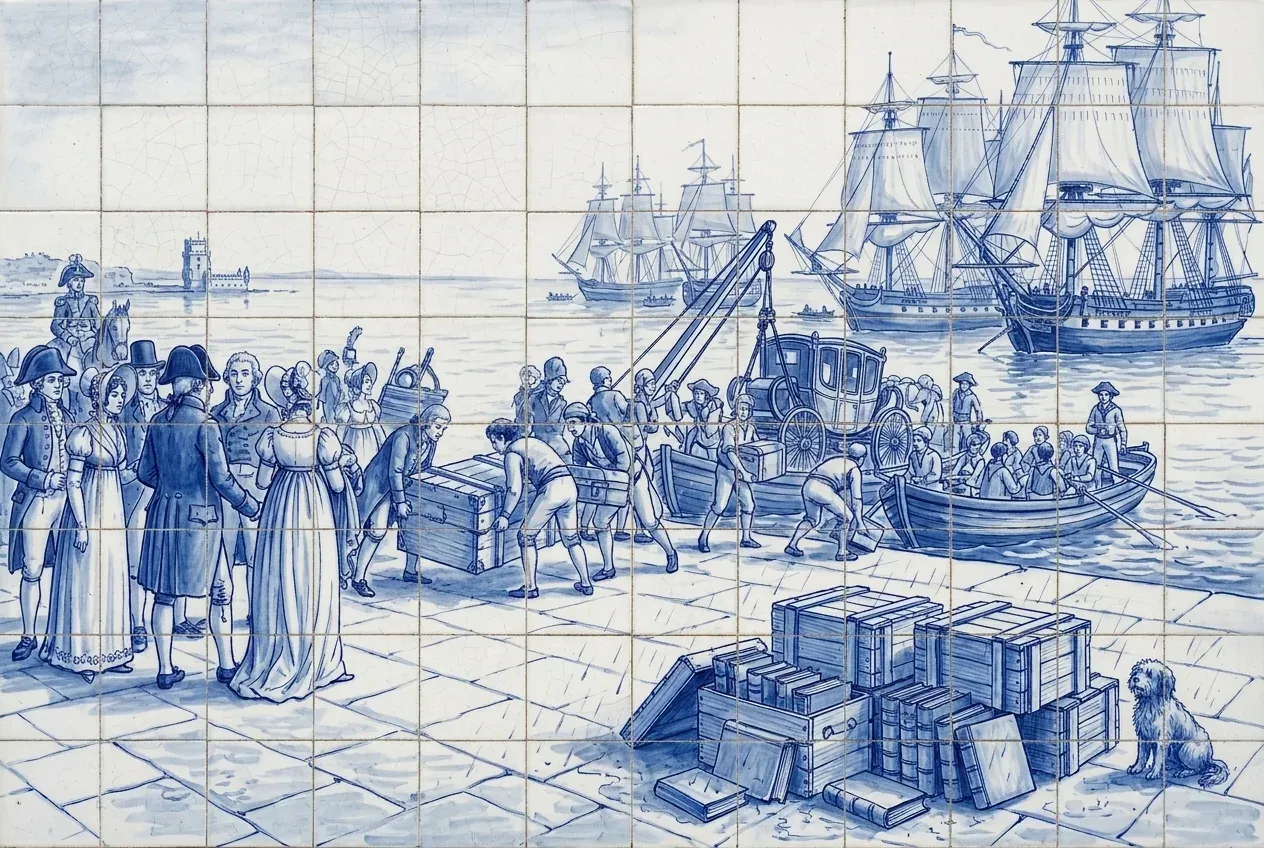
    The court sailed to Brazil and left its library on the quay. (Read the story)

    In November 1807 Napoleon's army was marching on Lisbon. Prince Regent John neither surrendered nor fought: he decided to move the entire court to Brazil. In two days at Belém, the queen, the ministers, the archives and the carriages were loaded onto ships. Between 10,000 and 15,000 people went with them, depending on the estimate. There was no wind, and the fleet waited on the river until 29 November. The next day General Junot marched into the city.

    More →
  9. 1809
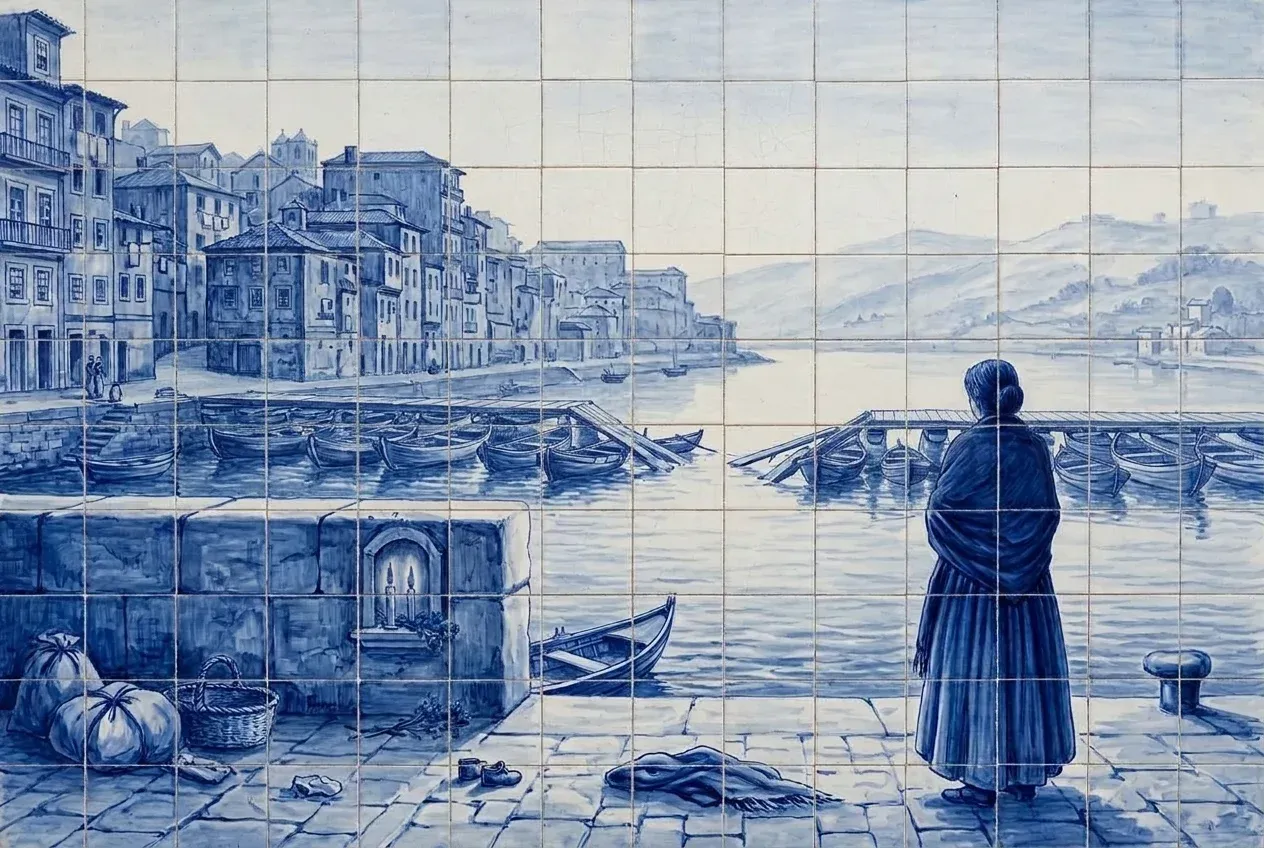
    A woman in a shawl stands on an empty quay looking at the broken bridge of boats; beside her abandoned bundles and candles in a niche.

    29 March 1809 · Porto

    The Bridge of Boats

    • Documented
    • People like us
    • Minimum age: 12+ (Has scenes of battle or violence.)
    • Heavy topic
    Thousands fled over a bridge made of boats. It gave way. (Read the story)

    In March 1809, French troops under Marshal Soult took Porto. In panic, residents fled toward Gaia over the Ponte das Barcas, a floating bridge of boats built in 1806. Chased by soldiers, the crowd packed onto the planks until the bridge gave way. Estimates of the dead run from several hundred to over 4,000.

    More →
  10. 1810
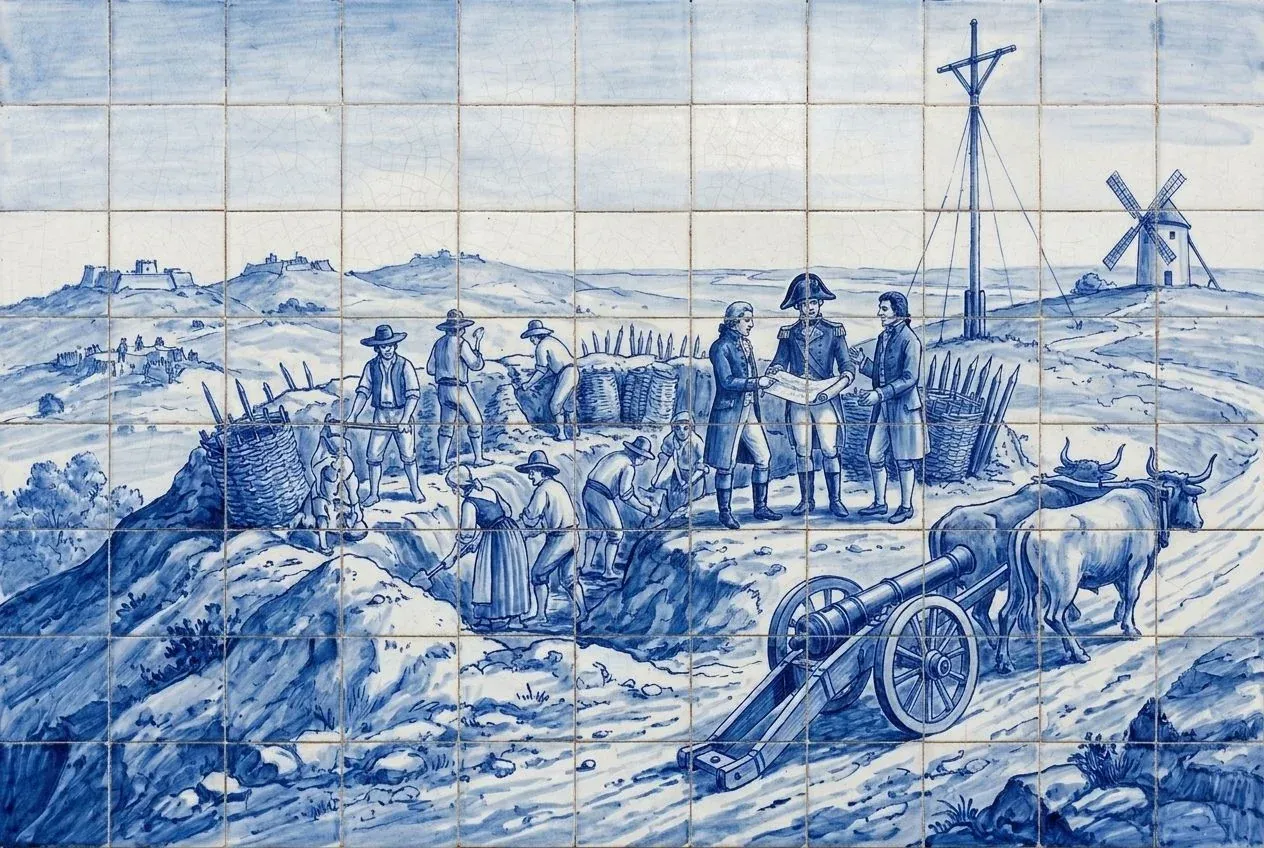
    Blue-and-white azulejo-style illustration: peasants dig trenches and fill earth baskets on a hill, officers study a map and oxen haul a cannon, with a signal mast and a windmill behind.

    11 October 1810 · Sobral de Monte Agraço

    The Lines of Torres Vedras

    Portugal spent a year building forts the French barely knew existed. (Read the story)

    In October 1809, Wellington ordered fortifications built on the hills north of Lisbon. Portuguese workers raised forts and redoubts in secret. In September 1810, Marshal Masséna marched on Lisbon with about 60,000 men, through a land stripped of food by its own farmers. On 11 October he reached the Lines of Torres Vedras. A month later, hungry, he turned back.

    More →
  11. 1812
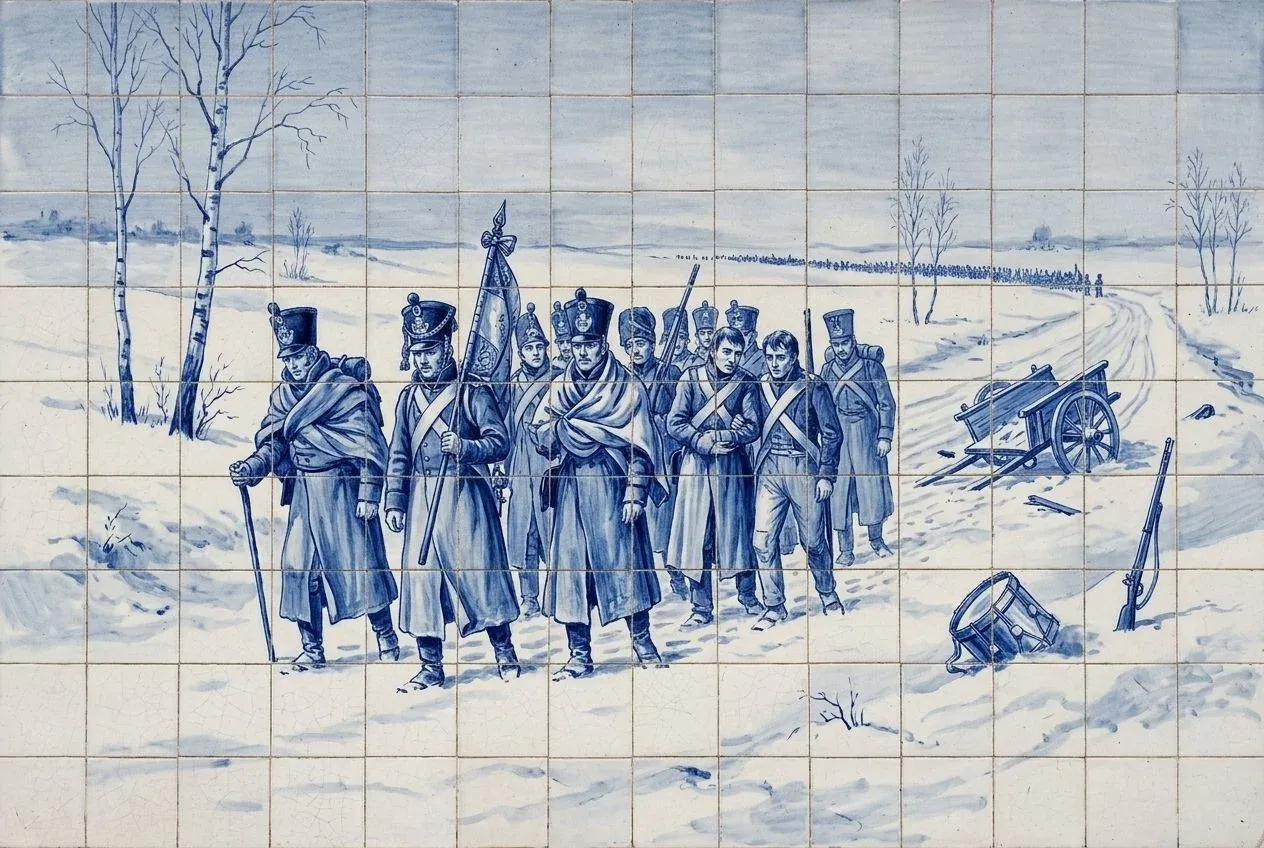
    After Russia, about a hundred of Napoleon's Portuguese Legion were left. (Read the story)

    In 1808 the French occupiers disbanded Portugal's army, then built a legion from its units. About 9,000 men, led by the Marquis of Alorna, marched off to France as the Portuguese Legion. They fought at Wagram in 1809 and in 1812 went to Russia, to Smolensk and Borodino. By 1813 only about a hundred were left.

    More →