Lusitania and Rome

6th c. BC – 5th c.

Viriathus, roads, and Latin

For eight years Roman legions couldn’t beat a shepherd named Viriathus, so Rome simply bribed his friends. Then came roads, bridges, and Latin: people still walk across the bridge built under Trajan in Chaves. And in the square of Murça stands a granite pig carved before the Romans ever arrived.

Each story reveals part of the panel

Panel of the era: 24 of 24 tiles open

Timeline of this era

Hidden stories: 1.

  1. 4th c. BC
    readNew
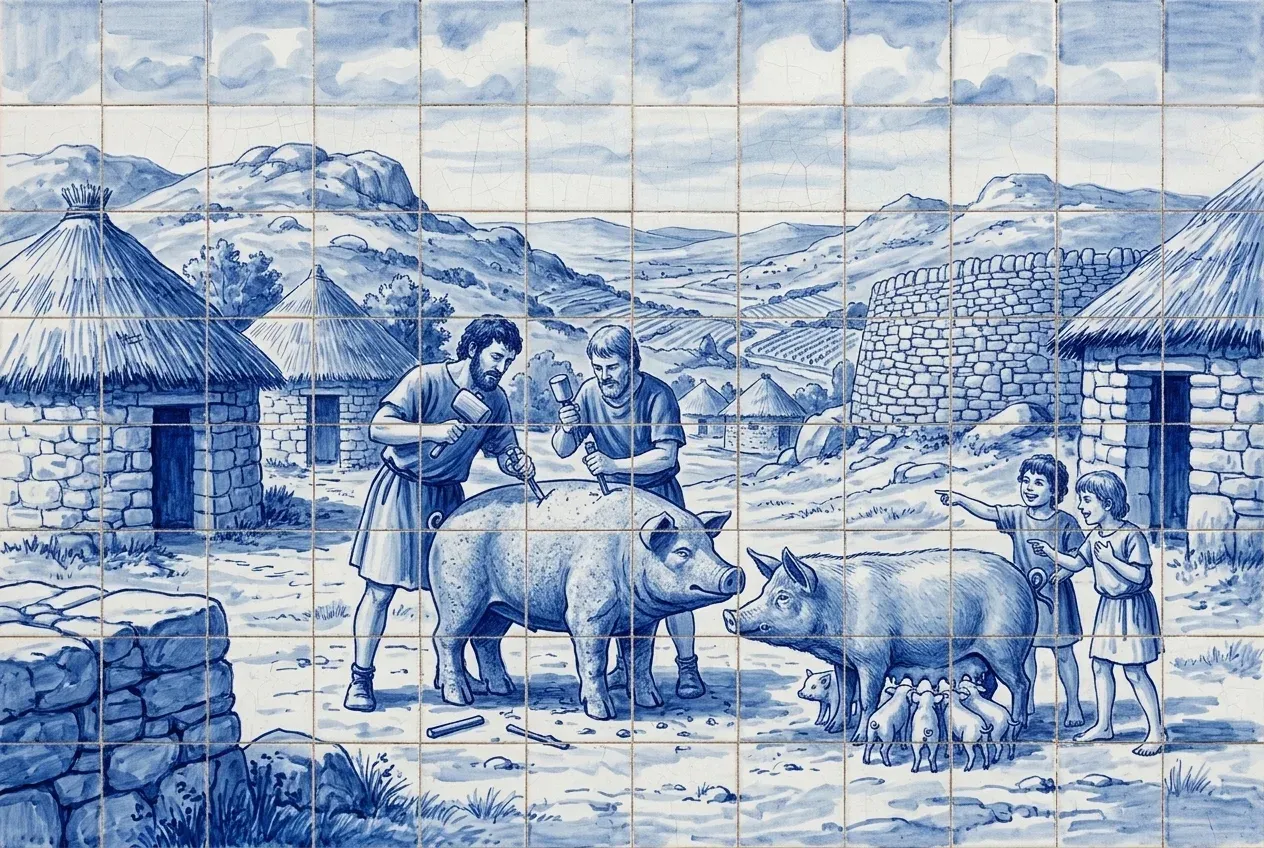
    Blue-and-white azulejo-style illustration: in a village of round thatched houses and a stone wall, two sculptors carve a granite pig while two children point at a living sow with her piglets.

    4th–1st century BC · Murça

    Granite Pigs Older Than the Romans

    A pig more than two thousand years old. (Read the story)

    Even before the Romans, tribes in northeastern Portugal and western Spain carved boars, pigs, and bulls out of granite. They’re called berrões. More than four hundred have been found. No one knows for sure what they were for: maybe to protect herds, maybe as boundary markers or grave markers. The most famous, the Porca de Murça, is almost two meters long, and the townspeople see it as the symbol of their town.

    More →
  2. 139 BC
    readNew
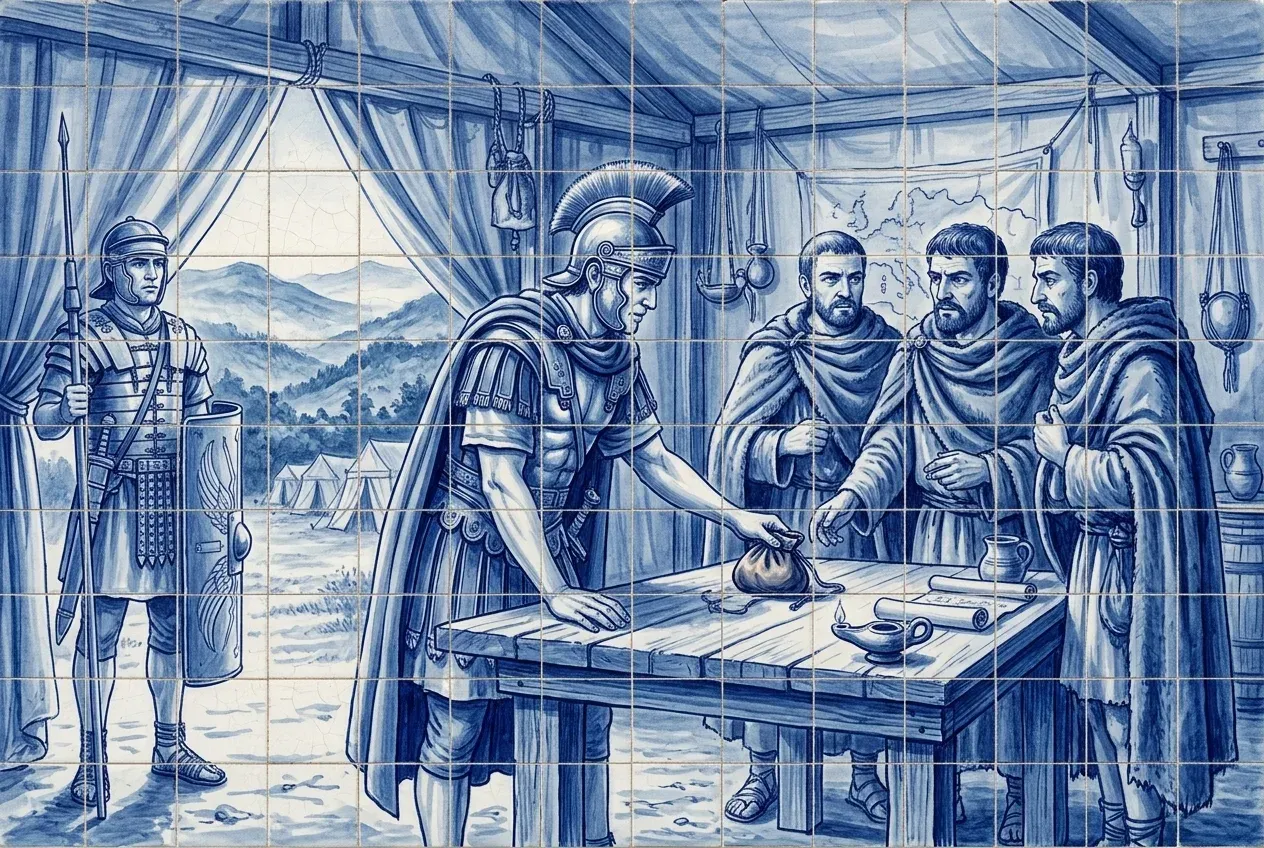
    Blue-and-white azulejo-style illustration: in a field tent a Roman general in a crested helmet sets a purse of coins on the table before three cloaked men, while a legionary with a spear stands guard at the entrance.

    139 BC · Lusitania

    Rome Doesn’t Pay Traitors

    Rome couldn’t defeat the shepherd. So it bought his friends. (Read the story)

    Viriathus was a Lusitanian shepherd who became the leader Rome fought for eight years. He lured the legions into ambushes and forced Rome to sign a peace treaty. The Roman general Caepio won the Senate’s permission to resume the war and decided to get rid of the leader through others. Three of Viriathus’s companions came to him to negotiate, and Caepio promised them a reward for their leader’s death. They killed Viriathus in his sleep but, when they came for the money, were told, according to tradition: “Rome doesn’t pay traitors.” Without him, the Lusitanians soon surrendered.

    More →
  3. 1st c.
    readNew
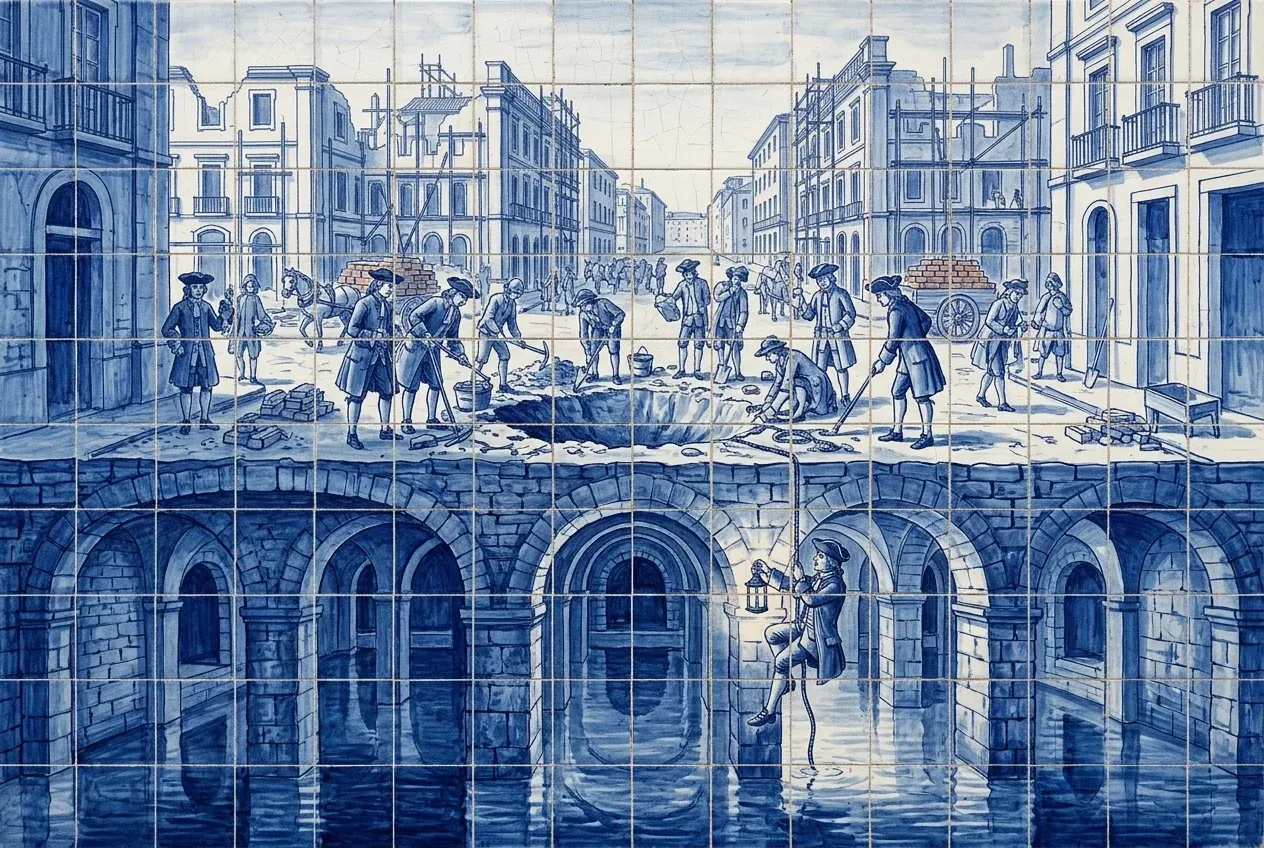
    Blue-and-white azulejo-style illustration: on a street under construction, workmen in coats and breeches dig a hole in the ground, and below, in flooded Roman arcades, a man climbs down a rope with a lantern.

    1st century (found in 1771) · Lisbon

    The Galleries Drained Twice a Year

    Lisbon’s flooded Roman galleries. (Read the story)

    After the 1755 earthquake, the Baixa was rebuilt from scratch, and in 1771 builders came across Roman underground galleries beneath Rua da Prata. People still argue about what they were for: maybe the foundations of a large building on the slope. The galleries are full of water, and it can’t be pumped out often: the water helps hold up the buildings above. So twice a year the water is removed, a hatch opens in the middle of the street, and groups led by staff of the Museum of Lisbon climb down under the street.

    More →
  4. 1st c.
    readNew
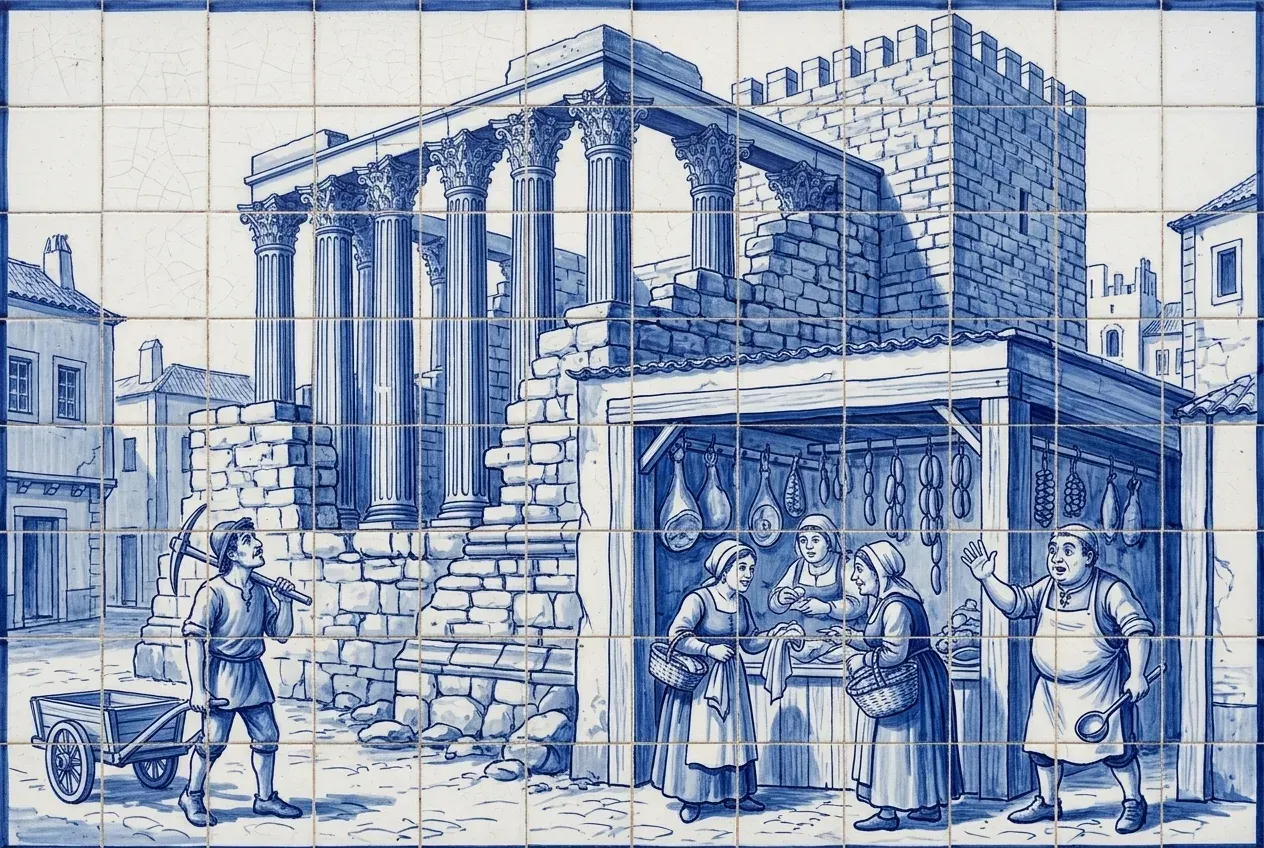
    Blue-and-white azulejo-style illustration: a Roman temple with Corinthian columns built into a medieval stone tower, with a butcher shop open between the columns where two women with baskets buy meat from a man in an apron; on the left a workman with a pickaxe pulls a handcart.

    1st century · Évora

    The Temple a Butcher Shop Saved

    Évora’s Roman temple survived because meat was sold inside it. (Read the story)

    In the 1st century a temple was built in the center of Évora, probably in honor of Emperor Augustus. After the empire fell, old temples all over the country were taken apart for stone to build houses and walls. Évora got lucky: in the Middle Ages the temple was built into a castle tower, the gaps between the columns were walled up, and from the 14th century until 1836 the town’s butcher shop operated inside. The town needed its butcher, so nobody took the building apart.

    More →
  5. 1st⁠–⁠5th c.
    readNew
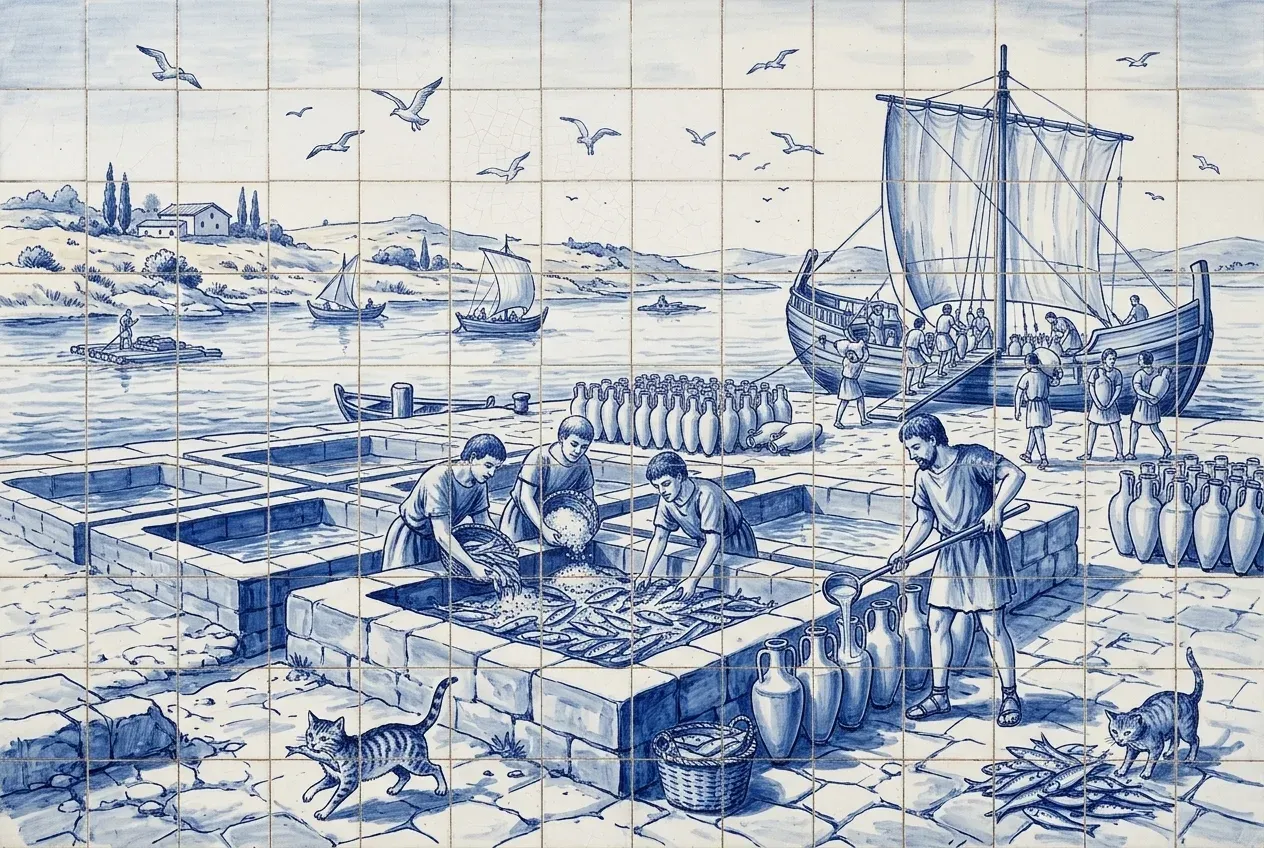
    Blue-and-white azulejo-style illustration: on a riverbank, Roman workers pour small fish into stone vats surrounded by amphorae; in the background a square-sailed boat is being loaded, gulls fly over the water and two cats prowl around the fish.

    1st–5th century · Lisbon

    The Fish Sauce Under the Bank

    Under a Lisbon bank, Romans once made fish sauce. (Read the story)

    In 1991 a bank in Lisbon’s Baixa set out to renovate its headquarters. Under the floor, workers found stone vats where the Romans had salted fish. Here on the banks of the Tagus, ancient Olisipo made preserved fish and a pungent sauce of fish, salt, and herbs that was loved across the empire. The bank didn’t fill the find back in, and today a Roman fish factory lies beneath its offices.

    More →
  6. 1st⁠–⁠2nd c.
    readNew
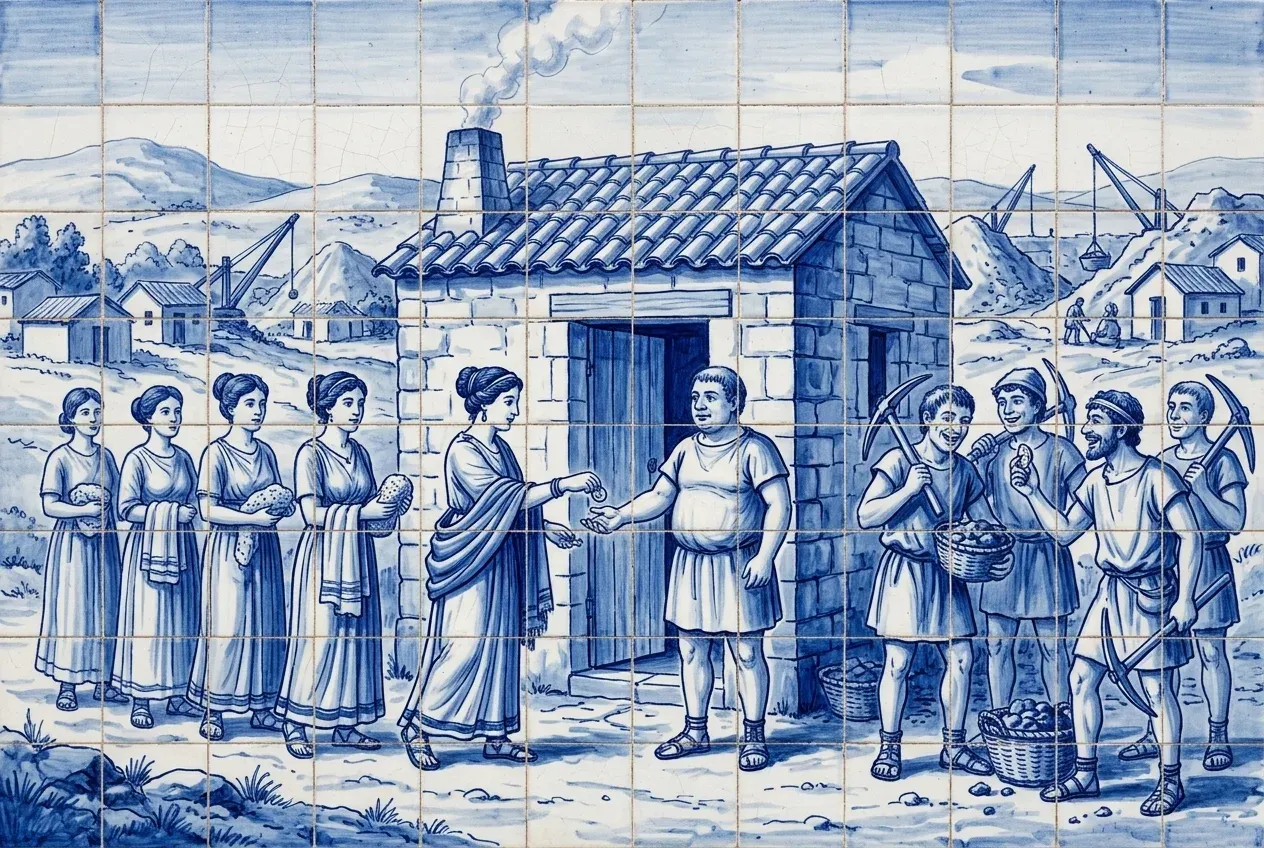
    Blue-and-white azulejo-style illustration: at the door of a stone building with a smoking chimney, a woman hands a coin to a man, with a line of women holding towels and loaves behind her, while on the right miners with pickaxes and baskets of ore talk; a mine lies in the background.

    late 1st – early 2nd century · Aljustrel

    The Baths Where Women Paid Double

    At the Roman baths, women paid twice as much as men. (Read the story)

    By the Vipasca mine, today’s Aljustrel in the Alentejo, a Roman miners’ village grew up. Its life was laid down by law on bronze tablets. At the baths, the morning until the seventh hour belonged to women, and men bathed from the eighth hour of the day until the second hour of the night. A man paid half a coin, a woman a whole one; historians argue why; one theory is that the boiler had to be relit in the morning. Children, soldiers, and imperial slaves got in free. The tablets were found in the mine’s old slag heaps in 1876 and 1906.

    More →
  7. c. 104
    readNew
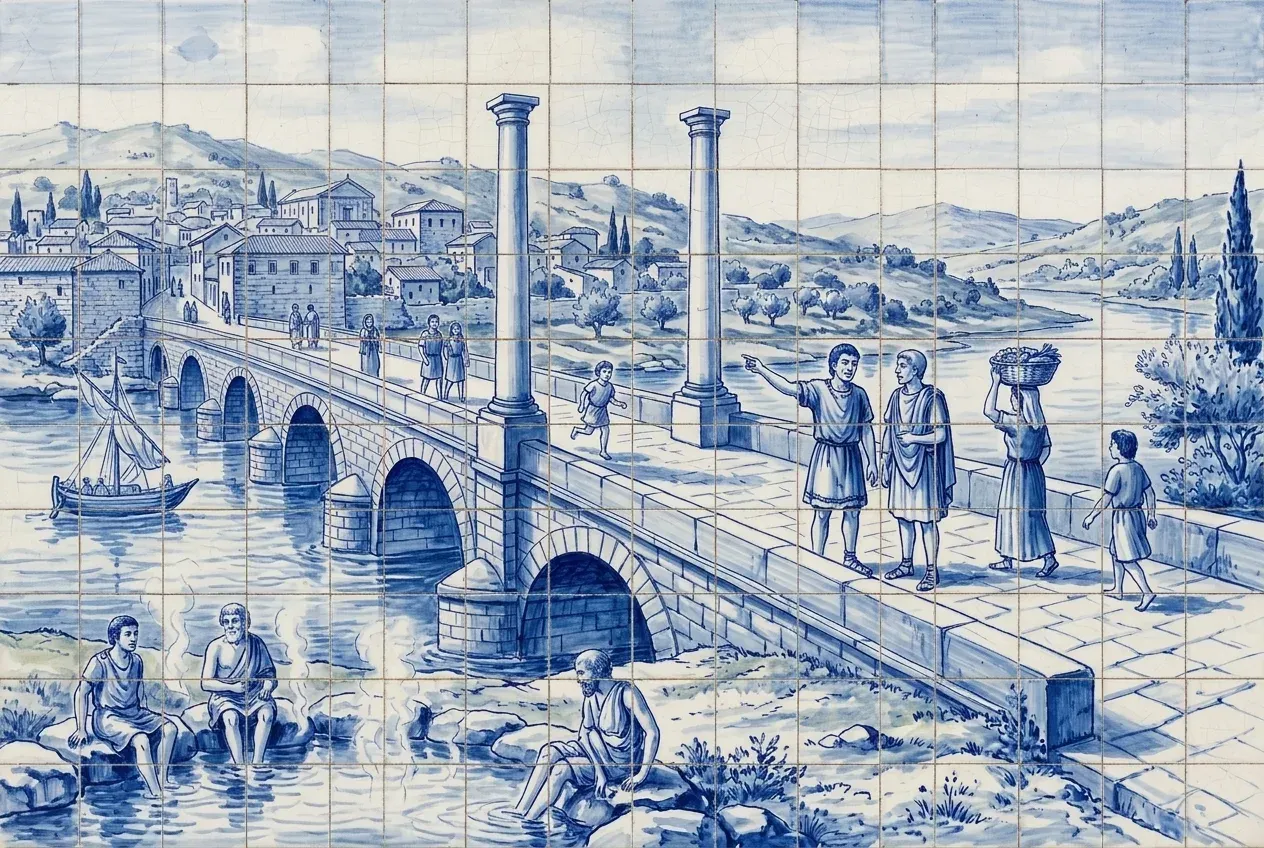
    The Roman bridge the townspeople paid for themselves. (Read the story)

    The Romans covered Lusitania with roads, and on the road from Braga to Astorga they needed a bridge over the Tâmega River. In the town of Aquae Flaviae, today’s Chaves, they built it around the turn of the 2nd century, under Emperor Trajan. The bridge outlived the fall of Rome, the Moors, floods, and wars. It has been repaired and its railings replaced, but the Roman arches still carry the road across the river.

    More →

Then and now

  • 2 weeksnow: about 3.5 h

    The Roman road Olisipo–Bracara ran 362 kilometers. On foot, at 25–30 km a day, that took about two weeks. A train now needs about 3.5 hours: in the same time it would make the trip about 96 times.

    calculation

  • 20–30 yearsnow: over 80 years

    In the Roman Empire, life expectancy at birth was 20 to 30 years, because many children died. Whoever reached adulthood lived considerably longer. In Portugal today it is over 80.

    estimate

  • 5–7.5 millionnow: about 61 million

    Under Rome, an estimated 5 to 7.5 million people lived on the Iberian Peninsula. Spain and Portugal together, islands included, now have about 61 million. Portugal did not exist yet.

    estimate

Estimate: a historians’ reconstruction. Calculation: my own, from distance and speed.

Sources