Union, Restoration, and Brazilian Gold

1580–1750

Gold, baroque, and independence

Young King Sebastian vanished in battle in Morocco, Portugal spent 60 years under Spanish kings, and impostors roamed the country claiming to be the returning king. In 1640 a band of conspirators won back independence in a single morning. Then Brazilian gold arrived, and King John V ordered bells from Flanders and an entire chapel from Rome.

Each story reveals part of the panel

Panel of the era: 96 of 96 tiles open

Timeline of this era

  1. 1581
    readNew
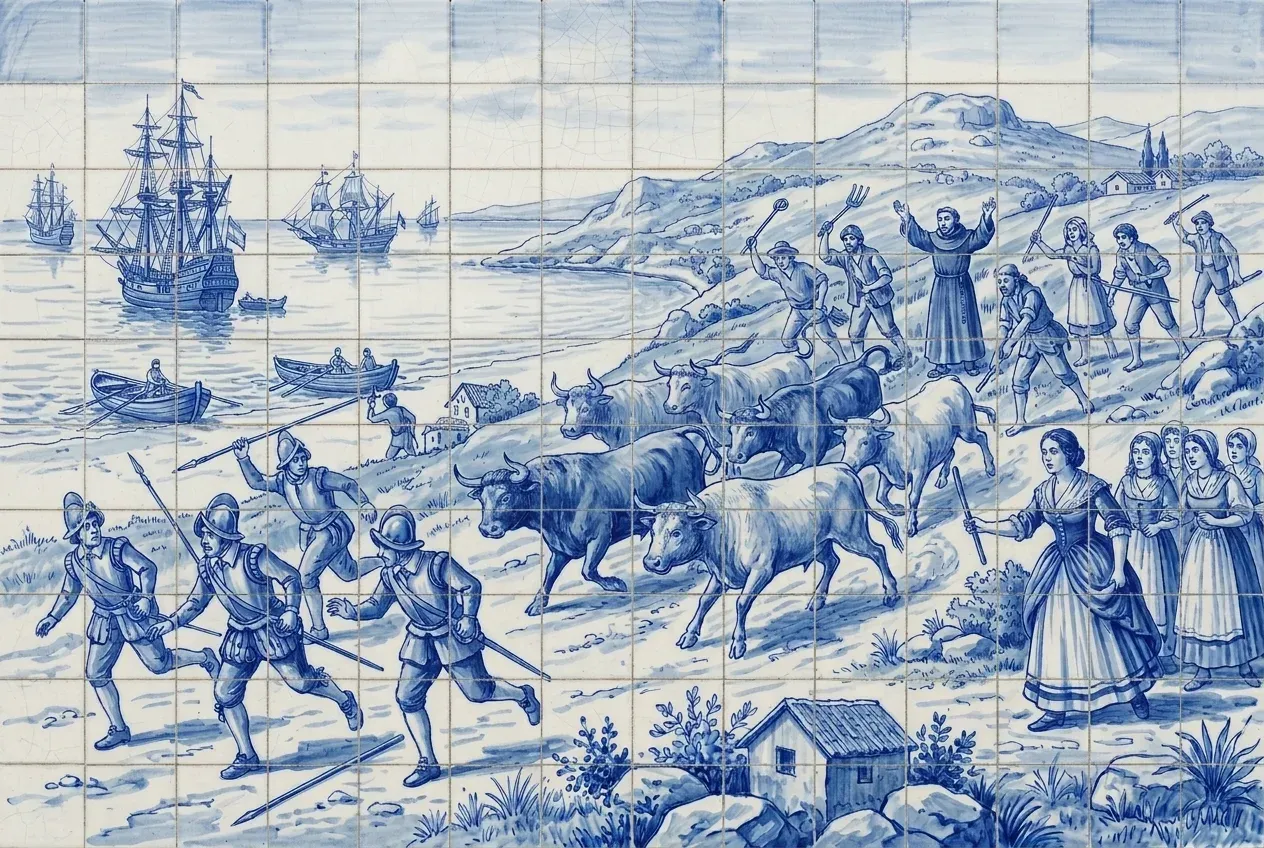
    Blue-and-white azulejo-style illustration: on a seaside slope, a friar and villagers with sticks drive a herd of bulls at fleeing Spanish soldiers, with ships offshore and women who also hold sticks.

    July 25, 1581 · Terceira

    Bulls Against the Landing

    On Terceira, a herd of bulls drove off a Spanish landing. (Read the story)

    In 1580 Portugal passed to the Spanish king Philip II, but the island of Terceira in the Azores refused to recognize him: it sided with António, Prior of Crato, who had been proclaimed king. On July 25, 1581, the Spanish landed in Salga Bay. The islanders were falling back, and that’s when a friar named Pedro came up with a plan: send bulls at the enemy. Hundreds of animals, driven by shouts, sticks, and gunfire, charged into the Spanish lines. The lines broke, the islanders attacked right behind them, and the landing force ran for its boats. The victory gave the island two more years of freedom, until 1583.

    More →
  2. 1584
    readNew
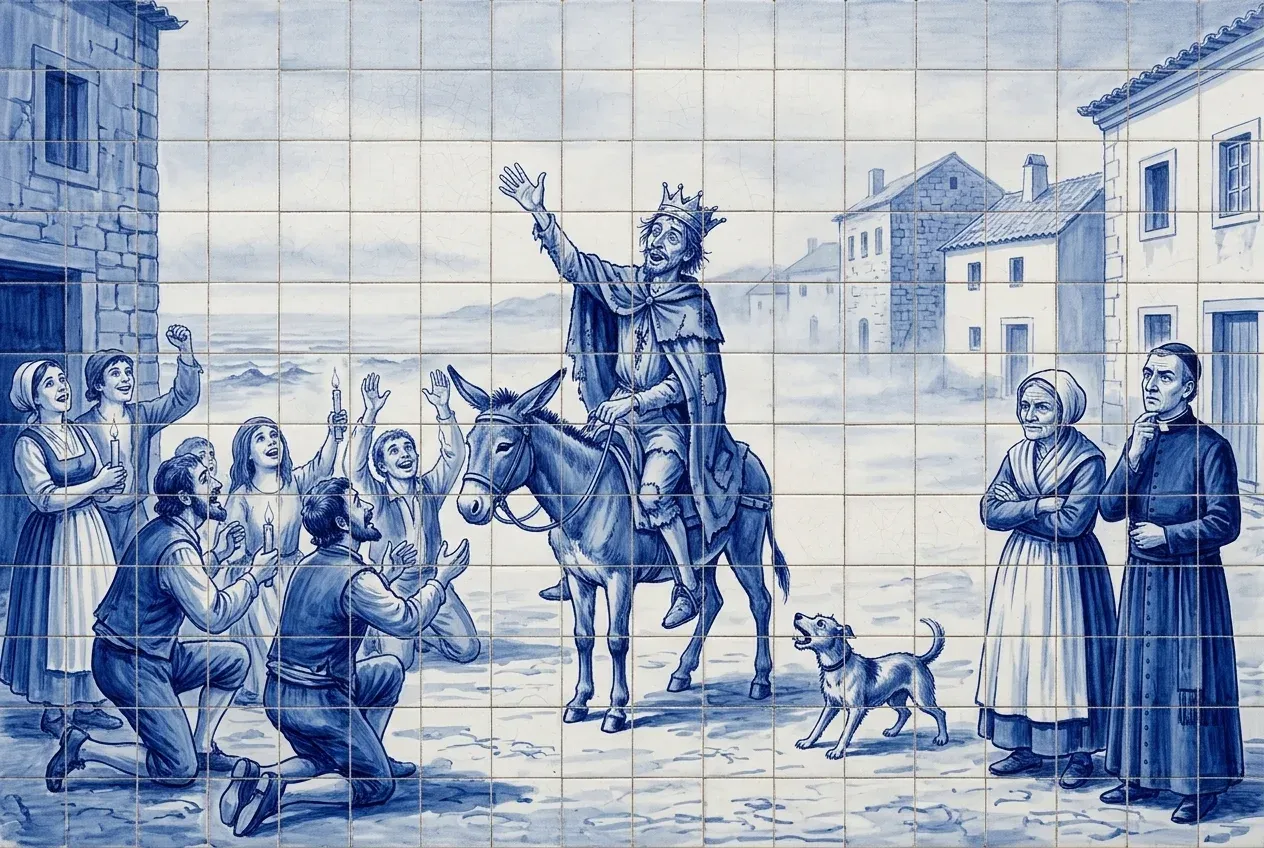
    Blue-and-white azulejo-style illustration: a ragged man in a crown, riding a donkey, greets kneeling villagers holding candles while a dog barks and a woman and a priest with folded arms look at him with suspicion.

    1584–1602 · Portugal

    The King Who Came Back Four Times

    The missing king kept being “found” for almost twenty years. (Read the story)

    In 1578, the young King Sebastian vanished in a battle in Morocco. No one got a good look at the body, and the Portuguese believed the king would return one foggy morning to save the country from the Spanish, who had ruled it since 1580. Impostors took advantage: by calling yourself king you could raise a band of followers and hand out titles. In 1584 a former novice from Penamacor claimed to be the king, in 1585 a hermit from Ericeira, then a pastry cook from Madrigal in Spain, and a Calabrian in Venice. All were exposed, but the faith in his return lived on.

    More →
  3. 1640
    readNew
    Sixty years of Spanish kings ended in a single morning. (Read the story)

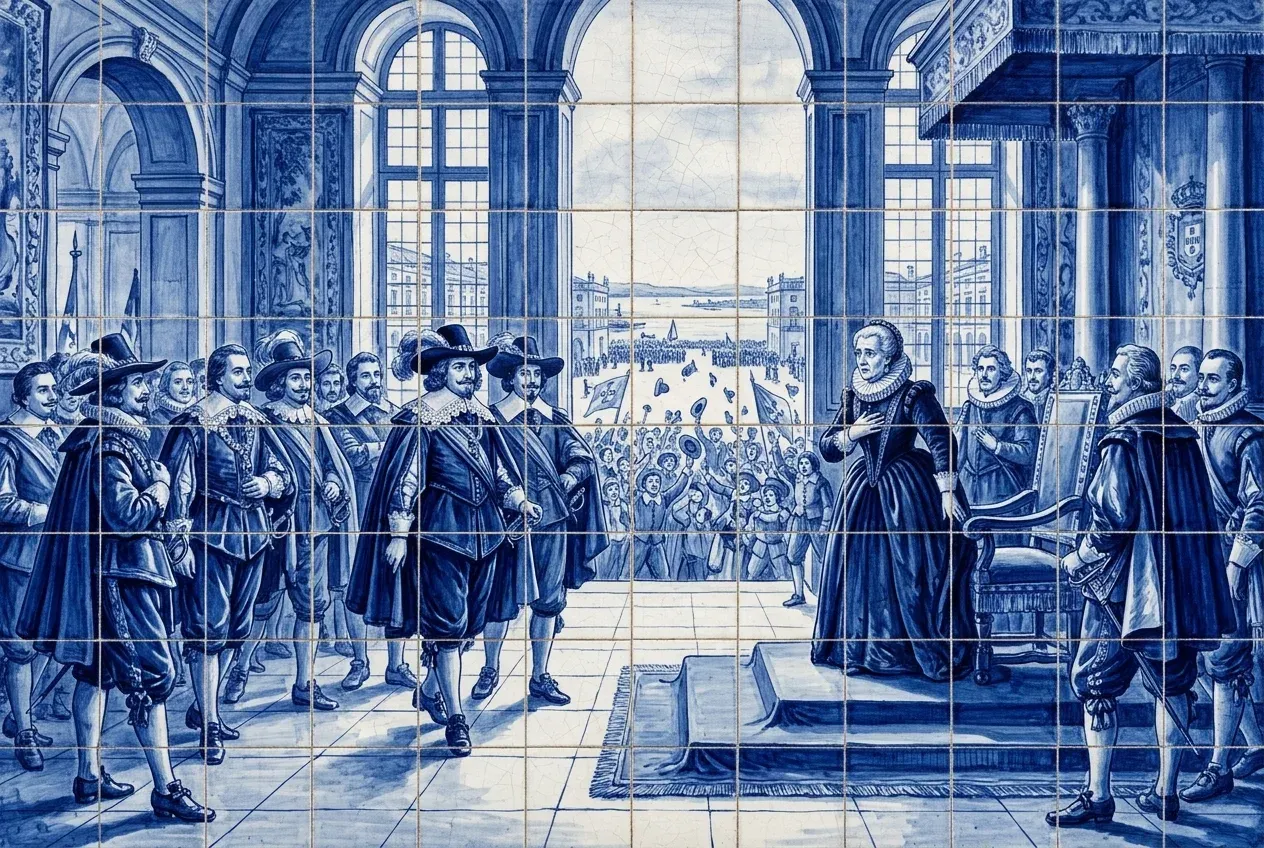
    From 1580, Portugal was ruled by the kings of Spain. Taxes kept rising, and Portuguese nobles were sent off to fight for someone else’s interests. In the fall of 1640, a group of noble conspirators made up their minds. On the morning of December 1 they walked into the palace in Lisbon, arrested the Spanish vicereine, the Duchess of Mantua, and proclaimed the Duke of Braganza king. A descendant of the House of Aviz and head of one of the country’s noblest families, he became John IV. Keeping independence turned out to be harder: the war with Spain dragged on for another 28 years.

    More →
  4. 1646
    readNew
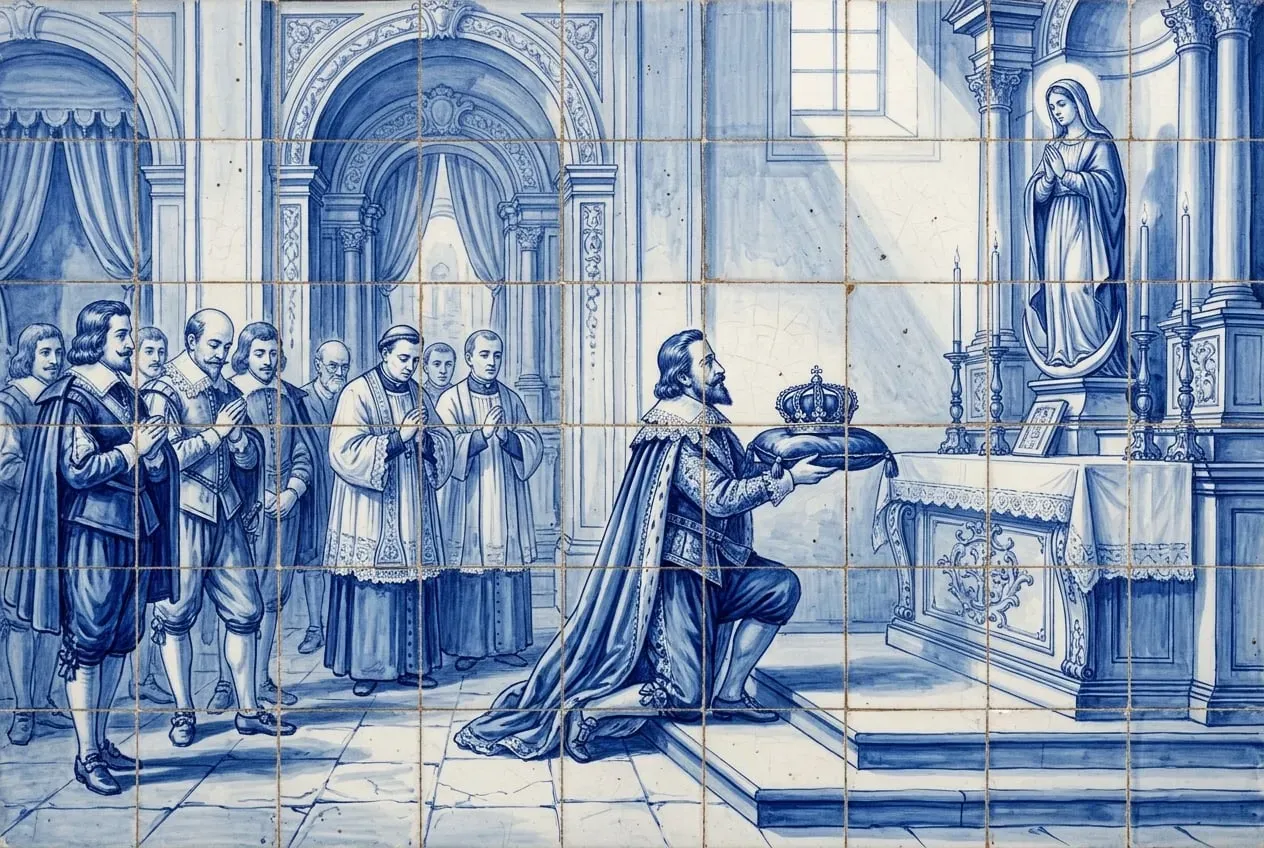
    By tradition, no Portuguese king has worn the crown since 1646. (Read the story)

    In 1640, the Duke of Braganza became King John IV, but the war with Spain went on for many more years. To protect the new dynasty, in 1646 the king proclaimed Our Lady of the Immaculate Conception patron of Portugal and offered his crown to her statue in Vila Viçosa, the Braganza family seat. From then on, the crown was hers, and by tradition no king wore it again: kings were acclaimed, with the crown set beside them on a cushion. The feast of the Immaculate Conception, December 8, is still a public holiday in Portugal.

    More →
  5. 1662
    readNew
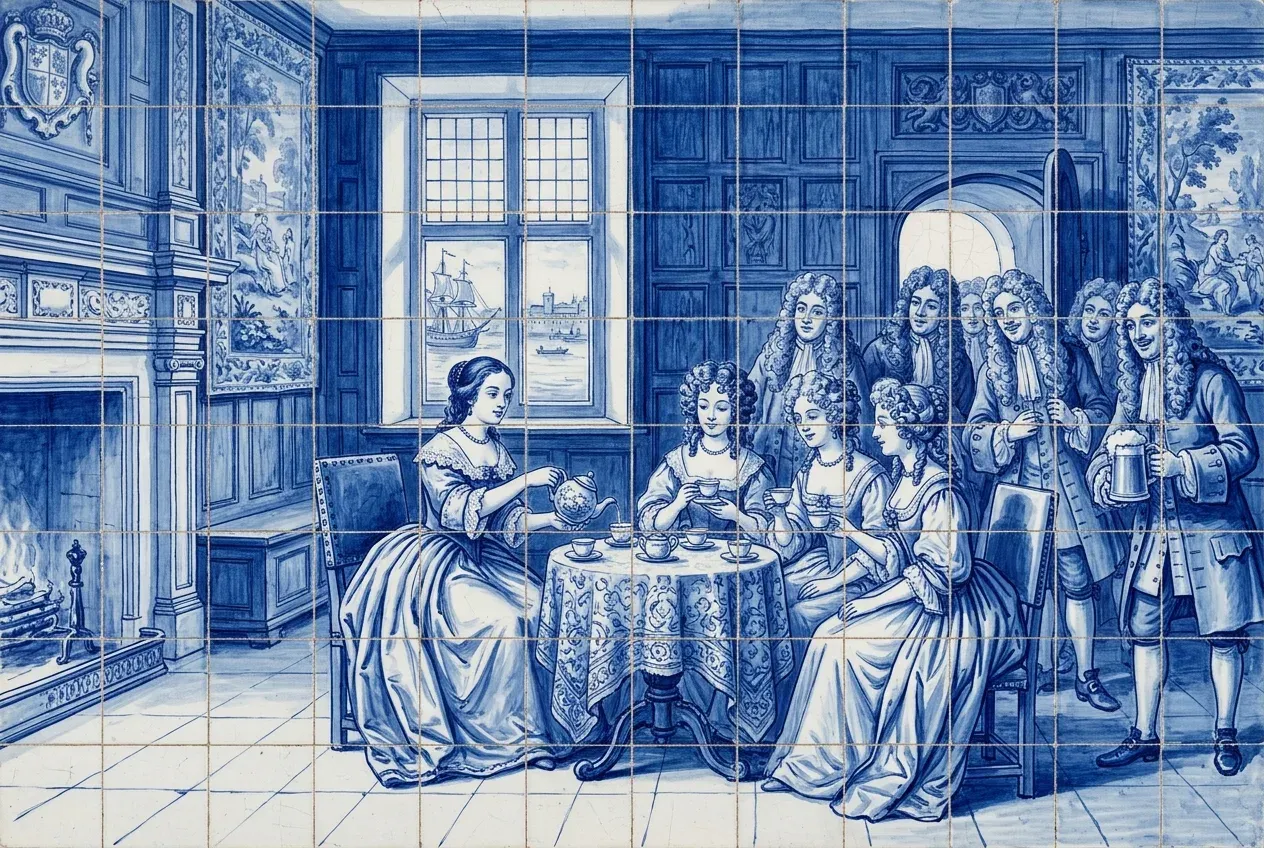
    A Portuguese princess brought England tea and, in her dowry, Bombay. (Read the story)

    In 1662, Catherine of Braganza, daughter of John IV, married King Charles II of England, bringing a huge dowry. She also brought the Portuguese habit of drinking tea: it had reached Portugal through merchants from Macau, and the nobility were already drinking it. In London tea was sold in coffeehouses as an expensive remedy, while she drank it every day, among her ladies. The court began to copy her, and tea went from a medicine to a fashionable drink.

    More →
  6. 1669
    readNew
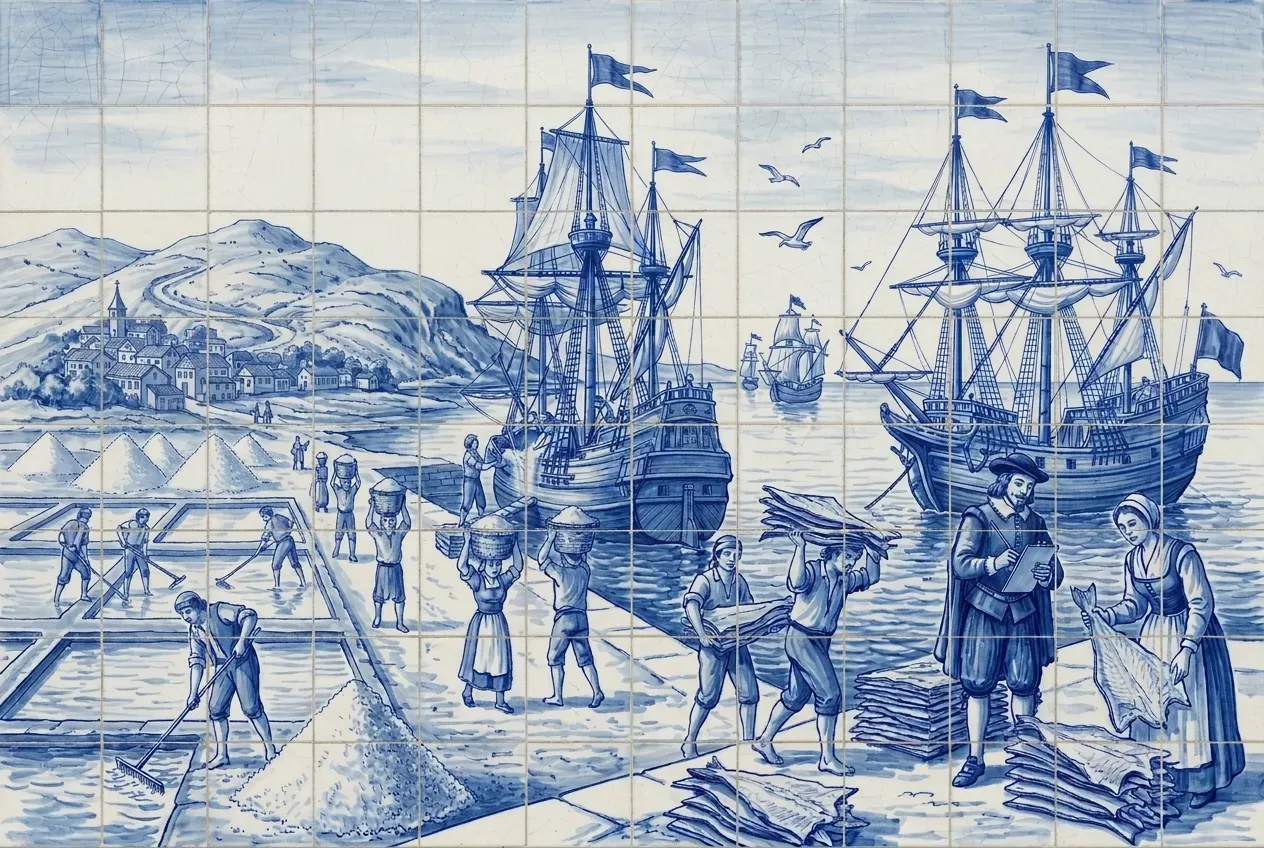
    For centuries, Portugal ate cod that other people caught. (Read the story)

    Cod lives in the cold northern seas, off Newfoundland, Iceland, and Norway. It isn’t found in Portugal’s warm waters. And yet salted, dried cod, bacalhau, became the country’s signature fish. It all came down to keeping it. Salted and dried, cod doesn’t spoil for months, travels well across the ocean, and could be eaten on fast days, when the Church banned meat. And there were lots of those: every Friday, all of Lent, and other holy days. The Portuguese were already fishing for cod off Newfoundland around 1501, after the voyages of the Corte-Real brothers. But in the 17th century they were pushed out by English and French sailors and privateers. Historians have found no Portuguese ship that brought home cod in that period: it was bought from the English.

    More →
  7. 18th c.
    readNew
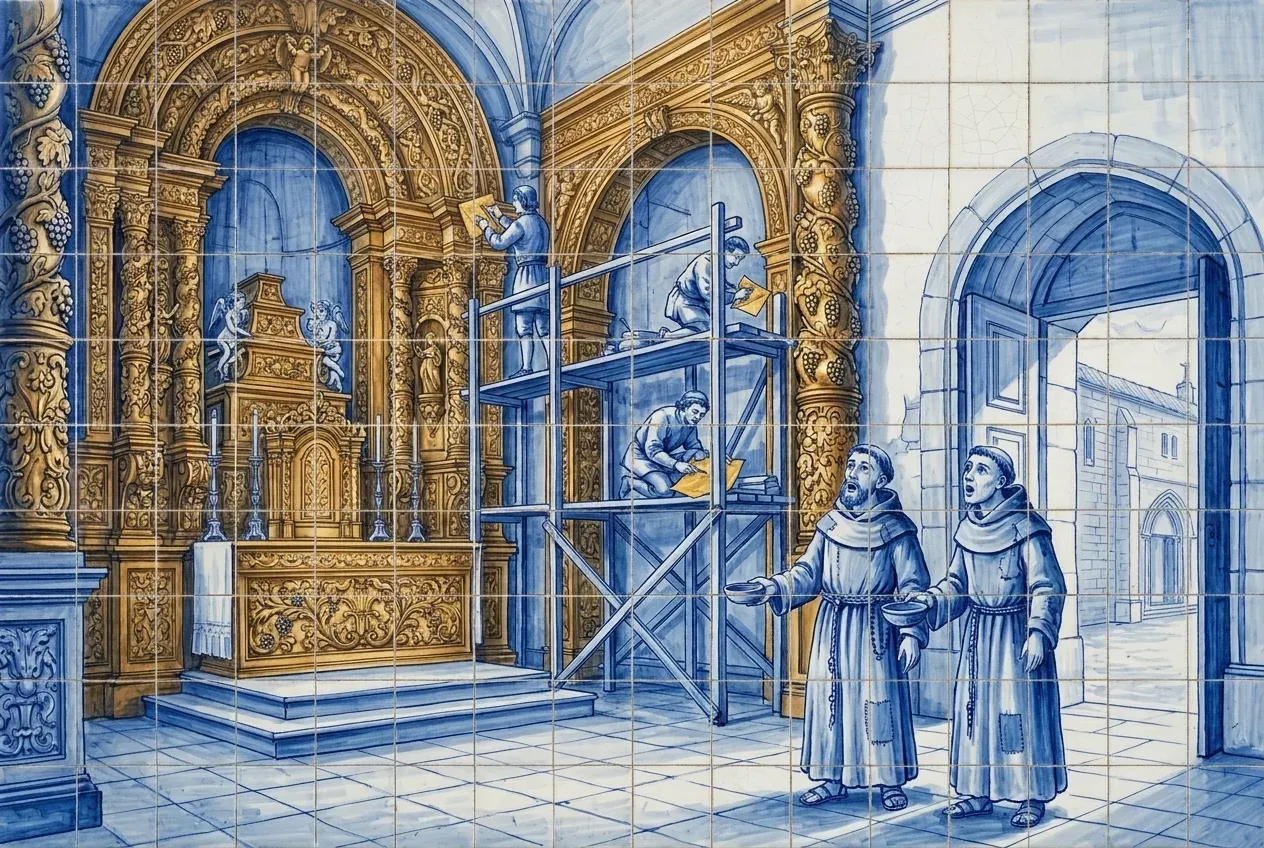
    Blue-and-white azulejo-style illustration: in a church, three gilders on a scaffold lay gold leaf on a carved altarpiece with vine-wrapped columns while two friars holding bowls look on with open mouths.

    first half of the 18th century · Porto

    The Church a Begging Order Covered in Gold

    Friars sworn to poverty covered their church in gold. (Read the story)

    At the end of the 17th century gold was found in Brazil, and ships with precious cargo set sail for Portugal. Some of that gold went to churches: all over the country they were dressed in talha dourada, gilded wood carving. The Franciscans in Porto, an order sworn to poverty, did not pay for the carving in their Gothic church: the Third Order, a brotherhood of wealthy lay merchants, did. The carving covers the interior: columns, vaults, altars, angels, and grapevines. It is said to have taken about 400 kilograms of Brazilian gold. From the outside the church is plain and gray, which is why the interior takes your breath away.

    More →
  8. 1717
    readNew
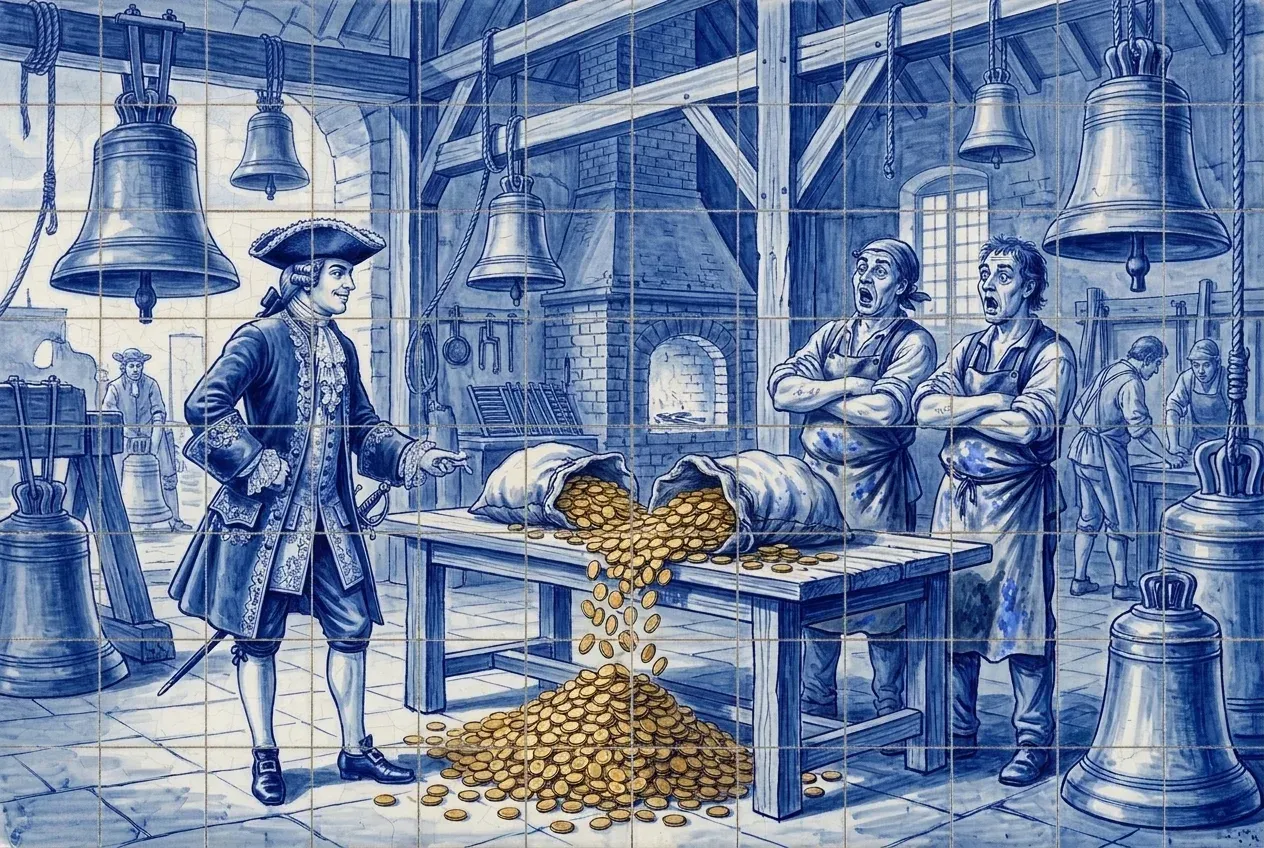
    The bellmakers demanded payment up front. The king paid double. (Read the story)

    King John V made a vow: if he had a child, he would build a monastery. A daughter was born, and the king kept his word: in 1717 the first stone was laid in Mafra. Gold and diamonds from Brazil poured into the project, and at times 45,000 workers were on site at once. For the two towers, almost a hundred bells were ordered from Flanders, tuned so that melodies could be played on them. The bellmakers doubted Portugal would pay and asked for the money in advance. According to tradition, the king wanted the finest set of bells and answered by doubling the sum.

    More →
  9. 1717
    readNew
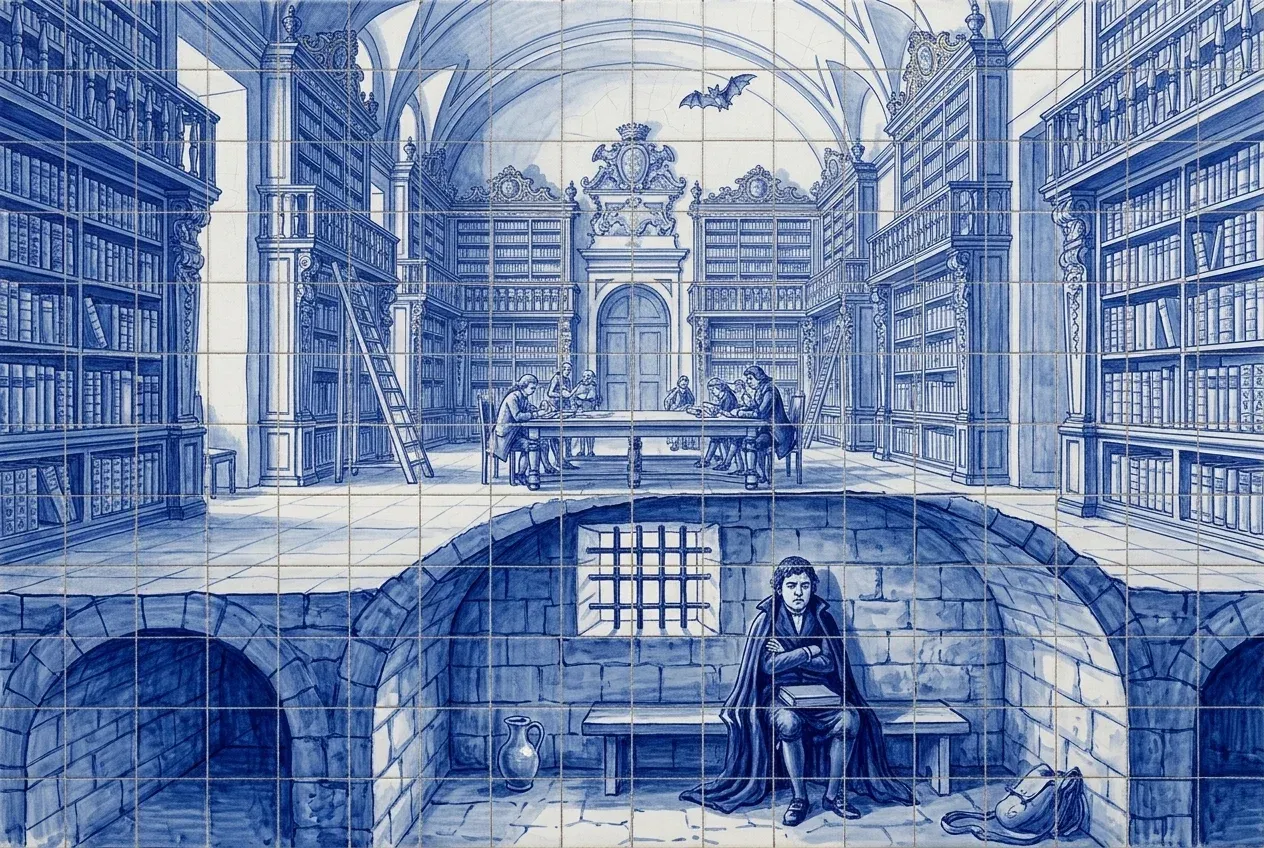
    Blue-and-white azulejo-style illustration: in a grand library with shelves up to the ceiling, where a bat flies, readers work at a table, and below, in a vaulted cell with a barred window, a student in a cloak sits on a bench.

    1717–1834 · Coimbra

    The Prison Under the Library

    Beneath Coimbra’s golden library was a jail for students. (Read the story)

    In 1717, John V gave the University of Coimbra money for a new library. Over eleven years, three halls were built in gold and red and green lacquer, with bookshelves up to the ceiling. The library was named the Joanina in the king’s honor. The university tried its own students and professors, and in the late 18th century its jail was moved to the library’s lower floor. So there was a prison under the halls, and until 1834 it held students who’d broken the rules, and even professors.

    More →
  10. 1725
    readNew
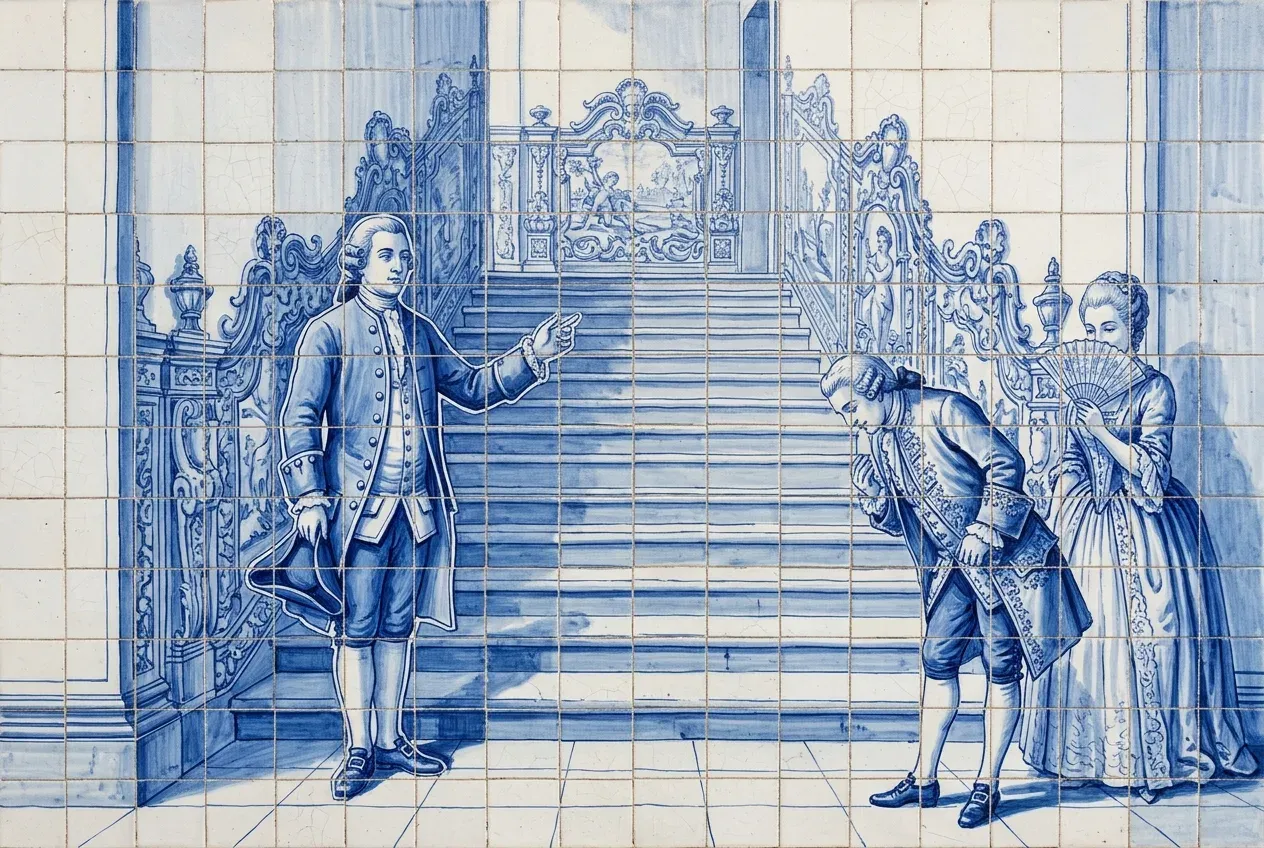
    Blue-and-white azulejo-style illustration: at the foot of a grand staircase with an ornate balustrade, a servant in a wig and coat points the way while a gentleman bows beside a lady hiding her face behind a fan.

    1725–1750 · Lisbon

    The Footman Made of Tiles

    Lisbon’s politest footman is three hundred years old. He’s made of tiles. (Read the story)

    In the first half of the 18th century, Brazilian gold was flowing into Lisbon, and the nobility was rebuilding its palaces. Entrance halls and staircases were covered in blue-and-white tiles, and the workshops couldn’t keep up with orders. At the door of a wealthy house, a servant would greet a guest and lead them upstairs. Tile painters found a way to make that welcome permanent: by entrances and on landings, they began painting life-size servants in tile. Footmen, halberdiers, and ladies stand by the entrance and on the stairs and welcome the guests. They’re called figuras de convite, “welcome figures.” A real servant had to be fed and clothed, but a tile one stands by the stairs for centuries and tells every visitor that the owner of the house is rich.

    More →
  11. 1742
    readNew
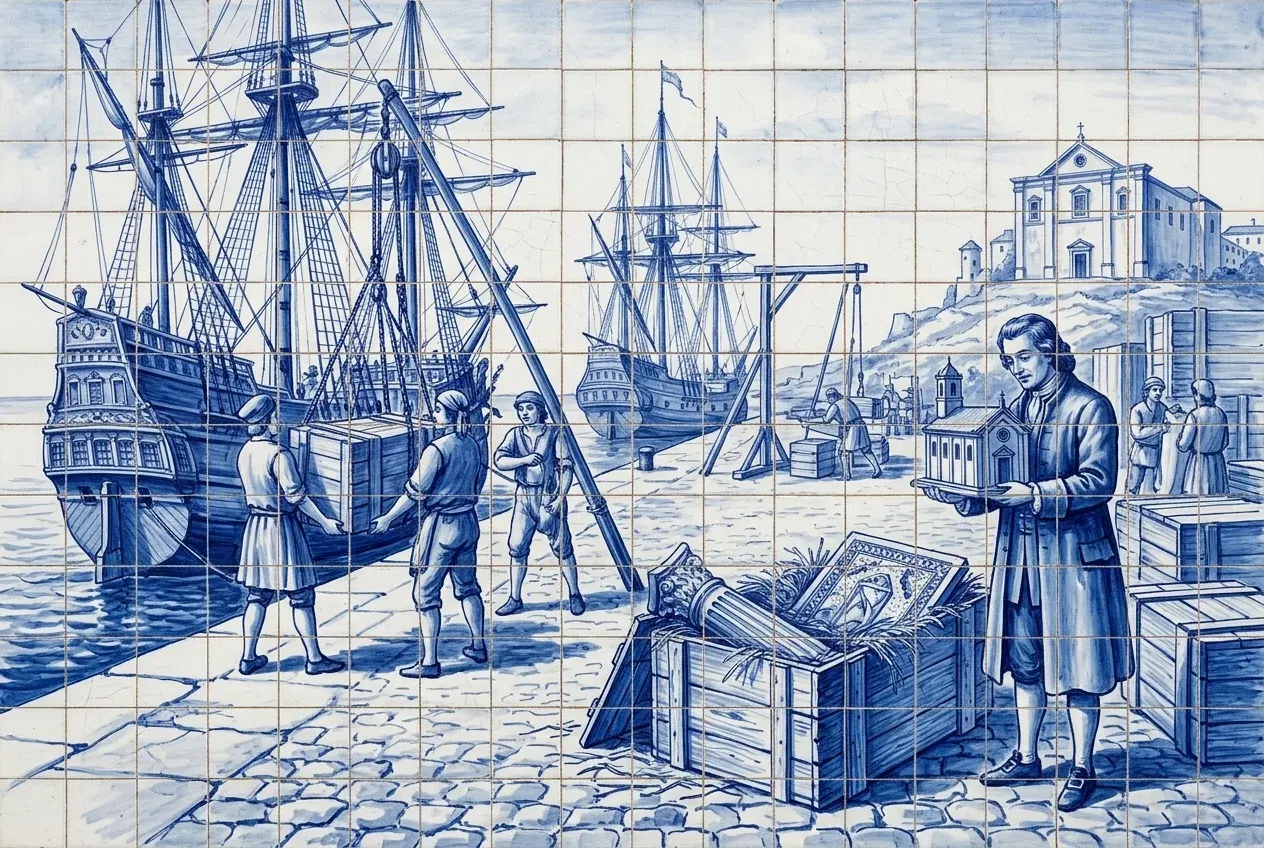
    The king ordered a chapel from Rome and shipped it in pieces. (Read the story)

    John V wanted a chapel as fine as any in Rome. In 1742 it was commissioned from Rome’s best craftsmen, and more than 130 people spent five years making it from marble, lapis lazuli, amethyst, and gilded bronze. The king never went to Rome and approved the design from a model. Once finished, the chapel was assembled in Rome and blessed by Pope Benedict XIV, then taken apart into 174 pieces. Three ships carried them to Lisbon, where the chapel was put back together in the Church of São Roque. It survived the 1755 earthquake.

    More →
  12. 1748
    readNew
    Galicians with barrels on their shoulders kept Lisbon watered for centuries. (Read the story)

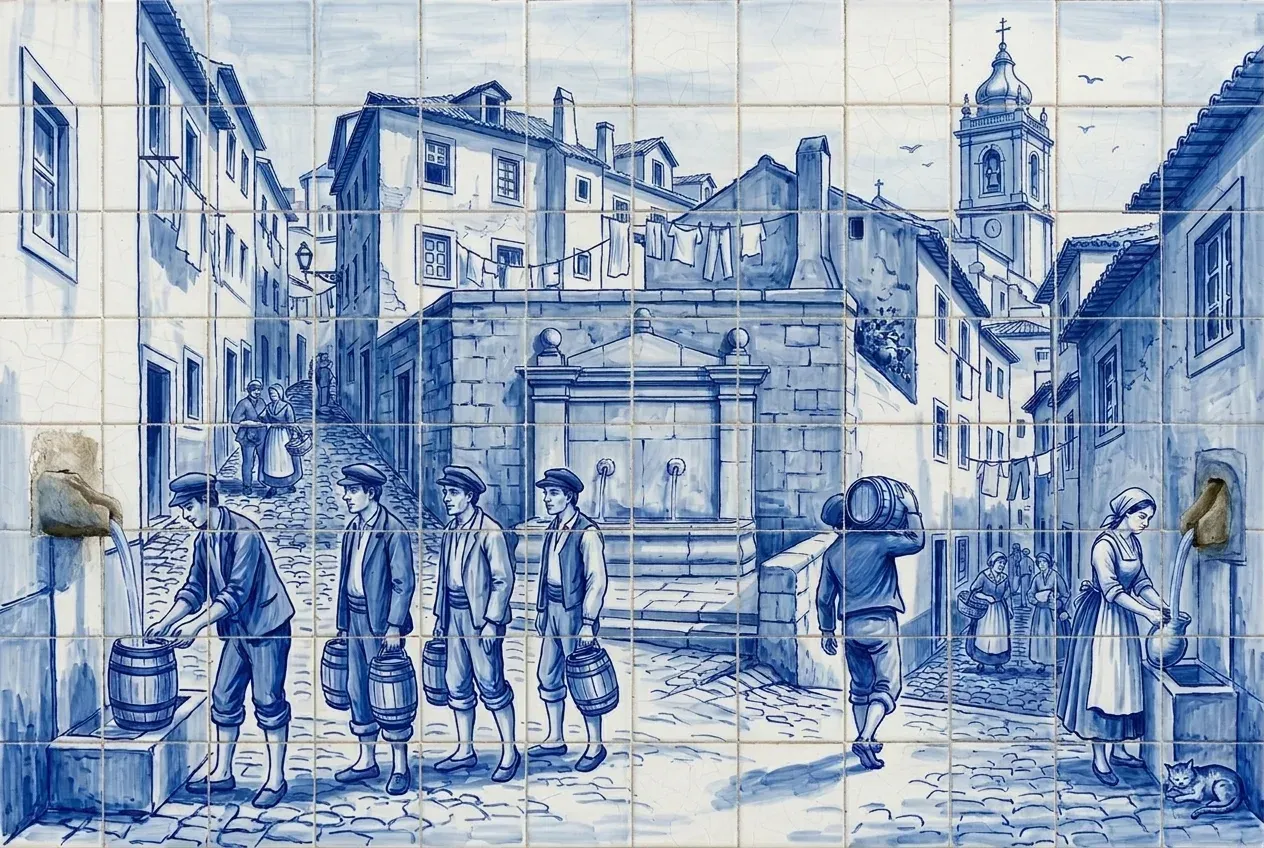
    Until the late 19th century, Lisbon homes had no running water. People fetched it from the city’s public fountains and then hauled it up the steep streets. Wealthy households paid water carriers to do it. The carriers were almost always Galicians, from northern Spain around Pontevedra and Vigo. With a barrel on the shoulder and a peaked cap, they went from fountain to customers’ doors. To work, you had to register with the city council, and breaking the rules meant a fine. The fountains were always crowded, so to prevent fights the spouts were split between groups: some only for water carriers, some for servants, some for sailors. Piped water reached homes little by little, and the trade disappeared with it.

    More →

Then and now

  • 10,000now: 12.4 million

    When the islands of Bombay went to England in 1661 as the dowry of Catherine of Braganza, they had about 10,000 inhabitants. Mumbai’s 2011 census counted 12.4 million: more than all of Portugal today.

    estimate→ The Queen Who Taught England to Drink Tea

  • never tastednow: 100 million cups a day

    In 1660 Samuel Pepys wrote in his diary that he sent for a cup of tea, never drunk before. Britons now drink more than 100 million cups a day, the UK Tea & Infusions Association said in 2023.

    → The Queen Who Taught England to Drink Tea

  • 557 tnow: 383 t

    Between 1720 and 1807, 557 tons of Brazilian gold reached the port of Lisbon. That is more than the 382.7 tons the Bank of Portugal holds in its reserves today.

    estimate

Estimate: a historians’ reconstruction.

Sources