
The Tea That Grew Out of an Orange Blight
Europe’s oldest tea exists because of a disease that hit oranges.
The story
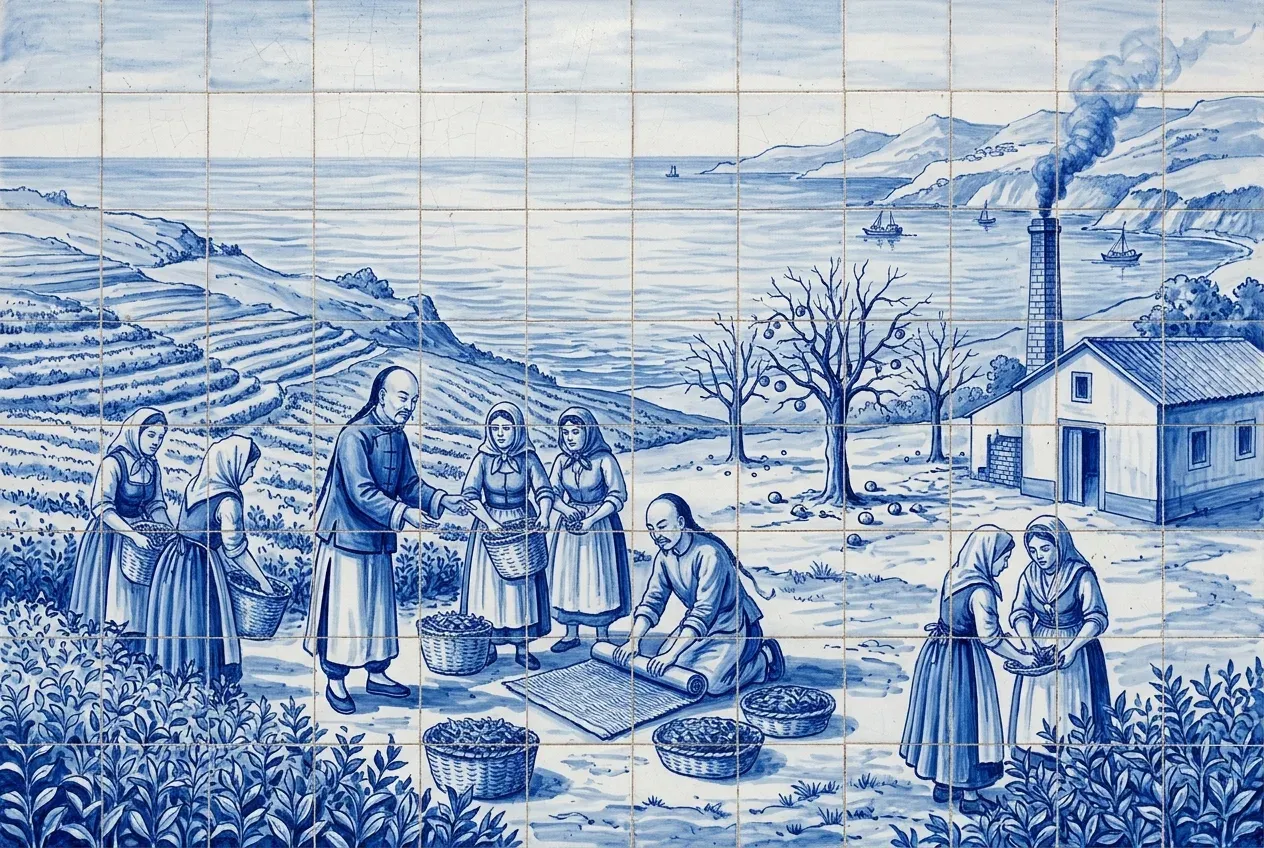
The island of São Miguel in the Azores lived on oranges, shipped by boat to England. Tea had been tried on the island before, but it was taken up in earnest only when, around 1864, a blight nearly wiped out the orchards. In 1878 two Chinese tea masters, Lau-a-Pan and his interpreter Lau-a-Teng, were brought in from Macau, and they taught the locals to grow and dry the leaf. In 1883 Ermelinda Gago da Câmara founded the Gorreana plantation. It’s still running, and it’s the oldest tea plantation in Europe.
Meanwhile
- 1886The Statue of Liberty is dedicated in New York Harbor.
More
Context
The first tea bushes were brought to the island back in 1860 by landowner José do Canto. The Gorreana plantation was founded by Ermelinda Gago da Câmara.
And so things came full circle: in 1662 the Portuguese princess Catherine made tea fashionable in England, and more than two hundred years later Portugal began growing its own.
Today the Azores have two tea plantations: Gorreana and Porto Formoso.
Where to see it today
Gorreana Tea Factory
Fábrica de Chá Gorreana
The tea terraces slope down to the ocean, and old machines still work in the factory.


Sources (3)· links checked on
That was the last story of the era “Monarchy and Republic.” Your panel is complete →