
Bread in Japanese
In Japan, bread is still called by a Portuguese word.
The story
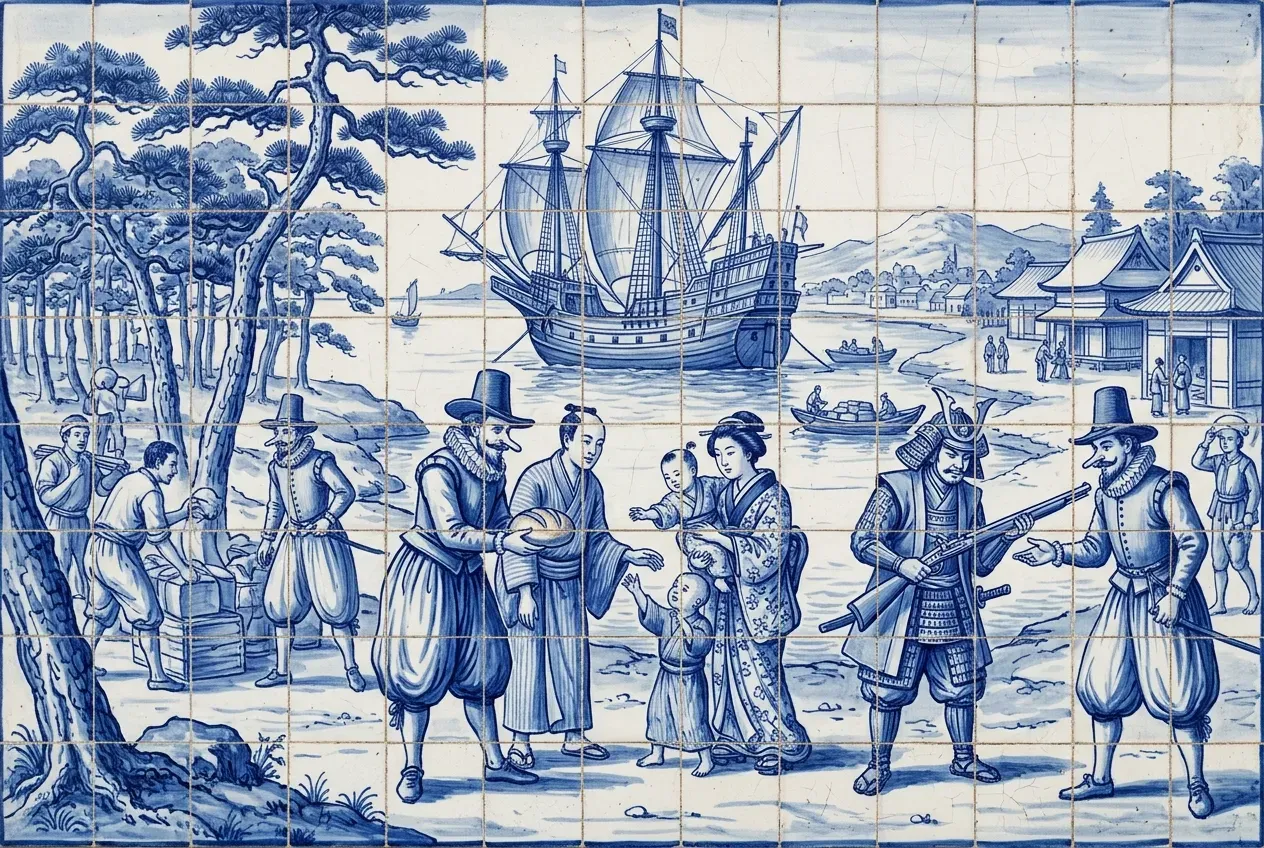
In 1543, a storm drove a Chinese junk carrying Portuguese merchants to the Japanese island of Tanegashima. That made the Portuguese the first Europeans to reach Japan, and for the next hundred years they traded there and brought things the Japanese had never seen.
Along with the things came the words. The Japanese didn’t bake bread, so they borrowed the Portuguese pão, which became pan. The rain cape, capa, became kappa, and playing cards, cartas, became karuta. These words are still used in Japanese today.
The Japanese called the visitors nanban, “southern barbarians,” because their ships came from the south. Painters showed them on large folding screens: long noses, baggy pants, enormous ships.
Meanwhile
- 1543Copernicus publishes the book in which the Earth orbits the Sun.
More
Context
The most important thing the Portuguese brought to Japan wasn’t bread but the gun. A local lord bought two matchlocks from the merchants on Tanegashima and had a swordsmith copy them. A year later, Japanese craftsmen were making them on their own, and before long they may have been producing more than any country in Europe. In Japan, the gun was even called a tanegashima.
Food came next. From Nagasaki, a port that grew up around Portuguese trade, came the sponge cake castella, from the Portuguese for “Castile cake.” Where tempura comes from is debated: one theory says tempero, “seasoning,” another says têmporas, the fasting days when Catholics ate fish and vegetables instead of meat.
In 1639, Japan’s rulers expelled the Portuguese and closed the country for almost two hundred years, out of fear of the missionaries. The merchants sailed away, but the words, the cake, and the guns stayed.
Where to see it today
National Museum of Ancient Art
Museu Nacional de Arte Antiga
The museum holds 17th-century Japanese nanban screens showing Portuguese ships and merchants.


That was the last story of the era “Avis and the Discoveries.” Your panel is complete →
Test yourself: myth or fact? →
New stories, once a month
One email a month, no ads. Unsubscribe in one click.
Almost done: check your inbox and confirm your subscription.