
The Holiday From a Pension Record
Portugal’s national day got its date from a pension record.
The story
Camões wrote The Lusiads, a poem in which the whole history of Portugal is told as one great voyage by sea. The Portuguese regard it as their national epic, and Portuguese is called “the language of Camões.” That is why the country’s holiday was tied to him. His birth is uncertain: neither the year nor the city is known. Camões has only one firm date, the day he died.
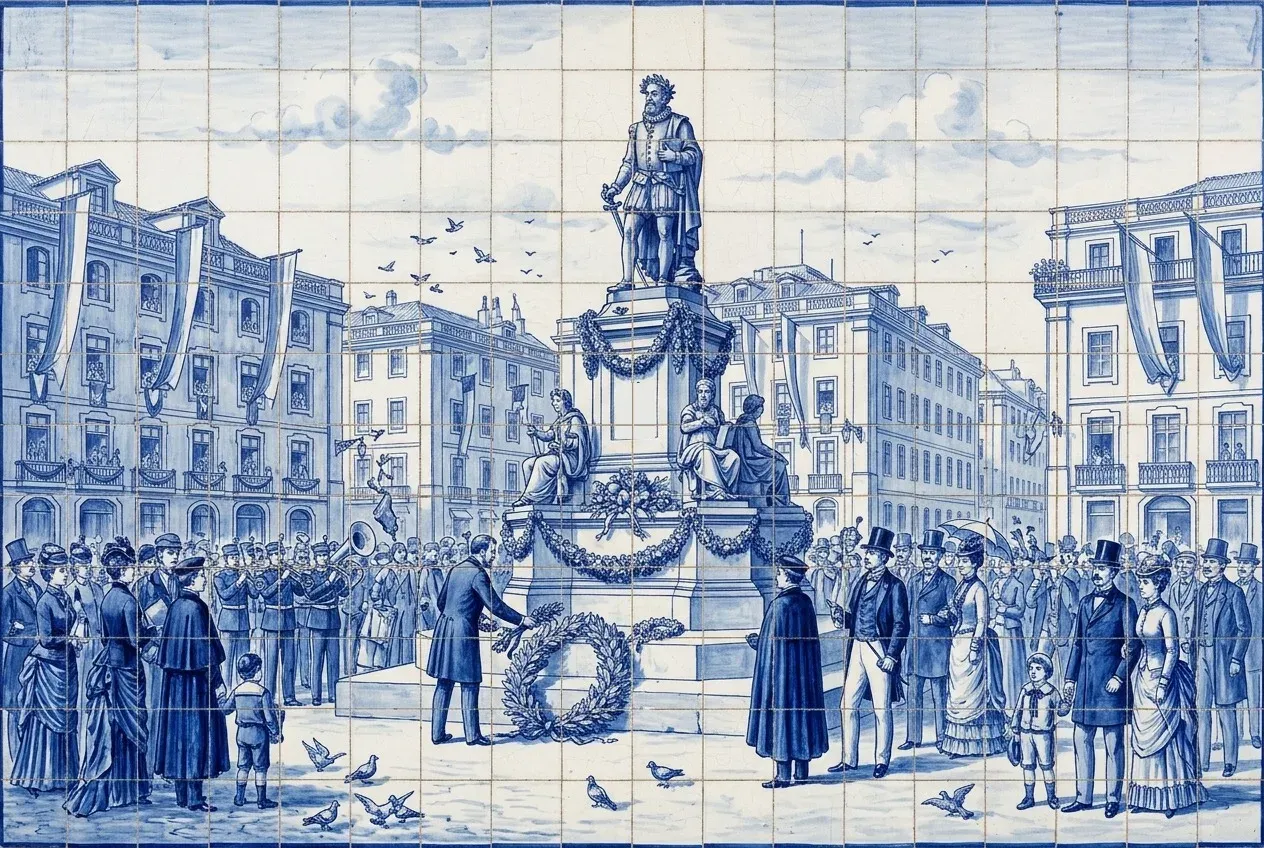
But even that was long unknown: the tombstone said 1579. The exact date turned up in the Torre do Tombo archive, in a paper of 1582 about money paid to the poet’s mother: June 10, 1580. On that basis, in 1880, for the tricentenary, King Luís I declared June 10 a holiday, for one year only. It became Portugal’s day for good in the 20th century. Some historians think the scribe got the year wrong and the poet died in 1579.
More
Context
Camões got his pension thanks to The Lusiads. He came back to Lisbon in 1570 after seventeen years in the East, with no money but with an almost finished poem. In 1572 it was printed, and King Sebastian granted the poet a small pension, no more than 15,000 reais a year. Camões died in 1580, the very year Portugal fell for 60 years under the king of Spain.
The Lusiads is ten cantos about Vasco da Gama’s voyage to India, and inside them the whole history of Portugal, which Gama retells along the way. The gods of Olympus quarrel over the sailors: Venus helps them, Bacchus gets in their way. The Portuguese know the poem’s characters from school. For instance, the “Old Man of Restelo,” who grumbles as the ships leave: to this day the name is used for anyone who distrusts everything new.
And the riddle of the first edition was solved only recently. In 1572 two books came out with the same date: on one title page the pelican looks left, on the other right. In 2024 a researcher from Coimbra, Rita Marnoto, showed that the book with the “right-facing” pelican is a forgery, printed later.
Where to see it today
Jerónimos Monastery
Mosteiro dos Jerónimos
Camões’s tomb faces Vasco da Gama’s; the bones were moved here in 1880, but many doubt they are his.


Sources (9)· links checked on
- DN, 2011: Os ossos de Camões e o 10 de junho
- DN, 2017: 10 de junho: primeiras comemorações foram em 1880
- Observador, 2015: Camões: a história e cinco dúvidas
- Barlavento / Lusa, 2024: Edição crítica de «Os Lusíadas» prova que original teve contrafação
- Wikipedia: Os Lusíadas
- Wikipedia: Luís de Camões
- Wikipedia: Portugal Day
- Wikipedia: The Old Man of Restelo
- RTP / Lusa, 2011: Túmulo nos Jerónimos poderá não conter os restos mortais do poeta

New stories, once a month
One email a month, no ads. Unsubscribe in one click.
Almost done: check your inbox and confirm your subscription.