The Child Scientists Still Argue About
Heavy topic. This story deals with a heavy topic.
This story is for readers 12+. This story deals with a difficult topic. Open?This story deals with a difficult topic. Open?
A four-year-old from Leiria had scientists arguing for twenty years.
The story
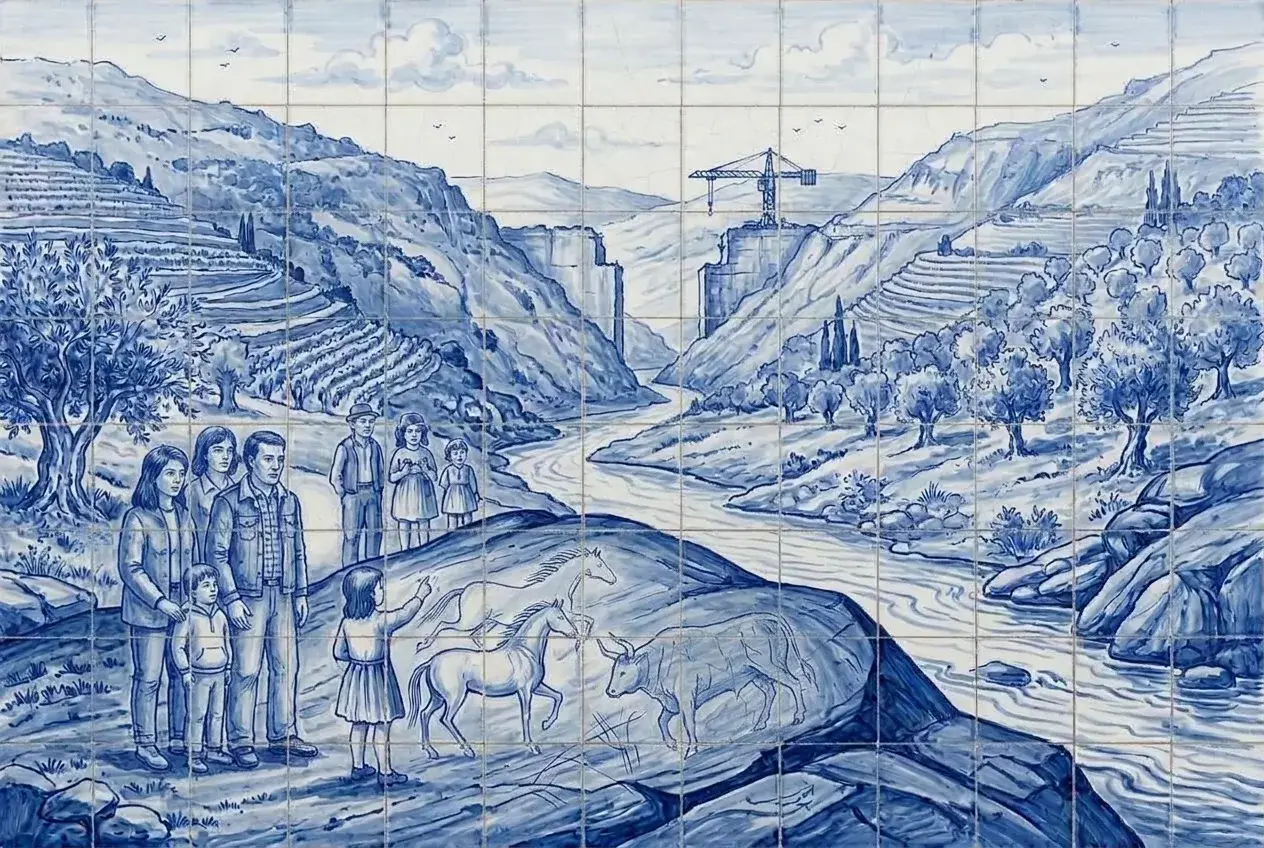
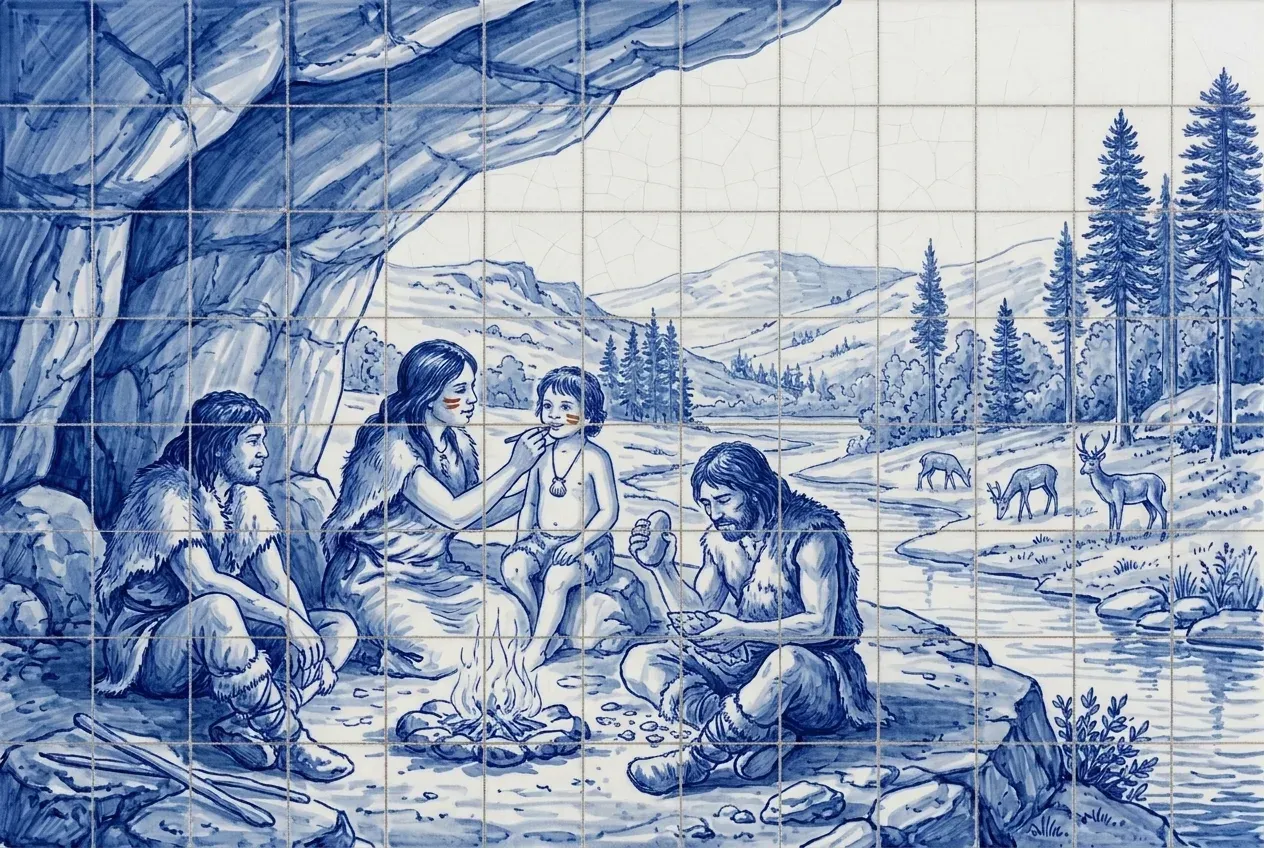
In late November 1998, archaeologists went to see the rock paintings at Lagar Velho, a rock shelter in the Lapedo Valley near Leiria. Shortly before, machinery had churned up the ground there, and bones had surfaced in it. It was the grave of a child about four years old, buried about 28,000 years ago with care: with a seashell and red ocher.
But something else surprised the scientists. In almost every way it was a child of our own species, but its legs, sturdy and differently proportioned, were like a Neanderthal’s. Archaeologist João Zilhão and his colleagues proposed that the two human species had met and had children together, and that their descendants carried traits of both for a long time.
That idea was argued over for years, and the debate still isn’t over.
More
Context
In 1999, when the paper on the Lapedo child came out, the idea that Neanderthals and our species had children together sounded bold. Most experts believed our species had simply replaced the Neanderthals. So some scientists saw signs of mixing in the skeleton, while others put its features down to the way this particular child grew.
Eleven years later, the debate turned. In 2010, geneticists read the Neanderthal genome and found traces of it in the DNA of most people alive today. So mixing did happen, though it can’t be proven for this particular child from the bones alone. That’s why the story carries the “Debated” label.
The skeleton itself is kept at the National Museum of Archaeology in Lisbon, and in 2021 it was classified as a national treasure of Portugal.
Where to see it today
Lagar Velho Rock Shelter Interpretation Center, Leiria
Centro de Interpretação do Abrigo do Lagar Velho
A replica of the skeleton and a reconstruction of the child’s face are on display here.


Sources (6)· links checked on
- Wikipedia: Lapedo child · Zilhão, the shell and ocher, the hybrid dispute
- Wikipédia: Menino do Lapedo · November 28, 1998, the trip to the rock art, the skeleton in the National Museum of Archaeology, the replica in the center
- Visite Leiria: Centro de Interpretação do Abrigo do Lagar Velho
- Duarte et al., 1999, PNAS 96(13): The early Upper Paleolithic human skeleton from the Abrigo do Lagar Velho (Portugal) and modern human emergence in Iberia · The 1999 age (about 24,500 years BP); body proportions
- Linscott et al., 2025, Science Advances 11: direct radiocarbon dating of the Lapedo child · The new direct dating: about 28,000 years
- Diário da República: Decreto n.º 14/2021 · The skeleton classified as a “national treasure”
That was the last story of the era “Prologue: Dinosaurs and Stones.” Your panel is complete →