
The Vines Saved by Sand
Sand saved Colares’ vines from phylloxera, but not from vacation homes.
The story
In the second half of the 19th century, phylloxera arrived in Europe from America. It’s a tiny insect, similar to an aphid: it lives in the soil on grapevine roots, sucks their sap, and the vine dies within a few years. Phylloxera swept through France, Spain, and Portugal, and almost all the old vineyards had to be pulled up.
The rescue came from American roots: European vines were grafted onto them, because American grapes can withstand phylloxera. Ever since, nearly every vine in Europe has grown on borrowed roots.
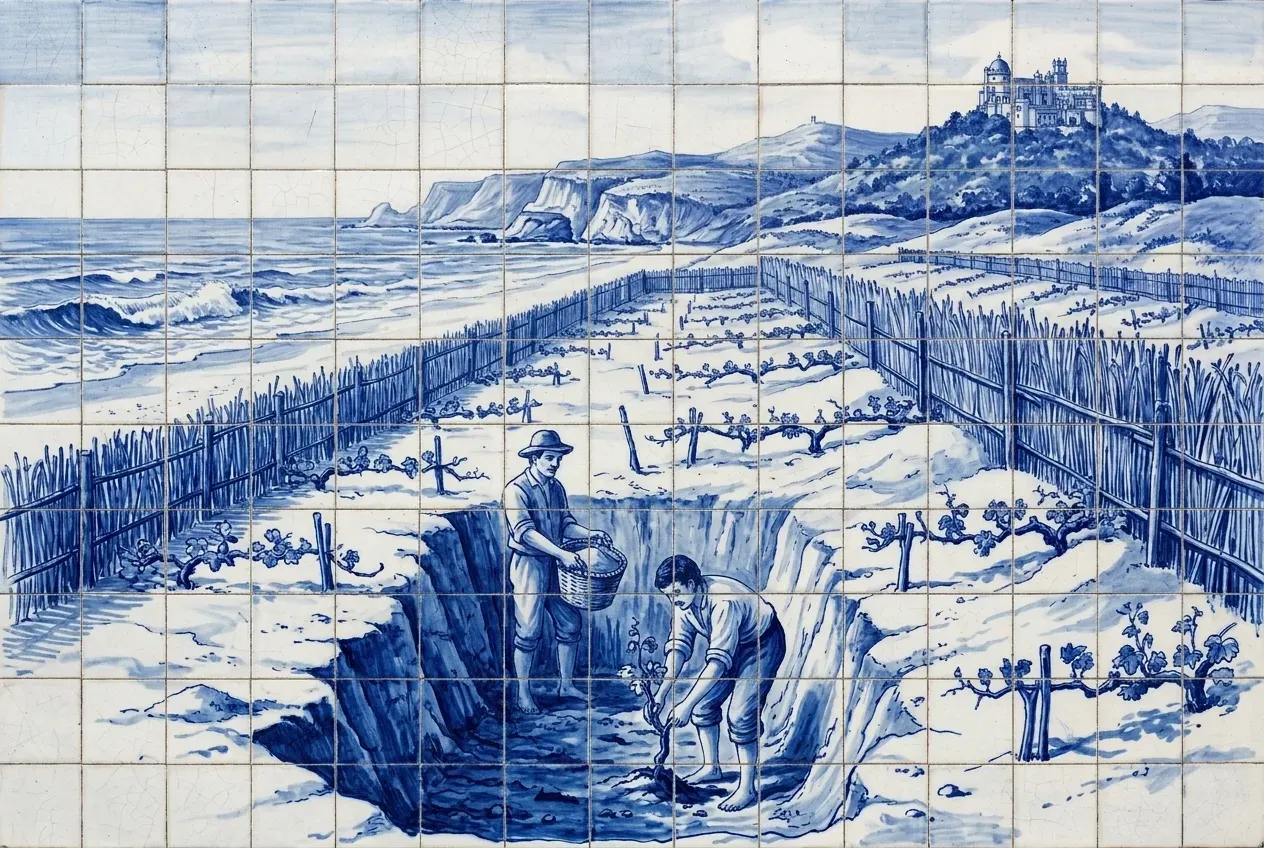
In Colares, by the sea, grafting wasn’t needed. Here the Ramisco grape grows in the dunes, in pure sand. Phylloxera can’t live in sand: the tunnels it digs to reach the roots collapse right away. So the vines of Colares grow on their own roots, just as they did before the pest.
Meanwhile
- 1908Ford begins producing the Model T.
More
Context
Are these the oldest vineyards? Not quite. According to local winemakers, grapes have grown here for about five hundred years, but individual vines don’t live that long, and an eighty-year-old vine is already treated like a monument. What makes Colares rare is something else: Ramisco may be the only grape variety never grafted onto American roots.
Planting it is hard work. To reach the moist clay, growers dig a trench several meters deep in the sand, and its walls keep caving in. The vines sprawl low, propped up on short wooden sticks, and are shielded from the salty wind by fences of dried reeds.
The sand stopped phylloxera, but it couldn’t stop the beach crowd. Seaside land near Sintra became expensive, and houses and villas went up where the vineyards had been. In 1950, Colares made over a million liters of wine a year; today it makes about twenty thousand. The growers have lost more than nine-tenths of their land.
Where to see it today
Adega Regional de Colares
The Colares growers’ cooperative, founded in 1931, makes wine from vines that grow in the sand on their own roots.


Sources (3)· links checked on
That was the last story of the era “Monarchy and Republic.” Your panel is complete →
Test yourself: myth or fact? →
New stories, once a month
One email a month, no ads. Unsubscribe in one click.
Almost done: check your inbox and confirm your subscription.