
March 28
Easter falls on the first Sunday after the spring full moon
Easter
Portugal’s big spring holiday. On Good Friday people eat bacalhau, and on Sunday there’s lamb and folar on the table.
The story of this day
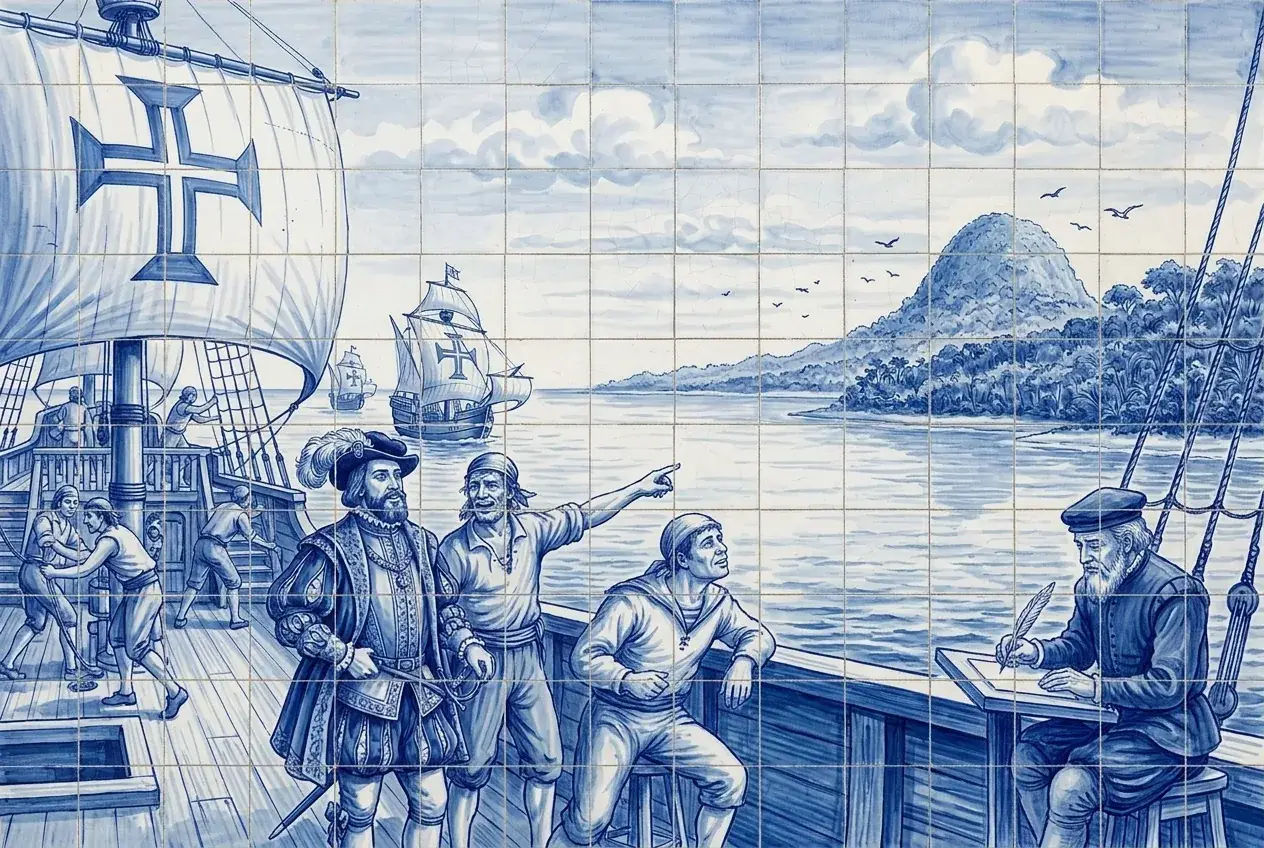
The first mountain the Portuguese saw in Brazil was named after Easter.
Easter Mountain
Traditions and facts
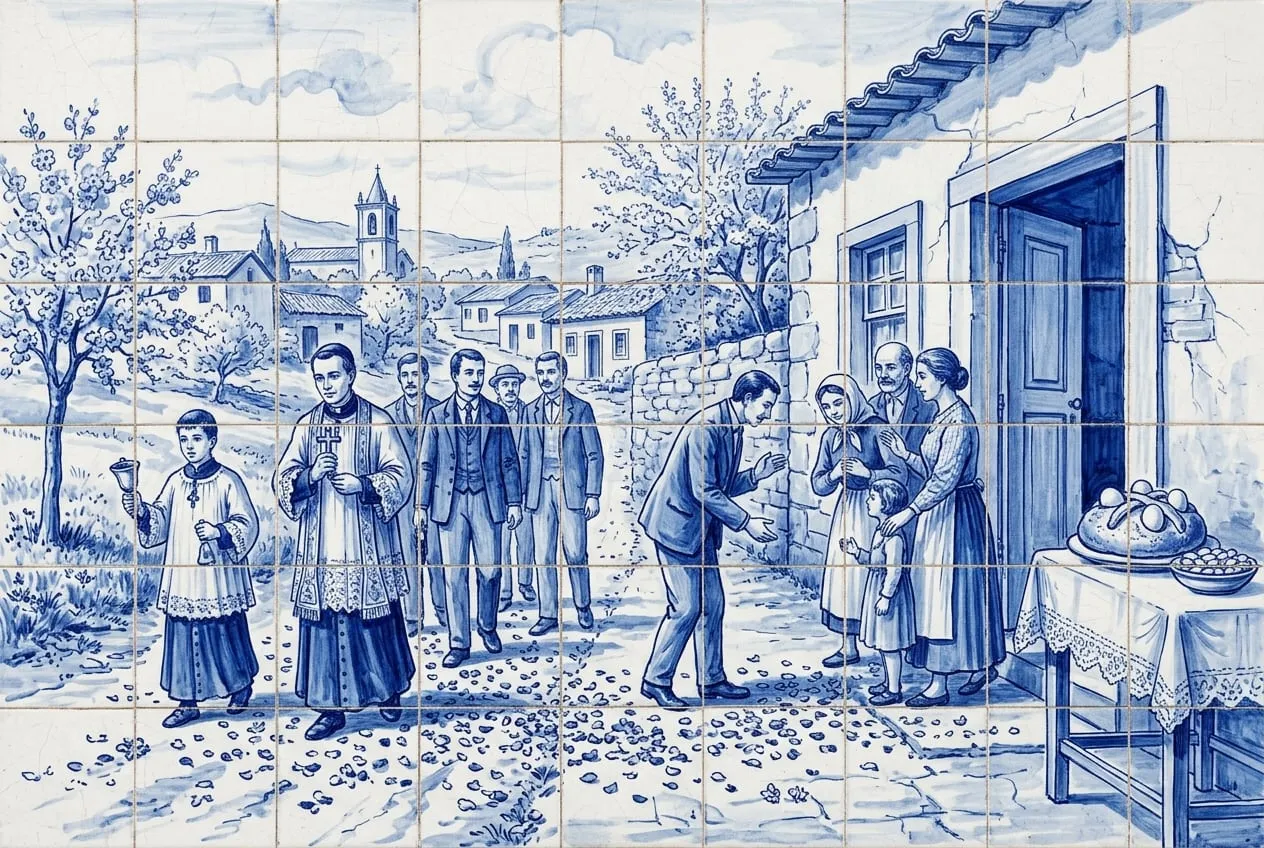
- Folar from godparents. Folar is a sweet bread baked with whole eggs, still in their shells, held in place by crossed strips of dough. In the north, on Palm Sunday, godchildren bring their godmother a bunch of violets and their godfather an olive branch, and at Easter the godparents give them a folar in return. Every region has its own: in Trás-os-Montes it’s stuffed with sausage and ham, while in Olhão, down south, it’s sweet and flaky, with sugar and cinnamon.
- The cross goes door to door. On Easter Sunday, especially in the north, the compasso makes its rounds: a priest or a parishioner carries a cross from house to house. Doorways are decorated with greenery and carpets of flowers, families kiss the cross, and visitors are offered food and drink. By the newspaper CM’s estimate, the crosses visit about 1.5 million homes in a single day.
- The night of the bells. On Holy Saturday, shepherds bring their lambs to the center of Castelo de Vide, a town in the Alentejo, to be blessed. That night, after the Easter Vigil, thousands of people walk the streets ringing shepherds’ bells of every size, along with the bells of the church and the clock tower. It’s said this was how shepherds thanked the church for blessing their flocks.
- Mussels instead of meat. On Good Friday, dozens of people with buckets head out at low tide to gather mussels at Magoito beach near Sintra. Older locals explain it with another custom: no meat on this day.